[et_pb_section fb_built=”1″ admin_label=”section” _builder_version=”4.16″ global_colors_info=”{}” theme_builder_area=”post_content”][et_pb_row admin_label=”row” _builder_version=”4.16″ background_size=”initial” background_position=”top_left” background_repeat=”repeat” global_colors_info=”{}” theme_builder_area=”post_content”][et_pb_column type=”4_4″ _builder_version=”4.16″ custom_padding=”|||” global_colors_info=”{}” custom_padding__hover=”|||” theme_builder_area=”post_content”][et_pb_text admin_label=”Text” _builder_version=”4.16″ background_size=”initial” background_position=”top_left” background_repeat=”repeat” global_colors_info=”{}” theme_builder_area=”post_content”]

Imagine discovering that your home—your most valuable asset—has a legal claim attached to it that prevents you from selling or refinancing. This isn’t a rare scenario. Thousands of homeowners face this challenge every year when a lien is placed on their property. Whether you’re dealing with unpaid debts, inherited property complications, or contractor disputes, understanding how a lien on house works can mean the difference between financial stress and finding helpful solutions.
A lien is a legal claim against your property that creditors use to secure payment for debts you owe. When a lien is placed on your home, it creates a legal encumbrance that must be addressed before you can transfer ownership or access your property’s equity. This comprehensive guide will walk you through everything you need to know about property liens in 2025, from the different types of liens to practical strategies for removal.
This article is worth reading because it provides expert service and helpful guidance for navigating one of the most complex aspects of property ownership. Whether you’re a current homeowner, potential buyer, or someone dealing with inherited property, you’ll find trustworthy service and actionable solutions here.
Key Takeaways
- A lien is a legal claim that creditors place on your property to secure debt repayment, preventing you from selling or refinancing until resolved
- Different types of liens include voluntary liens (like mortgages) and involuntary liens (such as tax liens, judgment liens, and mechanic’s liens)
- Liens could significantly impact your ability to sell the house, refinance, or access home equity, making lien resolution critical
- Removing a lien typically requires paying off the debt, negotiating a settlement, or legally disputing the lien’s validity
- Professional assistance from industry experts can provide helpful solutions when dealing with complex lien situations
What Is a Lien on a Property and How Does It Work?
A lien is a legal claim that a creditor or lender places on real property to ensure payment of a debt. When you owe money to a creditor, they may place a lien on your property as security. This legal claim gives the lien holder a right to your property until the debt is satisfied.
The way liens work is straightforward but powerful. A lien gives the creditor a legal interest in the property, which means they have a claim to proceeds from the sale if you decide to sell your home or refinance. The lien holder gets paid from these proceeds before you receive any money. This is why a lien on your house can prevent you from completing real estate transactions.
When a lien is placed on the property, it becomes part of the public record at the county recorder’s office in the county where the property is located. This public filing ensures that anyone conducting a title search—such as potential buyers or title companies—will discover the lien. The lien remains attached to the property, not just to the owner of the property, which means it transfers with the property until someone pays off the debt.
Understanding lien priority is crucial because multiple liens can exist on a single property. Generally, liens are paid in order of when they were filed, with some exceptions. A mortgage lien typically has priority because the lender places a lien when you first purchase the home. However, property tax liens often take precedence over all other liens, regardless of filing date.
What Are the Different Types of Liens on Property?
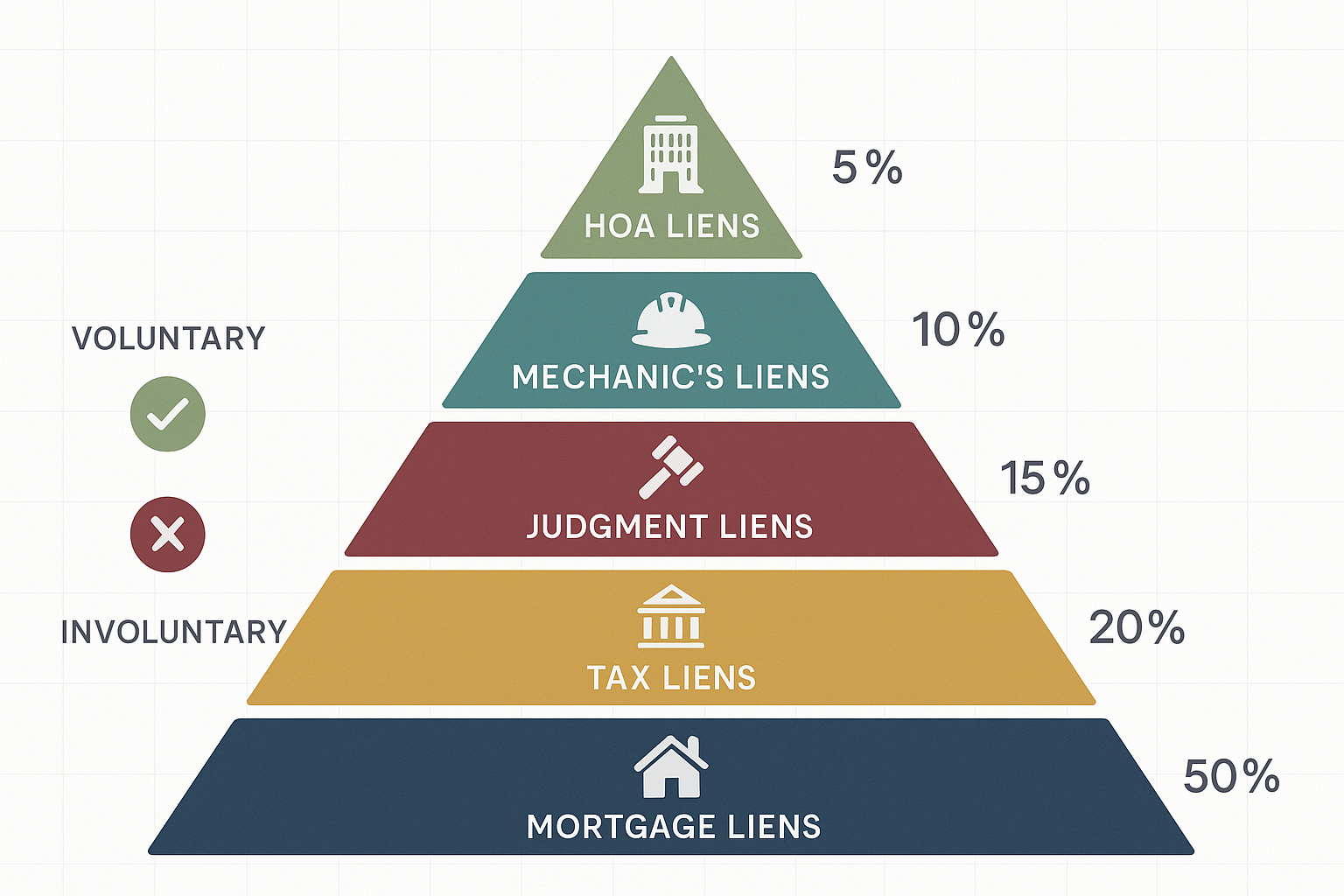
Understanding the different types of liens helps you recognize which type of lien affects your property and how to address it. Liens fall into two broad categories: voluntary liens and involuntary liens.
Voluntary liens are those you agree to when borrowing money. The most common voluntary lien is a mortgage lien. When you take out a mortgage loan to purchase a home, the mortgage lender places a lien on your property. This mortgage lien remains until you pay the loan in full. Similarly, if you refinance your home or take out a home equity loan, these also create voluntary liens. An auto loan creates a lien on personal property (your vehicle) using the same principle.
Involuntary liens are placed without your consent, typically because you owe money to a creditor. Involuntary liens are typically the result of unpaid debts or legal judgments. These include:
-
Tax liens: When you fail to pay property taxes or federal income taxes, government agencies can file a tax lien against your property. Property tax liens are particularly serious because they often have priority over other liens.
-
Judgment liens: If a creditor sues you and wins, they can file a judgment lien against your real property. This type of lien ensures the creditor gets paid when you sell the house or refinance.
-
Mechanic’s liens: Contractors, subcontractors, or suppliers who don’t receive payment for work on your property may file a mechanic’s lien (also called a construction lien). This specific lien protects those who improve your property.
-
HOA liens: Homeowners associations may place a lien on your property if you fail to pay HOA fees or assessments.
The distinction between general liens and specific liens is also important. A general lien attaches to all your property—both real property and personal property—while specific liens attach only to a particular piece of property. Most property liens are specific liens tied to one property.
How Does a Mortgage Lien Differ from Other Types of Property Liens?
A mortgage lien is unique among property liens because it’s a voluntary lien that you actively choose when purchasing a home. When you sign mortgage documents, you agree that the lender places a lien on your property as collateral for the mortgage loan. This lien guarantees that the mortgage lender gets paid first from proceeds from the sale if you sell your home or refinance.
Unlike involuntary liens that signal financial trouble, a mortgage lien is a standard part of homeownership. The lien gives the lender legal claim to the property, which protects their investment. If you fail to pay the loan according to the mortgage agreement, the lender can foreclose on the property and sell it to recover their money.
Key differences between mortgage liens and other liens:
| Feature | Mortgage Lien | Tax Lien | Judgment Lien | Mechanic’s Lien |
|---|---|---|---|---|
| Type | Voluntary | Involuntary | Involuntary | Involuntary |
| Created by | Agreement with lender | Unpaid taxes | Court judgment | Unpaid contractor work |
| Priority | Usually first (except tax liens) | Often supersedes all others | Based on filing date | Based on filing date |
| Impact on credit | Positive if paid on time | Severely negative | Very negative | Negative |
| Removal | Pay off loan or refinance | Pay taxes or settlement | Pay judgment or appeal | Pay contractor or dispute |
When you pay off your mortgage, the lender must sign a lien release document, officially removing the lien from your property. This lien release should be filed with the county recorder’s office to clear your title. The same principle applies when you refinance—the new lender pays off the old mortgage, the old lien is released, and a new mortgage lien replaces it.
A bank lien or mortgage lien typically has lower interest rates than other forms of secured debt because the property serves as substantial collateral. This makes mortgage liens one of the most favorable types of liens for property owners, even though they still represent a legal claim against the home.
Can You Sell Your Home or Refinance with a Lien on Your House?
Technically, you can sell your home with a lien on your property, but the lien must be satisfied from the sale proceeds before you receive any money. This is because the lien holder has a legal claim to the property that must be resolved before ownership can transfer to a new buyer.
When you attempt to sell the house, title companies conduct a title search that reveals any liens on a home. These liens must be addressed before the sale can close. In most cases, liens are paid from proceeds from the sale at closing. The lien holder gets paid first, followed by other creditors in order of lien priority, and finally, you receive whatever remains.
Challenges when selling with liens:
- Insufficient equity: If you owe more than the home’s value, proceeds from the sale may not cover all liens
- Multiple liens: When liens could exceed the property value, negotiations become complex
- Buyer concerns: Some buyers may walk away from properties with complicated lien situations
- Delayed closings: Resolving liens can extend the sales timeline by weeks or months
Similarly, you typically cannot refinance your home or access home equity until liens are resolved. Lenders require clear title before approving a new mortgage loan. The only exception is when the refinance provides enough funds to pay off existing liens, in which case the new lender may allow the refinance to proceed with lien payoffs handled at closing.
For homeowners facing this situation, professional property solutions can provide helpful guidance. Companies specializing in complex property situations can coordinate with counties, title professionals, and creditors to find practical solutions even when traditional sales seem impossible.
Your options when selling with a lien:
- Pay off the lien before listing the property
- Negotiate with the lien holder for a reduced settlement
- Use sale proceeds to satisfy the lien at closing
- Dispute the lien if it isn’t valid or was improperly filed
- Work with specialists who handle properties with title issues
What Happens When a Tax Lien Is Placed on Your Property?
A tax lien is one of the most serious types of liens because it often takes priority over other liens, including mortgage liens. When you fail to pay property taxes or federal income taxes, government agencies can file a tax lien against your real property and personal property.
Property tax liens are filed by local governments when homeowners fall behind on paying your property taxes. These liens are particularly powerful because most states give property tax liens “super priority” status, meaning they get paid first even before mortgage liens that were filed earlier. This protects the government’s ability to collect revenue needed for public services.
Federal tax liens are filed by the Internal Revenue Service (IRS) when you owe back taxes. Unlike property tax liens, federal tax liens don’t automatically have super priority, but they still create significant complications. The IRS may place a lien on all your property—both real and personal—making it difficult to sell assets or obtain credit.
Consequences of tax liens:
- Severely damaged credit: Tax liens appear on public records and significantly lower credit scores
- Difficulty selling: You cannot sell your home without addressing the tax lien
- Foreclosure risk: Unpaid property taxes can lead to tax foreclosure sales
- Accumulating penalties: Interest and penalties continue accruing until the debt is satisfied
- Limited refinancing options: Lenders won’t refinance property with tax liens
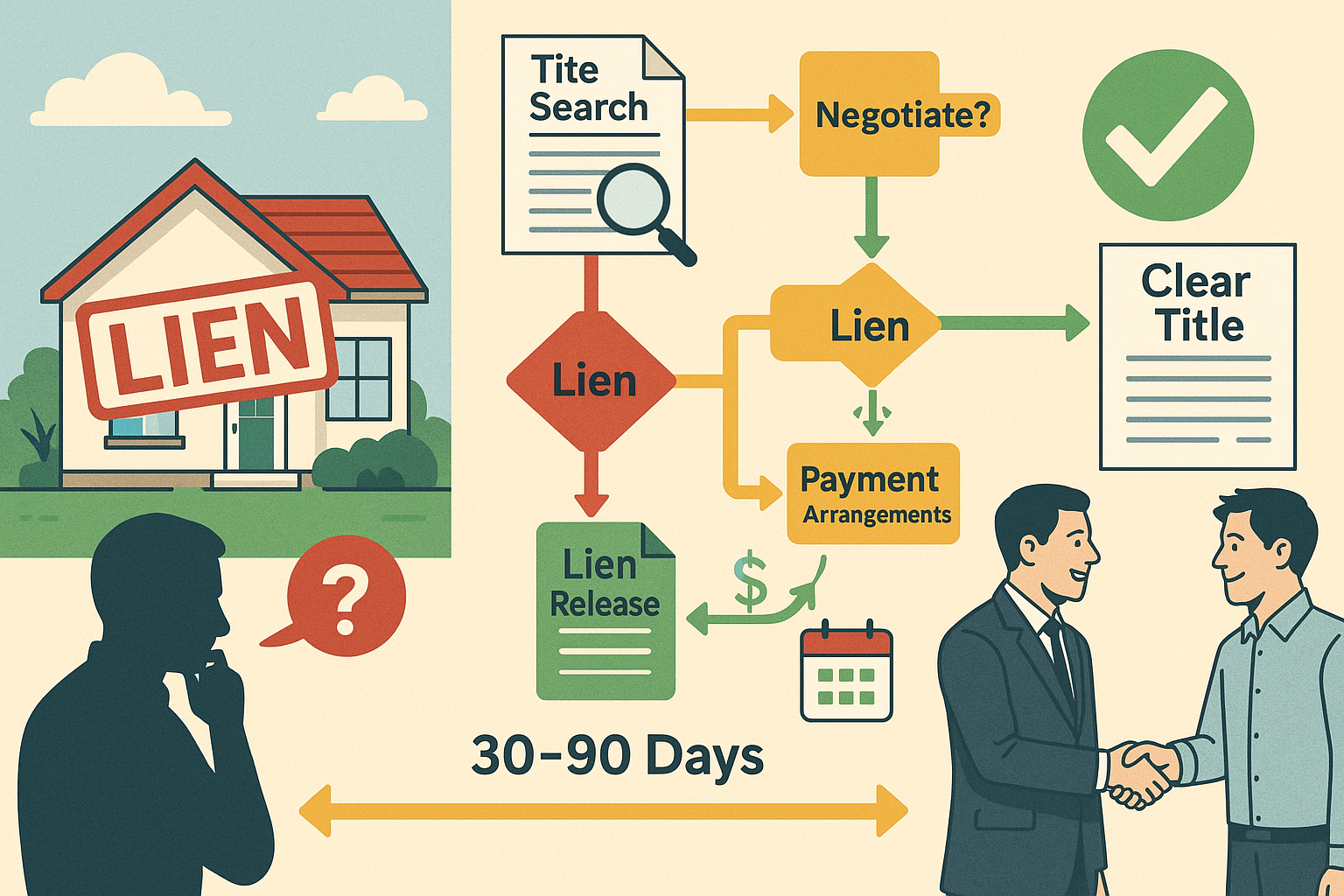
To remove a tax lien, you generally must pay off the debt in full. However, the IRS and some local governments offer alternatives:
- Payment plans: Installment agreements allow you to pay the debt over time, though the lien remains until paid in full
- Offer in Compromise: The IRS may accept less than the full amount owed if you demonstrate financial hardship
- Lien subordination: The government may agree to let another creditor move ahead in priority
- Lien withdrawal: After paying the debt, you can request that the lien be removed from public records
For property owners struggling with tax liens, seeking expert service from professionals who understand government procedures can be invaluable. These situations require careful navigation of bureaucratic processes and strict deadlines.
How Do Judgment Liens Affect Property Owners?
A judgment lien is created when a creditor sues you for unpaid debt and wins a court judgment. After obtaining this judgment, the creditor can file a judgment lien against your property in the county where the property is located. This transforms an unsecured debt into a secured claim against your real property.
Common situations that lead to judgment liens include:
- Unpaid credit card debt where the card company sues and wins
- Medical bills that remain unpaid after collection attempts
- Personal loans that go into default
- Business debts for which you’re personally liable
- Unpaid professional services (attorneys, accountants, consultants)
Once a creditor files a judgment lien, it attaches to your property and remains there until you pay off the debt or the lien expires (typically 5-20 years depending on state law). The lien holder may be able to force the sale of the property through a judicial sale, though this is less common than with mortgage or tax liens.
Impact on homeowners:
The presence of a judgment lien creates several challenges. You cannot sell your home or refinance without addressing the lien. When you eventually sell the house, the judgment creditor gets paid from the proceeds. If you attempt to refinance, lenders will require the judgment lien to be satisfied first.
Judgment liens also damage your credit and can affect your ability to obtain new credit, rent property, or even secure employment in some industries. The lien becomes part of public records, visible to anyone conducting a background check or credit review.
Strategies to address judgment liens:
- Pay the full judgment: This is the most straightforward solution, after which the creditor must sign a lien release
- Negotiate a settlement: Many creditors will accept less than the full amount, especially if the debt is old
- File for bankruptcy: Certain judgments can be discharged in bankruptcy, which removes the lien
- Challenge the lien: If the lien isn’t valid due to procedural errors, you can petition the court to remove it
- Wait for expiration: Judgment liens eventually expire, though this can take many years
Working with professionals who provide friendly and caring service while navigating these legal complexities can help property owners find the best path forward. Each situation is unique, and the right solution depends on your specific circumstances and financial goals.
What Is a Mechanic’s Lien and When Can Contractors File One?
A mechanic’s lien (also called a construction lien) is a specific type of lien that contractors, subcontractors, suppliers, or laborers can file when they don’t receive payment for work performed on your property. This lien protects those who improve your property by giving them a legal claim to the property until they’re compensated.
The process for filing a mechanic’s lien varies by state, but generally follows this pattern:
Step 1: Preliminary notice – The contractor typically must provide notice of their right to file a lien before or shortly after beginning work.
Step 2: Completion of work – The contractor completes the agreed-upon work or delivers materials.
Step 3: Non-payment – The homeowner fails to pay according to the contract terms.
Step 4: Filing the lien – The contractor files a mechanic’s lien with the county recorder’s office within a specific timeframe (typically 30-120 days after completion, depending on state law).
Step 5: Enforcement – If payment still isn’t made, the contractor may foreclose on the lien, potentially forcing the sale of the property.
Mechanic’s liens are particularly concerning because they can be filed even when you’ve paid the general contractor. If the general contractor fails to pay subcontractors or suppliers, those parties may place a lien on your property even though you fulfilled your contractual obligations. This is why it’s crucial to obtain lien releases from all parties before making final payment on construction projects.
Protecting yourself from mechanic’s liens:
- Request preliminary lien waivers before making any payments
- Obtain final lien releases from all contractors, subcontractors, and suppliers before final payment
- Use joint checks payable to both the general contractor and subcontractors
- Verify that contractors have paid their suppliers before releasing funds
- Consider title insurance that covers mechanic’s liens
- Withhold a retention amount (typically 10%) until all lien releases are provided
If a contractor files a mechanic’s lien against your property, you have several options. You can pay the amount claimed to remove the lien. You can dispute the lien if the work wasn’t completed properly or if the amount is excessive. You can also file a bond to release the lien while you dispute the claim in court.
Many states have strict deadlines for filing and enforcing mechanic’s liens. If the contractor misses these deadlines or fails to follow proper procedures, the lien may not be valid. Consulting with professionals who understand construction law can help you determine whether a lien is valid and how to proceed.
How Can You Check for Liens on a Property Before Purchasing?
Before purchasing any property, conducting a thorough lien search is essential. Liens could significantly impact your investment, and discovering them after purchase can lead to financial disaster. Fortunately, several methods exist to check for liens on a property.
Title search through title companies is the most comprehensive method. When you purchase a home, title companies conduct an extensive search of public records to identify any liens on the property. They examine records at the county recorder’s office, court records, and tax records to ensure clear title. This search typically reveals:
- Mortgage liens from current and previous owners
- Tax liens from local, state, and federal governments
- Judgment liens from court cases
- Mechanic’s liens from contractors
- HOA liens from homeowners associations
- Other encumbrances affecting the property
County recorder’s office searches can be conducted independently. Most counties maintain searchable databases of recorded documents, including liens. You can search by property address or owner name to find liens that have been filed. However, this method requires understanding legal descriptions and may miss liens filed in other jurisdictions.
Online property records are increasingly available through county websites and third-party services. Many counties now offer online access to property records, making it easier to conduct preliminary lien searches. However, these databases may not be complete or current, so they should supplement rather than replace professional title searches.
Title insurance protects buyers from undiscovered liens. Even with thorough searches, some liens may not appear in public records or may be filed incorrectly. Title insurance provides financial protection if a lien is discovered after purchase. The insurance company either resolves the lien or compensates you for losses.
Red flags when checking for liens:
🚩 Property sold significantly below market value (may indicate lien problems)
🚩 Owner reluctant to provide title information
🚩 Recent tax delinquencies or foreclosure notices
🚩 Multiple ownership changes in short periods
🚩 Incomplete or missing property records
🚩 Owner unwilling to use reputable title company
For buyers considering properties with complicated title issues, working with experienced property professionals who specialize in these situations can provide helpful solutions. These experts can coordinate with counties, creditors, and title companies to resolve liens and clear title.
Due diligence checklist:
- Order professional title search from reputable title company
- Review all recorded liens and encumbrances
- Verify property tax payment status
- Check for pending lawsuits against the property owner
- Confirm HOA fees are current (if applicable)
- Obtain title insurance policy
- Review all exceptions listed in title commitment
- Ensure seller will clear all liens before or at closing
What Are the Steps to Remove a Lien from Your Property?
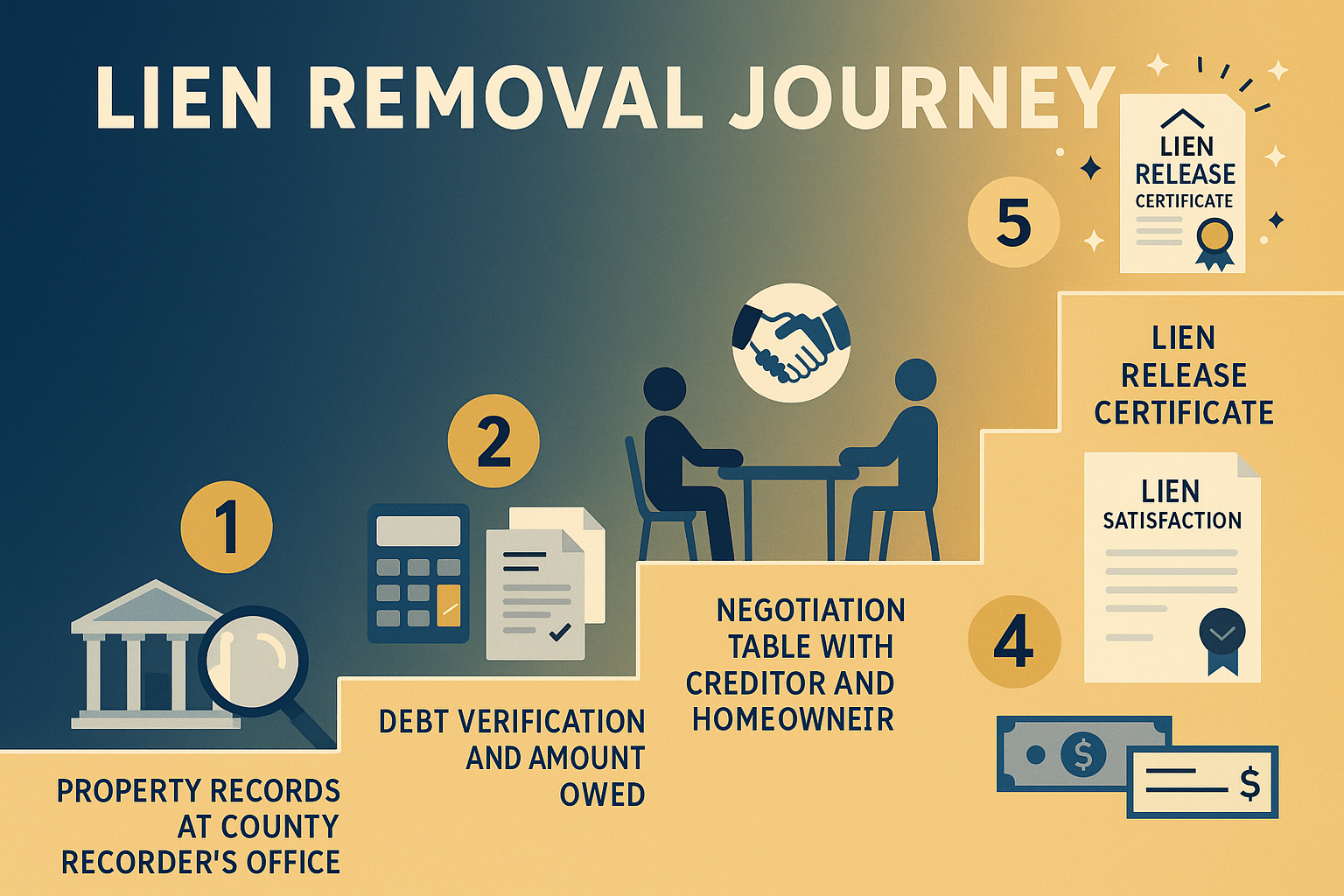
Removing a lien from your property requires following specific procedures that vary depending on the type of lien and your jurisdiction. However, the general process follows similar steps across most situations.
Step 1: Verify the lien’s validity
Before taking action, confirm that the lien is valid and was properly filed. Review the lien document to ensure:
- The lien holder followed proper filing procedures
- The amount claimed is accurate
- The lien was filed within statutory deadlines
- The underlying debt is legitimate
If the lien isn’t valid due to procedural errors or factual inaccuracies, you may be able to challenge it in court. This is particularly common with mechanic’s liens where contractors may have missed filing deadlines.
Step 2: Determine the amount owed
Contact the lien holder to verify the exact amount needed to satisfy the lien. This amount may include:
- Original debt principal
- Accrued interest
- Penalties and fees
- Administrative costs
- Attorney fees (if applicable)
Request a payoff statement in writing that specifies the exact amount required and how long that amount remains valid. Debt amounts can increase daily due to interest and penalties.
Step 3: Negotiate if possible
Many lien holders will negotiate, especially if:
- The debt is old
- The property value is less than the lien amount
- You can pay a lump sum immediately
- The lien holder faces difficulty collecting
You may be able to settle for less than the full amount owed. Get any settlement agreement in writing before making payment, and ensure it specifies that the lien will be released upon payment.
Step 4: Pay off the debt
Once you’ve agreed on an amount, pay the debt according to the lien holder’s requirements. Payment methods may include:
- Certified check or cashier’s check
- Wire transfer
- Attorney trust account
- Escrow through title company
Always obtain a receipt showing payment in full. This documentation is crucial for the next step.
Step 5: Obtain and file the lien release
After payment, the lien holder must sign a lien release document (also called a satisfaction of lien or release of lien). This document officially removes the lien from your property. The lien release should include:
- Property legal description
- Lien holder information
- Original lien recording information
- Statement that the debt is satisfied
- Lien holder’s signature and notarization
File the lien release with the county recorder’s office in the county where the property is located. Some lien holders will file this for you, but it’s wise to verify that filing occurs. Keep copies of the recorded lien release for your records.
Step 6: Verify removal
After filing the lien release, verify that the lien has been removed from your property records. Order a new title search or check county records to confirm the lien no longer appears. This verification ensures the lien is fully resolved and won’t cause problems in future transactions.
Alternative methods to remove liens:
- Bankruptcy: Certain liens can be discharged or stripped in bankruptcy proceedings
- Statute of limitations: Some liens expire after a specific period
- Legal challenge: Sue to invalidate improperly filed liens
- Bond: Post a bond to release the lien while disputing it
- Property sale: Use proceeds from the sale to satisfy liens at closing
For complex situations involving multiple liens, inherited property with unknown liens, or disputes about lien validity, professional assistance can be invaluable. Experts who provide trustworthy service can navigate the legal complexities and coordinate with multiple parties to achieve lien removal efficiently.
How Do Liens Impact Your Credit and Financial Future?
The presence of a lien on your property creates significant financial consequences that extend far beyond the immediate property issues. Understanding these impacts helps you recognize the urgency of addressing liens promptly.
Credit score damage is one of the most immediate effects. While mortgage liens don’t negatively impact credit (and may even help if paid on time), involuntary liens severely damage credit scores. Tax liens, judgment liens, and mechanic’s liens all appear in public records that credit bureaus monitor. These liens can:
- Lower credit scores by 100+ points
- Remain on credit reports for 7-10 years
- Signal financial distress to potential lenders
- Increase interest rates on future borrowing
- Limit credit card approvals and credit limits
Borrowing limitations result from liens on your property. With a lien on your home, you cannot:
- Refinance to obtain better interest rates
- Access home equity through loans or lines of credit
- Qualify for new mortgages on other properties
- Obtain favorable terms on auto loans or personal loans
- Secure business financing using property as collateral
Property value complications arise because liens could reduce marketability. Even if your property has substantial equity, the presence of liens makes it less attractive to buyers. Some buyers will walk away entirely from properties with lien complications, while others may offer lower prices to compensate for the hassle and risk.
Long-term financial planning becomes difficult when liens remain unresolved. You cannot:
- Use home equity for retirement planning
- Downsize or relocate easily
- Transfer property to family members
- Establish reverse mortgages (for seniors)
- Leverage property for investment opportunities
Emotional and psychological stress shouldn’t be underestimated. The burden of knowing a lien is placed on your most valuable asset creates anxiety and uncertainty. This stress can affect health, relationships, and overall quality of life.
Strategies to minimize lien impact:
- Address liens immediately rather than hoping they’ll disappear
- Communicate with creditors to arrange payment plans before liens are filed
- Monitor credit reports regularly to catch liens early
- Seek professional help when liens seem overwhelming
- Understand your rights regarding lien procedures and timelines
- Document everything related to debts and lien disputes
- Consider preventive measures like title insurance and proper contract management
The good news is that lien damage isn’t permanent. Once a lien is released and the lien release document is filed, your credit begins recovering. The lien’s impact diminishes over time, and your ability to use your property returns to normal.
For those facing multiple liens or complex financial situations, working with professionals who offer helpful guidance and industry expertise can make the difference between continued financial struggle and a clear path forward. These experts understand how to prioritize lien resolution, negotiate with creditors, and protect your long-term financial interests.
What Legal Rights Do Property Owners Have When Dealing with Liens?
Property owners have significant legal rights when a lien is placed on their property. Understanding these rights empowers you to challenge improper liens and ensure that creditors follow proper procedures.
Right to notice is fundamental. In most situations, creditors must provide notice before filing a lien. For mechanic’s liens, contractors typically must send preliminary notices. For judgment liens, you must be served with lawsuit papers and have opportunity to defend yourself in court. Tax liens usually require notice of delinquency before filing. If proper notice wasn’t provided, the lien may be invalid.
Right to dispute allows you to challenge liens you believe are improper. You can dispute a lien if:
- The amount claimed is incorrect
- The work wasn’t completed as claimed
- You already paid the debt
- The lien wasn’t filed within statutory deadlines
- Proper procedures weren’t followed
- The underlying debt isn’t valid
Disputing a lien typically requires filing a lawsuit or motion with the court. You may need to post a bond to release the lien while the dispute is pending. This bond protects the creditor’s interests if they ultimately prevail.
Right to lien release means that once you pay off the debt, the creditor must provide a lien release document. If the creditor refuses or delays unreasonably, you can petition the court to order the release. Some states impose penalties on creditors who fail to provide timely lien releases.
Right to lien priority information ensures you can determine which liens get paid first. This is crucial when selling property or dealing with foreclosure. County records must show the filing date and details of each lien, allowing you to understand the priority order.
Right to redemption exists in some states for tax liens and foreclosures. This right allows you to reclaim your property even after a foreclosure sale by paying the full amount owed plus costs and interest. Redemption periods vary by state and lien type.
Protection from improper enforcement means creditors must follow legal procedures to enforce liens. They cannot:
- Seize property without court authorization
- Harass or threaten you
- Misrepresent the amount owed
- File fraudulent liens
- Ignore bankruptcy stays
- Violate consumer protection laws
Statute of limitations protects property owners from ancient liens. Most liens expire after a specific period (typically 5-20 years depending on the lien type and state). Once expired, the lien loses its legal effect, though you may need to take action to remove it from public records.
Bankruptcy protections can eliminate certain liens. Chapter 7 bankruptcy can discharge the underlying debt for many judgment liens, though the lien may remain on property acquired before bankruptcy. Chapter 13 bankruptcy may allow “lien stripping” where junior liens are removed if the property value doesn’t support them.
Fair debt collection rights apply to lien enforcement. The Fair Debt Collection Practices Act (FDCPA) limits how collection agencies can pursue lien-related debts. They cannot:
- Contact you at unreasonable times
- Harass or abuse you
- Make false statements
- Communicate with third parties about your debt
- Continue collection after you dispute the debt in writing
State-specific protections vary significantly. Some states offer homestead exemptions that protect a certain amount of home equity from judgment liens. Other states have specific procedures for mechanic’s liens that provide additional property owner protections. Understanding your state’s laws is crucial for exercising your rights effectively.
When dealing with liens, documenting everything is essential. Keep records of:
- All communications with creditors and lien holders
- Payment receipts and canceled checks
- Lien release documents
- Dispute letters and responses
- Court filings and orders
- Title search results
If your rights are violated, you may have grounds to sue the creditor for damages. Violations of lien laws, consumer protection statutes, or debt collection rules can result in monetary compensation and attorney fees.
For property owners overwhelmed by lien complications, professional assistance from those offering expert service and helpful solutions can protect your rights while navigating complex legal procedures. These professionals understand the nuances of lien law and can advocate effectively on your behalf.
How Can You Prevent Liens from Being Placed on Your Property?
Prevention is always preferable to resolution when it comes to property liens. By taking proactive steps, property owners can avoid the stress, expense, and complications that liens create.
Pay debts on time is the most fundamental prevention strategy. The vast majority of liens result from unpaid debts. By maintaining current payments on:
- Property taxes
- Mortgage loans
- HOA fees
- Contractor bills
- Credit cards and personal loans
- Federal and state taxes
You eliminate the primary reason creditors place liens on your property.
Establish payment plans early when you anticipate difficulty paying. Most creditors prefer receiving payments over time rather than filing liens and pursuing collection. Contact creditors as soon as you recognize payment challenges to arrange:
- Modified payment schedules
- Reduced payment amounts
- Temporary forbearance
- Settlement agreements
Early communication demonstrates good faith and often prevents liens from being filed.
Verify contractor payments before releasing funds on construction projects. Even when you pay the general contractor, liens could be filed if they don’t pay subcontractors. Protect yourself by:
- Requiring preliminary lien waivers before making progress payments
- Obtaining final lien releases from all parties before final payment
- Using joint checks payable to contractors and suppliers
- Verifying that contractors have paid their bills
- Withholding retention amounts until all releases are provided
Monitor property tax status regularly. Property tax liens are among the most serious because they often have super priority. Don’t assume tax payments are current—verify directly with the tax collector’s office. If you have a mortgage, confirm that your lender is paying taxes from your escrow account as required.
Maintain adequate insurance to cover potential liabilities. Umbrella insurance policies protect against judgment liens resulting from lawsuits. If someone is injured on your property or you’re found liable in a lawsuit, insurance can pay the judgment and prevent a lien from being filed.
Use title insurance when purchasing property. While this doesn’t prevent new liens, it protects against undiscovered existing liens. Title insurance companies conduct thorough searches and provide financial protection if liens are discovered after purchase.
Structure business properly to separate personal and business assets. If you own a business, proper corporate structure (LLC, corporation) can prevent business debts from resulting in liens on personal property. Maintain proper corporate formalities to ensure this protection remains effective.
Review contracts carefully before signing. Many contracts contain provisions allowing creditors to place liens for non-payment. Understanding these provisions helps you recognize the risks and negotiate better terms. Never sign contractor agreements without understanding lien rights.
Maintain good records of all payments and agreements. Documentation proves payment if disputes arise. Keep:
- Canceled checks and payment receipts
- Lien releases and waivers
- Contracts and agreements
- Communication with creditors
- Tax payment records
- Insurance policies
Address disputes promptly rather than ignoring them. If you dispute a debt, communicate in writing and follow proper procedures. Ignoring disputes often leads to default judgments and judgment liens.
Conduct annual title checks to ensure no liens have been filed without your knowledge. Occasionally, liens are filed due to identity theft, clerical errors, or fraudulent claims. Early detection allows you to address these issues before they cause problems.
Work with professionals for complex transactions. Real estate attorneys, title companies, and property specialists can identify potential lien risks and structure transactions to minimize exposure. Their expertise is particularly valuable for:
- Large construction projects
- Business transactions involving property
- Estate planning and property transfers
- Purchase of properties with complicated histories
Create emergency funds to handle unexpected expenses. Financial cushions allow you to address tax bills, contractor payments, or other obligations without defaulting and risking liens.
Understand your state’s lien laws because procedures vary significantly. Some states have strict deadlines for filing mechanic’s liens. Others offer robust homestead protections. Knowing your state’s specific rules helps you recognize risks and exercise your rights.
By implementing these preventive strategies, property owners can significantly reduce the risk of liens being placed on their property. The modest effort required for prevention is far less than the time, expense, and stress of removing liens after they’re filed.
Key Takeaways: Understanding and Managing Property Liens
Property liens represent one of the most significant challenges in real estate ownership, but with proper understanding and timely action, they can be managed effectively. Here are the most important points to remember:
Understanding Liens
- A lien is a legal claim against property that creditors use to secure debt repayment
- Liens could prevent you from selling your home or refinancing until they’re resolved
- The lien holder gets paid from proceeds from the sale before you receive any money
- Liens are public records filed at the county recorder’s office, visible to potential buyers and lenders
Types of Liens
- Voluntary liens (like mortgage liens) are created by agreement when you borrow money
- Involuntary liens (tax liens, judgment liens, mechanic’s liens) are placed without your consent due to unpaid debts
- Different types of liens have different priority levels, affecting the order in which they’re paid
- Property tax liens typically have super priority over all other liens, including mortgages
Impact on Property Owners
- Liens severely damage credit scores and limit future borrowing opportunities
- You cannot sell the house or refinance without addressing liens
- Multiple liens can create complex situations requiring professional assistance
- The lien remains attached to the property, not just the owner, until satisfied
Removing Liens
- Most liens are removed by paying off the debt and obtaining a lien release document
- Negotiation may allow you to settle for less than the full amount owed
- Invalid liens can be challenged through legal proceedings
- The lien release must be filed with the county recorder’s office to officially remove the lien
Prevention Strategies
- Pay property taxes, mortgage payments, and contractor bills on time
- Obtain lien releases from all parties before making final payments on construction
- Establish payment plans early when facing financial difficulties
- Monitor your property records regularly to catch liens early
- Work with professionals when dealing with complex property transactions
Legal Rights
- Property owners have the right to notice before most liens are filed
- You can dispute liens that are invalid or improperly filed
- Creditors must follow specific procedures to enforce liens
- State laws provide various protections, including homestead exemptions and redemption rights
When to Seek Help
- Multiple liens create complex priority and payment issues
- Inherited property with unknown liens requires professional title work
- Disputes about lien validity may require legal representation
- Financial hardship makes paying liens difficult without negotiation
- Traditional sales aren’t possible due to lien complications
For property owners facing lien challenges, remember that helpful solutions exist even in complicated situations. Whether dealing with tax liens, judgment liens, mechanic’s liens, or multiple liens simultaneously, taking action is essential. Ignoring liens only allows interest and penalties to accumulate while limiting your options.
Professional assistance from industry experts who specialize in complex property situations can provide the helpful guidance needed to navigate lien resolution. These professionals coordinate with counties, creditors, and title companies to find practical solutions that protect your interests and clear your property title.
The key is to act promptly, understand your rights, and seek expert service when situations become overwhelming. With the right approach and trustworthy service, even properties with significant lien complications can be resolved, allowing you to move forward with confidence.
References
[1] National Association of Realtors. (2024). “Property Liens and Real Estate Transactions.” NAR Research Report.
[2] Internal Revenue Service. (2025). “Understanding Federal Tax Liens.” IRS Publication 594.
[3] American Bar Association. (2024). “Property Lien Law: A State-by-State Guide.” ABA Real Property Section.
[4] National Consumer Law Center. (2024). “Consumer Rights in Lien Enforcement.” NCLC Report.
[5] U.S. Census Bureau. (2024). “Property Tax Delinquency Rates in the United States.” Census Housing Survey.
[/et_pb_text][/et_pb_column][/et_pb_row][/et_pb_section]
Sure Path is a family-owned, curative-title cash buyer. We handle the paperwork and pay what’s owed at closing — no fees, no repairs, no pressure.
See how we help with houses with liens →