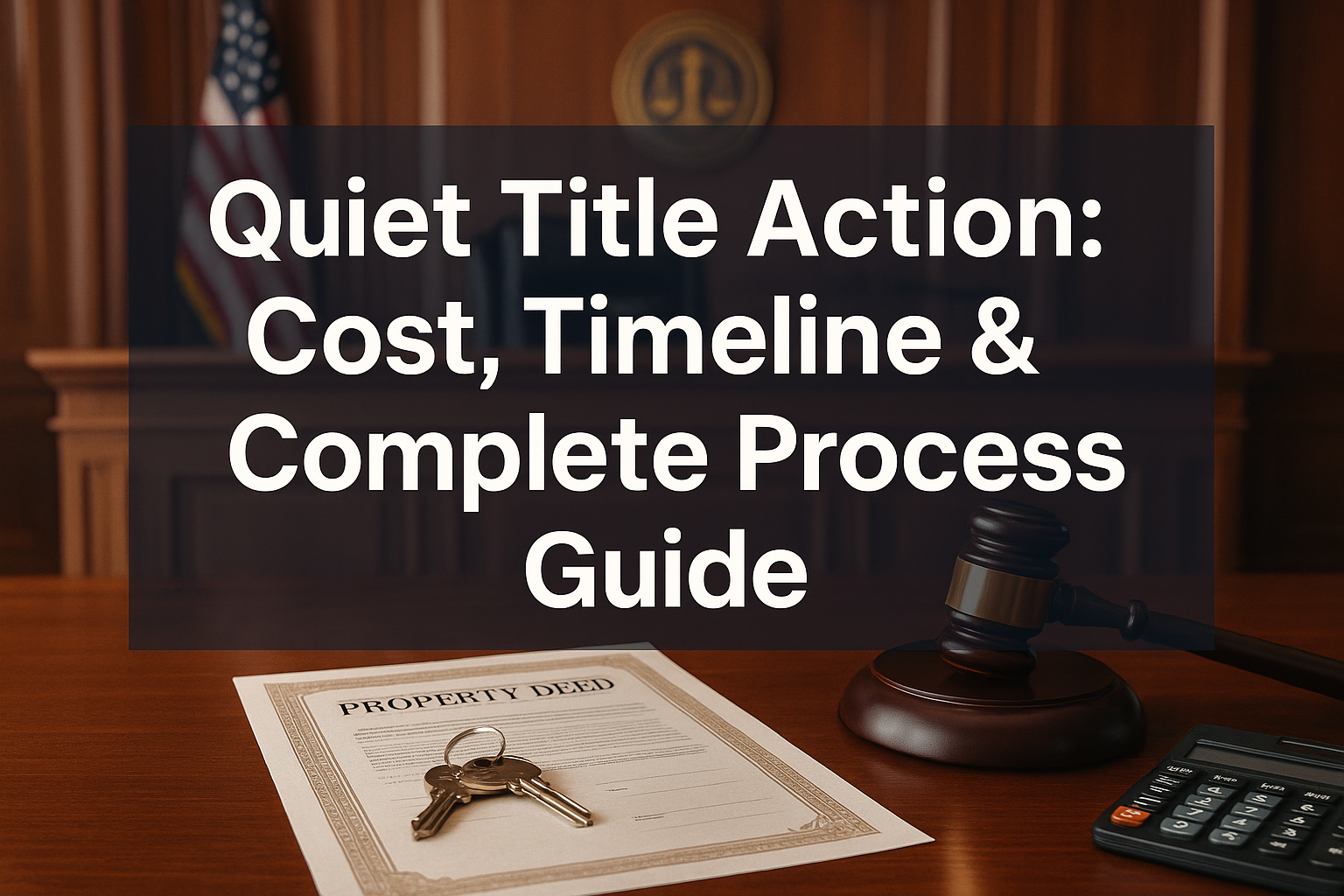
 Quiet Title Action: Cost, Timeline & Complete Process Guide’ in e” />
When you discover clouds on your property title—whether from an old lien, disputed boundary, inheritance complications, or break in the chain of ownership—the path forward can feel overwhelming. Understanding the quiet title action cost and legal process is essential for anyone facing property ownership challenges. This comprehensive guide breaks down everything you need to know about quiet title lawsuits, from filing procedures and typical expenses to timelines and successful outcomes, empowering you to make informed decisions about clearing the title to your property.
Key Takeaways:
• Quiet title actions are legal proceedings that establish clear, undisputed ownership of real estate by removing competing claims and resolving title defects
• Costs typically range from $3,000 to $10,000+ depending on case complexity, attorney fees, court filing requirements, and geographic location
• The process takes 6-18 months on average, involving title search, lawsuit filing, notification of interested parties, and court proceedings
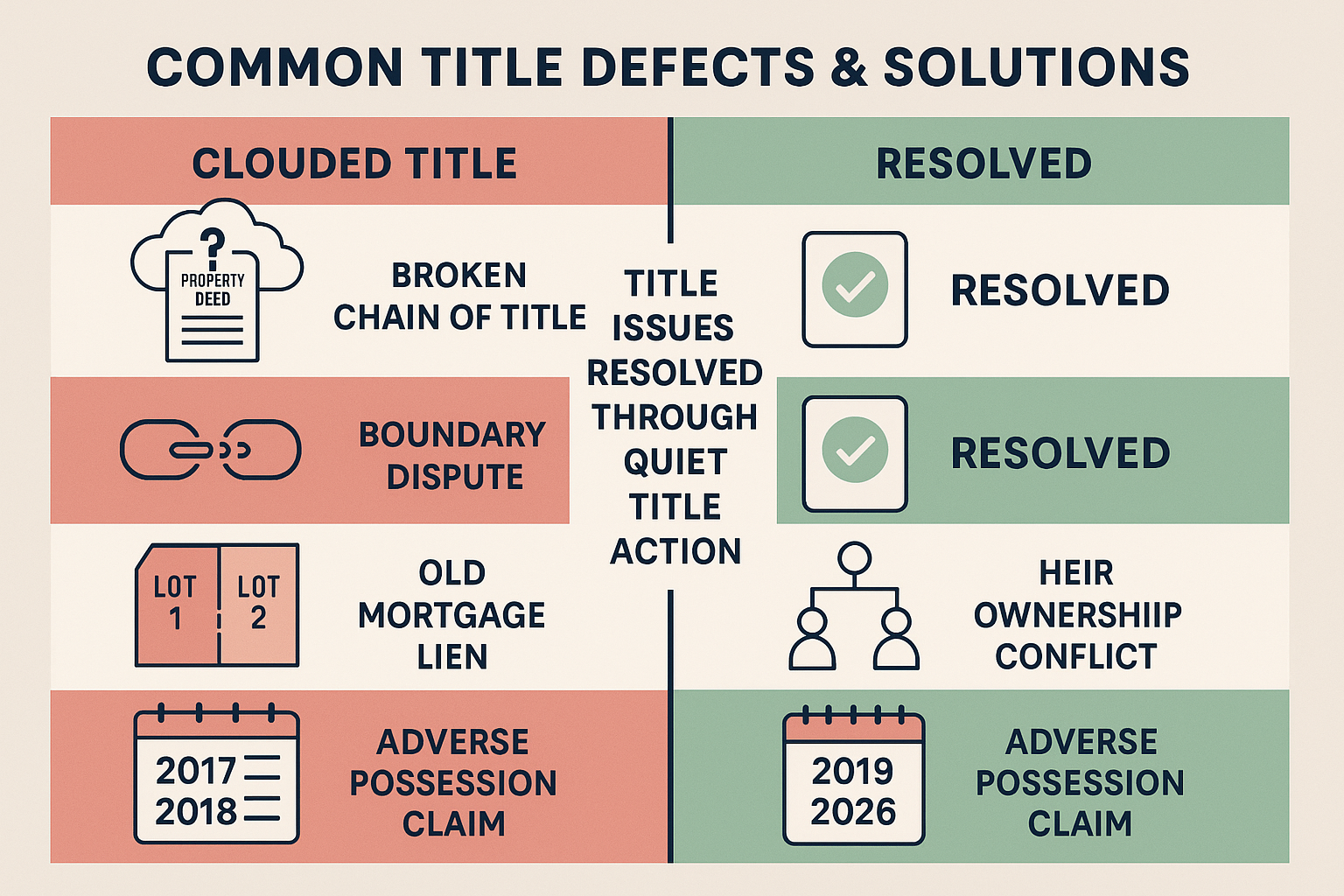
• Common reasons for filing include boundary disputes, inheritance issues, mortgage satisfaction errors, adverse possession claims, and breaks in the chain of title
• Working with experienced professionals significantly increases the likelihood of a successful quiet title action and provides peace of mind throughout the legal process
What Is a Quiet Title Action and Why Does It Matter?
A quiet title action is a lawsuit filed in the appropriate court to establish clear ownership of a property and remove any clouds, defects, or competing claims on the title. The purpose of a quiet title action is to “quiet” all challenges to ownership, resulting in a court order that definitively declares who the legal owner of the property is.
Think of your property title as a historical record—a chain of title that documents every transfer of ownership from the original owner to you. When this chain has missing links, errors, or disputed claims, it creates uncertainty about who truly owns the property. Title insurance companies refuse to insure properties with these issues, lenders won’t provide financing, and buyers won’t purchase real estate with unclear ownership. A quiet title action resolves these problems through formal legal proceedings.
Property owners face quiet title situations more often than many realize. Perhaps you inherited property from a relative who passed away decades ago, but the deed was never properly transferred. Maybe you purchased land at a tax sale, but previous owners or lienholders still have potential claims. You might have discovered an old mortgage that was paid off but never formally released, or neighbors dispute your property lines. In each scenario, a quiet title suit provides the legal remedy to establish clear, marketable ownership.
The legal proceeding serves multiple critical functions. First, it provides a formal legal document—a court judgment—that definitively establishes ownership of the property. Second, it eliminates the risk that someone might later make a claim to the property based on old liens, easements, or inheritance rights. Third, it makes the property marketable, allowing you to sell, refinance, or transfer the ownership without complications. Finally, it provides peace of mind knowing your property rights are legally protected and documented.
How Much Does a Quiet Title Action Cost? Breaking Down the Expenses
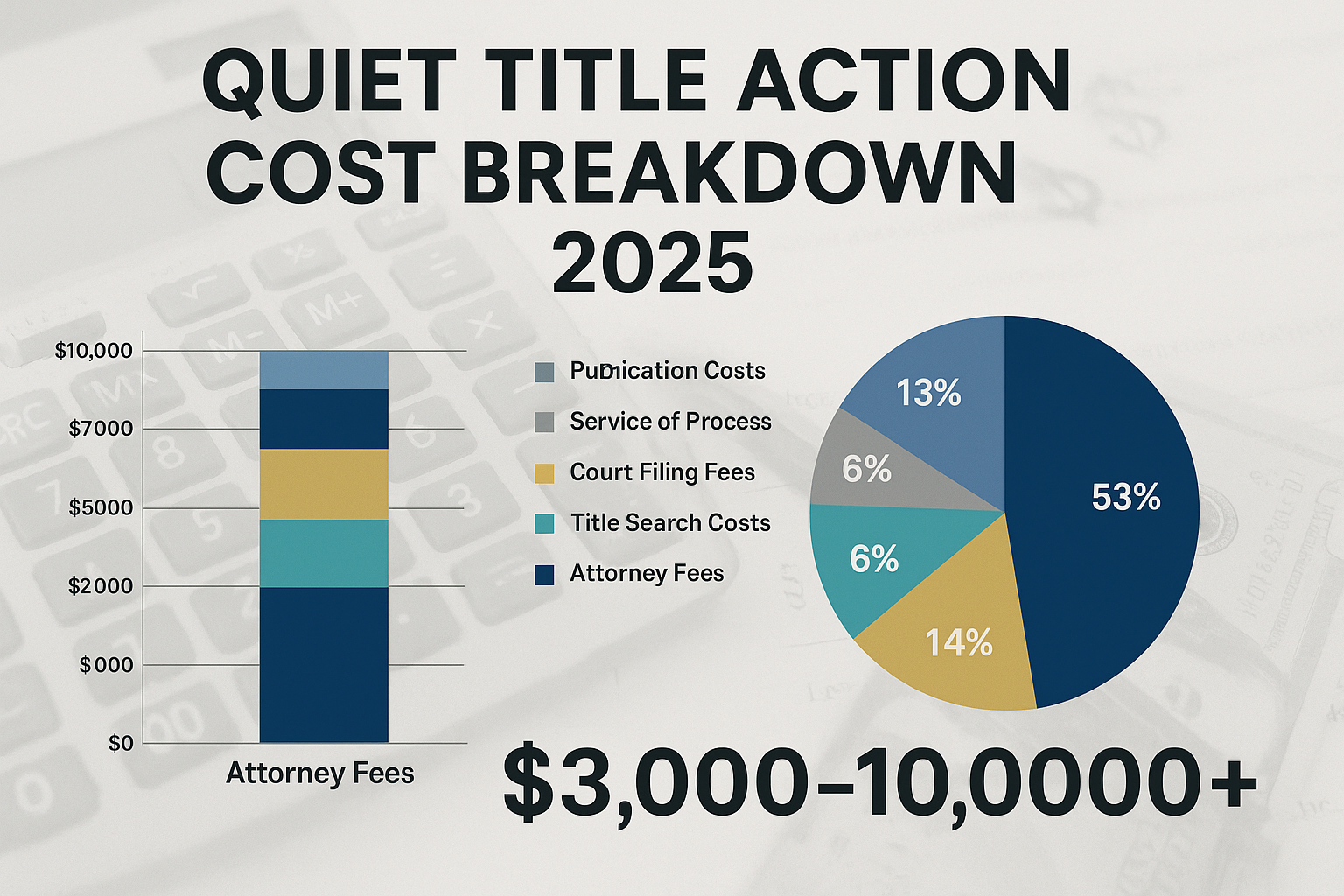
The quiet title action cost varies significantly based on multiple factors, but property owners should typically budget between $3,000 and $10,000 for straightforward cases. Complex litigation involving multiple parties, contested claims, or extensive research can exceed $15,000 or more. Understanding the cost breakdown helps you plan financially and avoid surprises during the legal process.
Attorney fees represent the largest expense component. Most real estate attorneys charge either hourly rates ($200-$500 per hour depending on location and experience) or flat fees for quiet title actions. A knowledgeable real estate attorney handling an uncontested case might charge $2,000-$5,000 as a flat fee. However, if parties contest the action and extensive court proceedings become necessary, hourly billing can quickly escalate costs. Geographic location significantly impacts attorney fees—costs in major metropolitan areas typically exceed those in rural counties.
Court filing fees vary by jurisdiction but generally range from $200 to $400. The county of filing determines the exact amount. These fees cover the initial complaint filing and any subsequent motions or documents filed with the court. Some jurisdictions charge additional fees for jury trials, though most quiet title cases are decided by judges alone.
Title search and examination costs typically run $300-$600. Before filing an action to quiet title, a thorough title examination must identify all potential claimants, defects, and issues with the title. A title company or specialized title research firm conducts this work, producing a comprehensive report that becomes the foundation for the lawsuit. This step is essential—you cannot properly file a quiet title action without knowing all parties who might have an interest in the property.
Service of process fees add another $100-$300 to the total. The law requires that all parties with potential claims receive formal legal notification of the lawsuit. A process server or sheriff must personally deliver these notices, charging fees for each party served. Cases involving numerous potential claimants or parties who are difficult to locate increase these costs substantially.
Publication costs apply when parties cannot be located or their whereabouts are unknown. Court rules typically require publishing legal notice in local newspapers for several consecutive weeks, costing $200-$500 or more depending on publication rates. This ensures that unknown heirs, missing lienholders, or other interested parties receive constructive notice of the proceedings.
The complexity of the case dramatically affects overall expenses. An uncontested action involving a simple title defect—like a clerical error in recorded documents—costs far less than contested litigation where two or more parties actively dispute ownership. Cases requiring expert witnesses, property surveys, extensive discovery, or multiple court hearings can easily double or triple the base costs.
Additional expenses might include property surveys ($500-$2,000) to resolve boundary disputes, expert witness fees for specialized testimony, recording fees to file the final judgment, and costs to collect all relevant documents like old deeds, mortgage records, and estate documents. Some cases require genealogical research to identify heirs or historical research to trace the chain of title through decades of records.
Sure Path Property Solutions understands that cost concerns often prevent property owners from addressing title issues. However, delaying action typically increases expenses over time while preventing you from fully utilizing or selling your property. The investment in clearing the title creates long-term value by establishing clear ownership and making your property marketable.
What Are the Most Common Reasons to File a Quiet Title Action?
Property owners file quiet title actions for numerous reasons, each involving some defect or dispute that clouds ownership. Understanding these common scenarios helps identify when you might need this legal remedy.
Inheritance and estate issues rank among the most frequent causes. When someone inherits property but the previous owner’s estate was never properly probated, or when multiple heirs have potential claims but ownership was never formally divided, title problems emerge. Perhaps a grandparent left property to several grandchildren, but no formal partition occurred. Or maybe the property passed through several generations without proper deed transfers, creating a break in the chain of documented ownership. A quiet title action can help establish who the rightful owner is and transfer the ownership legally.
Mortgage satisfaction problems create significant title clouds. When property owners pay off mortgages but lenders fail to record satisfaction documents, the old mortgage remains on public records indefinitely. This appears as an active lien against the property, even though no debt exists. Banks merge, go out of business, or lose records, making it difficult to obtain proper release documents decades later. A quiet title suit removes these phantom liens.
Tax sale purchases frequently require quiet title actions. When properties are sold for unpaid taxes, the previous owners, their heirs, or lienholders may retain redemption rights or other claims for specified periods. Even after redemption periods expire, these potential claims cloud the title until formally extinguished through court proceedings. Investors who purchase tax-delinquent properties often must file quiet title actions before they can sell or develop the real estate.
Adverse possession claims involve situations where someone has occupied and maintained property for the statutory period (typically 7-20 years depending on state law) without the legal owner’s permission. If the occupier meets all legal requirements—continuous, open, notorious, hostile, and exclusive possession—they may acquire title through adverse possession. However, this requires a quiet title action to formally transfer ownership from the record owner to the adverse possessor.
Boundary disputes and easement conflicts arise when property lines are unclear, surveys conflict, or neighbors disagree about the location of boundaries. Similarly, old easements that are no longer used or necessary may cloud titles. A quiet title action can resolve these property disputes by establishing definitive property lines and determining which easements remain valid.
Fraudulent conveyances or forged documents occasionally appear in title chains. When someone discovers that a deed in the chain of title was forged, signed under duress, or executed by someone lacking legal capacity, a quiet title action becomes necessary to correct the record and establish the true ownership history.
Clerical errors and recording mistakes seem minor but create significant problems. Misspelled names, incorrect legal descriptions, wrong parcel numbers, or documents recorded in the wrong county all create defects requiring correction. While some errors can be fixed through simpler procedures, others necessitate quiet title litigation to definitively resolve the issues.
Missing heirs and unknown claimants complicate many property transactions. When researching title history reveals gaps—periods where ownership is unclear or transfers are undocumented—potential unknown heirs might have claims. A quiet title action provides the legal mechanism to identify all possible claimants, notify them of the proceedings, and obtain a court order establishing clear ownership despite these uncertainties.
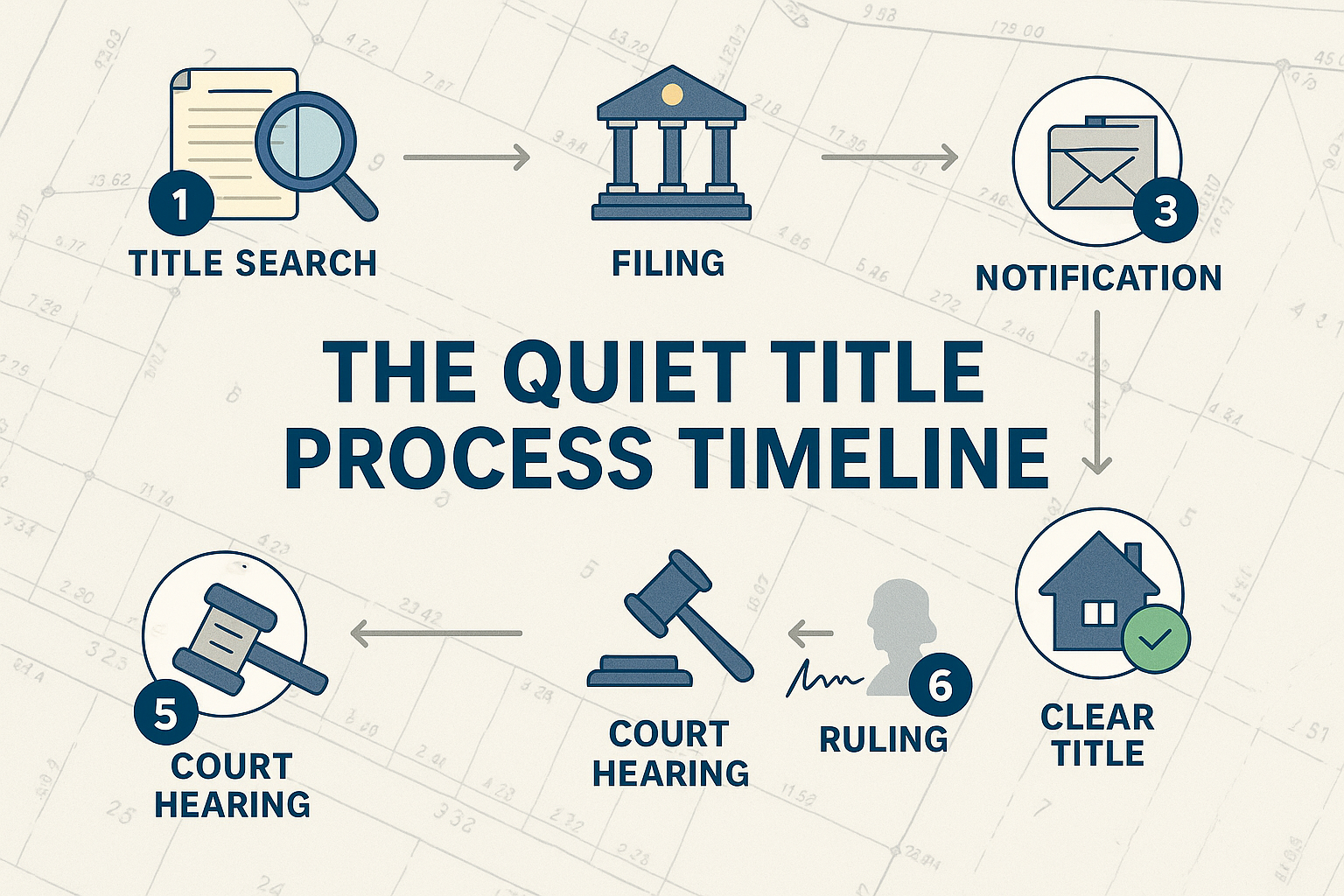
The Complete Quiet Title Process: Step-by-Step Guide
Understanding the quiet title legal process helps property owners know what to expect and prepare accordingly. While specific procedures vary by state and the complexity of individual cases, the general framework remains consistent.
Step 1: Initial Consultation and Case Evaluation begins when you meet with a real estate attorney to discuss your title issues. The experienced attorney reviews your situation, examines available documents like your copy of the deed, and assesses whether a quiet title action is the appropriate remedy. This consultation typically costs $200-$500 but provides essential guidance about your options, likely costs, and probability of success. The attorney evaluates alternatives to litigation that might resolve simpler issues more economically.
Step 2: Title Search and Examination involves comprehensive research into the property’s ownership history. The attorney or title company conducts a thorough title search, examining public records to trace the chain of title from the current situation back through decades of transfers. This research identifies all recorded deeds, mortgages, liens, judgments, easements, and other encumbrances. The goal is discovering every person or entity that might have any interest in the property—past owners, heirs, lienholders, mortgage companies, government agencies, and anyone else with potential claims.
This step also identifies the specific defects requiring resolution. Is there a break in the chain where ownership transfer wasn’t properly documented? Are there old liens that should have been released? Do boundary disputes exist? The title examination creates a roadmap for the litigation, identifying all parties who must be named as defendants and all issues the court must resolve.
Step 3: Preparing and Filing the Complaint transforms the title research into legal action. The plaintiff (the person seeking to establish ownership) files a lawsuit in the appropriate court—typically the county where the property is located. The complaint is a formal legal document that describes the property, explains the title defect or dispute, identifies all defendants (anyone with potential claims), and asks the court to issue a judgment declaring the plaintiff the legal owner of the property with clear title.
The complaint must name all possible claimants as defendants, even if their claims seem remote or unlikely. Failure to include necessary parties can result in the court dismissing the case or issuing a judgment that doesn’t fully resolve the title issues. Filing fees are paid at this stage, officially initiating the court proceedings.
Step 4: Service of Process and Publication ensures all defendants receive proper legal notification. The law requires that every named defendant be formally served with a copy of the complaint and summons. A process server or sheriff personally delivers these documents to known parties. For defendants whose locations are unknown or who cannot be found despite diligent efforts, the court allows service by publication—publishing legal notice in newspapers for several consecutive weeks.
This notification period is critical. Defendants typically have 20-30 days (depending on jurisdiction) to respond to the complaint. They can contest the plaintiff’s claims, assert their own ownership rights, or negotiate settlements. Many quiet title actions proceed uncontested because defendants recognize they have no valid claim or choose not to invest in litigation.
Step 5: Discovery and Investigation occurs if defendants contest the action. Both sides exchange information, documents, and evidence. Depositions might be taken, interrogatories answered, and documents produced. In complex cases involving boundary disputes, surveyors might be hired to establish property lines. Genealogists might trace family trees to identify rightful heirs. Title experts might testify about proper interpretation of historical documents.
This phase varies dramatically in length and cost depending on whether parties contest the case. Uncontested actions skip most discovery and move quickly to judgment. Contested cases can involve months of investigation and substantial litigation costs.
Step 6: Court Hearing or Trial provides the forum for the court to resolve the dispute. In uncontested cases, this might be a brief hearing where the plaintiff’s attorney presents evidence of proper service, demonstrates that no defendants responded, and shows the court why the plaintiff is entitled to clear title. The judge reviews the evidence and, if satisfied, issues a judgment in the plaintiff’s favor.
Contested cases require more extensive proceedings. The court will issue rulings on disputed facts, evaluate competing claims, and determine who the legal owner of the property is. Depending on the complexity, this might involve a single hearing or multiple court appearances over several months. The court rules on each claim, easement, lien, or defect, making definitive legal determinations.
Step 7: Final Judgment and Recording concludes the process. When the court determines the rightful owner, it issues a final judgment—a court order that declares ownership and removes all clouds from the title. This judgment is a formal legal document that becomes part of the public record. The plaintiff’s attorney files the judgment with the county recorder’s office where property records are maintained.
Once recorded, the judgment provides clear title to the property. Title insurance companies will now insure the property, lenders will provide financing, and buyers will purchase without concern about ownership disputes. The successful quiet title action transforms unmarketable property into an asset that can be freely sold, mortgaged, or transferred.
The entire timeline from filing to final judgment typically ranges from six months to eighteen months for uncontested cases. Contested litigation can extend beyond two years depending on court schedules, the complexity of issues, and whether appeals occur. However, the result—establishing clear ownership and removing all title disputes—makes the investment worthwhile for property owners seeking to resolve these fundamental issues.
How Do Quiet Title Actions Resolve Property Ownership Disputes?
Quiet title actions provide the legal mechanism to definitively resolve property ownership when multiple parties claim rights or when title defects create uncertainty. The court’s judgment has unique legal power to bind all parties and clear the title permanently.
The lawsuit operates on the principle that all potential claimants must have the opportunity to present their case. By naming every person or entity with possible interest in the property as defendants and providing proper legal notification, the process ensures comprehensive resolution. When the court issues its final judgment, that decision binds everyone—even parties who chose not to participate in the litigation.
Consider a common scenario: You purchase property at a tax sale, but the previous owner’s estate was never probated, and three adult children might have inherited the property. Additionally, an old mortgage appears on record, though it should have been satisfied decades ago. A quiet title action would name the three heirs and the mortgage company (or its successor) as defendants. Each receives notice of the lawsuit and opportunity to contest your ownership claim.
If the heirs fail to respond within the deadline, the court can enter a default judgment against them, extinguishing their potential claims. If the mortgage company cannot be located or no longer exists, service by publication provides constructive notice, and the court can remove the lien. The final judgment declares you the owner of the property, free from the heirs’ claims and the old mortgage. This judgment provides clear title that title insurance companies will insure and buyers will accept.
The court’s analysis focuses on several key questions: Does the plaintiff have a valid claim to the property? What is the nature and validity of each defendant’s claim? Does the evidence support the plaintiff’s version of ownership history? Are there defects in the chain of title, and how should they be resolved? Based on the evidence presented, who is the rightful owner?
In contested cases, the court weighs competing evidence. Perhaps two parties both claim to have purchased the property from different sellers. Or siblings dispute which of them inherited the property from a parent. The court examines deeds, wills, payment records, possession history, and testimony to determine the truth. Its judgment definitively resolves these disputes with the force of law.
The legal proceeding also addresses specific title defects. If an easement was granted decades ago but is no longer used, the court can extinguish it. If a lien was paid but never released, the court’s judgment removes it from the record. If property lines are disputed, the court establishes the correct boundaries. Each defect receives specific attention and resolution in the final judgment.
One powerful aspect of quiet title actions is their ability to bind unknown parties. Through service by publication and proper legal procedures, the court’s judgment affects even people who were never identified or located. This prevents someone from appearing years later claiming they had rights that weren’t addressed. The judgment provides finality and certainty.
For property owners struggling with title issues, this comprehensive resolution offers tremendous value. Rather than leaving clouds on the title indefinitely or attempting patchwork solutions that don’t fully resolve problems, a successful quiet title action provides complete clearing the title. The court order becomes part of the permanent public record, giving future buyers, lenders, and title companies confidence in the ownership of real estate.
Expert guidance through this complex process ensures that all necessary parties are identified, proper procedures are followed, and the strongest possible case is presented to the court. While the legal process requires time and investment, the result—clear, undisputed ownership—provides lasting value and peace of mind.
What Factors Affect Quiet Title Action Costs and Timelines?
The cost of a quiet title action and the time required to complete the process vary significantly based on several critical factors. Understanding these variables helps property owners set realistic expectations and budget appropriately.
Geographic location substantially impacts both costs and timelines. Attorney fees in major metropolitan areas like New York, Los Angeles, or San Francisco typically exceed those in smaller cities or rural areas. Court filing fees vary by county and state, with some jurisdictions charging double or triple what others require. Publication costs depend on local newspaper rates. Additionally, court dockets in busy urban courts often have longer delays than rural courts, extending the timeline before hearings can be scheduled.
Case complexity represents the most significant variable. A simple case involving a single clerical error—perhaps a misspelled name in a deed—with no contested claims might cost $3,000-$5,000 and resolve within six months. Conversely, a complex dispute involving multiple heirs, boundary disputes, adverse possession claims, and contested litigation could cost $15,000-$30,000 and take two to three years to fully resolve.
Complexity increases when:
- Multiple parties claim ownership or have competing claims
- Defendants actively contest the plaintiff’s claims
- Extensive title research is needed to trace historical ownership
- Property surveys are required to establish boundaries
- Expert witnesses must testify about specialized issues
- Discovery involves numerous documents and depositions
- Appeals are filed after the initial judgment
Number of defendants directly affects costs. Each additional party requires separate service of process, increasing fees. More defendants mean more potential for contested claims and more complex litigation. A case with fifteen potential heirs costs substantially more than one with a single defendant who doesn’t respond.
Whether claims are contested creates the largest cost differential. Uncontested quiet title actions—where no defendant responds or all parties agree to the resolution—proceed quickly and economically. The plaintiff presents evidence to the court, demonstrates proper service, and receives judgment without trial. Contested cases require extensive litigation: motion practice, discovery, possibly trial, and potentially appeals. Attorney fees for contested litigation can be five to ten times higher than uncontested proceedings.
Title research requirements vary based on property history. Properties with clear recent history require minimal research. Properties that have passed through multiple generations, have gaps in the chain of title, or involve historical transactions require extensive investigation. Tracing ownership through old handwritten records, identifying heirs of deceased owners, or researching defunct companies that held mortgages adds time and expense.
Court efficiency and backlog affect timelines significantly. Some jurisdictions schedule hearings within weeks of filing; others have backlogs extending months. Court closures, judge availability, and procedural requirements all impact how quickly cases progress. The COVID-19 pandemic created substantial backlogs in many courts that continue affecting timelines in 2025.
Service difficulties extend both time and cost. Defendants who are easily located and served keep costs down. Parties who have moved, cannot be found, or actively avoid service require additional efforts. Service by publication adds both time (typically 4-6 weeks of publication) and cost (newspaper fees). International defendants require specialized service procedures that increase expenses substantially.
Property value and stakes involved sometimes correlate with costs. While not a direct factor, high-value properties often involve more vigorous defense by defendants who have more to lose. Parties are more likely to hire attorneys and contest claims when significant value is at stake. Additionally, attorneys might charge higher fees for cases involving valuable properties, recognizing the higher stakes and potential liability.
Attorney experience and approach influence costs. Experienced real estate litigation attorneys often charge higher hourly rates but may resolve cases more efficiently due to their expertise. Less experienced attorneys might charge lower rates but require more hours to achieve the same results. Some attorneys are more aggressive in litigation, filing numerous motions and pursuing extensive discovery, while others take streamlined approaches. The attorney’s strategy significantly impacts total costs.
Settlement opportunities can dramatically reduce both costs and time. If defendants are willing to negotiate, cases can settle before trial, saving substantial litigation expenses. An experienced attorney identifies settlement opportunities early and facilitates negotiations that resolve disputes without full litigation. However, settlement requires willing parties—if defendants refuse to negotiate or demand unreasonable terms, litigation becomes necessary.
Understanding these factors helps property owners make informed decisions. While costs and timelines vary, the investment in resolving title issues typically proves worthwhile. Clear title enables property sales, refinancing, development, and transfers that would otherwise be impossible. The alternative—leaving title defects unresolved—often costs more in lost opportunities and diminished property value than the expense of a quiet title action.
When Should You File a Quiet Title Action? Timing Considerations
Determining the right time to file a quiet title action involves balancing several considerations. While some situations demand immediate action, others allow for strategic timing that minimizes costs and maximizes success probability.
Immediate filing becomes necessary when title issues prevent critical transactions. If you’re trying to sell property but buyers won’t close due to title defects, you need resolution quickly. When refinancing opportunities depend on clear title, delays cost money through higher interest rates or lost opportunities. If development plans require clear ownership to obtain permits or financing, prompt action is essential. In these scenarios, the cost of delay exceeds the expense of litigation.
Inheritance situations often benefit from relatively prompt action, though not necessarily immediate filing. When you inherit property with title issues, addressing them sooner rather than later prevents problems from compounding. Heirs might become harder to locate over time. Documents might be lost. Memories of family history fade. However, you might wait until estate settlement completes or until you decide whether to keep or sell the property. The key is addressing issues before they worsen while avoiding unnecessary urgency.
Tax sale purchases typically require quiet title actions after statutory redemption periods expire but before you plan to sell or develop the property. Most states give previous owners time to redeem property sold for taxes—often one to three years. Filing a quiet title action during the redemption period wastes money since the previous owner might redeem. However, once redemption rights expire, filing promptly establishes clear ownership and makes the property marketable.
Adverse possession claims have specific timing requirements. Most states require continuous possession for 7-20 years before adverse possession rights vest. Filing too early results in dismissal. However, once the statutory period completes and all legal requirements are met, prompt filing preserves rights and prevents the record owner from disrupting possession. Consulting a real estate attorney to evaluate whether adverse possession requirements are satisfied is essential before filing.
Boundary disputes and easement issues might benefit from attempting informal resolution before litigation. Surveying property lines, discussing concerns with neighbors, and exploring compromise solutions can sometimes resolve disputes without court involvement. However, if negotiations fail or if the dispute prevents property use or sale, filing becomes necessary. Don’t delay so long that adverse possession or prescriptive easement rights develop in the other party’s favor.
Mortgage satisfaction problems can often be addressed when discovered or when they interfere with property use. If an old satisfied mortgage clouds your title but you’re not planning to sell or refinance soon, you might delay filing to save costs. However, if the mortgage company is dissolving, merging, or becoming harder to locate, prompt action might be easier than waiting until records are lost or the company no longer exists.
Financial considerations influence timing. Quiet title actions require upfront investment in attorney fees and court costs. If you’re experiencing financial hardship, you might delay filing until resources are available. However, consider that title defects often reduce property value and prevent you from selling or borrowing against the property. Sometimes, resolving title issues creates financial opportunities that offset litigation costs.
Statute of limitations concerns rarely apply to quiet title actions themselves, but they might affect underlying claims. For example, if someone has an adverse possession claim, they must file within certain timeframes after their possession period completes. If you’re defending against claims, understanding applicable time limits helps determine optimal filing timing.
Market conditions sometimes influence timing for investment properties. If you purchased property at a tax sale intending to resell, you might time your quiet title action to coincide with favorable market conditions when you’re ready to sell. However, don’t delay so long that you miss opportunities or that title issues become more complicated.
Strategic considerations include defendant availability and cooperation. If potential defendants are cooperative and willing to sign quitclaim deeds or settlement agreements, you might be able to resolve issues without full litigation. However, if defendants are becoming harder to locate or less cooperative, filing sooner preserves your rights and ensures proper legal notice.
The general principle is to file when title defects interfere with your property ownership goals or when delay risks making problems worse. Consult with a knowledgeable real estate attorney to evaluate your specific situation. They can assess whether immediate filing is necessary or whether strategic timing might reduce costs while protecting your interests.
For property owners dealing with complex title issues—multiple heirs, liens, judgments, or unclear ownership—professional guidance helps navigate these decisions. Sure Path Property Solutions provides helpful guidance for property owners facing these challenging situations, coordinating with legal professionals and title experts to develop practical solutions tailored to individual circumstances.
Alternatives to Quiet Title Actions: Other Ways to Clear Title Issues
While quiet title actions provide comprehensive resolution for title defects, other options sometimes address specific problems more economically or efficiently. Understanding these alternatives helps property owners choose the most appropriate solution.
Quitclaim deeds offer a simple, inexpensive solution when all parties agree on ownership. If someone has a potential claim to your property but is willing to relinquish it, they can sign a quitclaim deed transferring any interest they might have to you. This works well for situations like:
- An ex-spouse who was on the original deed but agrees they have no current ownership interest
- Heirs who acknowledge they have no claim and are willing to sign off
- Holders of old liens who agree the debts were satisfied
- Family members willing to consolidate ownership in one person
Quitclaim deeds cost minimal attorney fees (often $200-$500) and avoid litigation entirely. However, they only work when all parties cooperate. If anyone refuses to sign or cannot be located, quitclaim deeds won’t resolve the issue, and a quiet title action becomes necessary.
Affidavits and corrective instruments address clerical errors and simple defects. If a deed contains a misspelled name, incorrect legal description, or wrong parcel number, an affidavit of correction or scrivener’s affidavit can fix the error without litigation. These sworn statements explain the mistake and provide the correct information. Once recorded, they clarify the public record.
Similarly, corrective deeds can fix errors in previously recorded deeds. If the wrong legal description was used, the parties can execute a corrective deed with the proper description. This approach works when the error is clear, all parties agree on the correction, and no one disputes ownership.
Mortgage release affidavits specifically address situations where mortgages were paid off but satisfaction documents were never recorded. If you can prove the mortgage was satisfied (through payment records, letters from the lender, or other evidence) but cannot obtain a formal release, many states allow filing an affidavit of mortgage satisfaction. After following specific procedures and waiting periods, this affidavit removes the mortgage from the public record without litigation.
Title insurance claims sometimes provide solutions. If you purchased title insurance when you acquired the property, and a defect existed at that time, your title insurance might cover the costs of resolving it. Title insurance companies often have streamlined procedures for addressing certain defects and might handle resolution without your direct involvement. Review your title insurance policy and contact the title company to explore this option.
Negotiated settlements can resolve disputes without full litigation. If parties disagree about ownership or rights, negotiating a settlement agreement might resolve the dispute more quickly and economically than a lawsuit. Perhaps siblings dispute inherited property—they might agree to partition it, with each receiving a specific portion. Or neighbors with boundary disputes might agree to a compromise location. Settlements require willing parties but avoid litigation costs and delays.
Partition actions address situations where multiple people own property but cannot agree on its use or disposition. Rather than determining who has clear title, partition actions divide the property among co-owners (partition in kind) or force its sale with proceeds distributed according to ownership interests (partition by sale). This differs from quiet title actions but resolves ownership disputes among co-owners.
Declaratory judgment actions sometimes serve similar purposes to quiet title actions but with broader application. These lawsuits ask the court to declare the parties’ rights and legal relationships. While quiet title actions specifically address real property ownership, declaratory judgments can address other property rights issues like easement interpretation or contract disputes affecting property.
Boundary line agreements resolve property line disputes through negotiated agreements between neighbors. Rather than litigating the correct boundary location, neighbors agree on a boundary line and execute formal agreements establishing it. Once recorded, these agreements bind future property owners and resolve the dispute without litigation.
Limitation of action might apply in specific circumstances. Some states have procedures where property owners can file documents limiting the time during which certain claims can be asserted. After the limitation period expires without anyone asserting claims, the title clears. This works for specific situations defined by state law.
The appropriate alternative depends on your specific title issues, the cooperation of other parties, and the complexity of problems. Simple, agreed-upon solutions like quitclaim deeds cost a fraction of litigation and resolve quickly. However, when parties disagree, cannot be located, or when comprehensive resolution is needed, quiet title actions remain the most effective option.
Consulting with a real estate attorney helps identify the best approach. An experienced attorney evaluates your title defects, assesses whether alternatives might work, and recommends the most cost-effective solution. Sometimes a combination approach works best—obtaining quitclaim deeds from cooperative parties while filing a quiet title action against uncooperative or unknown defendants.
How to Choose the Right Attorney for Your Quiet Title Action
Selecting the right legal representation significantly impacts your quiet title action’s success, cost, and stress level. Real estate law involves specialized knowledge, and not all attorneys have the expertise needed for effective title litigation.
Specialization in real estate law should be your primary criterion. General practice attorneys might handle occasional real estate matters, but specialists focus primarily on property law. They understand title issues, recording procedures, property rights, and the specific legal frameworks governing real estate. When interviewing attorneys, ask what percentage of their practice involves real estate matters and how many quiet title actions they’ve handled.
Experience with quiet title litigation specifically matters. Real estate law encompasses many areas—transactions, leasing, development, zoning. Quiet title actions involve litigation, which requires different skills than transactional work. Ask prospective attorneys how many quiet title cases they’ve handled, what types of title defects they’ve addressed, and what their success rate is. An attorney who regularly handles these cases brings valuable experience to your situation.
Local court knowledge provides significant advantages. Attorneys who regularly practice in the court where your case will be filed understand local rules, procedures, and judges’ preferences. They know how long cases typically take, which judges handle real estate matters, and what evidence local courts expect. This familiarity streamlines the process and avoids procedural mistakes that delay resolution.
Communication style and responsiveness affect your experience throughout the legal process. During initial consultations, assess whether the attorney explains concepts clearly in language you understand. Do they return calls promptly? Do they listen to your concerns and answer questions thoroughly? You’ll work with this attorney for months—choose someone whose communication style matches your preferences.
Fee structure transparency is essential. Attorneys should clearly explain their fees, whether they charge hourly or flat rates, what services are included, and what additional costs to expect. Request a written fee agreement detailing all charges. Ask about payment schedules and whether payment plans are available. Transparent fee discussions prevent surprises and help you budget appropriately.
Resources and support staff impact service quality. Does the attorney have paralegals, legal assistants, and support staff who can handle routine tasks efficiently? Larger firms might have more resources but charge higher rates. Solo practitioners might provide more personal attention but have limited capacity. Consider which model suits your needs and budget.
References and reviews provide insight into other clients’ experiences. Ask for references from previous quiet title clients. Search online reviews, though recognize that disgruntled clients are more likely to post reviews than satisfied ones. Check the attorney’s standing with the state bar association—are there any disciplinary actions or complaints?
Strategic approach varies among attorneys. Some take aggressive litigation approaches, filing numerous motions and pursuing extensive discovery. Others prefer streamlined, efficient processes that minimize costs. Discuss the attorney’s likely strategy for your case. Does it align with your goals and budget? Do they see opportunities for settlement or alternative resolution?
Availability and timeline matter if you need quick resolution. Some attorneys have full caseloads and cannot begin work immediately. Others can start promptly. Discuss realistic timelines for your case and whether the attorney’s availability matches your needs.
Personal rapport shouldn’t be overlooked. You’ll work closely with this attorney through a potentially stressful process. Choose someone you trust, feel comfortable with, and believe has your best interests at heart. If something feels off during initial meetings, trust your instincts and continue your search.
Questions to ask during consultations include:
- How many quiet title actions have you handled?
- What types of title defects have you resolved?
- What is your success rate in these cases?
- How long do you expect my case to take?
- What are the likely total costs, including all fees and expenses?
- What is your fee structure—hourly or flat fee?
- How will you communicate with me throughout the process?
- What information and documents do you need from me?
- Are there alternatives to litigation that might work in my situation?
- What are the potential challenges or complications in my case?
Most real estate attorneys offer initial consultations for free or modest fees ($200-$500). Use these meetings to evaluate multiple attorneys before making your decision. The investment in finding the right representation pays dividends through better outcomes, lower stress, and often lower overall costs due to efficient case handling.
For property owners facing complex situations involving multiple heirs, liens, back taxes, or judgments, working with professionals who understand these challenges makes a significant difference. Experienced attorneys can coordinate with title companies, county offices, and other professionals to develop comprehensive solutions. This collaborative approach, combined with expert service and helpful guidance, transforms overwhelming title problems into manageable, solvable situations.
State-Specific Considerations for Quiet Title Actions in 2025
Quiet title procedures, costs, and requirements vary significantly across states. While the general framework remains consistent, understanding your state’s specific rules helps you prepare appropriately and avoid procedural mistakes.
Statute of limitations for quiet title actions varies by state. Some states impose time limits on when quiet title actions can be filed, particularly for adverse possession claims. Others have no specific limitations. Understanding your state’s rules ensures you file within required timeframes. For example, some states require adverse possession claimants to file within specific periods after their possession period completes.
Service requirements differ substantially. Some states require personal service on all defendants. Others allow service by mail for certain parties. Publication requirements—how long notices must run, which newspapers qualify, what information must be included—vary by state and sometimes by county. Failure to comply with specific service requirements can invalidate your entire case.
Notice to government entities is required in many states. If property taxes are owed, if the property was involved in government proceedings, or if government agencies might have claims, many states require specific notice to relevant agencies. Some states require notice to the state attorney general. Missing these requirements can result in case dismissal or judgments that don’t fully clear title.
Redemption periods for tax sale properties vary significantly. Some states allow previous owners only six months to redeem property sold for taxes. Others provide up to three years. You cannot successfully file a quiet title action during redemption periods since previous owners retain rights. Understanding your state’s redemption period determines when you can file.
Adverse possession requirements vary dramatically among states. The possession period ranges from 5 years to 30 years depending on the state. Some states require adverse possessors to pay property taxes during the possession period. Others have different requirements for property with color of title (a defective deed) versus without. Some states require good faith belief in ownership; others don’t. These variations significantly affect whether adverse possession claims succeed.
Court jurisdiction rules determine which court hears quiet title cases. Most states file these cases in county circuit courts, superior courts, or district courts. Some states have specific courts for real property matters. Filing in the wrong court wastes time and money.
Pleading requirements vary. Some states require specific language in quiet title complaints. Others have particular requirements for describing property, identifying defendants, or alleging facts. Many states have form complaints or specific statutory language that must be included. Using incorrect pleading formats can result in dismissal.
Discovery rules differ among states. Some allow extensive discovery in all cases. Others limit discovery in quiet title actions. Understanding your state’s rules helps you plan litigation strategy and estimate costs.
Expert witness requirements for boundary disputes, title interpretation, or other specialized issues vary. Some states require specific qualifications for expert witnesses. Others have particular rules about expert disclosure and reports.
Recording requirements for final judgments differ. Some states have specific procedures for recording quiet title judgments. Others require particular information in judgments before they can be recorded. Ensuring your final judgment meets recording requirements is essential for actually clearing title.
Title insurance implications vary by state. Some states have specific title insurance regulations that affect how insurers treat properties with quiet title judgments. Understanding these rules helps you know whether title insurance will be available after your case concludes.
Costs and fees vary significantly by state and county. Court filing fees range from under $200 to over $500. Publication costs depend on local newspaper rates. Attorney fees vary by market—expect much higher costs in states like California, New York, and Massachusetts compared to states with lower costs of living.
Specific state programs sometimes offer alternatives or assistance. Some states have streamlined procedures for certain title defects. Others have programs helping property owners resolve tax-related title issues. Research your state’s resources—you might find helpful solutions.
Given these variations, working with a real estate attorney licensed in your state who regularly practices in your county is essential. They understand local requirements, have relationships with county officials and title companies, and know how to navigate your specific legal landscape efficiently.
For property owners in multiple states or dealing with out-of-state properties, ensure your attorney is licensed in the state where the property is located. Real estate law is jurisdiction-specific, and attorneys cannot practice in states where they’re not licensed.
Long-Term Benefits and Financial Impact of Clearing Title Issues
While quiet title actions require upfront investment, the long-term benefits typically far exceed the costs. Understanding these advantages helps property owners recognize the value of resolving title defects rather than leaving them unaddressed.
Marketability transformation represents the most immediate benefit. Properties with title defects are essentially unsalable through traditional means. Buyers cannot obtain financing for properties with clouds on the title. Title insurance companies refuse to insure them. Real estate agents won’t list them. A successful quiet title action transforms unmarketable property into an asset that can be freely sold, often at full market value.
Consider the financial impact: A property worth $200,000 with clear title might be worth only $50,000-$100,000 with significant title defects, if it can be sold at all. The $5,000-$10,000 investment in a quiet title action that restores full marketability creates $100,000+ in value. This represents an exceptional return on investment.
Financing opportunities open once title is clear. Property owners can refinance to obtain better interest rates, access home equity for improvements or other needs, or obtain construction financing for development. These opportunities are impossible with clouded titles. The ability to access property equity provides financial flexibility that often justifies quiet title costs many times over.
Development potential becomes accessible. If you own land you’d like to develop but title issues prevent obtaining permits or financing, clearing the title enables development. Whether building a home, subdividing property, or pursuing commercial development, clear title is a prerequisite. The development value often exceeds raw land value by multiples, making quiet title actions essential investments.
Insurance availability changes dramatically. Title insurance protects buyers and lenders against title defects. Without it, most transactions cannot close. After a successful quiet title action, title insurance becomes available, enabling sales and financing. Additionally, some property insurance companies hesitate to insure properties with ownership disputes—clearing title resolves this issue.
Property tax benefits sometimes result from resolving title issues. In some cases, properties with unclear ownership have been assessed incorrectly or have missed exemptions. Establishing clear ownership allows proper assessment and access to homestead exemptions, senior citizen reductions, or other tax benefits.
Estate planning becomes possible with clear title. You cannot effectively include property in estate plans if ownership is disputed or unclear. Clearing title allows you to create wills, trusts, and transfer-on-death deeds that ensure your property passes to intended heirs without complications.
Stress reduction and peace of mind have real value, though they’re harder to quantify. Living with uncertain property ownership creates ongoing anxiety. Will someone challenge your ownership? Will you lose the property? Can you pass it to your children? A quiet title judgment definitively resolves these concerns, providing certainty about your property rights.
Opportunity cost elimination matters significantly. Every month that title issues prevent you from selling, refinancing, or developing property represents lost opportunity. If you could sell the property and invest proceeds elsewhere, the returns you’re missing accumulate over time. If you could refinance to a lower interest rate, the excess interest you’re paying adds up. Resolving title issues quickly minimizes these opportunity costs.
Appreciation potential increases with clear title. Properties with title defects often deteriorate because owners cannot invest in improvements or maintenance when they’re uncertain about ownership. Clear title enables investment in the property, maintenance, and improvements that preserve and increase value.
Generational wealth transfer becomes possible. Many title issues involve inherited property that’s been stuck in limbo for generations. Clearing title allows you to finally sell, develop, or properly transfer the property to your children, creating generational wealth rather than generational problems.
Liability protection improves. Unclear ownership can create liability issues—who’s responsible if someone is injured on the property? Who pays property taxes? Who maintains the property? Clear ownership establishes responsibility and allows proper insurance coverage.
Negotiating power increases in various situations. If you’re dealing with government agencies about code violations, tax issues, or other matters, clear ownership strengthens your position. You can negotiate from a position of legal certainty rather than ambiguity.
The financial analysis is straightforward: Compare the cost of a quiet title action ($3,000-$10,000 typically) against the value it creates. For most properties, clearing title creates value far exceeding the cost. Even if you don’t plan to sell immediately, the options and opportunities clear title provides justify the investment.
For property owners who’ve inherited real estate with title problems, who purchased tax-delinquent properties, or who’ve discovered defects in their title, addressing these issues sooner rather than later maximizes long-term financial benefits. The longer title problems persist, the more opportunity costs accumulate and the more complicated resolution often becomes.
Preventative Strategies: Avoiding Title Issues in Future Transactions
While quiet title actions resolve existing problems, understanding how to prevent title issues in future property transactions saves time, money, and stress. These preventative strategies help property owners and buyers avoid the complications that necessitate quiet title litigation.
Comprehensive title searches before purchasing property are essential. Never buy real estate without a thorough title examination by a qualified title company or real estate attorney. This search should trace the chain of title back at least 30-60 years (or longer in some states), identifying all recorded documents affecting the property. The title search reveals existing liens, easements, judgments, and other encumbrances before you purchase, allowing you to address issues or negotiate with sellers.
Title insurance provides critical protection. Owner’s title insurance (different from lender’s title insurance) protects you against title defects that existed when you purchased but weren’t discovered during the title search. If defects emerge later, the title insurance company typically pays to resolve them, including legal fees for quiet title actions if necessary. The one-time premium (typically 0.5%-1% of purchase price) provides protection for as long as you own the property.
Proper estate planning prevents inheritance-related title issues. When property owners create wills, trusts, or transfer-on-death deeds, they ensure property transfers smoothly to heirs without probate complications or ownership disputes. Regular updates to estate plans as family situations change prevent the multi-heir disputes that often require quiet title actions.
Prompt recording of all property documents maintains clear chain of title. When you purchase property, receive a deed, pay off a mortgage, or execute any document affecting title, ensure it’s promptly recorded with the county recorder’s office. Unrecorded documents create gaps in the chain of title that cause problems later.
Mortgage satisfaction diligence prevents future issues. When you pay off a mortgage, verify that the lender records a satisfaction or release of mortgage within 30-60 days. If they don’t, contact them immediately. Obtaining proper releases while the lender still exists and has records is much easier than trying to clear phantom mortgages decades later.
Accurate legal descriptions in all documents prevent boundary confusion. Ensure deeds, mortgages, and other documents contain correct, complete legal descriptions of your property. When discrepancies exist between documents, resolve them promptly through corrective instruments.
Property surveys when purchasing real estate identify boundary issues before they become disputes. A survey shows exactly where property lines are located, identifies encroachments, and reveals easements. This information prevents boundary disputes with neighbors and ensures you know precisely what you’re buying.
Clear communication with heirs about property ownership prevents future disputes. If you own property you plan to leave to multiple children, discuss your intentions clearly. Consider whether leaving property to multiple heirs jointly is wise, or whether selling and dividing proceeds would prevent future conflicts.
Professional guidance for complex transactions protects your interests. When buying tax-delinquent property, foreclosures, estate sales, or property with known title issues, work with experienced real estate attorneys and title professionals. Their expertise helps you identify risks, structure transactions to minimize problems, and address issues before closing.
Document retention helps resolve future questions. Keep copies of all property documents—deeds, mortgages, satisfaction documents, surveys, title insurance policies, and closing documents. Store them safely and ensure heirs know where to find them. These documents provide evidence to resolve questions that might arise years later.
Regular title checks for investment properties or properties you’ve owned for decades can identify issues early. Periodic title searches (every 5-10 years) reveal whether liens, judgments, or other encumbrances have been recorded against your property without your knowledge. Early detection allows prompt resolution before problems compound.
Proper entity structure for investment properties provides liability protection and clear ownership. Holding rental properties or investment real estate in LLCs or other entities creates clear ownership records and simplifies transfers when you sell or pass property to heirs.
Attention to tax obligations prevents tax liens. Paying property taxes promptly prevents tax liens and eventual tax sales that create title complications. If you’re experiencing financial hardship, contact the county tax office about payment plans rather than ignoring obligations.
Boundary respect prevents adverse possession claims. If neighbors encroach on your property—building fences over the line, using portions of your land, or claiming access—address these issues promptly. Allowing encroachments to continue for years can result in adverse possession or prescriptive easement claims that require quiet title actions to resolve.
Written agreements for property arrangements prevent disputes. If you allow neighbors to use driveways, share wells, or cross your property, create written easement agreements that specify terms and record them. Informal arrangements often lead to disputes when properties change hands.
These preventative strategies require modest investment and attention but save substantial costs and stress compared to resolving title problems after they develop. An ounce of prevention truly is worth a pound of cure in real estate matters.
For buyers considering properties with known title issues, professional guidance helps assess risks and structure transactions appropriately. Sometimes purchasing property with title defects at discounted prices makes financial sense if you understand the costs and processes for clearing title. Expert assistance helps navigate these complex decisions, ensuring you make informed choices that align with your goals and risk tolerance.
Conclusion: Taking Action on Title Issues
Title defects create significant obstacles to property ownership enjoyment, transferability, and value. Whether you’ve inherited property with unclear ownership, purchased real estate at a tax sale, discovered old liens clouding your title, or face boundary disputes with neighbors, quiet title actions provide the legal remedy to establish clear, undisputed ownership.
Understanding quiet title action costs—typically $3,000-$10,000 for straightforward cases—helps you budget appropriately and recognize that the investment usually creates value far exceeding the expense. The process, while requiring patience through its 6-18 month timeline, results in court-ordered clear title that enables sales, financing, development, and peace of mind about your property rights.
The key to successful resolution lies in taking informed action. Consult with experienced real estate attorneys who specialize in quiet title litigation. They’ll evaluate your specific situation, explain your options, estimate costs and timelines, and guide you through the legal process from initial filing through final judgment. Don’t let title defects continue limiting your property’s potential—address them strategically with professional guidance.
For property owners facing complex situations involving multiple heirs, back taxes, liens, judgments, or unclear ownership, remember that solutions exist. While the challenges might seem overwhelming, experienced professionals can coordinate with courts, title companies, and county offices to develop practical paths forward. The journey from clouded title to clear ownership requires patience and investment, but the destination—secure, marketable property ownership—justifies the effort.
Take these next steps:
• Schedule consultations with 2-3 real estate attorneys who specialize in quiet title actions to discuss your situation and compare approaches
• Gather documentation including deeds, tax records, mortgage information, and any correspondence about title issues
• Research your property’s title history through county records or a preliminary title search to understand the scope of issues
• Evaluate your timeline and determine how urgently you need resolution based on your plans for the property
• Consider alternatives like quitclaim deeds for cooperative parties before committing to full litigation
• Develop a budget that accounts for attorney fees, court costs, and other expenses based on professional estimates
• Make an informed decision about proceeding, weighing the costs against the benefits of clear title
Title issues don’t improve with time—they typically become more complicated and expensive to resolve as years pass. Taking action now, while documents are available, parties can be located, and memories are fresh, provides the best path to successful resolution.
Whether you’re dealing with inherited property, tax sale purchases, mortgage satisfaction problems, or any other title defect, professional guidance transforms overwhelming challenges into manageable processes with clear paths to resolution. Your property represents significant financial value and personal importance—investing in clear ownership protects both.
Summary: Key Points to Remember
• Quiet title actions are lawsuits that establish clear property ownership by removing clouds, defects, and competing claims from the title through court judgment
• Costs typically range from $3,000-$10,000 for straightforward cases, with complex contested litigation potentially exceeding $15,000-$30,000 depending on the number of parties, case complexity, and geographic location
• The process takes 6-18 months on average for uncontested cases, involving title search, complaint filing, service of process, court proceedings, and final judgment recording
• Common reasons for filing include inheritance complications, mortgage satisfaction errors, tax sale purchases, adverse possession claims, boundary disputes, and breaks in the chain of title
• The legal process requires naming all potential claimants as defendants, providing proper notice, presenting evidence to the court, and obtaining a judgment that definitively establishes ownership
• State-specific requirements vary significantly regarding service procedures, notice requirements, adverse possession rules, and court jurisdiction—working with local attorneys is essential
• Alternatives exist for simpler situations, including quitclaim deeds, corrective instruments, mortgage release affidavits, and negotiated settlements that might resolve issues without litigation
• Long-term benefits far exceed costs for most properties, transforming unmarketable real estate into assets that can be sold, financed, developed, and transferred freely
• Prevention strategies include comprehensive title searches before purchasing, title insurance, proper estate planning, prompt document recording, and professional guidance for complex transactions
• Professional representation by experienced real estate attorneys specializing in quiet title litigation significantly increases success probability and provides guidance through complex legal processes
• Taking action sooner rather than later prevents title issues from compounding, reduces resolution costs, and maximizes the financial benefits of clear ownership
• The investment in clearing title creates substantial value by enabling property sales at market rates, financing opportunities, development potential, and secure ownership rights that provide peace of mind.
References
[1] American Bar Association, Real Property, Trust and Estate Law Section. “Understanding Quiet Title Actions.” 2024.
[2] National Association of Realtors. “Title Issues and Property Transfers: Statistical Analysis.” 2024.
[3] American Land Title Association. “Title Insurance Claims and Quiet Title Actions.” 2024.
[4] State Bar Associations (Various States). “Real Estate Litigation Cost Surveys.” 2023-2024.
[5] U.S. Census Bureau. “Property Ownership and Transfer Statistics.” 2024.
[6] Legal Services Corporation. “Access to Justice in Real Property Matters.” 2024.
[7] National Conference of State Legislatures. “State Property Law Variations.” 2024.
Sure Path is a family-owned, curative-title cash buyer. We handle the paperwork and pay what’s owed at closing — no fees, no repairs, no pressure.