
Can You Sell a Property with a Lien? Process & Requirements
Discovering a lien on your property when you’re ready to sell can feel like hitting a brick wall. The good news? You absolutely can sell a property with a lien—thousands of property owners do it successfully every year. The key is understanding the process, knowing your options, and working with the right professionals who can provide helpful guidance through what might seem like a complicated situation.
Whether you’re dealing with tax liens, judgment liens, or mechanic’s liens, this comprehensive guide will walk you through everything you need to know about can you sell a property with a lien? Process & requirements in 2026. We’ll break down the legal requirements, explore your options, and show you practical pathways to successfully close your sale—even with liens attached.
Key Takeaways
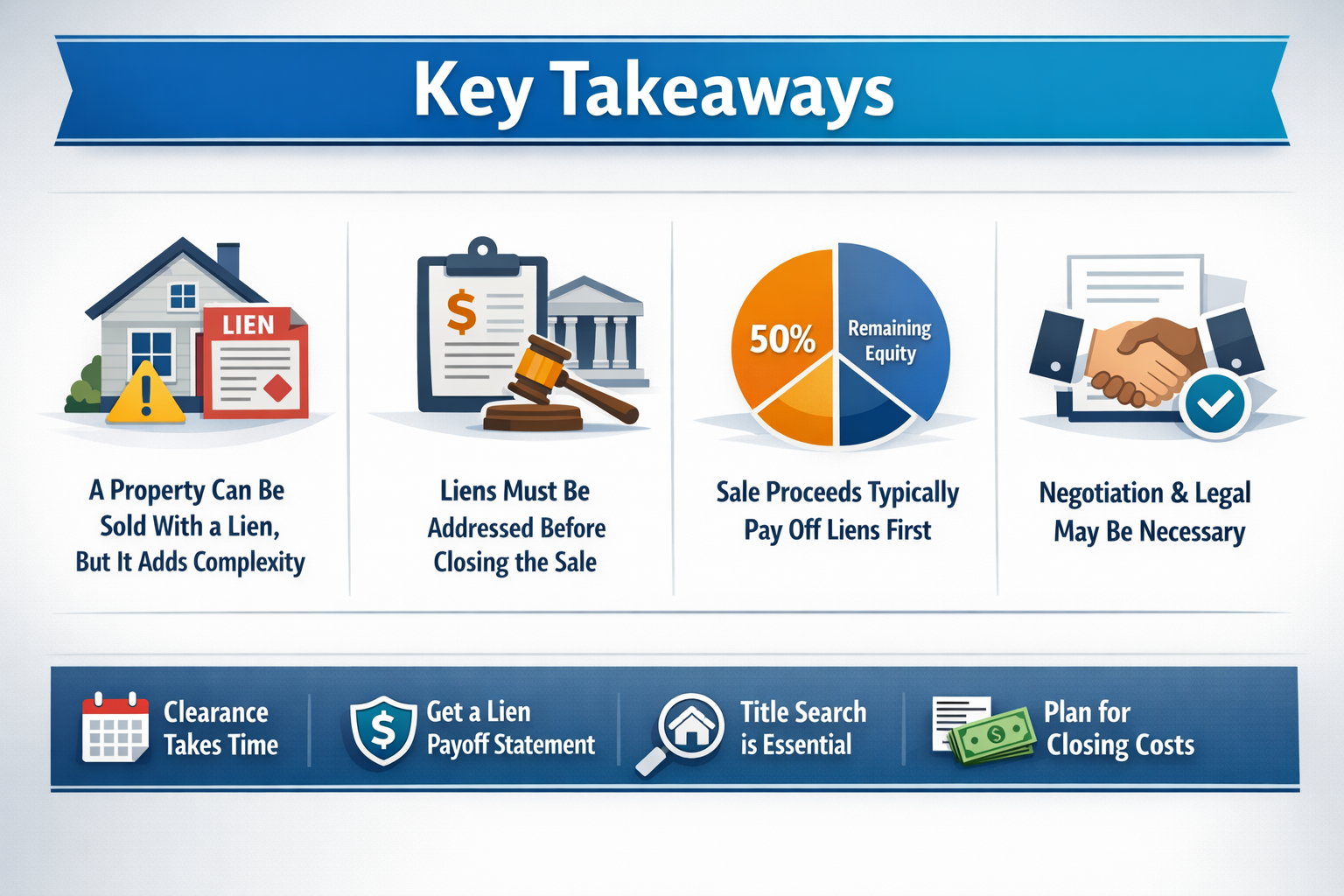
- Yes, you can legally sell property with a lien, but the lien must typically be satisfied from sale proceeds at closing
- Lien priority determines payoff order—tax liens usually take precedence over other types, regardless of filing date
- Multiple sale options exist: traditional sales with lien payoff, short sales, cash buyers who handle liens, or negotiated lien settlements
- Full disclosure is required—sellers must inform potential buyers about all known liens on the property
- Working with industry experts like title companies and experienced cash buyers can simplify the entire process
Understanding Property Liens: What They Are and How They Work
A property lien is a legal claim against your real estate that gives a creditor the right to receive payment from the sale proceeds. Think of it as a financial “sticky note” attached to your property that says, “This person gets paid before the owner receives their money.”
Liens serve as security for debts. When you owe money—whether to the government, contractors, lenders, or other creditors—they can file a lien to ensure they get paid when the property sells or refinances.
How Liens Attach to Property
Liens attach to the property itself, not just to you as the owner. This means:
- The lien stays with the property even if you transfer the deed
- New owners could inherit your debt obligations
- The lien must be addressed before clear title can transfer
- Creditors have legal recourse to force a sale through foreclosure
This is precisely why most buyers and their lenders require a clear title before completing a purchase. Nobody wants to buy a property and discover they’re responsible for someone else’s debts.
Common Types of Property Liens
Understanding the different types of liens helps you navigate the sales process more effectively:
Tax Liens 🏛️
- Federal, state, or local government claims for unpaid taxes
- Typically have priority over other liens
- Can lead to tax foreclosure if unresolved
- Selling a house with a tax lien requires special attention to government payoff procedures
Mortgage Liens 🏦
- Voluntary liens created when you borrow to purchase property
- First mortgages have priority over second mortgages
- Must be paid at closing in most sales
- Lenders hold the lien until the loan is fully satisfied
Judgment Liens ⚖️
- Court-ordered claims from lawsuit judgments
- Can result from credit card debt, medical bills, or other legal disputes
- Attach to all real property you own in the county where filed
- Learn more about selling a house with a judgment lien
Mechanic’s Liens 🔨
- Filed by contractors, subcontractors, or suppliers for unpaid work
- Must be filed within specific timeframes (varies by state)
- Can be complex when multiple parties are involved
- Our guide on mechanic’s liens on property covers removal strategies
HOA Liens 🏘️
- Homeowners association claims for unpaid dues or assessments
- Can accumulate quickly with interest and penalties
- May have “super-priority” status in some states
- Often include legal fees and collection costs
Can You Sell a Property with a Lien? The Legal Answer
The short answer is yes—you can legally sell property with a lien attached. However, there’s an important caveat: the lien doesn’t simply disappear when you sell. It must be addressed, typically through payment from the sale proceeds.
What the Law Says About Selling Liened Property
In 2026, real estate law across all states permits the sale of property with liens. However, several legal requirements apply:
Mandatory Disclosure Requirements
- Sellers must disclose all known liens to potential buyers
- Failure to disclose can result in legal liability and lawsuit damages
- Most states require written disclosure statements
- Honest disclosure builds trust and protects you legally
Title Transfer Requirements
- Buyers and their lenders typically require “clear and marketable title”
- Title insurance companies won’t insure properties with unresolved liens
- The closing cannot proceed until title issues are resolved
- Escrow companies coordinate lien payoffs at closing
Lien Priority and Payoff Order
- Liens are paid in order of priority, not recording date (with exceptions)
- Tax liens usually take first priority
- Mortgage liens follow their recording order
- Remaining liens are paid according to state-specific rules
The Reality of Selling with Liens
While you can legally sell, the practical reality is that liens must be satisfied for the sale to close. This typically happens in one of these ways:
- Paid from sale proceeds at closing (most common)
- Negotiated settlement for less than full amount (sometimes possible)
- Buyer assumes the lien (rare, usually only with mortgages)
- Seller pays before closing (if they have funds available)
The good news? If your property has sufficient equity, the liens can be paid from your sale proceeds without you needing to bring cash to closing. This is where working with trustworthy service providers becomes essential.
Understanding Lien Priority: Who Gets Paid First?
When your property sells, lien priority determines the order in which creditors receive payment from the proceeds. Understanding this hierarchy is crucial because it affects how much money you’ll receive after closing.
The Lien Priority Hierarchy
First Priority: Property Tax Liens 🥇
Tax liens almost always take first priority, regardless of when they were filed. This “super-priority” status exists because:
- Governments need property tax revenue to function
- Tax liens can “jump ahead” of mortgages recorded earlier
- Federal tax liens follow specific IRS priority rules
- State and local tax liens typically outrank all others
Second Priority: Mortgage Liens 🥈
- First mortgages recorded before other liens maintain priority
- Second mortgages or home equity lines follow first mortgages
- Recording date determines priority among mortgages
- Purchase money mortgages may have special priority
Third Priority: Other Liens 🥉
The remaining liens typically follow the “first in time, first in right” rule:
- Mechanic’s liens (may have retroactive priority to project start)
- Judgment liens (based on recording date)
- HOA liens (some states grant super-priority for certain assessments)
- Child support liens (may have special priority in some states)
How Priority Affects Your Sale
Understanding priority helps you calculate your net proceeds:
| Sale Price | $300,000 |
|---|---|
| Less Priority Liens: | |
| Property tax lien | -$15,000 |
| First mortgage | -$180,000 |
| Second mortgage | -$40,000 |
| Subtotal Available | $65,000 |
| Less Remaining Liens: | |
| Judgment lien | -$12,000 |
| Mechanic’s lien | -$8,000 |
| Less Closing Costs | -$9,000 |
| Net to Seller | $36,000 |
This example shows why equity matters. If you owe more than the property is worth, you’ll need to explore other options like short sales or cash buyers who specialize in complex situations.
The Process of Selling Property with a Lien: Step-by-Step
Successfully selling property with a lien requires following a systematic process. Here’s exactly how it works, from discovery to closing.
Step 1: Identify All Liens on Your Property
Before listing your property, you need a complete picture of what you’re dealing with.
Order a Title Search 📋
- Contact a title company or real estate attorney
- Expect to pay $200-$400 for a comprehensive search
- Receive a preliminary title report showing all recorded liens
- Review carefully for accuracy and completeness
Check Multiple Sources
- County recorder’s office (public records)
- Tax assessor’s office (property tax status)
- Court records (judgment liens)
- HOA records (association dues and assessments)
Don’t Forget Federal Liens
- IRS tax liens appear in county records but originate federally
- Check the IRS lien database for federal tax debts
- Federal liens follow different priority and release rules
Pro Tip: Some liens may not appear in county records immediately. Recent judgments or mechanic’s liens might be in process. Always ask creditors directly if you’re aware of potential claims.
Step 2: Obtain Payoff Amounts and Documentation
Once you know what liens exist, get exact payoff figures.
Request Payoff Statements
Each lienholder should provide:
- Current principal balance
- Accrued interest through a specific date
- Daily interest rate (per diem) after that date
- Payoff good-through date
- Where and how to send payment
- Account numbers and reference information
Calculate Total Payoff Amount
Add up all liens plus:
- Accrued interest to anticipated closing date
- Penalties or late fees
- Recording fees for lien releases
- Buffer for timing variations (extra few days of interest)
Verify Equity Position
Compare total liens to estimated sale price:
- Positive equity: Proceed with traditional sale
- Negative equity: Consider short sale or cash buyer options
- Marginal equity: Calculate if sale covers liens plus closing costs
Step 3: Choose Your Sale Strategy
Based on your equity position and timeline, select the best approach.
Traditional Sale with Lien Payoff 🏡
Best when you have positive equity and time:
- List with real estate agent
- Disclose all liens to potential buyers
- Liens paid at closing from proceeds
- Timeline: 60-120 days typically
- You receive net proceeds after all payoffs
Short Sale 💼
When you owe more than property value:
- Requires lender approval to accept less than owed
- Complex process with extensive documentation
- Timeline: 90-180+ days
- May impact credit, but avoids foreclosure
- Not all lienholders will agree to reduced payoff
Cash Buyer Specializing in Liens 💰
Fast option for complicated situations:
- Companies that buy houses with liens handle the complexity
- Quick closing (7-14 days possible)
- Buyer coordinates lien payoffs
- Lower sale price but certainty and speed
- Ideal for time-sensitive situations
Negotiate Lien Settlements 🤝
Sometimes possible with certain lienholders:
- Judgment creditors may accept less than full amount
- Contractors might settle mechanic’s liens
- Requires negotiation skills or attorney assistance
- Get settlement agreements in writing before closing
- Ensure lien release is part of settlement
Step 4: Disclose Liens to Potential Buyers
Transparency is both legally required and practically beneficial.
Written Disclosure
- Include all liens in seller’s disclosure statement
- Provide copies of lien documents to serious buyers
- Explain your plan for satisfying liens at closing
- Show payoff statements demonstrating sufficient equity
Benefits of Full Disclosure
- Builds buyer confidence and trust
- Prevents deal collapse during title review
- Reduces legal liability exposure
- Speeds up closing process
- Demonstrates professional approach
What to Tell Buyers
“This property has [X] liens totaling approximately $[amount]. All liens will be paid in full from sale proceeds at closing, and you will receive clear title. Here are the payoff statements showing exact amounts.”
Step 5: Work with Title Company and Escrow
The title company and escrow agent are your helpful partners in coordinating lien payoffs.
Title Company’s Role 📄
- Conducts comprehensive title search
- Identifies all liens and encumbrances
- Calculates exact payoff amounts including per diem interest
- Coordinates with lienholders for payoff instructions
- Ensures all releases are properly recorded
- Issues title insurance after liens are cleared
Escrow Agent’s Role 💼
- Holds buyer’s funds in trust account
- Pays off liens directly from sale proceeds
- Disburses funds according to closing statement
- Obtains lien release documents
- Records releases with county recorder
- Provides final settlement statement showing all transactions
Your Responsibilities
- Provide complete lien information early
- Respond promptly to title company requests
- Review closing statement carefully before signing
- Bring any required funds if proceeds don’t cover all costs
- Sign lien release authorizations
Step 6: Close the Sale and Confirm Lien Releases
The closing process with liens requires extra attention to detail.
At Closing
- Review HUD-1 or closing disclosure showing all lien payoffs
- Verify payoff amounts match your calculations
- Confirm wire transfer or check delivery methods
- Sign all required documents
- Receive confirmation of lien payments
After Closing ✅
- Title company sends payoff funds to lienholders
- Lienholders issue satisfaction or release documents
- Releases are recorded with county recorder
- You receive copies of all recorded releases
- Title insurance policy is issued to buyer
- Verify all liens show as released in public records (check 30-60 days later)
Timeline Expectations
- Lien payoffs: 1-3 business days after closing
- Release documents: 2-4 weeks after payoff
- Recording releases: 1-2 weeks after receipt
- Public records update: 2-4 weeks after recording
Important: Keep copies of all lien releases permanently. These prove the debts were satisfied and protect you from future claims.
Special Considerations for Different Types of Liens
Each lien type comes with unique challenges and requirements. Here’s what you need to know about selling property with specific liens.
Selling Property with Tax Liens
Tax liens require special attention because of their priority status and government involvement.
Federal Tax Liens (IRS)
- Contact IRS Collection Division for payoff amount
- Request Form 668-Z (Certificate of Release)
- IRS has 30 days to release after full payment
- May qualify for “discharge of property” allowing sale
- Consider IRS Fresh Start Program for payment plans
- Selling a house with a tax lien requires careful coordination with the IRS
State Tax Liens
- Contact state revenue department
- Each state has different procedures and timelines
- Some states offer settlement programs
- Release timelines vary by state (7-60 days typical)
- May require tax clearance certificate
Property Tax Liens
- Contact county tax collector
- Calculate current year plus delinquent years
- Include interest and penalties
- Some counties offer payment plans
- Tax sale or foreclosure threat adds urgency
- Learn about property tax lien foreclosure timelines
Helpful Solutions for Tax Liens:
- Request lien subordination (IRS may allow mortgage to take priority)
- Apply for Offer in Compromise if you qualify
- Use sale proceeds to satisfy tax debt at closing
- Work with tax professionals who understand real estate transactions
Selling Property with Judgment Liens
Judgment liens result from court cases and can be particularly sticky.
Understanding Judgment Liens
- Creditor wins lawsuit and records judgment
- Becomes lien on all real property in that county
- Includes original debt plus interest, court costs, attorney fees
- Interest continues accruing until paid
- May renew for extended periods (10-20 years in many states)
Negotiating Judgment Liens
Judgment creditors are often willing to negotiate because:
- They’ve already won their case
- Property sale provides actual payment opportunity
- Settling for less is better than nothing
- Avoids continued collection efforts
Negotiation Strategies:
- Offer lump sum for less than full amount (60-80% often works)
- Emphasize limited equity available
- Get settlement agreement in writing before closing
- Ensure agreement includes lien release
- Have attorney review settlement terms
Special Considerations:
- Some judgments expire and may no longer be enforceable
- Check if judgment has been renewed
- Verify creditor still exists and can release lien
- Old judgments may be negotiated for significant discounts
- Selling a house with a judgment lien becomes easier with expert service
Selling Property with Mechanic’s Liens
Contractor and supplier liens have unique timing and priority rules.
Mechanic’s Lien Basics
- Filed by contractors, subcontractors, or material suppliers
- Must be filed within statutory deadline (30-180 days after work completion)
- May have “relation back” priority to project start date
- Can be complex with multiple claimants
- Often disputed regarding validity or amount
Resolving Mechanic’s Liens:
Valid Liens:
- Pay from sale proceeds if amount is undisputed
- Negotiate settlement if amount is questionable
- Obtain lien waiver and release at payoff
- Ensure proper recording of release
Disputed Liens:
- May need to resolve dispute before sale can close
- Consider bonding off the lien (insurance company guarantees payment)
- Escrow holdback (buyer and seller agree to hold funds)
- Litigation may be necessary in some cases
- Title insurance may cover certain mechanic’s lien issues
Prevention for Future Projects:
- Always get lien waivers from contractors upon payment
- Use conditional and unconditional lien waivers appropriately
- Pay contractors directly rather than property owners
- Verify subcontractors were paid before releasing final payment
Selling Property with Multiple Liens
Properties with multiple liens require careful coordination and calculation.
Challenges with Multiple Liens:
- More complex title work and payoff coordination
- Higher risk of insufficient equity
- Multiple creditors to negotiate with
- Longer closing timeline
- Greater chance of unexpected issues
Strategies for Success:
- Create a comprehensive lien spreadsheet:
- List each lien with amount, priority, and contact information
- Track payoff request dates and responses
- Calculate total payoff with interest to closing
- Monitor daily to ensure accuracy
- Prioritize communication:
- Contact all lienholders early in process
- Provide estimated closing date
- Request cooperation and prompt release processing
- Keep all parties informed of timeline changes
- Consider professional help:
- Selling a house with multiple liens often benefits from expert service
- Real estate attorneys can coordinate complex payoffs
- Experienced title companies handle multi-lien situations regularly
- Cash buyers who specialize in liens can simplify the entire process
- Build in timeline buffer:
- Allow extra time for multiple payoff processing
- Plan for potential delays or complications
- Don’t commit to tight closing deadlines
- Have contingency plans ready
Your Options When Selling Property with a Lien
You have several pathways to successfully sell property with liens. Choosing the right option depends on your equity position, timeline, and personal circumstances.
Option 1: Traditional Sale with Lien Payoff at Closing
Best for: Properties with positive equity and sellers who aren’t in a rush.
How It Works:
- List property with real estate agent
- Market at fair market value
- Disclose liens to potential buyers
- Liens are paid from sale proceeds at closing
- You receive net proceeds after all payoffs and costs
Advantages: ✅
- Maximizes sale price through competitive market exposure
- Professional marketing reaches more potential buyers
- Agent handles negotiations and paperwork
- Established process familiar to buyers and lenders
- You receive maximum net proceeds
Disadvantages: ⚠️
- Longer timeline (60-120+ days typical)
- Agent commissions reduce net proceeds (5-6%)
- Property must show well to attract buyers
- Buyers may be concerned about lien complications
- Deal could fall through during title review
Requirements:
- Sufficient equity to cover liens, closing costs, and agent commissions
- Property in showable condition
- Time to complete traditional sale process
- Cooperation from all lienholders
Option 2: Sell to Cash Buyer Specializing in Liens
Best for: Sellers who need speed, certainty, or have complicated lien situations.
How It Works:
- Contact cash buyer who specializes in properties with liens
- Provide property and lien information
- Receive cash offer (typically 70-85% of market value)
- Buyer handles all lien payoff coordination
- Close in as little as 7-14 days
Advantages: ✅
- Fast closing timeline (1-2 weeks possible)
- No repairs or improvements needed
- Buyer handles all lien complexity and coordination
- Certainty of closing (no financing contingencies)
- No agent commissions or traditional closing costs
- Sell property as-is in any condition
- Expert service from industry experts who understand liens
Disadvantages: ⚠️
- Lower sale price than traditional market sale
- Less competitive bidding pressure
- Must find reputable, trustworthy service provider
Who This Works For:
- Sellers facing foreclosure or tax sale
- Properties with multiple or complex liens
- Inherited properties with lien issues
- Sellers who need quick cash
- Properties in poor condition
- Situations requiring helpful guidance through complexity
Finding the Right Cash Buyer:
Sure Path Property Solutions specializes in helping property owners navigate exactly these situations. We provide:
- Free, no-obligation property evaluation
- Transparent explanation of how liens will be handled
- Fair cash offers based on current market conditions
- Coordination with all lienholders
- Expert service throughout the entire process
- Friendly and caring approach to your unique situation
Get help selling a house with liens from professionals who understand your challenges.
Option 3: Short Sale (When You Owe More Than Property Value)
Best for: Properties with negative equity where liens exceed market value.
How It Works:
- Contact all lienholders to request short sale approval
- Submit financial hardship documentation
- List property (usually required by lenders)
- Submit offers to lienholders for approval
- Negotiate with multiple creditors
- Close when all parties agree
Advantages: ✅
- Avoid foreclosure and its severe credit impact
- Lienholders accept less than full amount owed
- May negotiate deficiency waiver (no remaining debt)
- More dignified exit than foreclosure
- Potential tax benefits (consult tax professional)
Disadvantages: ⚠️
- Very long timeline (90-180+ days or more)
- Complex process with extensive documentation
- Not all lienholders will approve
- Still impacts credit score (though less than foreclosure)
- No guarantee of approval
- May owe taxes on forgiven debt
- Requires demonstrated financial hardship
Requirements:
- Genuine financial hardship
- Property value less than total liens
- Cooperation from all lienholders
- Patience for lengthy approval process
- Detailed financial documentation
Short Sale Process:
- Contact lienholders to request short sale packages
- Complete extensive financial disclosure forms
- Provide hardship letter explaining circumstances
- Submit tax returns, bank statements, pay stubs
- List property with experienced short sale agent
- Submit offers to all lienholders for approval
- Negotiate with multiple parties simultaneously
- Obtain approval letters from all lienholders
- Close sale and obtain deficiency waivers if possible
Option 4: Negotiate Lien Settlements Before Sale
Best for: Sellers with some cash available and negotiable liens.
How It Works:
- Contact lienholders before listing property
- Negotiate reduced payoff amounts
- Pay settlements from personal funds or loan
- Obtain lien releases
- Sell property with clear title
Advantages: ✅
- Simplifies sale by removing lien complications
- May save money through negotiated discounts
- Faster sale process without lien contingencies
- More attractive to traditional buyers and lenders
- Greater control over timing and terms
Disadvantages: ⚠️
- Requires cash or financing to pay settlements
- Not all lienholders will negotiate
- May need attorney assistance (additional cost)
- Risk of paying liens then sale falling through
- Forgiven debt may have tax consequences
Which Liens Are Negotiable?
- Often negotiable: Judgment liens, old medical debt liens, some mechanic’s liens
- Sometimes negotiable: HOA liens, second mortgages in hardship situations
- Rarely negotiable: Property tax liens, IRS liens, first mortgages
Negotiation Tips:
- Emphasize limited ability to pay
- Offer lump sum payment for immediate settlement
- Get all agreements in writing before paying
- Ensure settlement includes full lien release
- Have attorney review settlement agreements
- Document everything for tax purposes
Option 5: Lien Subordination
Best for: Refinancing or selling with new financing when tax lien exists.
How It Works:
- Request lien subordination from lienholder (usually IRS)
- Lienholder agrees to move behind new mortgage in priority
- Allows new financing or buyer’s mortgage to proceed
- Original lien remains but in secondary position
When This Helps:
- Buyer needs mortgage financing
- You’re refinancing to pay off liens
- Property value supports new loan plus existing liens
- First mortgage lender requires clear first position
IRS Lien Subordination:
- File Form 14134 (Application for Certificate of Subordination)
- Demonstrate subordination will facilitate tax collection
- Usually approved when property value exceeds all liens
- Processing time: 45-60 days typically
- May require appraisal and documentation
State-Specific Considerations for Selling Property with Liens
Lien laws vary significantly by state. Understanding your state’s specific requirements ensures compliance and smoother transactions.
Key State Variations
Lien Recording Requirements:
- Recording deadlines for different lien types
- Where liens must be filed (county vs. state level)
- Required lien documentation and formats
- Notice requirements to property owners
Lien Priority Rules:
- How states determine priority among competing liens
- Special priority for certain lien types (HOA super-priority states)
- Mechanic’s lien relation-back rules
- Tax lien priority variations
Lien Release Timelines:
- Statutory deadlines for issuing releases after payoff
- Penalties for delayed releases
- Recording requirements for releases
- Electronic vs. paper release processes
Disclosure Requirements:
- Mandatory seller disclosure forms
- Specific lien disclosure language required
- Penalties for non-disclosure
- Buyer’s rights upon discovering undisclosed liens
State-Specific Resources
Florida:
Florida has specific laws regarding lien priority and disclosure. Selling a house with a lien in Florida requires understanding Florida Statutes Chapter 713 (construction liens) and Chapter 197 (tax liens).
Texas:
Texas property code governs lien filing, priority, and enforcement. Property liens in Texas follow specific constitutional and statutory provisions, including homestead protections.
Oklahoma:
Oklahoma has unique lien laws, particularly regarding oil and gas interests. Property liens in Oklahoma require understanding both statutory liens and common law principles.
Working with Local Experts:
State-specific lien laws make working with local professionals essential:
- Local real estate attorneys understand state requirements
- Title companies familiar with state practices
- Cash buyers operating in your state know local procedures
- County recorder’s offices provide state-specific guidance
Common Challenges and How to Overcome Them
Selling property with liens presents predictable challenges. Here’s how to address the most common obstacles.
Challenge 1: Insufficient Equity to Cover All Liens
The Problem:
Total liens exceed property value, leaving no proceeds for you or insufficient to cover all claims.
Solutions:
- Pursue short sale: Get lienholders to accept less than owed
- Bring cash to closing: Pay difference from personal funds
- Negotiate lien settlements: Reduce total payoff amounts
- Sell to cash buyer: Some buyers handle negative equity situations
- Consider bankruptcy: May discharge certain liens (consult attorney)
Prevention:
- Address liens promptly before they grow with interest
- Monitor property value and equity position
- Don’t ignore lien notices and collection attempts
Challenge 2: Lienholder Won’t Cooperate or Respond
The Problem:
Lienholder doesn’t respond to payoff requests, delays release documents, or creates obstacles.
Solutions:
- Escalate communication: Call, email, and send certified letters
- Involve attorney: Legal letter often prompts response
- File complaint: Report to state attorney general or licensing board
- Court action: Petition court to release lien after payment
- Title insurance: May cover certain non-cooperation situations
- Bond off lien: Post surety bond to release lien while resolving dispute
Documentation:
- Keep detailed records of all communication attempts
- Save emails, letters, and call logs
- Document dates, times, and people contacted
- Maintain copies of all lien documents
Challenge 3: Disputed Lien Amount or Validity
The Problem:
You disagree with the lien amount or believe the lien is invalid.
Solutions:
- Negotiate settlement: Even invalid liens may be cheaper to settle than litigate
- File lien challenge: Court action to invalidate improper lien
- Escrow holdback: Hold disputed amount in escrow while resolving
- Bonding: Post bond to release property while disputing lien
- Arbitration: Alternative dispute resolution may be faster than court
Common Disputes:
- Mechanic’s liens filed after deadline
- Judgment liens from cases you weren’t properly served
- Incorrect amounts due to calculation errors
- Liens that should have expired
- Fraudulent or forged lien documents
When to Fight vs. Settle:
- Fight if: Lien is clearly invalid, amount is substantial, principle matters
- Settle if: Cost to fight exceeds settlement amount, time is critical, outcome uncertain
Challenge 4: Multiple Owners or Heirs Disagree
The Problem:
Property has multiple owners (co-owners, heirs) who disagree about selling or lien handling.
Solutions:
- Mediation: Neutral third party facilitates agreement
- Buyout: One owner buys others’ interests
- Partition action: Court-ordered sale or division
- Sell partial interest: Some buyers purchase undivided interests
- Professional guidance: Attorney helps navigate co-ownership issues
Resources:
- Selling inherited property with multiple owners
- Sell heir property without all heirs
- Partition action lawsuit process
Challenge 5: Time Pressure (Foreclosure, Tax Sale)
The Problem:
Foreclosure or tax sale is imminent, leaving little time for traditional sale.
Solutions:
- Contact cash buyer immediately: Fast closing prevents foreclosure
- Request postponement: Ask lender or county for extension
- File bankruptcy: Automatic stay temporarily stops foreclosure
- Reinstatement: Pay delinquent amount to stop foreclosure
- Deed in lieu: Negotiate with lender to transfer property
Emergency Timeline Options:
- Cash buyers can close in 7-14 days
- Some can close in as little as 72 hours in emergencies
- Postponement requests may buy additional 30-90 days
- Bankruptcy automatic stay provides immediate relief
Resources:
Working with Professionals: Who Can Help
Successfully navigating property sales with liens often requires expert service from multiple professionals.
Real Estate Attorney
When You Need One:
- Complex lien situations with multiple creditors
- Disputed liens or lien validity questions
- Short sale negotiations
- Foreclosure defense
- Title defects or clouds on title
- Multiple property owners with disagreements
What They Do:
- Review lien documents and title reports
- Negotiate with lienholders on your behalf
- Draft settlement agreements
- File court actions when necessary
- Ensure legal compliance throughout sale
- Protect your interests in complex transactions
Cost:
- Hourly rates: $200-$500 per hour (varies by location and experience)
- Flat fees: $1,500-$5,000 for specific services
- Contingency: Some work on percentage of savings achieved
Finding the Right Attorney:
- Look for real estate litigation experience
- Ask about lien resolution experience specifically
- Check state bar association for complaints
- Request references from past clients
- Ensure they’re licensed in your state
Title Company
Their Essential Role:
- Conduct comprehensive title search
- Identify all liens and encumbrances
- Calculate exact payoff amounts
- Coordinate with lienholders
- Facilitate closing and fund disbursement
- Obtain and record lien releases
- Issue title insurance
Choosing a Title Company:
- Experience with liened properties
- Responsive communication
- Competitive fees
- Strong relationships with lienholders
- Efficient closing process
- Good reputation with local attorneys and agents
What to Expect:
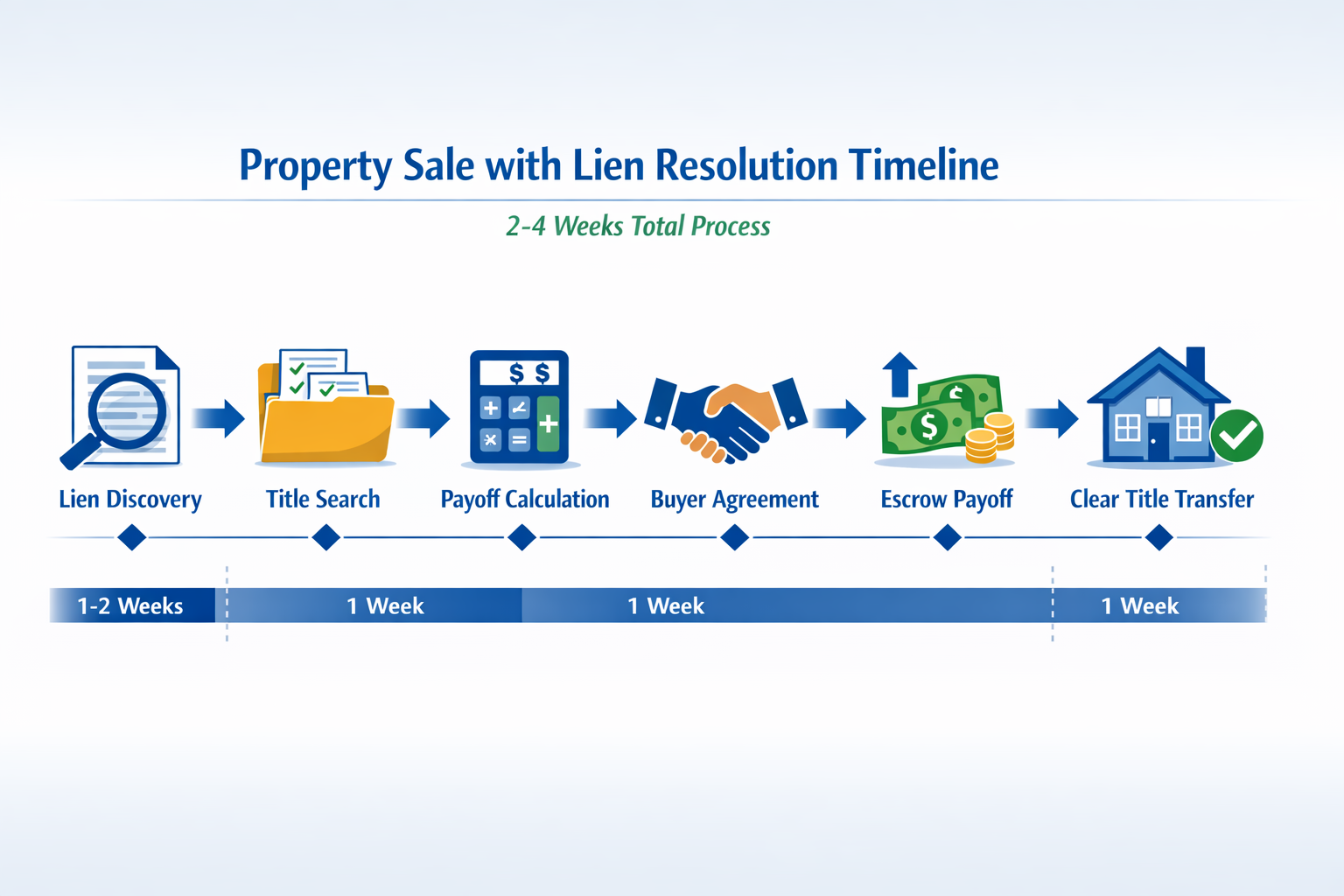
- Title search: 3-7 days
- Preliminary title report with lien details
- Payoff statement requests to all lienholders
- Closing coordination and scheduling
- Post-closing lien release recording
- Final title insurance policy
Real Estate Agent (for Traditional Sales)
When an Agent Helps:
- You have positive equity and time for traditional sale
- Property needs professional marketing
- You want maximum market exposure
- You’re unfamiliar with sale process
Agent Expertise with Liens:
- Not all agents understand lien sales well
- Look for agents with specific lien experience
- Ask about past sales with multiple liens
- Ensure they can explain process to buyers
Commission Considerations:
- Standard 5-6% commission reduces net proceeds
- Must be factored into equity calculations
- Negotiate commission if equity is tight
- Consider discount brokers if appropriate
Cash Buyer Specializing in Liens
Why This Option Works:
Cash buyers who specialize in properties with liens offer helpful solutions that traditional buyers can’t match.
What They Provide:
- Fast closing (7-14 days typical)
- Purchase property as-is
- Handle all lien complexity
- Coordinate directly with lienholders
- Provide certainty of closing
- Expert service throughout process
- Friendly and caring approach
Sure Path Property Solutions Advantages:
As industry experts in complicated property situations, Sure Path Property Solutions offers:
✅ Comprehensive Lien Handling
- We coordinate with all lienholders
- Calculate exact payoffs including interest
- Ensure proper releases are obtained
- Handle multiple liens simultaneously
✅ Transparent Process
- Clear explanation of how we calculate offers
- Detailed breakdown of lien payoffs
- No hidden fees or surprises
- Honest communication throughout
✅ Fast Timeline
- Cash offer within 24-48 hours
- Close in as little as 7-14 days
- Flexible closing date to meet your needs
- No financing contingencies or delays
✅ Helpful Guidance
- We explain all your options clearly
- Answer questions in plain language
- Provide resources and information
- Support you through the entire process
✅ No Additional Costs
- No agent commissions
- No repair requirements
- No closing costs (we cover them)
- No fees for our services
When to Choose a Cash Buyer:
- You need to close quickly
- Property has multiple or complex liens
- You want certainty and simplicity
- Traditional sale seems overwhelming
- You’re facing foreclosure or tax sale
- Property needs significant repairs
- You’ve inherited property with lien issues
Contact Sure Path Property Solutions for a free, no-obligation consultation about your property with liens.
Frequently Asked Questions
Can you sell a house with a lien on it?
Yes, you can legally sell a house with a lien. The lien must typically be satisfied from the sale proceeds at closing. The title company coordinates payoff to lienholders, and you receive the remaining proceeds after all liens, closing costs, and fees are paid.
What happens to a lien when property is sold?
When property is sold, liens are typically paid from the sale proceeds in order of priority. The title company or closing attorney obtains payoff amounts, disburses funds to lienholders, and ensures lien releases are recorded. The buyer receives clear title with no liens.
Can you sell land with a lien on it?
Yes, selling land with a lien follows the same process as selling a house with a lien. The lien must be satisfied at closing from sale proceeds. Land sales may have fewer buyer options since financing is sometimes more difficult for vacant land.
Will a buyer purchase property with a lien?
Many buyers will purchase property with liens if they’re confident the liens will be paid at closing from sale proceeds. Cash buyers and investors are often more comfortable with liens than traditional buyers using financing. Full disclosure and clear documentation help buyers feel confident proceeding.
How long does it take to sell a house with a lien?
Timeline varies by sale method:
- Traditional sale: 60-120+ days
- Cash buyer: 7-14 days
- Short sale: 90-180+ days
Additional time is needed for lien payoff coordination, but experienced title companies handle this efficiently.
Can I sell my house if I have a tax lien?
Yes, you can sell a house with a tax lien. Tax liens are paid from sale proceeds at closing. Because tax liens have priority, they’re paid first from available funds. The IRS or state revenue department must issue a release after receiving payment.
What if I owe more than my house is worth?
If total liens exceed property value, you have several options:
- Short sale (lienholders accept less than owed)
- Bring cash to closing to cover difference
- Negotiate lien settlements for reduced amounts
- Sell to cash buyer who may have creative solutions
- Consider bankruptcy (consult attorney)
Do I need to tell buyers about liens?
Yes, sellers are legally required to disclose all known liens to potential buyers. Failure to disclose can result in legal liability, lawsuit damages, and potential criminal penalties in some states. Honest disclosure protects you legally and builds buyer confidence.
Can a lien be removed before selling?
Yes, liens can be removed before selling by:
- Paying the lien in full
- Negotiating settlement for less than full amount
- Disputing invalid liens through court action
- Waiting for expiration (some liens expire after certain periods)
However, most sellers find it easier to pay liens from sale proceeds at closing rather than before listing.
What is lien subordination?
Lien subordination is when a lienholder agrees to move their lien to a lower priority position, allowing another lien (usually a new mortgage) to take first priority. This is sometimes necessary when buyers need financing or when refinancing. The IRS and some other lienholders will subordinate under certain circumstances.
Real-Life Examples: Success Stories
Understanding how others have successfully sold properties with liens can provide helpful guidance for your situation.
Example 1: Multiple Tax Liens Resolved at Closing
The Situation:
Maria inherited her father’s home in Houston with three years of unpaid property taxes totaling $18,000, plus a $12,000 IRS lien from her father’s business. The house was worth approximately $185,000 but needed $25,000 in repairs.
The Challenge:
Traditional buyers weren’t interested due to the property’s condition and lien complications. Maria lived out of state and couldn’t manage repairs or a lengthy sale process.
The Solution:
Maria contacted a cash buyer in Houston who specializes in properties with liens. They:
- Offered $135,000 cash (fair price considering condition and liens)
- Coordinated directly with county tax office and IRS
- Closed in 12 days
- Paid all liens from proceeds
- Maria received approximately $105,000 after lien payoffs and closing costs
The Outcome:
Maria avoided the stress of managing repairs from out of state, resolved all tax liens, and received cash quickly to settle her father’s estate. The fast timeline allowed her to move forward with her life.
Example 2: Judgment Lien Negotiated Down
The Situation:
Robert had a $45,000 judgment lien from a business dispute, plus a $220,000 first mortgage on a property worth $280,000. He needed to sell due to job relocation.
The Challenge:
After paying the mortgage and standard closing costs, insufficient equity remained to pay the full judgment and provide Robert with moving money.
The Solution:
Robert’s attorney negotiated with the judgment creditor, offering:
- $28,000 lump sum payment (62% of total)
- Immediate payment at closing
- Full satisfaction and release of judgment
The creditor accepted because:
- They’d been trying to collect for three years
- Property sale provided actual payment opportunity
- Lump sum was better than continued collection efforts
The Outcome:
Robert sold the property for $278,000, paid off the mortgage and negotiated judgment, covered closing costs, and walked away with $18,000 for his relocation. The negotiated settlement saved him $17,000 compared to paying the full judgment.
Example 3: Short Sale with Multiple Liens
The Situation:
Jennifer’s property in Orlando had:
- First mortgage: $195,000
- Second mortgage (HELOC): $45,000
- HOA lien: $3,200
- Mechanic’s lien: $8,500
- Total liens: $251,700
- Property value: $215,000 (underwater by $36,700)
The Challenge:
Jennifer had lost her job and couldn’t afford payments. Foreclosure was 60 days away. She needed to avoid foreclosure’s credit damage but had no cash to bring to closing.
The Solution:
Jennifer worked with a short sale specialist in Orlando who:
- Contacted all lienholders to request short sale approval
- Submitted comprehensive hardship documentation
- Found a buyer willing to pay $210,000
- Negotiated with all creditors:
- First mortgage: Accepted $192,000 (full payoff from proceeds)
- Second mortgage: Accepted $10,000 (negotiated down from $45,000)
- HOA: Accepted $3,200 (full amount)
- Mechanic’s lien: Accepted $4,800 (negotiated down from $8,500)
The Outcome:
All lienholders agreed to the short sale. Jennifer avoided foreclosure, had all liens released, and didn’t owe any deficiency balances. Her credit was impacted, but far less than foreclosure would have caused. The process took 127 days but saved her from a much worse outcome.
Example 4: Fast Sale Before Tax Foreclosure
The Situation:
David’s property in San Antonio faced tax foreclosure in 21 days. He owed:
- Property taxes: $14,200 (three years delinquent)
- First mortgage: $142,000
- Property value: $195,000
The Challenge:
Tax foreclosure would result in losing all equity. Traditional sale couldn’t close fast enough. David needed immediate action.
The Solution:
David contacted a cash buyer in San Antonio who:
- Provided cash offer within 24 hours: $168,000
- Closed in 9 days (before tax sale deadline)
- Paid property taxes and mortgage directly
- Covered all closing costs
The Outcome:
David avoided tax foreclosure and saved his equity. After paying taxes ($14,200), mortgage ($142,000), and closing costs ($3,500), he received approximately $8,300. While less than a traditional sale might have brought, the fast timeline saved him from losing everything in the tax sale.
Conclusion: Your Path Forward
Selling a property with a lien is absolutely possible—and thousands of property owners successfully navigate this process every year. The key is understanding your options, working with the right professionals, and taking action before liens create more serious problems.
Key Points to Remember
✅ You can legally sell property with liens – but the liens must be addressed, typically through payment from sale proceeds
✅ Multiple options exist – traditional sale, cash buyers, short sales, or lien negotiations each work in different situations
✅ Lien priority determines payoff order – tax liens typically come first, followed by mortgages and other liens in recording order
✅ Full disclosure is required – transparency with buyers protects you legally and facilitates smoother transactions
✅ Professional help makes the difference – title companies, attorneys, and experienced cash buyers provide expert service that simplifies complex situations
✅ Time matters – addressing liens promptly prevents them from growing and creating bigger problems
Your Next Steps
1. Identify All Liens
Order a title search or check county records to know exactly what you’re dealing with. You can’t solve problems you don’t know about.
2. Calculate Your Equity Position
Determine if you have positive equity, negative equity, or marginal equity. This determines which sale options are viable.
3. Gather Payoff Information
Contact all lienholders to request current payoff amounts. Get everything in writing with good-through dates.
4. Evaluate Your Options
Consider:
- Your timeline (how quickly do you need to sell?)
- Your equity position (do proceeds cover all liens?)
- Your stress tolerance (can you handle a complex process?)
- Your goals (maximize proceeds vs. speed and certainty?)
5. Choose Your Path
- Traditional sale: If you have time, positive equity, and property is in good condition
- Cash buyer: If you need speed, have complex liens, or want certainty
- Short sale: If you’re underwater and facing foreclosure
- Negotiate settlements: If you have cash and negotiable liens
6. Get Professional Help
Don’t navigate complex lien situations alone. Work with:
- Experienced title company
- Real estate attorney (for complex situations)
- Cash buyer specializing in liens (for fast, simple solutions)
- Real estate agent (for traditional sales)
How Sure Path Property Solutions Can Help
At Sure Path Property Solutions, we specialize in exactly these complicated situations. We’ve helped hundreds of property owners successfully sell properties with liens, providing:
🏆 Expert Service
Our team includes industry experts who understand liens, title issues, and complex property situations. We’ve seen it all and know how to navigate every challenge.
💙 Friendly and Caring Approach
We understand that property liens create stress and uncertainty. Our team treats every client with respect, patience, and genuine care for their situation.
⚡ Fast Solutions
When time matters, we deliver. We can provide cash offers within 24-48 hours and close in as little as 7-14 days—fast enough to prevent foreclosure or tax sale.
🎯 Helpful Guidance
We explain your options clearly, answer all your questions in plain language, and help you make informed decisions. No pressure, no confusion—just honest, helpful information.
💰 Fair Cash Offers
We provide transparent offers based on current market conditions, property condition, and lien payoffs. You’ll understand exactly how we calculated our offer and what you’ll receive at closing.
🤝 Trustworthy Service
We handle all lien coordination, payoffs, and releases. You can trust that everything will be handled properly and professionally.
Take Action Today
Liens don’t improve with time—they grow with interest and penalties. The sooner you address them, the more options you have and the more equity you preserve.
Ready to explore your options?
Contact Sure Path Property Solutions today for a free, no-obligation consultation. We’ll review your situation, explain your options, and provide a fair cash offer if selling to us makes sense for you.
📞 Call us for immediate assistance
💻 Visit our website at SurePathPropertySolutions.com
✉️ Request information about your specific lien situation
Whether you choose to work with us or pursue another option, we’re here to provide helpful guidance and point you in the right direction. Your success is our mission.
Don’t let liens hold you hostage. Take control of your situation today and discover the path forward that works best for you.