
Mechanic’s Lien on Property: Rights, Process & How to Remove
Discovering a mechanic’s lien on your property can feel like hitting an unexpected roadblock on your journey to financial freedom. Whether you’re trying to sell your home, refinance, or simply maintain clear ownership, a mechanic’s lien creates complications that demand immediate attention. Understanding the mechanic’s lien on property: rights, process & how to remove this legal claim is essential for both property owners and contractors navigating construction disputes in 2025.
A mechanic’s lien represents one of the most powerful tools contractors have to secure payment, yet it also creates significant challenges for property owners who may not even realize work was performed or materials were supplied. This comprehensive guide provides helpful solutions for anyone facing this complex real estate issue, offering expert service insights that transform confusion into clarity.
Key Takeaways
- A mechanic’s lien is a legal claim filed by contractors, subcontractors, or suppliers against your property when they haven’t been paid for work or materials, securing their right to compensation
- Filing deadlines vary by state and role: In Kansas, direct contractors have 4 months while subcontractors have 3 months from the last day of work to file a valid lien
- Liens take priority over most debts, including mortgages, and can prevent property sales or refinancing until resolved through payment, settlement, or legal challenge
- Removal requires action: Property owners can eliminate liens through full payment, negotiated settlement, bonding, or proving the lien is invalid through legal proceedings
- Professional guidance matters: Navigating mechanic’s liens successfully often requires coordination with title professionals, attorneys, and experienced real estate problem-solvers
What Is a Mechanic’s Lien on Property?
A mechanic’s lien (also called a construction lien or materialman’s lien) is a legal security interest filed against real property by contractors, subcontractors, laborers, or material suppliers who have provided work or materials that improved the property but haven’t received payment. This legal mechanism ensures that those who add value to a property have recourse when payment disputes arise.[1]
Think of a mechanic’s lien as a financial safety net for construction professionals. Just as a mortgage gives a bank security interest in a property until the loan is repaid, a mechanic’s lien gives workers and suppliers a claim against the property until they receive compensation for their contributions.
How Mechanic’s Liens Work
When contractors or suppliers complete work but don’t receive payment, they can file a formal claim with the county where the property is located. This filing creates a cloud on the property’s title—a legal encumbrance that appears in public records and affects the owner’s ability to sell or refinance.
The lien essentially says: “This property owes a debt for improvements made, and that debt must be satisfied before the property can be freely transferred or encumbered further.”
Common Scenarios That Lead to Mechanic’s Liens
Property owners encounter mechanic’s liens in various situations:
- 🏗️ General contractor disputes: A homeowner refuses final payment claiming defective work
- 🔨 Subcontractor non-payment: The general contractor doesn’t pay subcontractors even though the owner paid the general contractor
- 🧱 Material supplier claims: Suppliers deliver materials but the contractor fails to pay them
- 📋 Change order disagreements: Additional work is performed but payment terms weren’t clearly established
- 💰 Project abandonment: Construction stops mid-project with outstanding balances owed
“Mechanic’s liens level the playing field between property owners and those who improve their property. They’re designed to prevent unjust enrichment—situations where owners benefit from improvements without paying for them.” — Real Estate Attorney Sarah Mitchell, Kansas Property Law Group
Why Mechanic’s Liens Matter to Property Owners
For property owners, mechanic’s liens create immediate and serious complications:
Financial Impact: The lien amount becomes a debt attached to the property itself, not just a personal obligation. This means the property cannot be sold or refinanced without addressing the lien.
Title Issues: Title companies will not issue clear title insurance with an outstanding mechanic’s lien, effectively blocking most traditional real estate transactions.
Priority Status: Mechanic’s liens often take priority over other debts, including mortgages recorded after the work began, meaning they must be paid first from any sale proceeds.[2]
Foreclosure Risk: If left unresolved, lienholders can initiate foreclosure proceedings to force the sale of the property to recover their owed amounts.
Understanding these implications is the first step toward finding helpful solutions that protect your property rights and financial interests.
Contractor and Property Owner Rights Under Mechanic’s Lien Laws
The mechanic’s lien system balances competing interests—protecting those who improve property while safeguarding property owners from unfair claims. Both parties have specific rights and responsibilities that vary by state but follow common principles.
Contractor, Subcontractor, and Supplier Rights
Those who provide labor or materials for property improvements have several protected rights:
Right to File a Lien: Contractors, subcontractors, laborers, and material suppliers all have the legal right to file a mechanic’s lien when they aren’t paid for work that improves real property. This right exists even if the property owner has already paid the general contractor.[3]
Right to Enforce Through Foreclosure: Once properly filed, lienholders can pursue foreclosure if payment isn’t received within the statutory timeframe. In Kansas, this enforcement action must begin within one year of filing the lien, or the lien becomes void.
Priority Over Later Encumbrances: Mechanic’s liens typically take priority based on when the work began, not when the lien was filed. This means a mechanic’s lien can jump ahead of mortgages or other liens recorded after construction started.
Right to Payment from Sale Proceeds: If the property sells, mechanic’s lienholders have the right to be paid from the proceeds before most other creditors.
Property Owner Rights and Protections
Property owners aren’t without recourse when facing mechanic’s liens. Several important rights protect against improper or fraudulent claims:
Right to Proper Notice: In Kansas and most states, lienholders must provide notice to the property owner within a specific timeframe after filing. Kansas requires notice within 10 days of filing the lien with the district court.[4]
Right to Challenge Invalid Liens: Property owners can contest liens that don’t meet legal requirements, including:
- Missed filing deadlines
- Incomplete or inaccurate lien documents
- Work not actually performed
- Amounts already paid
- Work not authorized by the owner
Right to Demand Itemization: Owners can require detailed breakdowns of claimed amounts to verify the legitimacy of charges.
Right to Bond Around the Lien: In many states, property owners can post a bond that transfers the lien from the property to the bond, allowing sales or refinancing to proceed while disputes are resolved.
Right to Require Lien Releases: Property owners can demand that contractors provide lien releases from all subcontractors and suppliers before making final payment.
State-by-State Variations in Lien Rights
Mechanic’s lien laws vary significantly across the United States. Understanding your state’s specific requirements is crucial for both contractors and property owners.
| State | Contractor Filing Deadline | Subcontractor Filing Deadline | Enforcement Period | Notice Requirements |
|---|---|---|---|---|
| Kansas | 4 months from last work | 3 months from last work | 1 year to file suit | 10 days after filing |
| Missouri | 6 months from last work | 6 months from last work | 1 year to file suit | Within 10 days |
| Texas | 4th month after last work | 3rd month after last work | 1 year to file suit | 10 days after filing |
| California | 90 days after completion | 90 days after completion | 90 days to file suit | 20 days before filing |
| Florida | 1 year from last work | 1 year from last work | 1 year to file suit | Before filing (Notice to Owner) |
Kansas-Specific Considerations: Kansas law includes a unique provision for commercial projects that allows filing deadlines to extend to 5 months if a proper notice of extension is filed with the district court and sent to the property owner by both certified and regular mail.[5]
The Balance of Rights
The mechanic’s lien system attempts to balance fairness for all parties. Contractors deserve payment for legitimate work, while property owners deserve protection from paying twice or from fraudulent claims.
For property owners facing inherited property with unknown liens or those dealing with multiple heirs who may have authorized work without full agreement, these rights become especially important. Trustworthy service from industry experts can help navigate these complicated situations with helpful guidance tailored to your specific circumstances.
The Mechanic’s Lien Filing Process: Step-by-Step
Understanding the mechanic’s lien filing process helps both contractors seeking payment and property owners anticipating or challenging liens. The process follows specific legal requirements that must be met for the lien to be valid and enforceable.
Step 1: Preliminary Notice (Pre-Lien Notice)
In many states, contractors and suppliers must file a preliminary notice before they can later file a mechanic’s lien. This notice informs the property owner that work is being performed or materials supplied, creating a paper trail.
Kansas Exception: Kansas does not require preliminary notices for most residential projects, but commercial projects may have different requirements. However, sending preliminary notices is still considered a best practice for documentation purposes.
Step 2: Completion of Work and Final Invoice
The clock for filing a mechanic’s lien typically starts ticking from the last day of furnishing labor, materials, or equipment to the project. This date is critical because filing deadlines are calculated from this point.
Contractors should:
- Document the final day of work with photos, timesheets, or delivery receipts
- Send a final invoice clearly stating amounts owed
- Provide the property owner reasonable opportunity to pay before filing a lien
- Maintain detailed records of all communications regarding payment
Step 3: Preparing the Lien Document
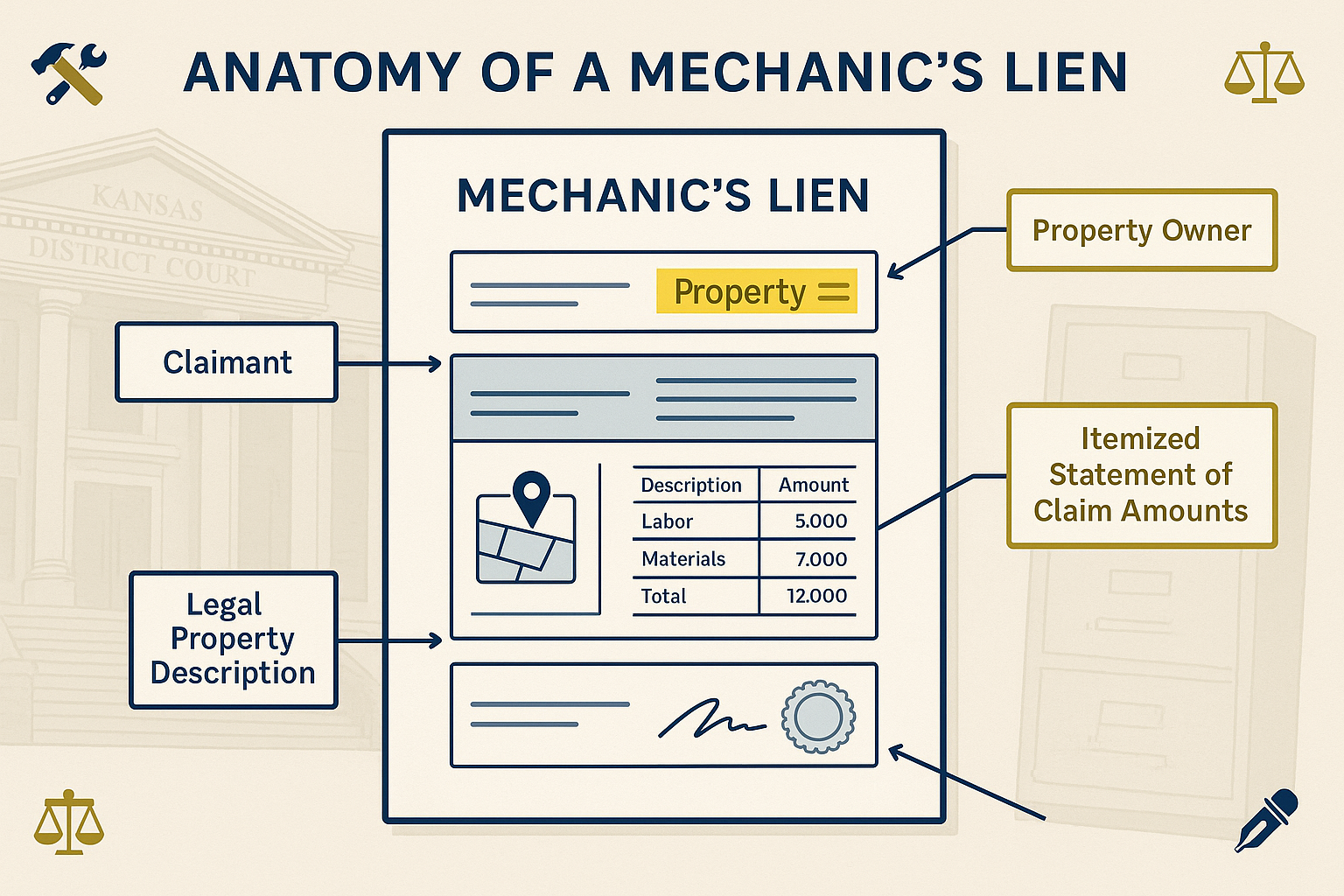
A valid mechanic’s lien in Kansas must include specific information to be legally enforceable:[6]
✅ Property owner’s full legal name
✅ Claimant’s name and complete address
✅ Legal description of the property (not just the street address)
✅ Reasonably itemized statement of the claim amount, including labor, materials, and equipment
✅ Dates of first and last furnishing of labor or materials
✅ Verified signature by affidavit (sworn statement before a notary)
Common mistakes that invalidate liens include:
- Using only a street address instead of the legal property description
- Failing to have the document properly notarized
- Missing filing deadlines by even one day
- Inflating claim amounts beyond actual work performed
- Vague descriptions of work without itemization
Step 4: Filing with the District Court
In Kansas, mechanic’s liens must be filed with the District Court Clerk’s Office in the county where the property is located. This is different from some states where liens are filed with the county recorder or register of deeds.
The filing process involves:
- Completing the lien statement with all required information
- Having the statement verified before a notary public
- Submitting the document to the appropriate district court clerk
- Paying the required filing fee (varies by county)
- Receiving a file-stamped copy for your records
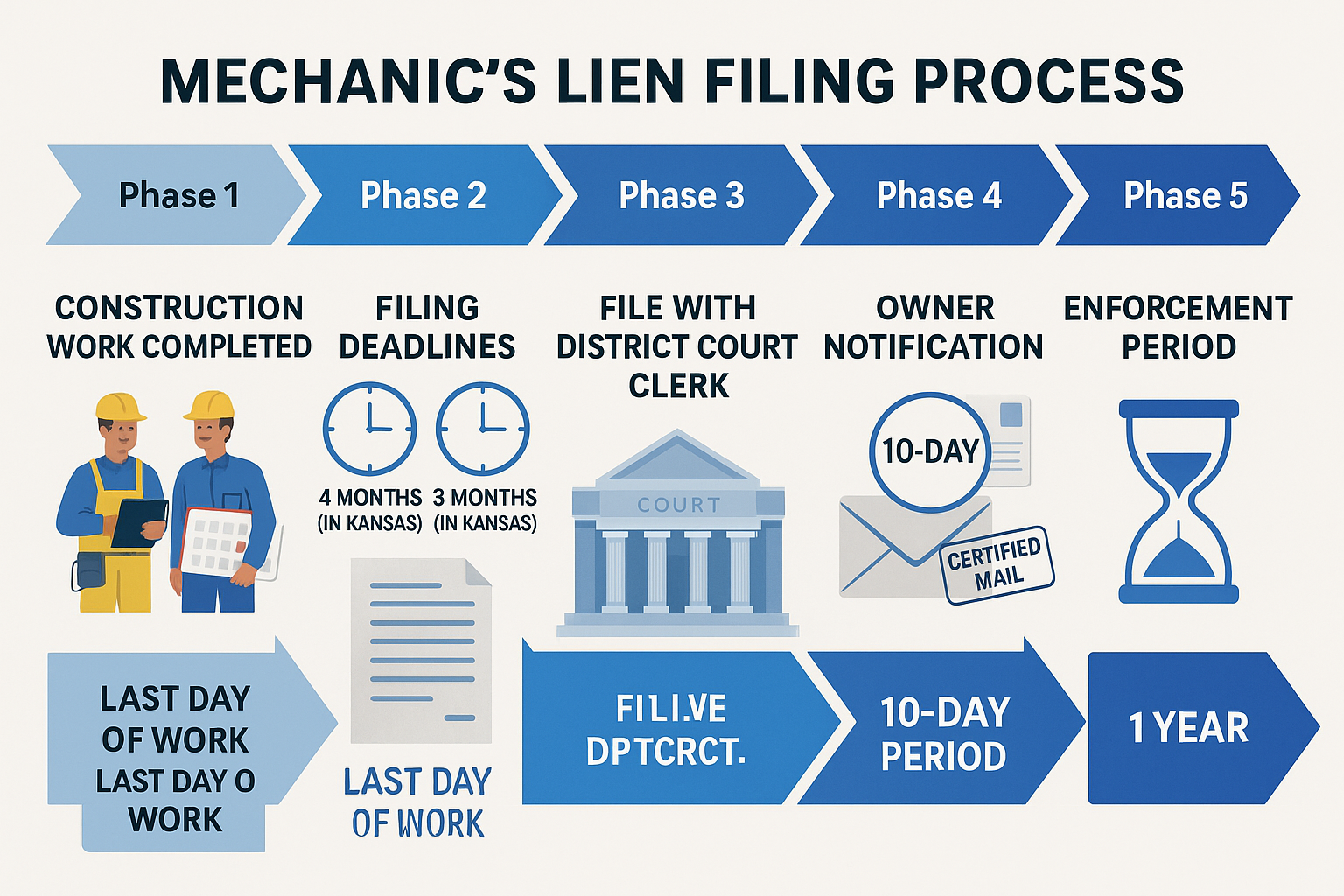
Filing Deadlines in Kansas:
- Direct contractors: 4 months from the last day of supplying labor, materials, or equipment
- Subcontractors and suppliers: 3 months from the last day of furnishing labor or materials
- Commercial project extension: 5 months if proper notice of extension was filed and sent to the owner[7]
Step 5: Providing Notice to the Property Owner
Filing the lien with the court is not enough. Kansas law requires that notice of the filed lien must be sent to the property owner within 10 days of filing to ensure proper legal procedure.[8]
This notice should be sent via:
- Certified mail with return receipt requested
- Regular first-class mail
The notice should include:
- A copy of the filed lien statement
- Information about the owner’s rights to challenge the lien
- Contact information for resolving the claim
Failure to provide timely notice can invalidate the lien, even if it was properly filed with the court.
Step 6: The One-Year Enforcement Window
Once filed and noticed, a mechanic’s lien in Kansas remains valid for one year. During this period, the lienholder must either:
- Receive payment and file a release of lien, or
- Initiate legal action to enforce the lien through foreclosure proceedings
If no enforcement action is taken within one year, the lien automatically expires and becomes void.[9]
What Happens After Filing
For property owners, a filed mechanic’s lien creates immediate consequences:
📌 Title companies will discover the lien during title searches, blocking most sales or refinancing
📌 The lien appears in public records, potentially affecting credit and reputation
📌 The property cannot be sold with clear title until the lien is resolved
📌 Other creditors may take notice, potentially affecting other financial matters
For contractors, filing a lien sends a strong message about serious intent to collect payment. Many disputes resolve through negotiation once a lien is filed, as property owners recognize the serious implications.
Special Considerations for Complex Situations
Property owners dealing with multiple heirs, inherited property, or unclear title face additional complications when mechanic’s liens are filed. Questions arise such as:
- Which heir is responsible for the debt?
- Was the work authorized by all owners?
- How can the property be sold when heirs disagree about payment?
These situations benefit from expert service and helpful guidance from professionals experienced in complicated real estate issues. Sure Path Property Solutions specializes in coordinating with counties and title professionals to navigate these exact scenarios, providing friendly and caring support during stressful times.
How to Remove a Mechanic’s Lien from Your Property
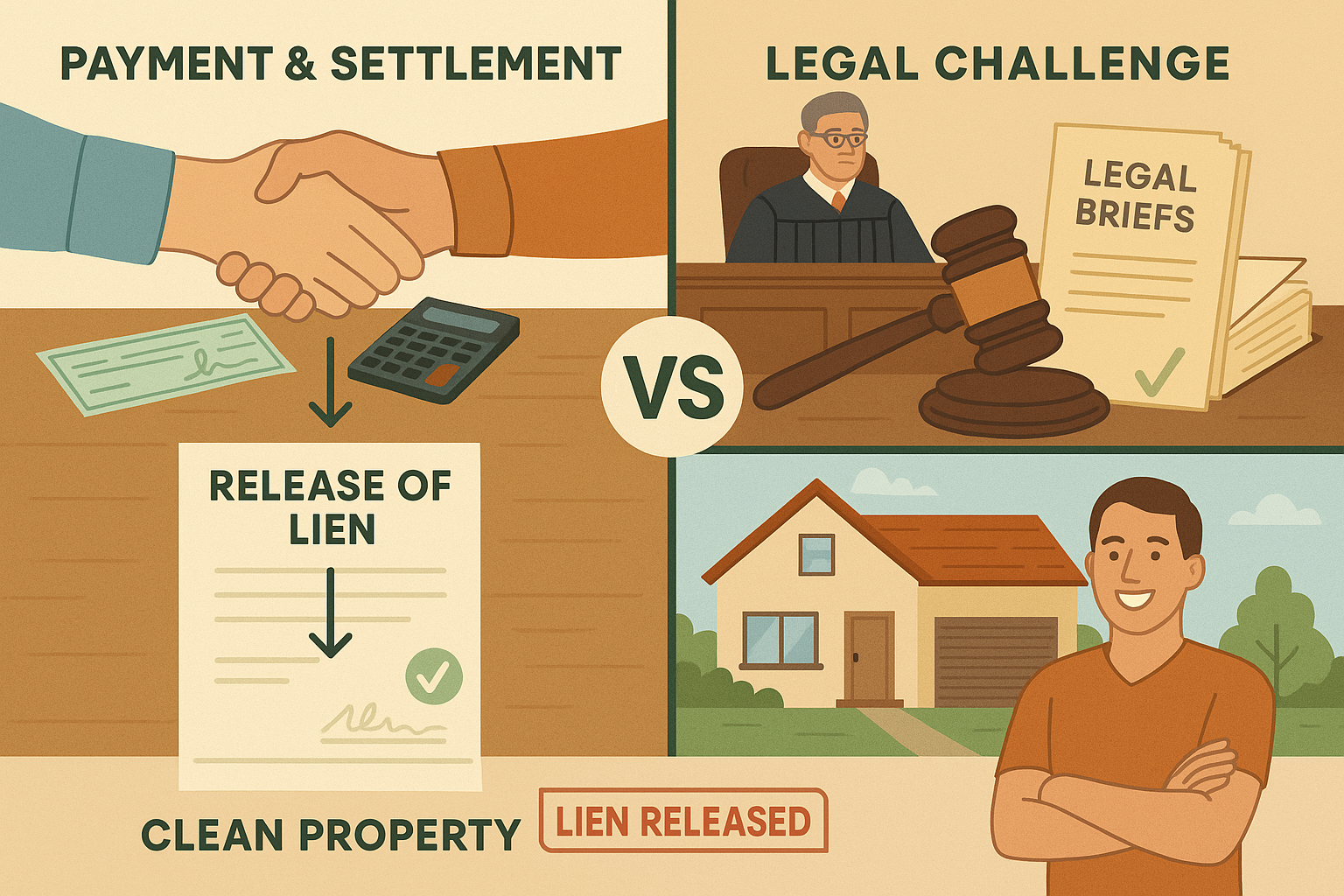
Removing a mechanic’s lien is essential for regaining clear title and the ability to sell or refinance your property. Several pathways exist for eliminating liens, each appropriate for different circumstances. Understanding the mechanic’s lien on property: rights, process & how to remove this encumbrance empowers property owners to take decisive action.
Method 1: Pay the Debt in Full
The most straightforward way to remove a mechanic’s lien is to pay the full amount owed and obtain a release of lien.
Steps to remove a lien through payment:
- Verify the amount owed: Request an itemized breakdown of charges to ensure accuracy
- Negotiate payment terms: Discuss whether payment plans are acceptable or if full payment is required
- Make payment: Use a method that creates clear documentation (check, wire transfer, or escrow)
- Obtain a signed release of lien: The contractor must sign a notarized release document
- File the release with the district court: Record the release in the same office where the lien was filed
- Verify removal from title: Confirm with a title company that the lien no longer appears
Pro tip: Never make final payment without receiving a signed, notarized release of lien simultaneously. Some property owners pay in good faith only to have contractors delay or refuse to file the release.
Method 2: Negotiate a Settlement
When disputes exist about the amount owed or quality of work, negotiating a settlement for less than the claimed amount may be possible.
Settlement strategies include:
💡 Offering a lump sum payment in exchange for immediate lien release
💡 Pointing out defects or incomplete work to justify reduced payment
💡 Proposing mediation through a neutral third party
💡 Trading payment for corrections to unsatisfactory work
💡 Highlighting the cost of litigation to encourage reasonable compromise
Settlements should always be documented in writing with clear terms specifying that the agreed payment fully satisfies the lien claim and requires immediate filing of the release.
Method 3: Post a Bond to Transfer the Lien
In many states, property owners can post a surety bond that transfers the lien from the property to the bond itself. This allows the property to be sold or refinanced while the payment dispute continues.
How bonding works:
- The property owner purchases a bond (typically 1.5 to 2 times the lien amount)
- The bond is filed with the court, substituting for the property as security
- The lien is removed from the property title
- The contractor’s claim continues against the bond instead of the property
- Disputes can be resolved through litigation without blocking property transactions
Bonding is particularly useful when selling property with a disputed lien or when time is critical for refinancing.
Method 4: Challenge the Lien’s Validity
If a mechanic’s lien was improperly filed or is fraudulent, property owners can challenge it through legal proceedings.
Grounds for challenging a mechanic’s lien:
⚖️ Missed deadlines: The lien was filed after the statutory deadline expired
⚖️ Improper notice: Required notices to the property owner weren’t provided
⚖️ Incomplete documentation: The lien statement lacks required information
⚖️ Work not performed: The claimed work or materials were never actually provided
⚖️ Payment already made: The debt was already satisfied before the lien was filed
⚖️ Lack of authorization: The work was performed without the owner’s knowledge or consent
⚖️ Excessive amounts: The claimed amount far exceeds the value of work performed
Challenging a lien typically requires filing a motion with the court and may involve a hearing where both parties present evidence. Legal representation from an experienced real estate attorney is strongly recommended for lien challenges.
Method 5: Wait for the Lien to Expire
In Kansas, mechanic’s liens automatically expire if the lienholder doesn’t initiate enforcement action within one year of filing.[10] While waiting isn’t ideal, it may be appropriate when:
- The claimed amount is small relative to litigation costs
- The contractor has gone out of business or cannot be located
- The lien is clearly invalid but the contractor won’t voluntarily release it
Important caveat: Even after expiration, the lien may still appear in title records until a formal release or court order removes it. Property owners should file an affidavit of expiration to clear the title.
Method 6: Resolve Through Foreclosure Defense
If a contractor initiates foreclosure proceedings to enforce the lien, property owners can defend against the foreclosure by:
- Proving the lien is invalid
- Demonstrating payment was already made
- Showing the work was defective or incomplete
- Arguing the claimed amount is excessive
Foreclosure defense requires immediate legal action and should not be attempted without qualified legal representation.
Special Considerations for Inherited Property
Property owners who inherited property with existing mechanic’s liens face unique challenges. The lien may have been filed before or after the inheritance, and the work may have been authorized by the previous owner.
Key questions for inherited property liens:
- Was the work completed before or after the inheritance?
- Did the deceased owner authorize the work?
- Are estate funds available to pay the lien?
- Do all heirs agree on how to resolve the lien?
- Can the property be sold to pay the lien if heirs cannot afford payment?
These situations benefit from helpful solutions provided by industry experts who understand both lien law and estate property issues. Coordinating with title professionals and county offices becomes essential for clearing title and moving forward.
Working with Professionals for Lien Removal
Removing mechanic’s liens often requires coordination among multiple professionals:
🏛️ Real estate attorneys: Provide legal advice and represent owners in disputes or litigation
🏢 Title companies: Conduct title searches and verify lien removal
📋 Escrow companies: Hold funds and coordinate simultaneous payment and release
🏗️ Construction experts: Evaluate work quality and fair value for settlement negotiations
🏡 Real estate problem-solvers: Navigate complex situations involving multiple issues
Sure Path Property Solutions offers expert service for property owners facing mechanic’s liens combined with other complications like back taxes, multiple heirs, or judgments. Our friendly and caring approach provides helpful guidance through the entire resolution process, coordinating with all necessary parties to achieve clear, practical solutions.
Selling Your Property with a Mechanic’s Lien
Selling a house with a mechanic’s lien presents significant challenges but is not impossible. Understanding your options and the process for selling property with an active lien helps property owners move forward even when facing this complication.
Can You Sell a House with a Mechanic’s Lien?
Yes, you can sell a house with a mechanic’s lien, but the lien must be addressed as part of the transaction. Traditional buyers and mortgage lenders will not proceed with a purchase when a mechanic’s lien clouds the title, but several strategies make sales possible.
The fundamental principle: Liens must be satisfied from the sale proceeds before the property can transfer with clear title to the new owner.
Option 1: Pay the Lien from Sale Proceeds
The most common approach when selling a house with a mechanic’s lien is to pay the lien amount from the sale proceeds at closing.
How this works:
- List the property for sale with full disclosure of the lien
- Negotiate the sale price accounting for the lien amount
- Set up escrow with a title company experienced in lien resolution
- At closing, the title company pays the lienholder directly from sale proceeds
- The lienholder provides a release that is immediately filed
- The buyer receives clear title with the lien removed
Example scenario: A property sells for $200,000 with a $15,000 mechanic’s lien. At closing, the title company pays the $15,000 to the lienholder, files the release, and distributes the remaining proceeds to the seller (minus other closing costs and debts).
This approach works well when:
- Sufficient equity exists to pay the lien and other debts
- The lien amount is not disputed
- The lienholder cooperates with the closing process
Option 2: Negotiate a Short Payoff
When the lien amount is disputed or the property lacks sufficient equity, negotiating a reduced payoff amount may be possible.
Lienholders may accept less than the full claimed amount when:
- The alternative is lengthy litigation with uncertain outcomes
- The property’s value doesn’t support the full lien amount
- The lienholder needs immediate cash flow
- Questions exist about the lien’s validity
Negotiation tips:
- Present evidence of property value and available equity
- Highlight costs and delays of foreclosure proceedings
- Offer a quick closing with immediate payment
- Involve an attorney or experienced negotiator
- Get settlement terms in writing before closing
Option 3: Sell to a Cash Buyer or Investor
Traditional buyers using mortgage financing cannot purchase property with active liens. However, cash buyers and real estate investors often purchase properties with lien complications.
Advantages of selling to cash buyers:
✅ No financing contingencies that liens would block
✅ Faster closing timelines (often 7-30 days)
✅ Buyers experienced with lien resolution who understand the process
✅ Willingness to purchase “as-is” without requiring repairs
✅ Simplified process with fewer contingencies
Potential disadvantages:
❌ Lower purchase prices to account for lien complications and risk
❌ Less competitive bidding compared to traditional market sales
❌ Need for careful buyer vetting to ensure legitimacy and financial capability
Sure Path Property Solutions specializes in purchasing properties with complicated issues including mechanic’s liens, back taxes, and multiple ownership situations. Our expert service provides fair offers and handles all lien resolution coordination, offering helpful solutions when traditional sales aren’t feasible.
Option 4: Sell Subject to the Lien
In rare cases, a buyer might purchase property subject to an existing lien, meaning the buyer takes ownership with the lien still attached and assumes responsibility for resolving it.
This approach is uncommon and typically only occurs when:
- The buyer is a contractor who can negotiate directly with the lienholder
- The lien amount is small relative to property value
- The buyer plans extensive renovation and can incorporate the lien resolution
- Family members or related parties are involved in the transaction
Most traditional buyers and investors will not accept property subject to liens due to the complications and risks involved.
Timeline for Selling Property with a Mechanic’s Lien
The timeline for selling a house with a mechanic’s lien varies based on the approach:
Traditional market sale with lien payoff:
- Listing and marketing: 30-90 days
- Negotiation and contract: 7-14 days
- Escrow and lien coordination: 30-45 days
- Total timeline: 3-5 months
Cash sale to investor:
- Property evaluation: 1-3 days
- Offer and negotiation: 3-7 days
- Escrow and closing: 7-30 days
- Total timeline: 2-6 weeks
Sale after lien removal:
- Lien resolution process: 30-90 days
- Traditional sale process: 60-90 days
- Total timeline: 3-6 months
Disclosure Requirements When Selling
Property owners must disclose known mechanic’s liens to potential buyers. Failure to disclose can result in:
- Contract cancellation by the buyer
- Legal liability for fraud or misrepresentation
- Delayed closing and additional costs
- Damage to reputation and future transaction difficulties
Best practices for disclosure:
- Provide copies of all lien documents to potential buyers
- Explain the circumstances that led to the lien
- Share any correspondence or negotiations regarding resolution
- Be transparent about timeline and resolution plans
Working with Real Estate Professionals
Selling property with a mechanic’s lien requires coordination with experienced professionals:
Real estate agents: Choose agents experienced with distressed properties and lien complications who can properly market the property and set realistic expectations.
Title companies: Work with title companies that have experience resolving liens and coordinating complex closings with multiple payoffs.
Real estate attorneys: Legal representation helps navigate disclosure requirements, contract negotiations, and lien resolution procedures.
Property buyers specializing in complicated situations: Companies like Sure Path Property Solutions offer trustworthy service for property owners who need helpful guidance through sales involving liens, inherited property issues, and multiple owners.
When Multiple Issues Complicate the Sale
Many property owners facing mechanic’s liens also deal with additional complications:
- 📊 Back taxes that must be paid from sale proceeds
- 👨👩👧👦 Multiple heirs who disagree about sale terms or lien resolution
- ⚖️ Judgments creating additional title clouds
- 🏚️ Property condition issues requiring repairs or as-is sales
- 📋 Unclear title from estate or ownership complications
These layered challenges require comprehensive helpful solutions that address all issues simultaneously. Industry experts who specialize in complicated real estate situations can coordinate resolution of multiple problems, simplifying the path to a successful sale.
“Selling property with a mechanic’s lien doesn’t have to mean accepting a terrible deal or waiting years for resolution. With the right approach and experienced partners, property owners can achieve fair outcomes and move forward with their lives.” — Michael Chen, Real Estate Investment Specialist
Preventing Mechanic’s Liens: Proactive Strategies
While this guide focuses on understanding and removing mechanic’s liens, prevention is always preferable to cure. Property owners undertaking construction or renovation projects can take several steps to minimize lien risk.
For Property Owners: Protective Measures
1. Use written contracts for all work: Clear contracts specifying scope, payment terms, and timelines reduce misunderstandings that lead to liens.
2. Require lien releases before final payment: Before making final payment to contractors, require signed releases from all subcontractors and material suppliers.
3. Use escrow or joint checks: For large projects, pay subcontractors and suppliers directly through joint checks or escrow arrangements.
4. Verify contractor licensing and insurance: Work only with properly licensed contractors who carry adequate insurance.
5. Document all payments: Maintain detailed records of all payments made, including dates, amounts, and check numbers.
6. Request preliminary lien waivers: Before work begins, have contractors provide conditional lien waivers that take effect upon payment.
7. Monitor the project closely: Regular site visits help ensure work is progressing as agreed and payment requests match completed work.
For Contractors: Best Practices
1. Send preliminary notices: Even in states where not required, preliminary notices establish your lien rights and create documentation.
2. Maintain detailed records: Document all work performed, materials supplied, and dates of service.
3. Communicate clearly about payment: Send regular invoices and follow up promptly on overdue payments.
4. File liens promptly: Don’t wait until the deadline approaches; file liens as soon as it’s clear payment won’t be received.
5. Provide accurate lien documents: Ensure all required information is included and accurate to avoid invalidation.
Conclusion: Taking Action on Mechanic’s Liens
Understanding the mechanic’s lien on property: rights, process & how to remove this legal claim empowers both property owners and contractors to protect their interests and resolve disputes effectively. Whether you’re facing an unexpected lien on inherited property, dealing with multiple heirs who disagree about payment, or simply trying to sell a house with lien complications, helpful solutions exist.
Key actions for property owners facing mechanic’s liens:
- Act quickly: Don’t ignore liens hoping they’ll disappear—address them promptly to minimize complications
- Verify the lien’s validity: Ensure all legal requirements were met and the claimed amount is accurate
- Explore all resolution options: Payment, negotiation, bonding, or legal challenge may all be appropriate depending on circumstances
- Seek professional guidance: Work with experienced attorneys, title professionals, and real estate experts who understand lien resolution
- Consider all sale options: Traditional sales, cash buyers, and specialized property buyers each offer different advantages
Key actions for contractors and suppliers:
- Know your state’s specific requirements: Filing deadlines and procedures vary significantly by state
- File complete, accurate lien documents: Errors and omissions can invalidate otherwise legitimate claims
- Provide required notices: Meet all notification requirements to protect your lien rights
- Be willing to negotiate: Reasonable settlements often serve everyone’s interests better than prolonged litigation
- Act within enforcement deadlines: Don’t let valid liens expire through inaction
Your Next Steps
If you’re dealing with a mechanic’s lien combined with other property complications like back taxes, multiple owners, or unclear title, you don’t have to navigate these challenges alone. Sure Path Property Solutions provides expert service and helpful guidance for property owners facing complicated real estate issues.
Our friendly and caring team coordinates with counties, title professionals, and all necessary parties to develop clear, practical solutions tailored to your specific situation. We offer trustworthy service that simplifies complex problems and helps property owners move forward with confidence.
Contact Sure Path Property Solutions today to discuss your property situation and explore your options. Whether you need help removing a mechanic’s lien, selling property with multiple complications, or simply want helpful guidance from industry experts who understand your challenges, we’re here to help.
Remember: mechanic’s liens are serious legal claims, but they’re not insurmountable obstacles. With the right information, professional support, and proactive approach, you can resolve lien issues and regain clear title to your property in 2025 and beyond.
References
[1] National Association of Home Builders. (2024). “Understanding Mechanic’s Liens: A Guide for Property Owners and Contractors.” NAHB Legal Resources.
[2] American Bar Association. (2024). “Real Property Liens and Priority: Legal Framework.” ABA Real Property, Trust and Estate Law Section.
[3] Kansas Statutes Annotated § 60-1101. “Mechanic’s Liens – Who May File.”
[4] Kansas Statutes Annotated § 60-1103. “Notice Requirements for Mechanic’s Liens.”
[5] Kansas Statutes Annotated § 60-1102. “Time Limitations for Filing Mechanic’s Liens.”
[6] Kansas Statutes Annotated § 60-1104. “Contents of Mechanic’s Lien Statement.”
[7] Kansas District Court Procedures Manual. (2025). “Filing Mechanic’s Liens: Requirements and Deadlines.”
[8] Kansas Supreme Court. (2023). “Notice Requirements in Mechanic’s Lien Cases.” Kansas Case Law Digest.
[9] Kansas Statutes Annotated § 60-1106. “Duration and Enforcement of Mechanic’s Liens.”
[10] National Mechanics Lien Database. (2025). “State-by-State Mechanic’s Lien Laws Comparison.” Construction Legal Resources.