
Sell Joint Tenancy Property: Options for Co-Owners

When two or more people own property together as joint tenants, selling that property can feel like navigating a maze with multiple paths—and not all of them are clearly marked. Whether you inherited a home with siblings, purchased real estate with a business partner, or share ownership with a former spouse, the question of how to sell joint tenancy property: options for co-owners becomes critical when circumstances change.
The reality is that joint tenancy creates unique challenges. Unlike sole ownership, where one person makes all the decisions, joint tenancy requires coordination between multiple parties who may have very different goals, financial situations, and timelines. One co-owner might desperately need cash now. Another might want to hold the property for years. These conflicting interests can create stress, family tension, and financial uncertainty.
This comprehensive guide explores every viable path forward when you need to sell joint tenancy property. From traditional sales requiring all co-owners’ consent to legal remedies when agreement proves impossible, you’ll discover helpful solutions tailored to your specific situation. Whether you’re dealing with cooperative co-owners or facing complete deadlock, understanding your options is the first step toward resolution.
Key Takeaways
- Joint tenancy requires unanimous consent for traditional property sales, meaning all co-owners must agree to list and sell the property together
- Three primary pathways exist when selling joint tenancy property: mutual agreement sales, partition actions, and selling your individual share to specialized buyers
- Partition lawsuits provide legal recourse when co-owners cannot agree, but typically cost $20,000-$50,000+ and take 6-18 months to complete
- Selling your share independently to cash buyers offers the fastest exit strategy, often closing in 7-14 days without requiring other co-owners’ permission
- Tax implications, right of survivorship, and state-specific laws significantly impact the selling process and should be carefully evaluated before proceeding
Understanding Joint Tenancy: The Foundation of Co-Ownership
Before exploring how to sell joint tenancy property: options for co-owners, it’s essential to understand what joint tenancy actually means and how it differs from other ownership structures.
What Is Joint Tenancy?
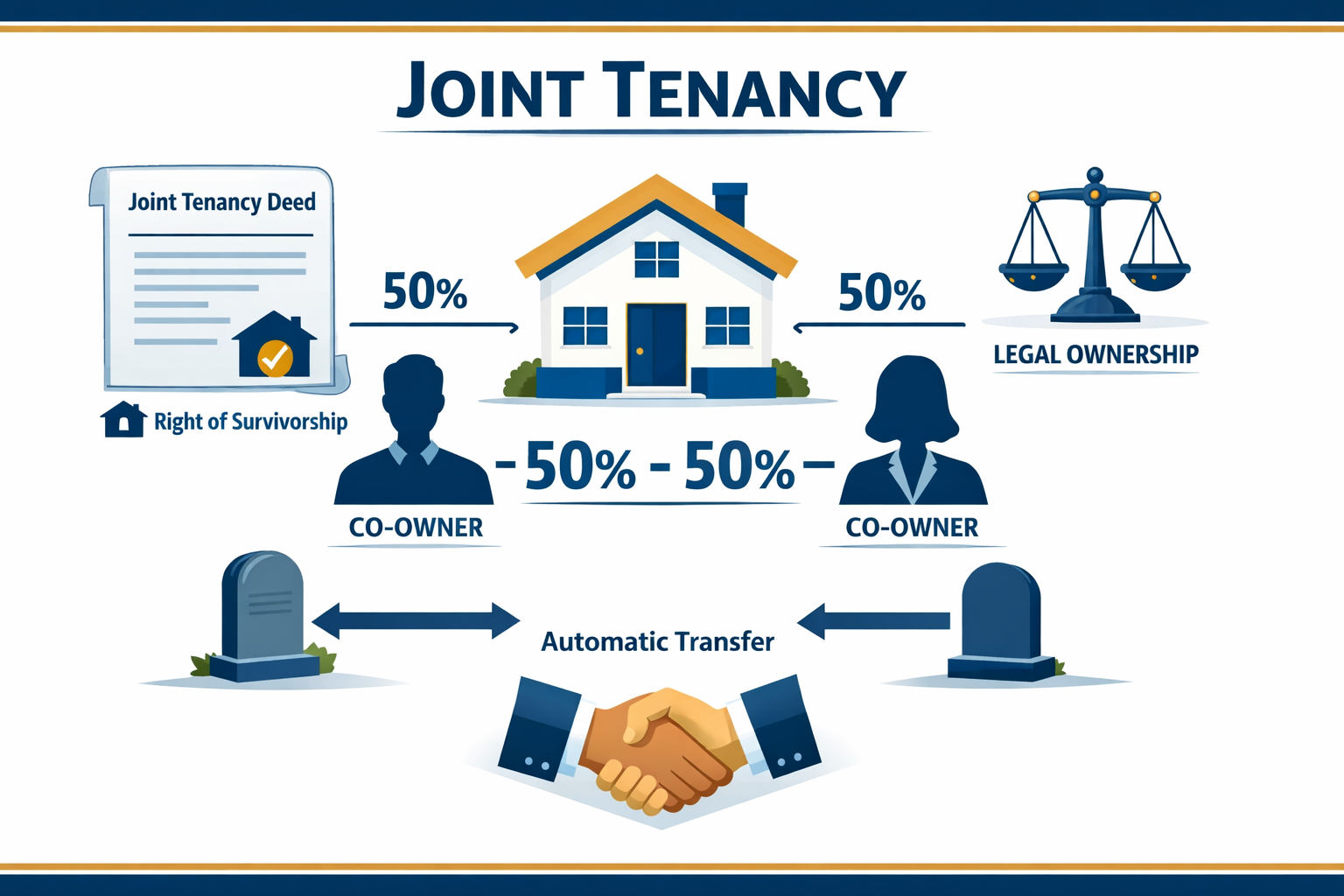
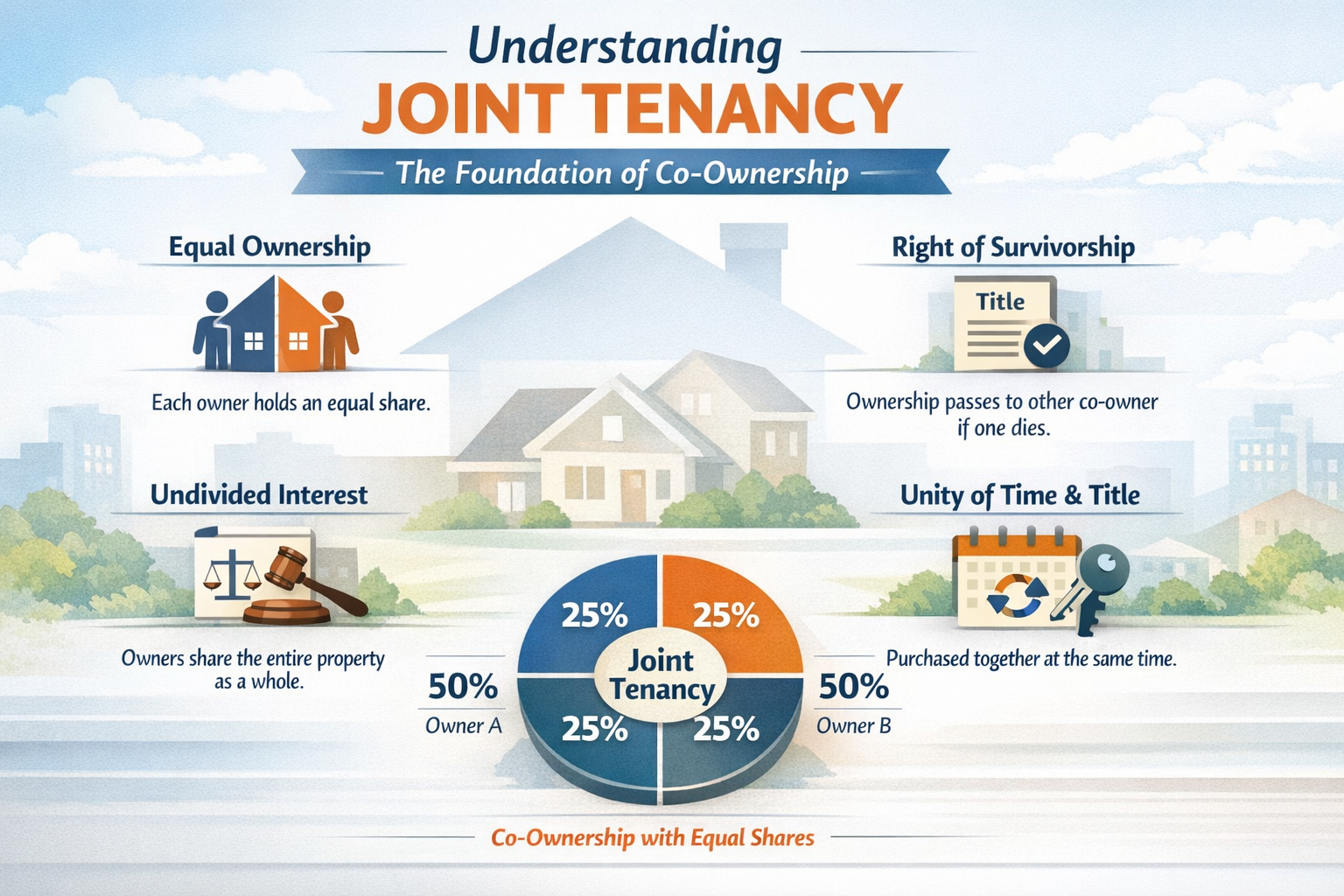
Joint tenancy is a form of property ownership where two or more people hold equal, undivided interests in the entire property. Think of it like owning a pizza together—each person doesn’t own specific slices, but rather has an equal share in the whole pie.
The defining characteristics of joint tenancy include:
Equal Ownership Shares: Each joint tenant owns an identical percentage of the property. If there are two owners, each owns 50%. With four owners, each holds 25%.
Right of Survivorship: This is the most distinctive feature of joint tenancy. When one joint tenant dies, their ownership interest automatically transfers to the surviving joint tenant(s). The property doesn’t pass through probate or according to a will—it simply belongs to whoever remains.
Unity of Time, Title, Interest, and Possession: All joint tenants must acquire their interest at the same time, through the same deed, with equal shares, and equal rights to possess the entire property.
Simultaneous Decision-Making: Major decisions about the property, including selling it, typically require unanimous consent from all joint tenants.
Joint Tenancy vs. Tenants in Common
Many property owners confuse joint tenancy with tenants in common. The differences matter significantly when selling:
| Feature | Joint Tenancy | Tenants in Common |
|---|---|---|
| Ownership Shares | Always equal | Can be unequal (e.g., 70%-30%) |
| Right of Survivorship | Yes—automatic transfer | No—share passes through estate |
| Selling Your Share | Converts to tenancy in common | Remains tenancy in common |
| Requires Consent to Sell | Yes, for whole property | Yes, for whole property |
| Created By | Specific deed language | Default in many states |
Understanding which type of ownership you have is crucial. Check your deed or title documents for phrases like “as joint tenants with right of survivorship” versus “as tenants in common.”
Common Scenarios Leading to Joint Tenancy
Joint tenancy typically arises in several situations:
🏡 Married couples purchasing a home together for estate planning simplicity
👨👩👧👦 Family members inheriting property and converting it to joint tenancy
🤝 Business partners investing in real estate together
💑 Unmarried couples buying property jointly
Each scenario brings unique challenges when the time comes to sell. The helpful guidance you need depends on your specific circumstances and relationship with your co-owners.
Why Selling Joint Tenancy Property Can Be Complicated
Unlike selling property you own outright, selling joint tenancy property introduces layers of complexity that can derail even the best-laid plans.
The Unanimous Consent Challenge
The primary obstacle is simple but significant: all joint tenants must agree to sell the property. This requirement creates several potential problems:
Conflicting Financial Goals: One owner might need immediate cash to pay medical bills or settle debts, while another views the property as a long-term investment. These opposing timelines create natural tension.
Disagreement on Price: Co-owners often have different opinions about the property’s value. One might want to sell quickly at market price, while another insists on holding out for a premium.
Emotional Attachments: When the property has sentimental value—like a family home where children grew up—emotional factors can override financial logic. One sibling might refuse to sell regardless of economic considerations.
Communication Breakdowns: Strained relationships between co-owners, especially after divorce or family disputes, can make productive conversations nearly impossible.
Financial Complications
Joint tenancy also creates financial entanglements that complicate sales:
Shared Expenses: Who pays for property taxes, insurance, maintenance, and repairs? Disputes over financial contributions can poison negotiations about selling.
Mortgage Complications: If the property has a mortgage in multiple names, all borrowers remain liable until the loan is paid off or refinanced. This can prevent one owner from exiting the arrangement cleanly.
Unequal Contributions: When one co-owner has paid significantly more toward the mortgage or improvements, they may expect a larger share of sale proceeds—creating conflict with the equal ownership structure of joint tenancy.
Tax Debt and Liens: If the property has back taxes or liens, all owners share responsibility, but not all may have the resources or willingness to resolve these issues before selling.
Legal and Title Issues
Joint tenancy can create legal complications that surface during a sale attempt:
Unclear Title: Questions about whether joint tenancy was properly created or whether it was severed by previous actions can cloud title and prevent a sale.
Creditor Claims: A creditor with a judgment against one joint tenant may place a lien on that person’s interest in the property, complicating the sale process.
Divorce Complications: When joint tenants divorce, the property often becomes a contentious issue requiring court intervention to resolve.
Death of a Co-Owner: When one joint tenant dies, proving the right of survivorship and clearing title for the surviving owner(s) requires specific documentation that can delay sales.
These complications aren’t insurmountable, but they require expert service from professionals who understand the nuances of joint tenancy problems and how to resolve them.
Option 1: Traditional Sale with All Co-Owners’ Agreement
When all joint tenants agree on selling the property, the process closely resembles a standard real estate transaction—with a few additional considerations.
Steps for a Cooperative Sale
1. Hold a Co-Owners Meeting
Before listing the property, all joint tenants should meet (in person or virtually) to discuss:
- Target sale price and acceptable minimum
- Timeline and urgency
- Division of sale proceeds
- Who will handle various responsibilities
- Selection of a real estate agent
- Agreement on property improvements or repairs
Document these agreements in writing, even if informally. This prevents misunderstandings later.
2. Select a Real Estate Professional
Choose an agent experienced with multi-owner properties. They should understand the additional documentation required and be skilled at managing communication with multiple decision-makers.
Interview several agents and make the selection together. This shared decision-making builds trust and ensures everyone feels represented.
3. Prepare the Property
Decide collectively on:
- Necessary repairs and improvements
- Who pays for what
- Professional staging or cleaning
- How to split costs
Consider creating a simple spreadsheet tracking all expenses so reimbursement is straightforward at closing.
4. List and Market the Property
All joint tenants should review and approve:
- Listing price
- Marketing materials and photos
- Listing description
- Open house schedule
5. Review Offers Together
When offers arrive, all co-owners should:
- Review each offer as a group
- Discuss pros and cons
- Negotiate collectively
- Make acceptance decisions unanimously
6. Sign All Documents
Every joint tenant must sign:
- Purchase agreement
- Disclosure documents
- Closing documents
- Deed transferring ownership
Missing even one signature can derail the entire transaction.
Dividing Sale Proceeds
In joint tenancy, proceeds are typically divided equally among all owners. However, co-owners can agree to different arrangements if:
- One owner contributed significantly more to the down payment
- One owner paid for major improvements
- One owner covered expenses while others didn’t contribute
Document any alternative arrangement in writing before closing. Have an attorney review the agreement to ensure it’s legally enforceable.
Tax Considerations for Joint Tenant Sales
Each joint tenant reports their share of the sale on their individual tax return. Important tax factors include:
Capital Gains Calculation: Each owner calculates gain based on their portion of the original purchase price (cost basis) and their share of the sale proceeds.
Primary Residence Exclusion: If the property was a primary residence, each owner may qualify for up to $250,000 in capital gains exclusion ($500,000 for married couples filing jointly).
Step-Up in Basis: If a joint tenant inherited their share through right of survivorship, they may receive a step-up in basis to the property’s value at the previous owner’s death, potentially reducing capital gains tax.
Consult a tax professional before selling to understand your specific tax situation and plan accordingly.
When Agreement Isn’t Possible
Unfortunately, not all co-owners can reach agreement. When negotiations break down and consensus proves impossible, you need to explore alternative options for selling joint tenancy property.
Option 2: Partition Action—The Legal Solution
When co-owners cannot agree on selling, a partition action provides a legal remedy that forces the sale or division of the property.
What Is a Partition Action?
A partition action is a lawsuit filed by one or more co-owners asking the court to either:
- Partition in Kind: Physically divide the property into separate parcels, with each owner receiving their portion
- Partition by Sale: Order the property sold and proceeds divided among owners
For most residential properties, physical division isn’t practical, so courts typically order a partition sale.
When to Consider a Partition Lawsuit
Partition actions make sense when:
✅ Co-owners have tried negotiation but cannot reach agreement
✅ One or more owners refuse to communicate or cooperate
✅ The property is being neglected because owners won’t agree on maintenance
✅ Financial circumstances require one owner to access their equity
✅ Relationships have broken down irreparably (divorce, family disputes, business dissolution)
Partition is a legal right available to any joint tenant. Courts rarely deny partition requests, recognizing that co-owners shouldn’t be forced to remain in unwanted partnerships indefinitely.
The Partition Lawsuit Process
Understanding the partition process helps set realistic expectations:
Step 1: Attempt Negotiation (Weeks to Months)
Before filing, make documented attempts to resolve the situation through negotiation or mediation. Courts favor parties who tried reasonable alternatives first.
Step 2: Hire an Attorney (1-2 Weeks)
Partition actions require legal representation. Seek an attorney experienced in real estate litigation and partition cases.
Step 3: File the Complaint (1 Day)
Your attorney files a partition complaint in the county where the property is located, naming all other co-owners as defendants.
Step 4: Service of Process (2-4 Weeks)
All co-owners must be formally served with the lawsuit papers.
Step 5: Response Period (30-60 Days)
Defendants have time to respond. They may:
- Agree to partition
- Contest the partition
- Raise counterclaims
- Request partition in kind instead of sale
Step 6: Discovery and Court Proceedings (3-12 Months)
The court process includes:
- Exchange of financial information
- Property appraisal
- Accounting of contributions and expenses
- Hearings and potential mediation
Step 7: Court Order (1-3 Months)
The court issues an order either:
- Appointing a referee to sell the property
- Ordering specific terms for the sale
- Dividing the property physically (rare)
Step 8: Property Sale (3-6 Months)
A court-appointed referee or commissioner manages the sale, which may occur through:
- Public auction
- Private sale with court approval
- Listing with a real estate agent
Step 9: Distribution of Proceeds (1-2 Months)
After the sale, the court oversees distribution of proceeds, accounting for:
- Each owner’s ownership percentage
- Reimbursement for expenses paid
- Offsets for exclusive use or rent
- Attorney fees and court costs
Total Timeline: Expect 6-18 months from filing to final distribution.
Costs of Partition Actions
Partition lawsuits are expensive. Typical costs include:
| Expense Category | Estimated Cost |
|---|---|
| Attorney Fees | $15,000 – $40,000+ |
| Court Filing Fees | $400 – $800 |
| Service of Process | $100 – $500 |
| Property Appraisal | $400 – $800 |
| Referee/Commissioner Fees | $5,000 – $15,000 |
| Title Work | $500 – $2,000 |
| Total Estimated Cost | $20,000 – $50,000+ |
These costs are typically paid from sale proceeds, reducing what each owner receives. In some cases, courts may order the losing party to pay the prevailing party’s attorney fees, though this isn’t guaranteed.
Alternatives to Partition Lawsuits
Given the time and expense involved, consider these partition lawsuit alternatives before filing:
Mediation: A neutral third party facilitates negotiation between co-owners. Mediation costs $2,000-$5,000 and often resolves disputes in weeks rather than months.
Buyout Agreement: One owner buys out the other(s) at an agreed-upon price. This requires financing or cash but avoids court entirely.
Cash Buyer for Your Share: Selling your ownership interest to a specialized buyer provides immediate exit without litigation costs or delays.
For many property owners, the third option—selling their share—offers the most practical path forward.
Option 3: Selling Your Share of the Joint Tenancy Property
You don’t need other co-owners’ permission to sell your individual interest in a joint tenancy property. This option provides an exit strategy when agreement proves impossible.
How Selling Your Share Works
When you sell your share of a joint tenancy property:
- The joint tenancy is severed for your portion, converting it to a tenancy in common
- The buyer receives your ownership percentage (e.g., 50% if there were two joint tenants)
- The buyer becomes a tenant in common with the remaining original owner(s)
- You exit completely, receiving cash for your interest
This process doesn’t require other owners’ consent or participation, though you should notify them as a courtesy.
Who Buys Individual Ownership Shares?
Traditional homebuyers don’t want to purchase a fractional interest in a property where they’ll share ownership with strangers. Instead, specialized buyers purchase these interests:
🏢 Real Estate Investors: Companies that specialize in fractional ownership and complicated property situations.
💰 Cash Buyers: Investors who can close quickly without financing contingencies.
🤝 Co-Tenancy Specialists: Buyers experienced in managing shared ownership situations and negotiating with remaining co-owners.
🏘️ Property Solutions Companies: Firms like Sure Path Property Solutions that provide helpful solutions for owners facing complex real estate challenges, including selling undivided interests.
Advantages of Selling Your Share
This option offers several benefits:
✅ Speed: Cash buyers can close in 7-14 days, providing immediate liquidity
✅ No Co-Owner Consent Required: You can proceed regardless of other owners’ wishes
✅ Avoid Litigation Costs: Save $20,000-$50,000+ in partition lawsuit expenses
✅ Certainty: You receive a firm cash offer rather than hoping for court-ordered sale results
✅ Simplicity: Minimal paperwork and hassle compared to traditional sales or lawsuits
✅ Relief from Ongoing Obligations: Exit property tax, insurance, and maintenance responsibilities immediately
Disadvantages and Considerations
This approach also has limitations:
❌ Discounted Price: Expect to receive 50-70% of your share’s market value due to the complexity and risk the buyer assumes
❌ No Control Over Buyer: Your co-owners will have a new partner they didn’t choose
❌ Potential Relationship Strain: Co-owners may feel betrayed if not consulted
❌ Tax Implications: Consult a tax advisor about capital gains on your share
How to Sell Your Share: Step-by-Step
Step 1: Determine Your Ownership Percentage
Review your deed to confirm your exact ownership interest. In joint tenancy, this is typically equal shares, but verify to be certain.
Step 2: Get a Property Valuation
Obtain a professional appraisal or broker price opinion to understand the property’s full market value. Your share’s value is your percentage of this amount.
Step 3: Research Specialized Buyers
Look for investors and companies that purchase fractional interests. Research their reputation, reviews, and track record with selling inherited property with multiple owners or similar situations.
Step 4: Request Cash Offers
Contact multiple buyers to request offers. Provide:
- Property address and description
- Your ownership percentage
- Recent property valuation
- Any liens, back taxes, or title issues
- Photos of the property
Step 5: Compare Offers
Evaluate offers based on:
- Purchase price
- Closing timeline
- Contingencies (if any)
- Buyer’s reputation and reliability
- Terms and conditions
Step 6: Accept an Offer
Once you select a buyer, they’ll typically:
- Conduct title research
- Verify your ownership interest
- Prepare purchase documents
- Coordinate closing with a title company
Step 7: Close the Sale
At closing, you’ll:
- Sign a deed transferring your interest
- Receive your cash payment
- Provide any required disclosures
The entire process typically takes 1-3 weeks from accepted offer to closing.
Notifying Co-Owners
While not legally required in most states, consider notifying co-owners before selling your share. This courtesy:
- Gives them the opportunity to purchase your interest themselves
- Maintains relationships where possible
- Demonstrates good faith
- May prevent future disputes
Send a written notice stating your intention to sell, the price you’re seeking, and a deadline for them to respond if interested in buying your share.
Special Situations When Selling Joint Tenancy Property
Certain circumstances create additional complexity when attempting to sell joint tenancy property: options for co-owners vary significantly based on these special situations.
Inherited Joint Tenancy Property
When you inherit property as a joint tenant (typically through right of survivorship when another joint tenant dies), unique considerations apply:
Stepped-Up Basis: Your inherited share receives a step-up in basis to the property’s fair market value at the date of death, potentially reducing capital gains tax when you sell.
Multiple Heirs: If several heirs inherit as joint tenants, coordinating a sale among family members with different financial needs and emotional attachments can prove challenging. Our guide on selling inherited property with multiple owners provides detailed strategies.
Sibling Disputes: When one sibling won’t sell an inherited house, legal options include partition actions or selling your individual share.
Probate Complications: Ensure the property has properly passed through right of survivorship and title is clear before attempting to sell.
Estate Debts: Outstanding debts of the deceased may create liens against the property that must be resolved before sale.
For inherited properties with complex ownership situations, specialized buyers offer helpful guidance and can often purchase properties that traditional buyers won’t touch.
Joint Tenancy with Back Taxes or Liens
Properties with tax debt or liens create additional challenges:
Shared Liability: All joint tenants are typically responsible for property taxes and liens, regardless of who actually incurred the debt.
Title Issues: Liens must usually be paid off or resolved before a traditional sale can close.
Disagreement on Payment: Co-owners may dispute who should pay to clear liens, creating deadlock.
Foreclosure Risk: Unpaid taxes can lead to tax foreclosure, forcing a sale and potentially eliminating all owners’ equity.
Solutions for Encumbered Properties:
- Negotiate with co-owners to split the cost of paying off liens
- Sell to a cash buyer who will pay off liens from purchase proceeds
- File a partition action and let the court allocate lien payments from sale proceeds
- Sell your share to an investor who specializes in encumbered properties
Companies like Sure Path Property Solutions regularly handle properties with back taxes and liens, providing expert service to navigate these complications and deliver helpful solutions.
Joint Tenancy After Divorce
Divorce creates unique joint tenancy challenges:
Divorce Decree Terms: The divorce decree may specify how the property should be handled, potentially overriding normal joint tenancy rules.
Buyout Provisions: One spouse may be required to buy out the other’s interest within a specified timeframe.
Refinancing Requirements: If one spouse keeps the property, they typically must refinance to remove the other from the mortgage.
Forced Sale: Courts may order the property sold if spouses cannot agree on other arrangements.
Emotional Complications: Post-divorce relationships often make cooperation difficult, necessitating legal intervention or sale to a third party.
If you’re dealing with joint tenancy property after divorce and your ex-spouse won’t cooperate, selling your share to a cash buyer may provide the cleanest exit strategy.
Joint Tenancy in Business Partnerships
When business partners own property as joint tenants:
Partnership Dissolution: Ending the business relationship often requires liquidating shared assets, including real estate.
Unequal Contributions: Business partners may have contributed different amounts to the property, creating disputes over proceeds distribution despite equal ownership.
Operating Agreements: Partnership or LLC operating agreements may specify procedures for selling jointly owned property.
Tax Implications: Business property sales may have different tax treatment than residential property.
Liability Concerns: Business debts or lawsuits may create liens against the property, complicating sales.
Consult both a real estate attorney and a business attorney when selling joint tenancy property held in a business context.
Navigating the Decision: Which Option Is Right for You?
Choosing the best path for selling joint tenancy property depends on your specific circumstances. Use this decision framework to guide your choice.
Decision Framework
Choose Traditional Sale with All Co-Owners (Option 1) if:
- ✅ All co-owners agree on selling
- ✅ You can agree on price, timeline, and terms
- ✅ You want to maximize sale proceeds
- ✅ You’re willing to invest time in the traditional sales process
- ✅ Relationships between co-owners are functional
Choose Partition Action (Option 2) if:
- ✅ Co-owners refuse to sell or cooperate
- ✅ You can afford $20,000-$50,000+ in legal costs
- ✅ You’re willing to wait 6-18 months for resolution
- ✅ Other options have been exhausted
- ✅ You want court oversight of the sale and proceeds distribution
Choose Selling Your Share (Option 3) if:
- ✅ You need cash quickly (within 2-4 weeks)
- ✅ Co-owners won’t agree to sell
- ✅ You want to avoid litigation costs
- ✅ You’re willing to accept 50-70% of your share’s market value
- ✅ You want certainty and simplicity
- ✅ You need to exit property obligations immediately
Questions to Ask Yourself
Before deciding, consider:
Financial Questions:
- How urgently do I need access to my equity?
- Can I afford to wait months or years for a sale?
- Can I cover ongoing property expenses while waiting?
- Do I have funds for legal fees if needed?
Relationship Questions:
- Can I communicate productively with co-owners?
- Is the relationship salvageable or irreparably damaged?
- Will a partition lawsuit permanently destroy family relationships?
- Can mediation help us reach agreement?
Practical Questions:
- Who’s currently living in or using the property?
- Are property taxes and expenses current?
- Does the property have liens or title issues?
- What’s the property’s condition and marketability?
Legal Questions:
- What does my deed actually say about ownership?
- Are there any agreements in writing about the property?
- Do divorce decrees or other court orders affect my options?
- What are the tax implications of each option?
Getting Professional Guidance
Complex property situations benefit from expert service. Consider consulting:
Real Estate Attorney: Essential for partition actions and complex title issues
Tax Advisor: Critical for understanding capital gains and tax implications
Real Estate Agent: Valuable for traditional sales and property valuations
Mediator: Helpful for facilitating agreement between disputing co-owners
Specialized Property Buyer: Companies like Sure Path Property Solutions offer free consultations to evaluate your situation and present options
Don’t navigate these decisions alone. Trustworthy service from industry experts can illuminate paths forward you might not have considered.
How Sure Path Property Solutions Helps Co-Owners
When you’re facing challenges with joint tenancy property, Sure Path Property Solutions provides friendly and caring support combined with expert service.
Our Approach to Joint Tenancy Properties
We understand that selling joint tenancy property: options for co-owners can feel overwhelming. That’s why we’ve developed a streamlined process that removes the complexity and stress.
We Specialize in Complicated Situations
Our expertise includes:
- 🏘️ Properties with multiple owners who disagree
- 📜 Properties with back taxes or liens
- 👨👩👧👦 Inherited properties with family disputes
- ⚖️ Properties facing partition lawsuits
- 🏚️ Properties in poor condition or unclear title
We’ve helped hundreds of property owners navigate these exact challenges, providing helpful solutions when traditional methods fail.
Three Ways We Can Help
1. Purchase Your Individual Share
If you need to exit a joint tenancy situation, we can:
- Make a fair cash offer for your ownership interest
- Close in as little as 7-14 days
- Handle all paperwork and title work
- Pay cash regardless of property condition
- Work around your timeline and needs
This option works whether you own 25%, 50%, or any other percentage of the property.
2. Purchase the Entire Property (with All Owners’ Agreement)
When all co-owners agree to sell but the property has issues that prevent a traditional sale, we can:
- Buy the property as-is, no repairs needed
- Pay off back taxes and liens from purchase proceeds
- Close quickly to meet your timeline
- Provide a straightforward, no-hassle process
- Offer fair pricing based on current market conditions
3. Provide Expert Consultation and Guidance
Even if we’re not the right buyer for your situation, we offer:
- Free property evaluations
- Honest assessment of your options
- Referrals to attorneys and other professionals
- Helpful guidance on next steps
- No-obligation consultations
Why Property Owners Choose Sure Path
Experience with Complex Situations: We’ve successfully closed on properties that other buyers walked away from—properties with title defects, multiple owners, liens, judgments, and more.
Transparent Process: We explain every step clearly, answer all questions, and never pressure you to make a decision.
Fair Pricing: While we can’t pay full retail market value for complicated properties, we offer fair prices that reflect the property’s actual condition and circumstances.
Fast Closings: When you need to sell quickly, we can close in days rather than months.
Compassionate Service: We recognize that property challenges often involve family stress, financial pressure, and emotional difficulty. Our team treats every client with respect and understanding.
Real Success Stories
The Martinez Family inherited their parents’ home as joint tenants—three siblings with very different financial situations and opinions about the property. After months of disagreement, one sibling needed cash urgently for medical expenses. We purchased that sibling’s one-third interest, providing immediate relief while allowing the other two siblings to keep the property. Everyone got what they needed.
David and Jennifer owned a rental property as joint tenants after their business partnership dissolved. Neither wanted to continue working together, but neither could afford to buy out the other. We purchased the property from both of them, paying off the mortgage and back property taxes, and giving each a fair cash payment within 10 days.
The Thompson Heirs faced a partition lawsuit over their grandmother’s house—five cousins who couldn’t agree on anything. Legal fees were mounting, and the property was deteriorating. We made an offer to purchase the entire property, which all five cousins accepted. They avoided another year of litigation and thousands in additional legal fees.
These stories represent the helpful solutions we provide every day to property owners facing difficult situations.
Frequently Asked Questions
Can one joint tenant force the sale of property?
Yes, through a partition action. Any joint tenant can file a lawsuit requesting that the court order the property sold and proceeds divided. Courts almost always grant partition requests, recognizing that co-owners shouldn’t be forced to remain in unwanted partnerships. However, partition lawsuits are expensive and time-consuming, typically costing $20,000-$50,000+ and taking 6-18 months to complete.
Can I sell my share of a joint tenancy property without the other owner’s permission?
Yes. You can sell your individual ownership interest without other co-owners’ consent. When you do, the joint tenancy is severed for your portion, converting it to a tenancy in common. The buyer of your share becomes a tenant in common with the remaining original owner(s). However, finding buyers for fractional interests typically requires working with specialized investors who purchase these types of ownership shares.
What happens to joint tenancy property when one owner dies?
When a joint tenant dies, their ownership interest automatically transfers to the surviving joint tenant(s) through the right of survivorship. This transfer happens outside of probate and isn’t controlled by the deceased person’s will. The surviving owner(s) must typically record an affidavit of death and possibly a new deed to clear the title and show sole or continued joint ownership.
How are sale proceeds divided in joint tenancy?
By default, sale proceeds are divided equally among all joint tenants since joint tenancy requires equal ownership shares. However, co-owners can agree to different distributions if one owner contributed more to the down payment, paid for improvements, or covered expenses. Any alternative arrangement should be documented in writing and reviewed by an attorney before closing.
Do all joint tenants have to sign the deed when selling?
Yes. When selling the entire property in a traditional sale, all joint tenants must sign the deed and all closing documents. Missing even one co-owner’s signature will prevent the sale from closing. This unanimous consent requirement is one reason why selling joint tenancy property can be challenging when co-owners disagree.
Can a joint tenant rent out the property without the other owner’s consent?
This depends on state law and any agreements between co-owners. Generally, each joint tenant has the right to possess and use the entire property. However, major decisions like renting to tenants typically require all owners’ consent. Renting without agreement can create legal disputes and may give other co-owners grounds for a partition action or lawsuit for their share of rental income.
What’s the difference between selling joint tenancy property and tenancy in common property?
The selling process is similar—both require unanimous consent to sell the entire property in a traditional sale. The key differences are: (1) Joint tenancy always involves equal shares, while tenancy in common can have unequal ownership percentages, and (2) Joint tenancy includes right of survivorship, while tenancy in common shares pass through the deceased owner’s estate. When you sell your individual share of joint tenancy property, it converts to tenancy in common.
How long does it take to sell joint tenancy property?
The timeline varies dramatically based on which option you choose:
- Traditional sale with agreement: 1-3 months (similar to any home sale)
- Partition lawsuit: 6-18 months from filing to final distribution
- Selling your share to a cash buyer: 1-3 weeks from offer to closing
Your specific timeline depends on property condition, market conditions, co-owner cooperation, and legal complexities.
Can I force my co-owner to buy me out?
Generally, no. You cannot force another co-owner to purchase your interest. However, you can: (1) Offer them the first opportunity to buy you out before selling to a third party, (2) File a partition action that may motivate them to buy you out to avoid a court-ordered sale, or (3) Sell your share to a third-party investor, which may motivate the co-owner to buy you out to avoid having a new partner.
What if the property has a mortgage in both names?
A mortgage in multiple names complicates selling. All borrowers remain liable for the loan until it’s paid off or refinanced. When selling the entire property, the mortgage is typically paid from sale proceeds at closing. When selling just your share, the buyer receives your ownership interest subject to the existing mortgage, though most lenders require all borrowers to remain on the loan unless it’s refinanced.
Taking Action: Next Steps for Co-Owners
Understanding how to sell joint tenancy property: options for co-owners is the first step. Taking action is the next.
Immediate Steps You Can Take Today
1. Locate Your Property Documents
Gather:
- Original deed showing ownership structure
- Mortgage documents (if applicable)
- Property tax statements
- Insurance policies
- Records of improvements and expenses
- Any written agreements between co-owners
2. Verify Your Ownership Type
Review your deed carefully to confirm whether you hold the property as:
- Joint tenants with right of survivorship
- Tenants in common
- Another ownership structure
The exact language matters. If unclear, consult a real estate attorney.
3. Assess the Property’s Condition and Value
Determine:
- Current estimated market value
- Needed repairs or improvements
- Outstanding liens or back taxes
- Marketability in current condition
4. Evaluate Your Financial Situation
Consider:
- How urgently you need access to your equity
- Whether you can afford ongoing property expenses
- Your ability to fund legal action if needed
- Tax implications of selling
5. Attempt Communication with Co-Owners
If you haven’t already:
- Reach out to discuss selling
- Propose mediation if direct communication fails
- Document all communication attempts
- Offer first right of refusal to purchase your share
When to Seek Professional Help
Consult professionals when:
- Co-owners refuse to communicate or cooperate
- The property has significant liens or back taxes
- Title issues or legal complications exist
- You’re considering a partition lawsuit
- Tax implications are unclear
- You need to sell quickly due to financial hardship
- Family relationships are at risk
How to Contact Sure Path Property Solutions
If you’re dealing with a challenging joint tenancy situation, we’re here to help. Our team provides:
✅ Free property evaluations with no obligation
✅ Honest assessment of your options and realistic timelines
✅ Fair cash offers for your share or the entire property
✅ Quick closings when you need to sell fast
✅ Helpful guidance even if we’re not the right solution for your situation
Ready to explore your options? Contact Sure Path Property Solutions today for a confidential consultation. We’ll review your specific situation, answer your questions, and help you understand the best path forward.
Whether you choose to pursue a traditional sale, consider a partition action, or sell your individual share, having industry experts on your side makes all the difference. Don’t let a complicated co-ownership situation keep you stuck. Helpful solutions exist, and we’re here to guide you toward the one that’s right for you.
Conclusion
Selling joint tenancy property presents unique challenges that don’t exist with sole ownership. The requirement for unanimous consent, the potential for co-owner disputes, and the complexity of dividing proceeds can make what should be a straightforward transaction feel impossibly complicated.
But as this comprehensive guide demonstrates, you have options. Whether all co-owners agree and you can pursue a traditional sale, you need the legal remedy of a partition action, or you choose to sell your individual share to exit the situation quickly—a path forward exists.
The key is understanding your specific circumstances, evaluating your priorities (speed vs. maximum proceeds, certainty vs. potential upside, relationship preservation vs. clean break), and choosing the option that best aligns with your needs.
For property owners facing difficult co-ownership situations—especially those involving inherited property, back taxes, or multiple owners who can’t agree—specialized buyers like Sure Path Property Solutions offer helpful solutions that traditional real estate channels cannot provide.
You don’t have to navigate this journey alone. Whether you need expert service to complete a traditional sale, legal guidance for a partition action, or a fair cash offer for your ownership share, professional help is available.
Take the first step today. Review your property documents, assess your options using the framework in this guide, and reach out to professionals who can provide the helpful guidance you need. Your path to resolution starts with understanding your options—and now you have the knowledge to move forward with confidence.
The complicated situation you’re facing today can become a resolved chapter tomorrow. With the right approach, trustworthy service, and expert support, selling joint tenancy property is not only possible—it can be surprisingly straightforward.