Selling a House with a Tax Lien: Process, Options & Solutions

Discovering a tax lien on your property can feel like hitting a brick wall when you’re trying to sell. The good news?
Selling a house with a tax lien is absolutely possible—and with the right guidance and understanding of your options, you can navigate this challenge successfully. Whether you’re facing federal tax liens from the IRS or local property tax liens from your municipality, helpful solutions exist to move forward with your sale and resolve the debt.
Understanding the process of
selling a house with a tax lien: process, options & solutions empowers property owners to make informed decisions during what can be a stressful time. This comprehensive guide walks through everything you need to know about tax liens, how they affect your ability to sell, and the practical pathways available to complete your transaction.
Key Takeaways
- Tax liens don’t prevent sales entirely, but they must be addressed before or during the closing process to transfer clear title to a buyer
- Multiple resolution options exist, including paying the lien before closing, satisfying it from sale proceeds, negotiating payment plans, or selling to specialized cash buyers
- Time is critical—redemption periods (often two years in states like New Jersey) allow you to resolve liens before foreclosure proceedings begin[1]
- Interest and penalties accumulate rapidly, with rates starting as high as 18% in some jurisdictions, making early action financially beneficial[3]
- Professional guidance from tax specialists and real estate experts can unlock solutions you might not discover on your own
Can You Sell a House with a Tax Lien?
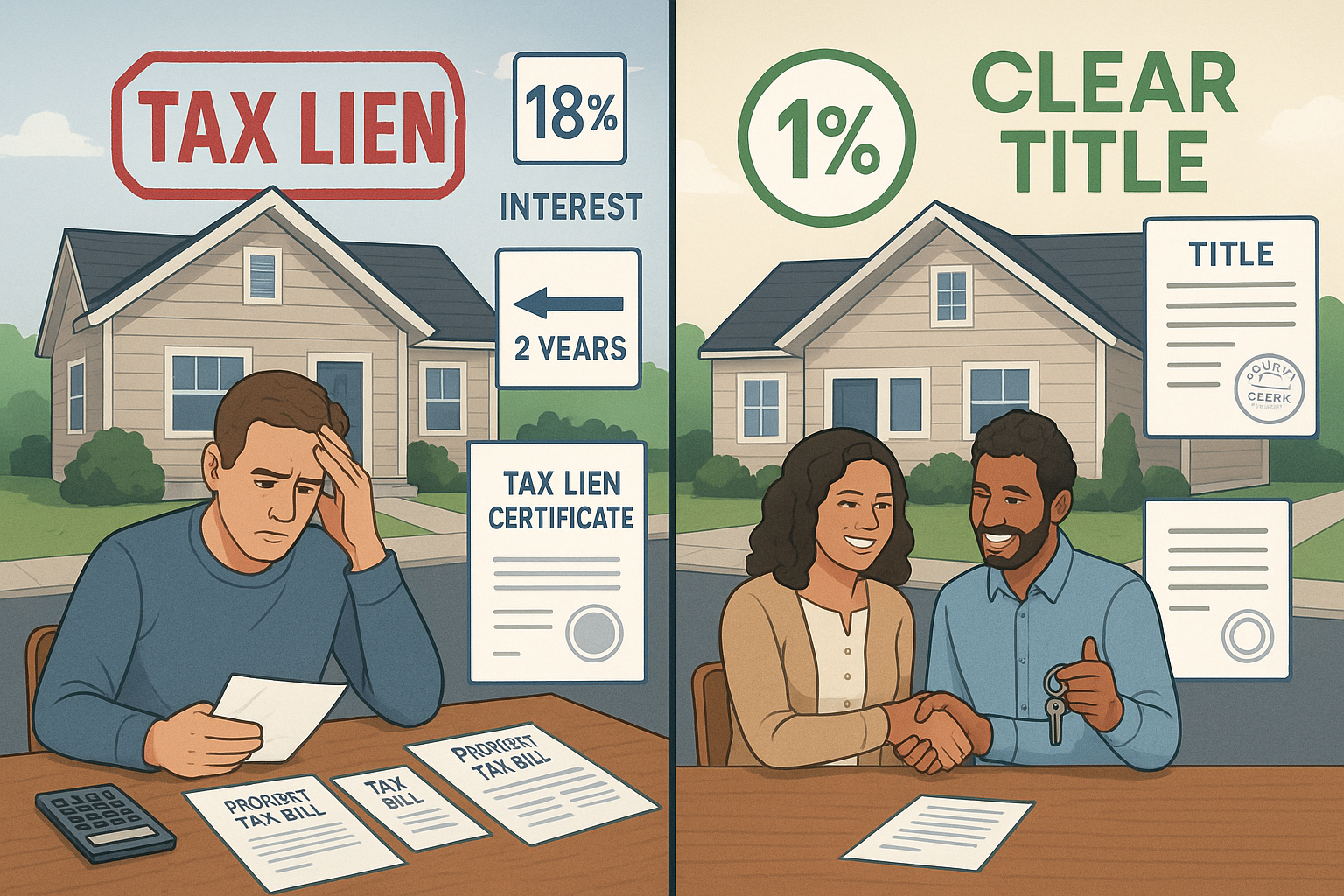
The short answer is
yes, you can sell a house with a tax lien—but with important conditions. A tax lien doesn’t strip you of property ownership or your right to sell. However, it does create a significant obstacle that must be cleared before the sale can close.
Understanding Tax Liens and Property Ownership
A tax lien represents a legal claim placed by a government taxing entity on real estate due to unpaid property taxes[1]. Think of it as the government saying, “We have first dibs on any money from this property until the tax debt is paid.” The lien attaches to the property itself, not just to you as the owner.
This distinction matters because:
- You still own the property and can list it for sale
- You can accept offers and enter into purchase agreements
- However, you cannot transfer clear title until the lien is satisfied[4]
The Clear Title Requirement
Here’s where the rubber meets the road: buyers and their lenders require clear title to complete a purchase. When a property has a tax lien, a clear title cannot be issued until the lien is removed[4]. Title companies won’t insure the property, and mortgage lenders won’t fund loans with outstanding liens clouding the title.
This creates a catch-22: You need money from the sale to pay the lien, but you can’t complete the sale without paying the lien first.
Fortunately, several practical solutions exist to break this cycle, which we’ll explore throughout this guide.
Can You Sell a House with Unpaid Property Taxes?
Absolutely. Many homeowners successfully sell properties with unpaid property taxes every year. The key is having a clear plan to satisfy those taxes—either before closing or as part of the closing transaction itself.
The most common approaches include:
- Paying the lien from personal funds before listing the property
- Using sale proceeds at closing to satisfy the lien (with buyer and lender agreement)
- Negotiating with the taxing authority for payment plans or settlements
- Selling to cash buyers who specialize in properties with title issues
Types of Tax Liens Affecting Property Sales
Not all tax liens are created equal. Understanding which type affects your property helps determine the best resolution strategy.
Property Tax Liens (Municipal/County)
These are the most common liens affecting residential real estate. When property owners fall behind on local property taxes, the municipality or county places a lien on the property.
How they work:
In many states, including New Jersey, municipalities conduct annual tax lien sales where tax sale certificates are issued to winning bidders[1]. These investors essentially pay your tax debt to the municipality and then have the right to collect from you—with interest.
Key characteristics:
- 📊 Interest rates can be substantial (18% down to 1% in New Jersey, depending on bidding)[3]
- ⏰ Redemption periods typically last two years, during which you can pay off the full amount owed[1]
- 🏛️ Foreclosure risk becomes real after the redemption period expires
- 💰 Additional charges can be added by the lienholder for subsequent taxes or municipal fees[4][5]
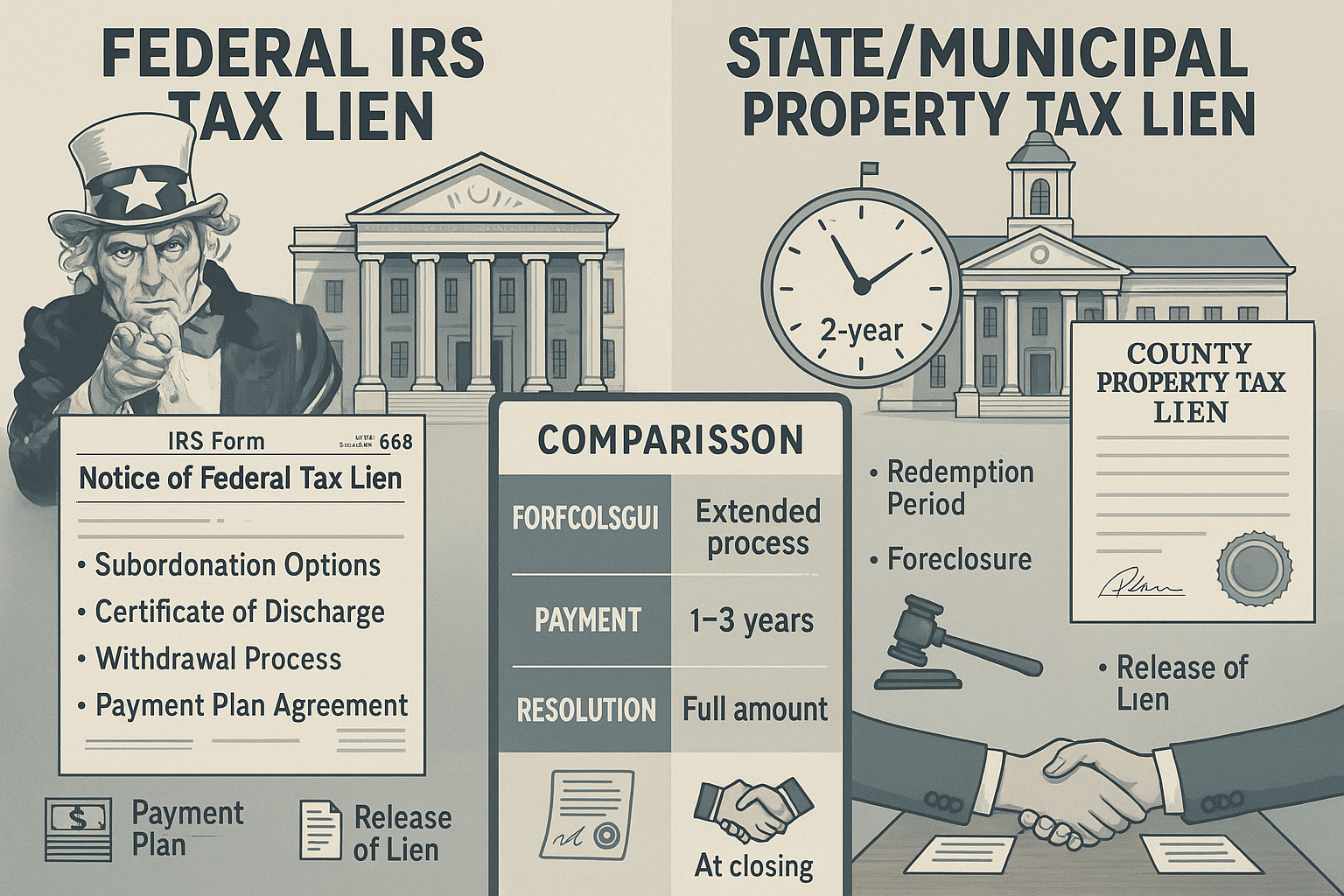
Federal Tax Liens (IRS)
The Internal Revenue Service files federal tax liens when individuals or businesses have unpaid federal income taxes, payroll taxes, or other federal tax obligations.
How they differ from property tax liens:
| Property Tax Liens |
Federal Tax Liens |
| Attached to specific property |
Attach to all assets (real and personal) |
| Sold to private investors |
Remain with IRS |
| State/local redemption laws apply |
Federal tax law governs |
| Foreclosure after redemption period |
IRS can levy/seize property |
| Local resolution process |
National IRS procedures |
Federal tax liens can be more complex to resolve but offer unique options like
subordination (allowing another creditor priority) and
discharge (removing the lien from specific property)[6].
State Tax Liens
Individual states can also file liens for unpaid state income taxes, business taxes, or other state obligations. These function similarly to federal liens but are governed by state law and procedures.
Judgment Liens
While not technically “tax” liens, judgment liens from unpaid debts or court judgments can similarly cloud title and complicate sales. These must also be addressed during the selling process.
How Tax Liens Affect Home Sales: The Real Impact
Tax liens create several practical challenges that directly impact your ability to sell and the financial outcome of the sale.
Title Issues and Buyer Concerns
When potential buyers discover a tax lien during their due diligence, several concerns immediately arise:
🚩 Buyer worries:
- Will the lien be cleared before closing?
- Are there other hidden liens or title problems?
- Will their lender approve the purchase?
- Is the seller financially unstable or unreliable?
These concerns can cause buyers to:
- Walk away from the deal entirely
- Demand significant price reductions
- Require the lien be cleared before they’ll proceed
- Insist on extended contingency periods
Impact on Property Valuation
Properties with tax liens typically sell for less than comparable properties with clear title. The discount reflects:
- Risk premium buyers demand for dealing with complications
- Reduced buyer pool (many conventional buyers won’t consider lien properties)
- Urgency to sell before foreclosure proceedings begin
- Accumulated debt reducing net equity available
Expect offers
10-30% below market value when selling with unresolved liens, especially to investors or cash buyers who specialize in these situations.
Lender and Financing Complications
Traditional mortgage lenders have strict requirements about title quality. Most will
not approve loans on properties with:
- Outstanding tax liens
- Unresolved judgments
- Clouds on title
- Pending foreclosure actions
This dramatically shrinks your potential buyer pool to:
- Cash buyers with immediate funds
- Investors who specialize in distressed properties
- Buyers willing to wait while you resolve the lien
The Accumulating Cost Problem
Every day a tax lien remains unpaid, the total amount owed increases. In New York City, for example, the amount owed to the lienholder increases after the lien is sold, as the lienholder is entitled to charge additional fees beyond the original tax debt[2].
What gets added to your balance:
- 💸 Interest (often 18% annually or higher)[3]
- 📋 Administrative fees
- 🏛️ Legal costs if foreclosure begins
- 💰 Subsequent property taxes the lienholder pays[4][5]
- 📄 Recording and filing fees
A $5,000 tax lien can easily balloon to $8,000-$10,000 or more within two years when interest and fees compound.
Selling a House with a Tax Lien: Process, Options & Solutions
Now for the helpful solutions you’ve been waiting for. Multiple pathways exist to successfully sell your property despite tax liens.
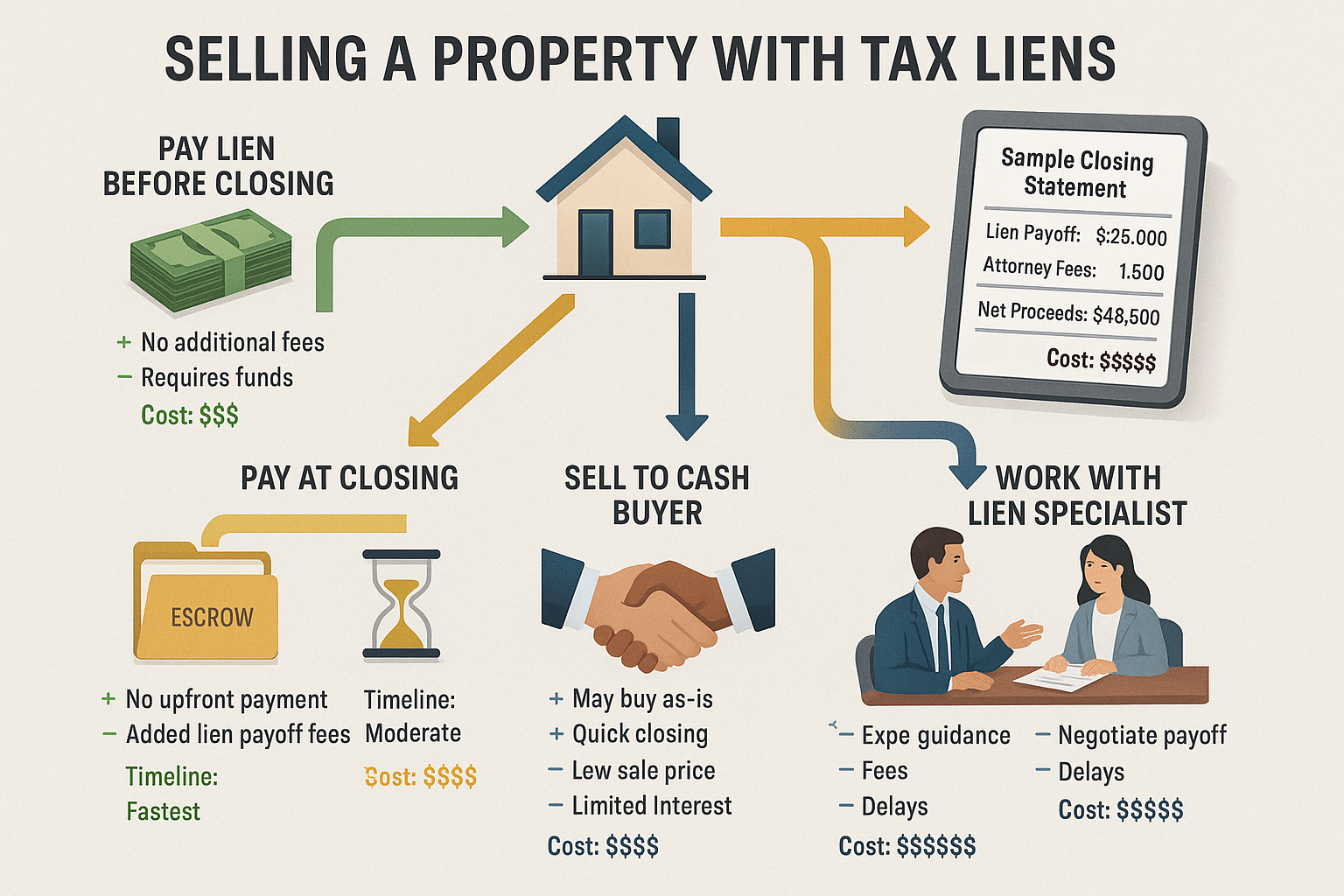
Option 1: Pay Off the Lien Before Listing
The cleanest approach: Resolve the lien completely before putting your house on the market.
Advantages:
- ✅ Property shows with clear title
- ✅ Access to full buyer market (including financed buyers)
- ✅ Stronger negotiating position
- ✅ Faster, smoother closing process
- ✅ No lien-related price reductions
How to proceed:
- Contact the lienholder (municipality, county, or investor who purchased the certificate)
- Request a payoff statement showing exact amount owed
- Verify all fees and charges included in the total
- Pay in certified funds (cashier’s check or wire transfer)
- Obtain lien release documentation
- Record the release with your county clerk
- Confirm clear title through a title search before listing
Property owners can redeem a tax lien at any time prior to the entry of a judgment of foreclosure by paying the full amount owed in cash or certified funds[5].
When this works best:
- You have savings or access to funds
- You have time before foreclosure deadlines
- You want maximum sale price
- The lien amount is manageable relative to property value
Option 2: Pay Off Tax Liens at Closing
The most common solution: Use proceeds from the sale to satisfy the lien as part of the closing transaction.
This approach requires coordination between multiple parties but is entirely feasible with proper planning.
How it works:
The closing attorney or title company acts as intermediary, ensuring the lien is paid from sale proceeds before disbursing remaining funds to you.
Step-by-step process:
- Disclose the lien to potential buyers upfront (transparency builds trust)
- Obtain current payoff amount from lienholder
- Ensure sufficient equity exists to cover the lien plus closing costs
- Buyer and lender agree to proceed with lien payoff at closing
- Title company requests payoff and coordinates payment
- Closing funds are distributed in this priority:
- Lien satisfaction first
- Closing costs and fees
- Remaining proceeds to seller
Sample Closing Calculation:
Sale Price:                           $250,000
Less: Tax Lien Payoff                 -$12,500
Less: Real Estate Commission (6%)     -$15,000
Less: Other Closing Costs             -$3,500
Less: Mortgage Payoff                 -$180,000
──────────────────────────────────────────────
Net Proceeds to Seller:               $39,000
Requirements for success:
- Sufficient equity to cover all liens and costs
- Buyer willing to proceed (often requires price adjustment)
- Lender approval (if buyer is financing)
- Accurate payoff amounts obtained in advance
- Professional closing team experienced with lien payoffs
Option 3: Sell to Cash Buyers or Investors
The fastest route: Specialized buyers purchase properties “as-is” with liens intact.
Companies like
Sure Path Property Solutions provide expert service for property owners facing exactly these situations. Industry experts who understand tax liens, redemption periods, and foreclosure timelines can offer helpful guidance and fair solutions.
How cash buyer transactions work:
- Contact a reputable cash buyer specializing in lien properties
- Property evaluation (often same-day or within 24-48 hours)
- Receive cash offer (typically below market value but guaranteed)
- Buyer handles lien resolution as part of their acquisition
- Fast closing (often 7-14 days versus 30-60+ days traditional)
- Walk away with net proceeds after lien satisfaction
Advantages:
- ⚡ Speed (critical when facing foreclosure deadlines)
- 🤝 Certainty (no financing contingencies or buyer backing out)
- 😌 Simplicity (buyer handles title issues and complications)
- 💼 Professional expertise navigating complex situations
- 🏠 “As-is” purchase (no repairs or preparations needed)
Trade-offs:
- Lower sale price (typically 60-80% of market value)
- Less negotiating leverage
- Reduced proceeds after lien satisfaction
When this makes sense:
- Foreclosure deadline approaching
- Property needs significant repairs
- You need certainty and speed
- Limited equity makes traditional sale difficult
- Emotional or physical distance from property
Option 4: Negotiate Payment Plans with Tax Authorities
The time-buying strategy: Establish payment arrangements that allow you to sell on a longer timeline.
Many taxing authorities, including the IRS and local municipalities, offer payment plan options that can provide breathing room.
IRS Payment Plan Options:
For federal tax liens, the IRS offers several programs:
- Installment Agreements: Monthly payments over extended periods (up to 72 months)
- Offer in Compromise: Settle debt for less than full amount (if you qualify)
- Currently Not Collectible Status: Temporary suspension of collection activities
- Partial Payment Installment Agreement: Pay what you can afford monthly
Local Property Tax Options:
Many municipalities offer:
- Deferred payment programs
- Hardship exemptions
- Settlement negotiations
- Extended payment schedules
In New York City, property owners may be eligible for a waiver of the 5% tax lien surcharge if they meet specific income and residency requirements (combined annual income no greater than $107,300)[2].
Strategic benefit:
A payment plan can prevent foreclosure proceedings from beginning, giving you time to:
- Prepare the property for sale
- Wait for better market conditions
- Find the right buyer
- Arrange financing to pay off the lien
Important consideration:
In New York City, the lienholder can begin foreclosure proceedings within one year after the lien sale date if the property owner has not paid the lien in full or entered into a payment agreement[2]. Establishing a payment plan stops this clock.
Option 5: Request IRS Lien Discharge or Subordination
For federal tax liens specifically: The IRS offers programs that can facilitate property sales even with liens in place.
Lien Discharge:
This removes the federal tax lien from specific property, allowing you to sell it with clear title. The IRS may grant discharge if:
- The sale proceeds will be applied to the tax debt
- The government’s interest is protected
- Facilitating the sale is in the government’s best interest
Lien Subordination:
This allows another creditor (like a mortgage lender) to move ahead of the IRS lien in priority. This can enable refinancing or sale with new financing.
Application process:
- Complete IRS Form 14135 (Discharge) or Form 14134 (Subordination)
- Provide detailed financial information
- Submit purchase agreement and settlement statement
- Demonstrate how IRS will receive payment
- Wait for IRS review and approval (can take 45-60 days)
When to pursue this:
- Selling property with federal tax liens
- Sale proceeds will partially or fully satisfy IRS debt
- You need to refinance to pay off liens
- Traditional lien payoff at closing isn’t feasible
Understanding Redemption Periods and Foreclosure Timelines
Time is both your ally and your enemy when dealing with tax liens. Understanding the timeline helps you make strategic decisions.
The Two-Year Redemption Window
In states like New Jersey, property owners have a two-year redemption period after a tax lien is purchased during which they can pay off the full amount owed, including interest and costs incurred by the lienholder[1].
What this means:
During these two years, you have the legal right to:
- Remain in the property
- Sell the property
- Redeem the lien by paying the full balance
- Negotiate with the lienholder
What happens during redemption:
The lienholder has rights too. A lienholder has the right to pay any delinquent municipal charges on the property and add those payments to the lien balance[4][5]. This means your redemption amount increases if you fall behind on:
- Subsequent property taxes
- Water and sewer bills
- Municipal fees and assessments
- Code enforcement fines
After Redemption Period Expires
Once the redemption period ends, the situation becomes more urgent. After the two-year redemption period expires in New Jersey, the lienholder can begin foreclosure proceedings by filing a foreclosure complaint in the Chancery Division of Superior Court[1].
Foreclosure timeline:
- Complaint filed in Superior Court
- Notice served to property owner
- Court proceedings (several months typically)
- Judgment entered if owner doesn’t respond/resolve
- Sheriff’s sale scheduled (property auctioned)
- Deed transferred to winning bidder
- Owner loses all rights to the property
Abandoned Property Provisions
If a property is abandoned, the redemption period may be shortened and the lienholder must pay all municipal taxes and liens in the tax year when due[7]. This accelerated timeline makes quick action even more critical.
Signs of abandonment:
- Property vacant for extended periods
- Utilities disconnected
- No maintenance or upkeep
- Mail accumulating
- Municipal notices unanswered
Strategic Timing for Sales
Best times to sell:
- ✅ Early in redemption period: Maximum negotiating leverage, lowest accumulated fees
- ✅ Before foreclosure filing: Avoid legal costs and court involvement
- ✅ When equity still exists: Ensure liens haven’t consumed all value
Danger zones:
- ⚠️ Late in redemption period: Limited time to find buyers and close
- ⚠️ After foreclosure filing: Legal complications and additional costs
- ⚠️ When liens exceed value: No equity remaining for owner
Working with Professionals: Your Support Team
Successfully selling a house with a tax lien requires coordinating multiple experts. Building the right team provides helpful guidance through complex situations.
Real Estate Professionals Specializing in Distressed Properties
Not all real estate agents have experience with lien sales. Seek out professionals who:
- Understand tax lien law in your state
- Have relationships with cash buyers and investors
- Can accurately price properties with title issues
- Provide realistic timelines and expectations
- Offer trustworthy service during stressful times
Companies like
Sure Path Property Solutions specialize in helping owners navigate complicated real estate issues—back taxes, multiple heirs, liens, judgments, or unclear title. Expert service from industry experts who simplify complex situations can make the difference between losing your property to foreclosure and walking away with proceeds.
Tax Attorneys and CPAs
Tax professionals help with:
- Negotiating with the IRS or state tax authorities
- Preparing discharge or subordination applications
- Structuring payment plans
- Identifying tax relief programs you qualify for
- Ensuring compliance with tax law throughout the sale
When to hire a tax attorney:
- Federal tax liens exceed $25,000
- Multiple years of unfiled returns
- IRS has initiated collection actions
- Complex business or investment property situations
- Offer in Compromise or other settlement negotiations
Real Estate Attorneys
A real estate attorney experienced with lien transactions can:
- Review purchase agreements to protect your interests
- Coordinate lien payoffs at closing
- Ensure proper documentation and releases
- Handle title issues and clearing clouds
- Represent you if foreclosure proceedings begin
Title Companies
Title professionals play a crucial role by:
- Conducting comprehensive title searches
- Identifying all liens and encumbrances
- Calculating exact payoff amounts
- Coordinating with lienholders
- Ensuring clean title transfer to buyers
- Providing title insurance to protect all parties
The Value of Friendly and Caring Guidance
Dealing with tax liens can be emotionally overwhelming. Beyond technical expertise, seek professionals who offer:
- 🤝 Compassionate communication that respects your situation
- 📞 Accessibility when you have questions or concerns
- 🎯 Clear explanations without confusing legal jargon
- 💡 Creative problem-solving for unique circumstances
- ✨ Positive outlook focused on helpful solutions
The right team doesn’t just solve problems—they provide peace of mind during uncertain times.
Practical Steps: Your Action Plan for Selling with Tax Liens
Ready to move forward? Here’s your step-by-step roadmap.
Step 1: Assess Your Current Situation (Week 1)
Gather information:
- Obtain copies of all tax lien notices and certificates
- Determine which government entities hold liens (IRS, state, county, municipality)
- Identify when liens were filed and redemption period deadlines
- Calculate approximate property value (use online estimators initially)
- List all other debts secured by the property (mortgages, HELOCs, judgments)
Calculate your equity position:
Estimated Property Value:              $XXX,XXX
Less: Mortgage Balance                 -$XX,XXX
Less: Tax Lien Payoff Amount          -$XX,XXX
Less: Other Liens/Judgments           -$X,XXX
Less: Estimated Closing Costs (8-10%) -$XX,XXX
────────────────────────────────────────────────
Estimated Net Equity:                  $XX,XXX
If net equity is
positive, you have options. If
negative or minimal, cash buyers may be your best route.
Step 2: Get Exact Payoff Amounts (Week 1-2)
Contact each lienholder to request:
- Current balance owed
- Daily interest rate
- Additional fees or charges
- Payoff good-through date
- Payment instructions (certified funds, wire transfer, etc.)
- Lien release process and timeline
Pro tip: Get payoff quotes in writing via email or certified mail to avoid disputes later.
Step 3: Explore Resolution Options (Week 2-3)
Based on your situation, research:
If you have funds available:
- Cost/benefit of paying liens before listing
- Interest savings from early payoff
- Potential sale price increase with clear title
If you need sale proceeds:
- Real estate agents experienced with lien properties
- Cash buyers who specialize in these situations
- Timeline to close traditional sale vs. cash sale
If you need more time:
- Payment plan eligibility with each taxing authority
- IRS installment agreement options
- Hardship programs you might qualify for
Step 4: Assemble Your Professional Team (Week 3-4)
Depending on your chosen path:
- Real estate agent or cash buyer to handle the sale
- Real estate attorney to protect your interests
- Tax professional if dealing with IRS or complex tax issues
- Title company to coordinate closing and lien payoffs
Interview multiple professionals and choose those offering helpful guidance and expert service.
Step 5: List or Market the Property (Week 4+)
Traditional listing approach:
- Price competitively considering lien complications
- Disclose liens upfront to serious buyers
- Prepare for longer marketing time
- Be flexible with terms to attract buyers
Cash buyer approach:
- Contact 2-3 reputable companies
- Compare offers and terms
- Verify company credentials and reviews
- Understand exactly what you’ll net after lien payoff
Step 6: Navigate the Closing Process (Week 8-12+)
Before closing:
- Provide all lien documentation to title company
- Confirm final payoff amounts (within days of closing)
- Review settlement statement carefully
- Verify all liens will be satisfied from proceeds
At closing:
- Bring required identification and documents
- Sign all necessary paperwork
- Confirm lien payments are made immediately
- Obtain copies of lien releases
After closing:
- Verify lien releases recorded with county
- Obtain confirmation from each taxing authority
- Keep all documentation for tax purposes
- Consider consulting tax professional about sale implications
Special Considerations and Common Questions
Can You Sell a House with Back Taxes Owed?
Yes, you can absolutely sell a house with back taxes owed. Back taxes are simply unpaid property taxes that may or may not have resulted in a formal tax lien yet.
If no lien has been filed:
- You have more flexibility and time
- Pay back taxes from sale proceeds at closing
- Less complicated than dealing with lien certificates sold to investors
- Lower accumulated interest and fees
If a lien has been filed:
- Follow the processes outlined throughout this guide
- Act quickly to preserve equity
- Consider all resolution options available
What If the Lien Exceeds Property Value?
This challenging situation—being “underwater” with liens—requires creative solutions:
Option 1: Short sale with lien forgiveness
- Negotiate with lienholders to accept less than full amount
- Requires demonstrating financial hardship
- May have tax consequences (forgiven debt as income)
Option 2: Deed in lieu of foreclosure
- Transfer property to lienholder voluntarily
- Avoid foreclosure on your record
- May negotiate release from remaining debt
Option 3: Bankruptcy protection
- Chapter 13 can reorganize tax debts
- Stops foreclosure proceedings temporarily
- Allows time to catch up on payments
- Consult bankruptcy attorney for guidance
Multiple Liens: Priority and Payment Order
When multiple liens exist, they’re typically paid in this order at closing:
- Property tax liens (highest priority in most states)
- Federal tax liens (priority based on filing date)
- Mortgage liens (first mortgage, then second, etc.)
- Judgment liens (based on filing date)
- HOA liens (varies by state)
Understanding lien priority helps you calculate what you’ll net from the sale.
Tax Implications of Selling with Liens
Consult a tax professional about:
- Capital gains tax on the sale (if applicable)
- Forgiven debt as income (if liens are settled for less)
- Deductibility of interest paid on tax liens
- 1099-C forms for cancelled debt
- Primary residence exclusion (up to $250,000/$500,000 gain)
Inherited Property with Tax Liens
If you’ve inherited property with tax liens, you face unique challenges:
- Multiple heirs may complicate decision-making
- Estate may be responsible for liens, not individual heirs
- Probate process may be required before selling
- Step-up in basis may reduce capital gains
Sure Path Property Solutions helps owners navigate complicated situations involving multiple heirs and unclear title, providing helpful solutions that work for all parties involved.
Avoiding Tax Liens: Prevention for Future Property Ownership
Once you’ve successfully navigated selling with a tax lien, protect yourself going forward:
Set Up Property Tax Escrow
If you have a mortgage, ensure property taxes are escrowed and paid automatically by your lender. If you own free and clear:
- Set up automatic payments with your municipality
- Create a dedicated savings account for property taxes
- Set quarterly reminders to verify payments received
Understand Your Tax Obligations
- Know your property’s assessed value
- Understand your local tax rate and payment schedule
- Review tax bills carefully for accuracy
- File for exemptions you qualify for (homestead, senior, veteran, etc.)
Act Immediately If You Fall Behind
If financial hardship strikes:
- Contact the tax collector immediately
- Explain your situation honestly
- Ask about payment plans before liens are filed
- Seek assistance programs for qualifying homeowners
- Consider selling before liens accumulate
Monitor Your Property Records
- Check county records annually for unexpected liens
- Verify tax payments are properly credited
- Ensure exemptions are applied correctly
- Address errors or discrepancies immediately
Resources and Next Steps
Government Resources
IRS Resources:
- IRS.gov/liens – Information about federal tax liens
- Form 14135 – Application for Certificate of Discharge
- Form 14134 – Application for Certificate of Subordination
- IRS Taxpayer Advocate Service – 877-777-4778
State and Local Resources:
- County tax collector’s office
- Municipal tax assessor
- State Department of Revenue
- County clerk’s office for lien searches
Professional Associations
- National Association of Tax Professionals
- American Bar Association – Taxation Section
- National Association of Realtors
- American Land Title Association
When to Seek Help
Don’t wait until the last minute. Contact professionals if:
- ⏰ You’re within 6 months of redemption period expiration
- 📋 You’ve received foreclosure notices
- 💰 Liens are accumulating rapidly
- 🤔 You’re unsure which option is best for your situation
- 😰 The stress is overwhelming your ability to act
Sure Path Property Solutions offers friendly and caring guidance for property owners facing these exact challenges. Industry experts who coordinate with counties and title professionals can guide you toward clear, practical solutions—even in the most complex situations.
Conclusion: Moving Forward with Confidence
Selling a house with a tax lien: process, options & solutions may seem daunting initially, but thousands of property owners successfully navigate this challenge every year. The key is understanding your options, acting decisively, and assembling the right team of professionals to guide you through.
Remember these fundamental truths:
✅
Tax liens don’t prevent sales—they just require proper handling
✅
Multiple pathways exist—from paying before closing to working with specialized buyers
✅
Time is valuable—early action preserves equity and options
✅
Professional help matters—expert service saves money and stress
✅
Solutions are available—even in complex situations with multiple liens
Your Next Steps Today
- Assess your timeline – How much time before foreclosure risk becomes real?
- Calculate your equity – Do you have positive equity after lien payoff?
- Identify your priority – Speed, maximum proceeds, or simplicity?
- Contact professionals – Reach out to experienced real estate experts
- Take action – Every day of delay costs money in interest and fees
Whether you choose to pay off liens before listing, coordinate payoff at closing, or work with cash buyers who specialize in these situations, the important thing is
taking that first step forward.
Companies like
Sure Path Property Solutions exist specifically to provide helpful solutions for property owners navigating complicated real estate issues. With trustworthy service, expert guidance, and a focus on practical solutions, you can move past tax lien challenges and successfully sell your property.
The path forward may have obstacles, but it’s absolutely navigable with the right guidance and support. Your property doesn’t have to become a foreclosure statistic—helpful solutions exist, and taking action today opens the door to resolving tax liens and moving forward with your life.
References
[1] New Jersey tax lien sale procedures and redemption periods – Municipal tax sale regulations
[2] New York City Department of Finance – Tax lien sale information and surcharge waiver programs
[3] New Jersey tax lien interest rate bidding process – State tax sale statutes
[4] Title clearance requirements for properties with tax liens – Title insurance industry standards
[5] Tax lien redemption rights and procedures – State property law
[6] IRS Publication 594 – Understanding the Collection Process (including liens, levies, and releases)
[7] Abandoned property provisions in tax lien law – Municipal foreclosure procedures