
Cash Buyers for Tax Lien Properties: Sell Fast, No Repairs
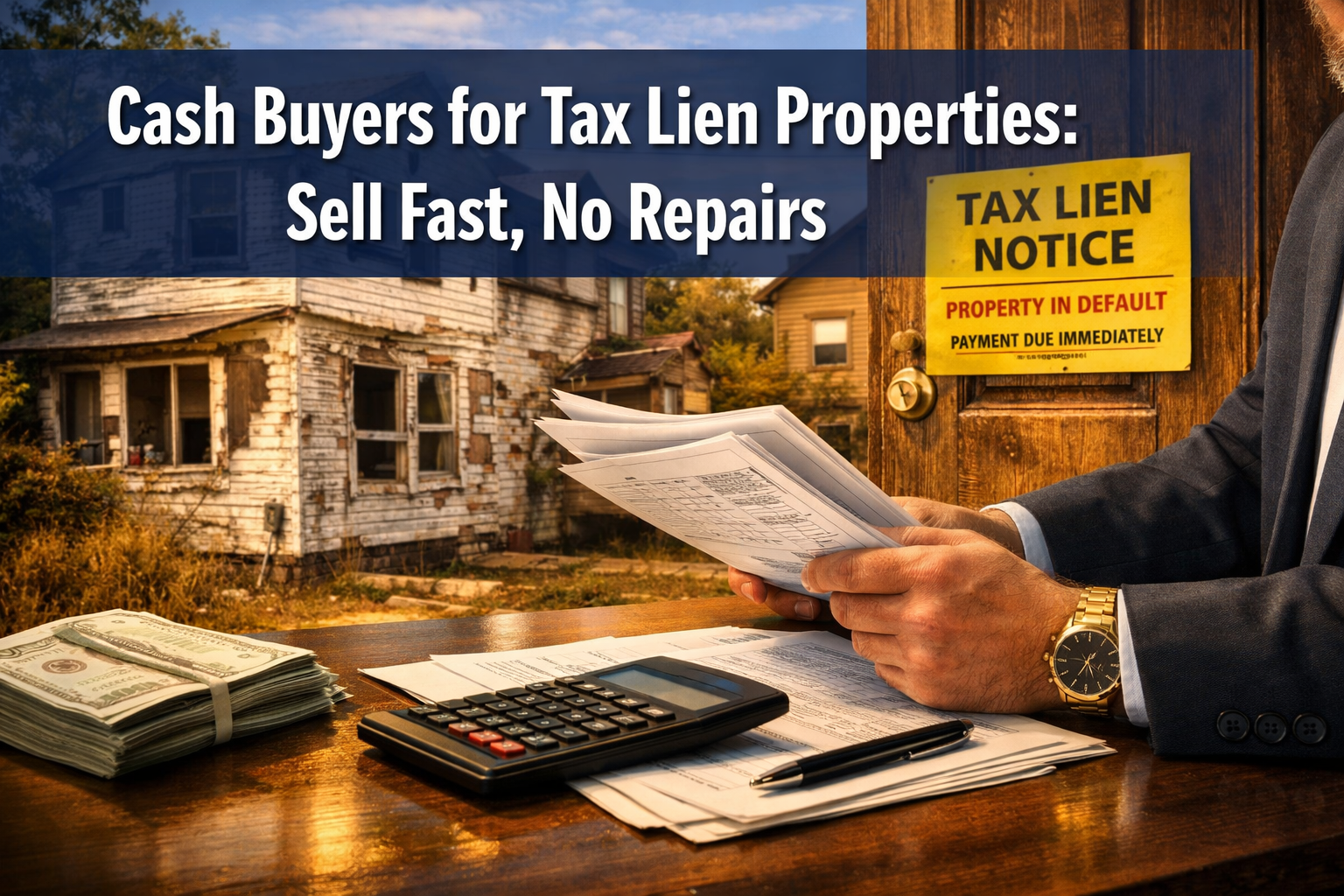
Facing a property with tax liens can feel like being trapped in quicksand. The more time passes, the deeper the problem becomes. Interest accumulates. Penalties stack up. The county threatens foreclosure. Meanwhile, the property sits there—often in disrepair—while traditional buyers run the other way. But here’s the good news: cash buyers for tax lien properties offer a lifeline that can pull you out of this situation quickly, without requiring a single repair.
This comprehensive guide explores how cash buyers provide helpful solutions for property owners struggling with tax liens, what makes this selling method different, and why it might be the perfect exit strategy for your complicated situation.
Key Takeaways
- Cash buyers purchase tax lien properties as-is, eliminating the need for costly repairs, renovations, or even basic cleaning before sale
- Closing can happen in as little as 7-14 days, preventing further tax accumulation and potential foreclosure proceedings
- Reputable cash buyers coordinate directly with county tax offices to settle outstanding liens at closing, removing the burden from property owners
- No traditional financing means no appraisals, inspections, or buyer backing out, creating certainty in uncertain situations
- This solution works for various property types—houses, land, commercial buildings—regardless of condition or title complexity
Understanding Tax Lien Properties and Why They’re Hard to Sell
Tax lien properties carry a special burden that makes them challenging to sell through traditional channels. When property taxes go unpaid, the county or municipality places a lien against the property. This lien takes priority over almost every other claim, including mortgages.
What Makes Tax Liens Different
Unlike other types of liens, tax liens have super-priority status. This means they get paid first when a property sells. Even if you have a mortgage, the tax lien jumps to the front of the line.
Here’s what happens when tax liens accumulate:
- Interest compounds at rates typically between 8-18% annually depending on your state
- Penalties add up on top of the principal amount owed
- Additional fees from the county continue to accrue
- Foreclosure timelines begin once properties reach a certain delinquency threshold
Traditional buyers and their lenders see tax liens as red flags. Mortgage companies won’t approve loans on properties with outstanding tax debt. Cash is usually required to clear the liens before closing, creating a catch-22 situation for owners who lack the funds.
Common Scenarios Leading to Tax Lien Properties
Property owners find themselves with tax liens for various reasons:
Inherited properties often come with surprise tax bills. The previous owner may have fallen behind, and heirs discover years of back taxes when they try to sell. Back taxes on inherited property create complex situations that require expert service to navigate.
Financial hardship can make it impossible to keep up with tax payments while managing other obligations. Job loss, medical bills, or business failures leave property owners choosing between immediate needs and property taxes.
Multiple owners of a property may disagree about who should pay taxes, resulting in no one paying them. This situation frequently occurs with inherited family land where siblings or cousins can’t agree on responsibilities.
Vacant or rental properties sometimes slip through the cracks when owners don’t receive tax bills at their current address or when rental income doesn’t cover all expenses.
Why Traditional Selling Methods Don’t Work for Tax Lien Properties
The conventional real estate market operates on certain assumptions that break down when tax liens enter the picture. Understanding these limitations helps explain why cash buyers offer such valuable helpful guidance.
The Financing Problem
Most homebuyers need mortgages. Lenders require clear title before approving loans. A tax lien clouds the title, making it unmarketable to financed buyers.
Even if a buyer wants to purchase the property, their lender will demand the tax lien be satisfied before closing. This creates a financial puzzle: the seller needs proceeds from the sale to pay the taxes, but can’t complete the sale without paying the taxes first.
The Repair Expectation
Traditional buyers expect move-in ready properties or at least properties in good condition. Tax lien properties often sit neglected because owners facing financial difficulties can’t afford maintenance.
The typical selling process requires:
- ✅ Repairs to pass inspections
- ✅ Cosmetic updates to compete with other listings
- ✅ Cleaning and staging
- ✅ Ongoing maintenance during the listing period
- ✅ Utility activation for showings
Each of these costs money and time—resources that property owners with tax liens typically don’t have.
The Time Factor
Listing a property traditionally takes months. During those months:
- Tax liens continue growing with interest and penalties
- Risk of foreclosure increases
- Property condition may deteriorate further
- Carrying costs accumulate
- Stress and uncertainty persist
For someone facing property tax lien foreclosure, time is the enemy. Every passing month makes the situation worse.
How Cash Buyers for Tax Lien Properties Work
Cash buyers operate on a completely different model than traditional real estate transactions. Understanding this model reveals why it’s so effective for complicated situations.
The As-Is Purchase Advantage
The phrase “as-is” means exactly what it sounds like: the buyer purchases the property in its current condition, with no repairs, updates, or improvements required.
What this means for sellers:
- No money spent on repairs
- No time wasted on renovations
- No cleaning or staging needed
- No hiding problems or making disclosures complicated
- No inspection negotiations
Cash buyers evaluate properties based on their after-repair value and purchase potential, not current condition. They have the resources and expertise to handle repairs themselves after closing.
The Speed of Cash Transactions
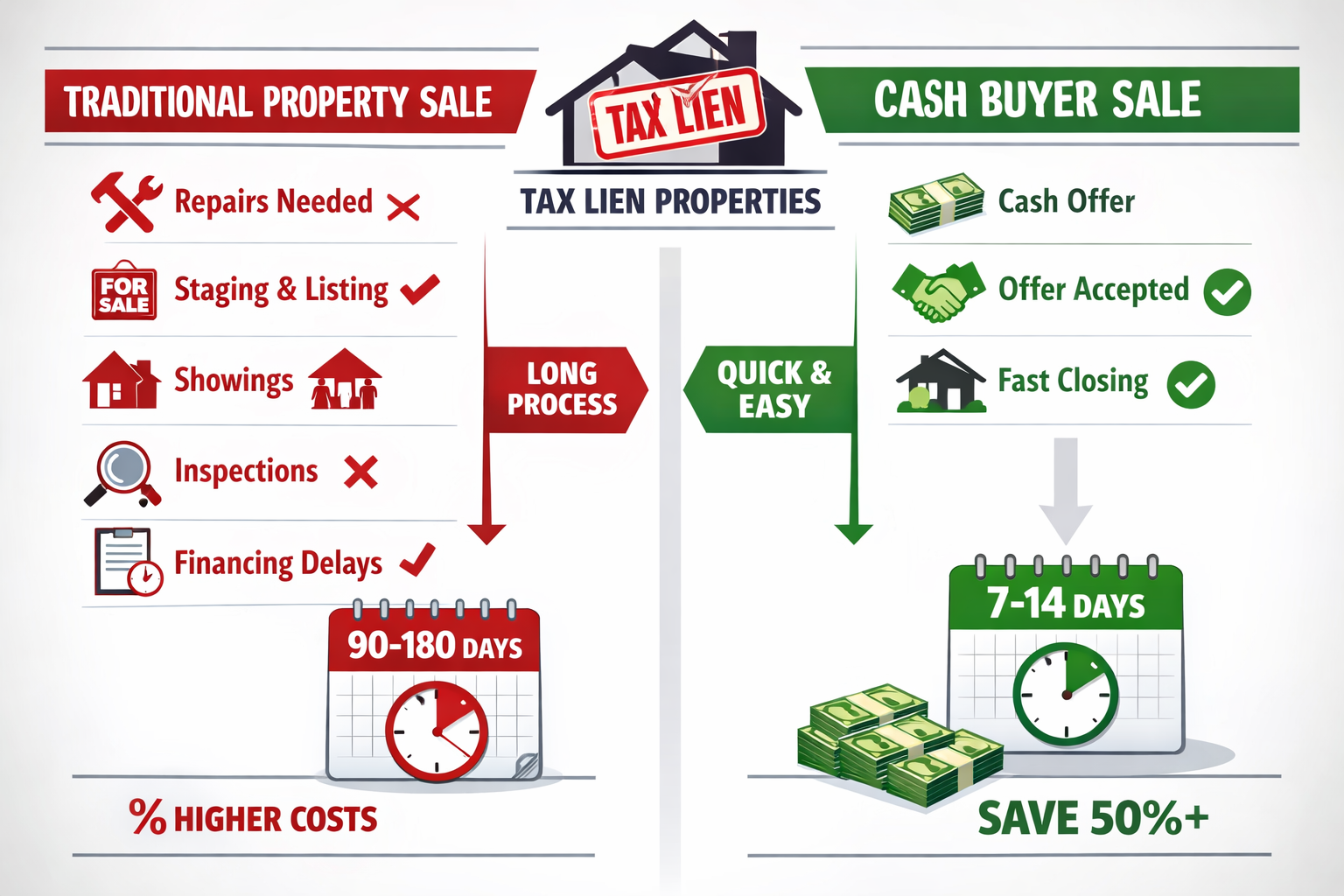
Without financing contingencies, cash transactions move remarkably fast. Here’s a typical timeline:
| Stage | Traditional Sale | Cash Buyer Sale |
|---|---|---|
| Property evaluation | 1-2 weeks | 24-48 hours |
| Offer presentation | After listing | Immediate |
| Buyer financing approval | 30-45 days | N/A |
| Inspections and negotiations | 2-3 weeks | Minimal/none |
| Title work | 2-3 weeks | 1-2 weeks |
| Total timeline | 90-180 days | 7-14 days |
This speed prevents additional tax accumulation and stops the foreclosure clock.
Direct Lien Coordination
Reputable cash buyers have established relationships with county tax offices and title companies. They coordinate directly to:
- Obtain exact payoff amounts for all tax liens
- Schedule lien releases to coincide with closing
- Ensure proper documentation and recording
- Handle all paperwork and communication
This coordination removes the burden from property owners who often feel overwhelmed by bureaucratic processes. The cash buyer’s team becomes your team, providing trustworthy service throughout the transaction.
Finding Reputable Cash Buyers for Tax Lien Properties: Sell Fast, No Repairs
Not all cash buyers operate with the same standards. Finding industry experts who provide friendly and caring service makes a significant difference in your experience and outcome.
Characteristics of Trustworthy Cash Buyers
Look for these qualities when evaluating potential buyers:
🏆 Transparency in pricing: Reputable buyers explain their offer calculations clearly, showing how they arrived at their purchase price based on market value, repair costs, and tax lien amounts.
📞 Direct communication: You should speak with decision-makers, not just call center representatives reading scripts. Personal attention indicates genuine commitment to helpful solutions.
⭐ Verifiable track record: Established buyers have reviews, testimonials, and references from previous clients in similar situations. They’re proud to share their history of successful transactions.
🤝 No-pressure approach: Trustworthy buyers give you time to consider offers and answer questions without pushy sales tactics. They understand this is a significant decision.
📋 Professional documentation: Legitimate buyers provide written offers, clear contracts, and work with licensed title companies and attorneys.
Red Flags to Avoid
Be cautious of buyers who:
- ❌ Pressure you to sign immediately without time to review
- ❌ Request upfront fees before closing
- ❌ Offer prices that seem too good to be true
- ❌ Avoid putting agreements in writing
- ❌ Don’t involve licensed professionals in the transaction
- ❌ Can’t provide references or proof of previous purchases
Questions to Ask Potential Buyers
Before committing to work with a cash buyer, ask:
- How many tax lien properties have you purchased? Experience matters when navigating complicated situations.
- Can you provide references from sellers in similar situations? Speaking with previous clients reveals how the buyer actually operates.
- What is your timeline from offer to closing? Specific timelines show realistic expectations and organizational capability.
- How do you calculate your offers? Understanding their methodology helps you evaluate fairness.
- Who handles the tax lien payoff? Clear processes prevent confusion and ensure proper lien resolution.
- What costs will I be responsible for? Reputable buyers are upfront about any seller costs.
The Process: From Contact to Closing
Understanding the step-by-step process removes uncertainty and helps you know what to expect when working with cash buyers for tax lien properties.
Step 1: Initial Contact and Property Information
The process begins when you reach out to a cash buyer. During initial conversations, you’ll provide basic information:
- Property address and type
- Approximate tax lien amount (if known)
- Property condition overview
- Timeline needs and urgency
- Any additional complications (multiple owners, other liens, title issues)
Reputable buyers like Sure Path Property Solutions specialize in these complicated scenarios and won’t be scared off by complexity.
Step 2: Property Evaluation
The buyer conducts a property evaluation, which typically includes:
- Physical inspection: A brief walkthrough to assess condition, not a detailed home inspection
- Tax lien research: Verification of exact amounts owed to all taxing authorities
- Title search: Identification of any other liens, judgments, or title issues
- Market analysis: Determination of property value in current market conditions
This evaluation usually happens within 24-48 hours of initial contact.
Step 3: Written Offer Presentation
Based on their evaluation, the buyer presents a written offer that includes:
- Purchase price
- Closing timeline
- Contingencies (usually minimal)
- Explanation of how tax liens will be handled
- Net proceeds estimate after lien payoff
Take time to review this offer carefully. Ask questions about anything unclear. A trustworthy buyer welcomes your questions and provides helpful guidance.
Step 4: Acceptance and Contract Signing
If you accept the offer, you’ll sign a purchase agreement. This legally binding contract protects both parties and outlines:
- Purchase terms
- Closing date
- Responsibilities of each party
- Contingencies and conditions
- Dispute resolution procedures
Most cash buyers work with real estate attorneys or title companies to prepare proper documentation.
Step 5: Title Work and Lien Coordination
While you wait for closing, the buyer’s team handles:
- Title examination: Detailed review of property ownership history and any issues
- Lien payoff coordination: Contact with county tax offices to obtain payoff amounts and schedule releases
- Additional lien resolution: If other liens exist beyond taxes, coordination for their satisfaction
- Closing document preparation: All paperwork needed for legal transfer
This behind-the-scenes work is where experienced buyers truly shine. They navigate bureaucracy efficiently, preventing delays.
Step 6: Closing and Fund Distribution
At closing, you’ll:
- Sign the deed transferring ownership
- Sign closing statements showing all financial transactions
- Receive your proceeds via check or wire transfer
The buyer simultaneously:
- Pays off all tax liens
- Satisfies any other agreed-upon obligations
- Takes ownership of the property
The entire process typically completes in 7-14 days from offer acceptance, though urgent situations can sometimes close even faster.
Benefits Beyond Speed: Why Cash Buyers Provide Complete Solutions
The advantages of working with cash buyers extend beyond quick closings. These benefits create comprehensive helpful solutions for property owners facing difficult circumstances.
No Out-of-Pocket Costs
Traditional selling requires upfront investment:
- Repair costs
- Staging expenses
- Utility activation
- Cleaning services
- Real estate commissions
- Marketing fees
Cash buyers eliminate these costs entirely. You pay nothing out of pocket. All transaction costs are handled at closing from the purchase proceeds.
Certainty in Uncertain Times
When facing potential foreclosure or mounting tax debt, certainty becomes invaluable. Cash transactions provide:
- Guaranteed closing: No financing fall-through risk
- Fixed timeline: Specific closing dates you can count on
- Clear outcomes: Known net proceeds before committing
This certainty allows you to plan your next steps with confidence rather than anxiety.
Relief from Ongoing Responsibilities
Until a property sells, you remain responsible for:
- Continuing tax accumulation
- Property maintenance
- Insurance
- Liability for injuries on the property
- Utility costs (if maintained)
- Homeowners association fees
A quick cash sale ends these obligations rapidly, stopping the financial bleeding.
Preservation of Credit and Financial Standing
Property tax lien foreclosure devastates credit scores and creates public records that follow you for years. Selling before foreclosure:
- Avoids foreclosure on your record
- Prevents tax sale proceedings
- Maintains better credit standing
- Preserves future borrowing ability
Privacy and Discretion
Cash sales happen privately without public listings, open houses, or neighborhood awareness. For those who value discretion during difficult times, this privacy provides emotional relief.
Special Situations: When Cash Buyers Excel
Certain property situations particularly benefit from the cash buyer approach. These scenarios demonstrate when this solution truly shines.
Multiple Owners and Inherited Properties
Properties with multiple owners create coordination challenges. Getting all parties to agree on repairs, listing price, and timing proves difficult.
Cash buyers simplify this by:
- Providing clear, straightforward offers that don’t require negotiation
- Handling all paperwork and coordination
- Distributing proceeds according to ownership percentages
- Closing quickly before disagreements escalate
When selling inherited property with multiple owners, the speed and simplicity of cash sales prevent family conflicts from destroying relationships.
Properties with Multiple Liens
Tax liens often don’t exist in isolation. Properties may have:
- Federal tax liens
- State tax liens
- County/municipal tax liens
- Judgment liens
- Mechanic’s liens
- HOA liens
Each lien complicates the title and must be addressed before closing. Experienced cash buyers coordinate with all lien holders simultaneously, negotiating payoffs and ensuring proper releases.
For comprehensive information about various lien types, review this complete guide to property liens.
Properties in Pre-Foreclosure
When tax foreclosure proceedings have begun, time becomes critical. Cash buyers can:
- Close before the foreclosure sale date
- Stop the foreclosure process
- Preserve your equity instead of losing it at auction
- Prevent the long-term credit damage of foreclosure
The ability to close in days rather than months makes cash buyers the only realistic option once foreclosure timelines are underway.
Land with Tax Liens
Selling land with liens presents unique challenges. Land doesn’t generate rental income and often requires ongoing tax payments without any offsetting revenue.
Cash buyers purchase land as-is, regardless of:
- Lack of improvements
- Access issues
- Zoning restrictions
- Environmental concerns
- Survey discrepancies
They evaluate land based on future potential and current market value, not current use.
Properties with Title Issues
Tax liens often coincide with other title problems:
- Breaks in chain of title
- Clouded titles
- Missing heirs
- Unclear ownership
- Recording errors
Experienced cash buyers work with title professionals to resolve these issues as part of the transaction, providing expert service that addresses multiple problems simultaneously.
Maximizing Your Outcome When Selling to Cash Buyers
While cash offers typically come below retail market value, you can take steps to ensure you receive fair value and the best possible outcome for your situation.
Be Honest About Property Condition
Transparency builds trust and prevents surprises that could delay closing. Disclose:
- Known structural issues
- Environmental concerns
- Legal disputes
- Tenant situations
- Any other material facts
Honest disclosure actually improves your outcome because buyers can evaluate accurately and won’t reduce offers after discovering hidden problems.
Gather Available Documentation
Having information ready speeds the process:
- Recent tax bills showing amounts owed
- Property deed or title documents
- Survey if available
- Any inspection reports
- Homeowners association documents
- Utility account information
You don’t need perfect documentation—cash buyers work with incomplete records—but providing what you have helps.
Understand the Numbers
Ask buyers to explain their offer calculations. Understanding how they arrived at their price helps you evaluate fairness:
Typical calculation:
- After-repair market value: $200,000
- Minus repair costs: -$40,000
- Minus buyer profit margin (typically 15-25%): -$35,000
- Minus tax lien payoff: -$15,000
- Minus transaction costs: -$5,000
- = Offer price: $105,000
This transparency helps you see that legitimate buyers aren’t trying to steal your property—they’re making business calculations that account for real costs and risks.
Get Multiple Offers
Just as you’d get multiple bids for a major repair, consider contacting several cash buyers. Offers can vary based on:
- Different repair cost estimates
- Varying profit margin requirements
- Different risk tolerance
- Specialized expertise in certain property types
Comparing offers ensures you’re getting competitive value.
Consider Total Net Proceeds, Not Just Price
The highest offer isn’t always the best deal. Consider:
- Closing timeline (faster means less additional tax accumulation)
- Seller costs and fees
- Certainty of closing
- Reputation and track record
- Communication and professionalism
A slightly lower offer from a reputable buyer who closes in 10 days may net you more than a higher offer from an unreliable buyer who takes 45 days.
Common Concerns and Misconceptions About Cash Buyers

Property owners often have questions and concerns about working with cash buyers. Addressing these directly helps you make informed decisions.
“Aren’t cash buyers just trying to steal my property?”
Legitimate cash buyers are running businesses, not scams. They purchase at below-market prices because they:
- Accept properties in any condition
- Take on all repair and renovation costs
- Assume market risk (property values could decline)
- Invest time and expertise in improvements
- Handle all complicated title and lien issues
- Provide speed and certainty traditional buyers can’t match
They earn their profit by providing valuable services—taking problems off your hands and transforming distressed properties into marketable homes.
“Why would I sell for less than market value?”
Market value assumes a retail buyer purchasing a property in good condition with clear title. Your property doesn’t fit that description.
Consider what achieving “market value” would actually require:
- Months of time (during which taxes accumulate)
- Thousands in repairs
- Carrying costs throughout the listing period
- Real estate commissions (typically 6%)
- Risk of deals falling through
- Stress and ongoing responsibility
When you factor in these costs and risks, the net proceeds from a cash sale often approach what you’d actually receive from a traditional sale—with far less hassle.
“How do I know the buyer will actually close?”
Reputable cash buyers demonstrate their seriousness through:
- Proof of funds: Documentation showing they have cash available
- Track record: History of completed transactions
- Professional team: Working with established title companies and attorneys
- Written contracts: Legally binding agreements with specific terms
- Earnest money deposits: Putting money at risk if they fail to close
These elements provide assurance that the buyer intends to complete the purchase.
“What if I owe more than the property is worth?”
This situation—being “underwater”—is common with tax lien properties. If total liens exceed property value, you have limited options:
- Negotiate with lien holders: Some may accept reduced payoffs
- Short sale: If a mortgage exists, the lender may accept less than owed
- Deed in lieu: Transfer property to the lien holder to satisfy debt
- Walk away: Allow foreclosure (damages credit significantly)
Cash buyers experienced in these situations can sometimes negotiate with lien holders on your behalf, potentially creating solutions where none seemed to exist. Even if you won’t receive proceeds, ending the liability and responsibility provides valuable relief.
Legal and Financial Considerations
Understanding the legal and financial implications of selling tax lien property helps you make informed decisions and avoid surprises.
Tax Implications of Selling
Selling property creates potential tax consequences:
Capital gains: If the property has appreciated since you acquired it, you may owe capital gains tax on the profit. However, if you’ve owned and lived in the property as your primary residence for 2 of the last 5 years, you may qualify for the primary residence exclusion (up to $250,000 for individuals, $500,000 for married couples).
Loss deductions: If you sell for less than your cost basis, you may be able to deduct the loss if the property was an investment or rental property (not available for personal residences).
Forgiven debt: If lien holders accept less than owed, the forgiven amount may be considered taxable income. However, insolvency exceptions may apply.
Consult with a tax professional about your specific situation to understand implications and plan accordingly.
Legal Protections for Sellers
Real estate transactions are heavily regulated to protect consumers:
- Disclosure requirements: You must disclose known material defects, though “as-is” sales reduce this burden
- Contract law: Written agreements are legally enforceable, protecting both parties
- Title insurance: Protects against title defects and ensures proper lien releases
- Escrow processes: Neutral third parties hold funds and documents until all conditions are met
Working with established cash buyers who use licensed professionals ensures these protections are in place.
When to Consult an Attorney
Consider consulting a real estate attorney if:
- Multiple complex liens exist beyond property taxes
- Title issues are particularly complicated
- Multiple owners disagree about the sale
- You’re uncertain about contract terms
- The property is part of an estate or trust
- Significant assets are at stake
Many cash buyers work with attorneys as part of their standard process, which protects everyone involved.
Alternatives to Consider
While cash buyers provide excellent solutions for many situations, understanding alternatives ensures you’re making the best choice for your circumstances.
Negotiating Tax Payment Plans
Some counties offer payment plans for delinquent taxes. If you want to keep the property, this may be worth exploring. However, payment plans require:
- Ongoing ability to make payments
- Willingness to keep the property long-term
- Bringing current on all other obligations
- Dealing with accumulated interest and penalties
For those who want to exit ownership, payment plans don’t solve the underlying problem.
Borrowing to Pay Liens
Some property owners consider borrowing against other assets or taking personal loans to pay tax liens. This strategy makes sense only if:
- You want to keep the property long-term
- You can afford ongoing tax payments going forward
- The property generates income or provides significant value
- You have access to reasonable borrowing rates
If you’re selling anyway, borrowing to pay liens just transfers debt from one place to another without solving anything.
Traditional Sale After Lien Payoff
If you have access to funds to pay the tax liens, you could clear the title and then list traditionally. This approach works if:
- You have savings or can borrow at reasonable rates
- The property is in good condition
- You can afford to wait months for a sale
- Market conditions favor sellers
- You want to maximize sale price
However, most people with tax lien properties don’t have these resources available, making this option impractical.
Letting the Property Go to Tax Sale
Some owners consider simply walking away and letting the property go to tax foreclosure auction. This is generally the worst option because:
- ❌ Severely damages credit
- ❌ Creates public records that follow you
- ❌ You lose any equity in the property
- ❌ May still owe deficiency if the property sells for less than owed
- ❌ Doesn’t solve the problem—just delays consequences
Selling to a cash buyer is almost always preferable to foreclosure.
Real Success Stories: Cash Buyers Providing Helpful Solutions
Understanding how cash buyers have helped others in similar situations provides perspective and hope.
Case Study: Inherited Property with Years of Back Taxes
Situation: Three siblings inherited their parents’ home in a rural area. None lived nearby, and they discovered $23,000 in accumulated back taxes spanning seven years. The house needed significant repairs, and the siblings disagreed about whether to keep or sell the property.
Solution: They contacted a cash buyer specializing in tax lien properties. The buyer:
- Evaluated the property within 48 hours
- Presented an offer that paid off all tax liens
- Closed in 12 days
- Distributed proceeds equally to all three siblings
Outcome: Each sibling received $18,000 after lien payoff and closing costs. While less than the property’s potential retail value, it solved their problem quickly without requiring them to invest in repairs, travel repeatedly to the property, or continue disagreeing about next steps.
Case Study: Pre-Foreclosure Land Sale
Situation: A property owner had purchased vacant land as an investment but lost his job and couldn’t keep up with tax payments. After three years of delinquency, the county initiated foreclosure proceedings. The tax sale was scheduled in 45 days.
Solution: The owner contacted a cash buyer who:
- Verified the exact tax amount and foreclosure timeline
- Made an immediate offer
- Coordinated with the county to halt foreclosure
- Closed in 21 days
Outcome: The owner received $12,000 after tax liens were satisfied. More importantly, he avoided foreclosure on his record and ended the stress of pending legal action. The quick resolution allowed him to move forward with his life.
Case Study: Multiple Liens on Rental Property
Situation: A rental property owner fell behind on property taxes while dealing with problem tenants and costly repairs. By the time she decided to sell, the property had:
- $15,000 in property tax liens
- $8,000 in HOA liens
- $5,000 in contractor liens from unpaid repairs
- Tenants who had stopped paying rent
Solution: An experienced cash buyer:
- Negotiated with all lien holders
- Handled tenant removal after closing
- Purchased the property as-is despite condition issues
- Closed in 18 days
Outcome: After all liens were satisfied, the owner received $22,000. She eliminated a property that had become a financial drain and source of constant stress, allowing her to refocus on her primary residence and stable employment.
Why Sure Path Property Solutions Excels at Tax Lien Property Purchases
When facing complicated real estate situations, working with industry experts makes all the difference. Sure Path Property Solutions specializes in exactly these challenging scenarios.
Specialized Expertise in Complex Situations
Sure Path Property Solutions focuses specifically on properties with complications:
- ✅ Back taxes and tax liens
- ✅ Multiple heirs and co-owners
- ✅ Title issues and clouds
- ✅ Judgment liens
- ✅ Properties in probate
- ✅ Pre-foreclosure situations
This specialization means they’ve seen your situation before and know exactly how to navigate it efficiently.
Comprehensive Coordination Services
Rather than leaving you to coordinate with county tax offices, title companies, and other parties, Sure Path handles everything:
- Direct communication with all taxing authorities
- Title research and issue resolution
- Lien payoff coordination and scheduling
- Documentation preparation and filing
- Professional closing services
This comprehensive approach provides truly helpful guidance throughout the entire process.
Transparent, Fair Pricing
Sure Path Property Solutions explains their offer calculations clearly, showing exactly how they arrived at their purchase price. This transparency builds trust and helps you understand that you’re receiving fair value for your situation.
Proven Track Record
With numerous successful closings on tax lien properties, Sure Path has demonstrated their ability to:
- Close quickly (often 7-14 days)
- Handle complicated title issues
- Coordinate with multiple lien holders
- Provide friendly and caring service during stressful times
- Deliver on commitments and promises
No-Pressure Approach
Sure Path understands that selling property—especially under difficult circumstances—is a major decision. They provide:
- Time to review offers and ask questions
- Clear explanations without high-pressure tactics
- Respect for your timeline and decision-making process
- Helpful solutions rather than pushy sales pitches
This approach reflects their commitment to trustworthy service that puts property owners’ needs first.
Taking the Next Step: How to Get Started
If you’re facing a tax lien property situation and considering a cash sale, taking the first step is straightforward and risk-free.
Gather Basic Information
Before reaching out, collect whatever information you have available:
- Property address
- Approximate tax lien amount (if known)
- General property condition
- Any other known liens or title issues
- Your timeline and urgency level
Don’t worry if you don’t have complete information—cash buyers are accustomed to working with incomplete records.
Make Initial Contact
Reach out to reputable cash buyers to start the conversation. When you contact Sure Path Property Solutions, you’ll speak with knowledgeable professionals who understand complicated property situations.
During initial conversations, expect to discuss:
- Your property situation and challenges
- Tax lien amounts and other complications
- Your goals and timeline
- The cash buying process and what to expect
- Next steps if you decide to move forward
Request a Property Evaluation
If the initial conversation seems promising, the buyer will schedule a property evaluation. This typically involves:
- A brief property visit (often 30-60 minutes)
- Photos and condition assessment
- Verification of tax lien amounts
- Basic title research
This evaluation is usually free with no obligation.
Review the Written Offer
Within 24-48 hours of the evaluation, you’ll receive a written offer that includes:
- Purchase price
- Closing timeline
- How tax liens will be handled
- Estimated net proceeds after liens are paid
- Any contingencies or conditions
Take time to review this carefully and ask questions about anything unclear.
Make Your Decision
Decide whether the offer meets your needs by considering:
- Net proceeds compared to alternatives
- Timeline benefits
- Relief from ongoing responsibilities
- Certainty of closing
- Overall fit with your goals
There’s no pressure to accept immediately. Reputable buyers give you time to make an informed decision.
Move Forward with Confidence
If you accept the offer, the buyer’s team handles everything from that point forward:
- Title work and lien coordination
- Communication with all parties
- Document preparation
- Closing scheduling
- Fund distribution
Your involvement is minimal—mostly just signing documents at closing and receiving your proceeds.
Frequently Asked Questions About Cash Buyers for Tax Lien Properties
How much will I receive after tax liens are paid?
The amount depends on several factors: property value, condition, tax lien amount, other liens, and market conditions. Typically, sellers receive 50-70% of the property’s after-repair market value, minus all liens and closing costs. Cash buyers provide written estimates showing exactly what you’ll receive before you commit.
Can I sell if I’m already in foreclosure?
Yes, as long as the foreclosure sale hasn’t occurred yet. Cash buyers can close quickly—sometimes in as little as 7-10 days—to beat foreclosure deadlines. The key is acting quickly once foreclosure proceedings begin.
What if there are other liens besides tax liens?
Experienced cash buyers handle properties with multiple liens regularly. They coordinate with all lien holders to obtain payoffs and schedule releases. Some liens may be negotiable for reduced payoffs, potentially increasing your net proceeds.
Do I need to make any repairs before selling?
No. Cash buyers purchase properties completely as-is. You don’t need to fix anything, clean anything, or make any improvements whatsoever. They buy the property in its current condition.
How long does the process take?
From initial contact to closing typically takes 7-14 days with cash buyers, though urgent situations can sometimes close faster. Traditional sales usually take 90-180 days by comparison.
Will I owe taxes on the sale?
Possibly, depending on your specific situation. If the property has appreciated since you acquired it, you may owe capital gains tax. However, various exemptions and deductions may apply. Consult with a tax professional about your specific circumstances.
What if I owe more than the property is worth?
If total liens exceed property value, you may not receive proceeds, but selling can still benefit you by ending ongoing liability and responsibility. Some cash buyers can negotiate with lien holders for reduced payoffs, potentially creating equity where none existed.
Can I sell if there are multiple owners?
Yes. Cash buyers regularly purchase properties with multiple owners. All owners must agree to the sale and sign documents, but the buyer coordinates everything and distributes proceeds according to ownership percentages.
What happens to the tax liens after I sell?
The cash buyer pays off all tax liens at closing as part of the purchase transaction. The county releases the liens once paid, and you have no further obligation. The property transfers to the new owner with clear title.
How do I know if a cash buyer is legitimate?
Look for proof of funds, verifiable track record, professional team (title company, attorney), written contracts, and willingness to provide references. Legitimate buyers are transparent about their process and don’t pressure you to sign immediately.
Conclusion: Finding Your Path Forward
Facing a property with tax liens can feel overwhelming. The debt accumulates. The county threatens foreclosure. Traditional buyers won’t touch it. The property sits there—a constant source of stress and financial drain.
But this situation doesn’t have to define your future. Cash buyers for tax lien properties offer a clear path forward—one that’s fast, straightforward, and requires no repairs or upfront investment from you.
The benefits of this approach are substantial:
- Speed: Close in as little as 7-14 days instead of months
- Simplicity: No repairs, no staging, no showings, no hassle
- Certainty: No financing contingencies or deals falling through
- Relief: End tax accumulation, carrying costs, and ongoing stress
- Expertise: Professional coordination with county offices and lien holders
While cash offers typically come below retail market value, the net proceeds after accounting for repair costs, carrying costs, time value, and risk often approach what you’d actually receive from a traditional sale—with far less hassle and much greater certainty.
The key is working with reputable, experienced buyers who specialize in complicated situations. Sure Path Property Solutions provides the expert service, trustworthy approach, and proven track record that property owners need when navigating tax lien challenges.
Your Next Steps
If you’re ready to explore whether selling to a cash buyer makes sense for your situation:
- Gather basic information about your property and tax lien situation
- Contact reputable cash buyers to discuss your circumstances
- Request property evaluations to receive specific offers
- Review offers carefully and ask questions about anything unclear
- Make an informed decision based on your goals and circumstances
- Move forward with confidence knowing you’re ending a difficult situation
Remember, reaching out for information creates no obligation. Reputable buyers provide helpful guidance and transparent information to help you make the best decision for your situation—whether that’s selling to them or pursuing another option.
The situation you’re facing is challenging, but it’s not hopeless. Thousands of property owners have successfully resolved tax lien problems through cash sales, moving forward to better financial situations and peace of mind.
Your path forward exists. Taking the first step—simply reaching out to learn about your options—begins your journey toward resolution.
For properties with tax liens, judgment liens, title issues, or other complications, explore how Sure Path Property Solutions provides helpful solutions for property owners facing difficult circumstances. Their friendly and caring team specializes in turning complicated situations into clear, practical outcomes.
The stress of tax liens doesn’t have to continue. Relief is available, and it starts with a simple conversation about your situation and options.