
Sell House with Abstract Problems: Fast Cash, Any Title Issue

Imagine discovering the house you inherited has a tangled web of title issues—unpaid liens from decades ago, missing heirs, or a break in the chain of ownership that makes traditional buyers run for the hills. You’re not alone. Thousands of property owners face this nightmare every year, watching their real estate asset become an unsellable burden rather than the financial relief they desperately need.
The good news? You can sell a house with abstract problems and receive fast cash, regardless of the title issue. While conventional buyers and traditional real estate agents typically avoid properties with clouded titles, specialized cash buyers understand how to navigate these complications and close deals quickly—often in as little as 7-14 days.
This comprehensive guide reveals everything property owners need to know about selling houses with abstract and title problems, from understanding what these issues mean to finding trustworthy service providers who offer helpful solutions for even the most complicated situations.
Key Takeaways
✅ Abstract problems don’t make your property unsellable—specialized cash buyers purchase houses with liens, judgments, breaks in chain of title, and other title issues regularly
✅ Fast cash sales bypass traditional financing obstacles—closing can happen in 7-14 days without mortgage lender title requirements
✅ Professional buyers coordinate title resolution—expert service providers handle the complex paperwork, county coordination, and lien negotiations
✅ Multiple title issues can be resolved simultaneously—from back taxes to missing heirs to judgment liens, comprehensive solutions exist
✅ You don’t need to fix title problems before selling—cash buyers purchase properties “as-is” and handle title clearing as part of the transaction
Understanding Abstract of Title Problems
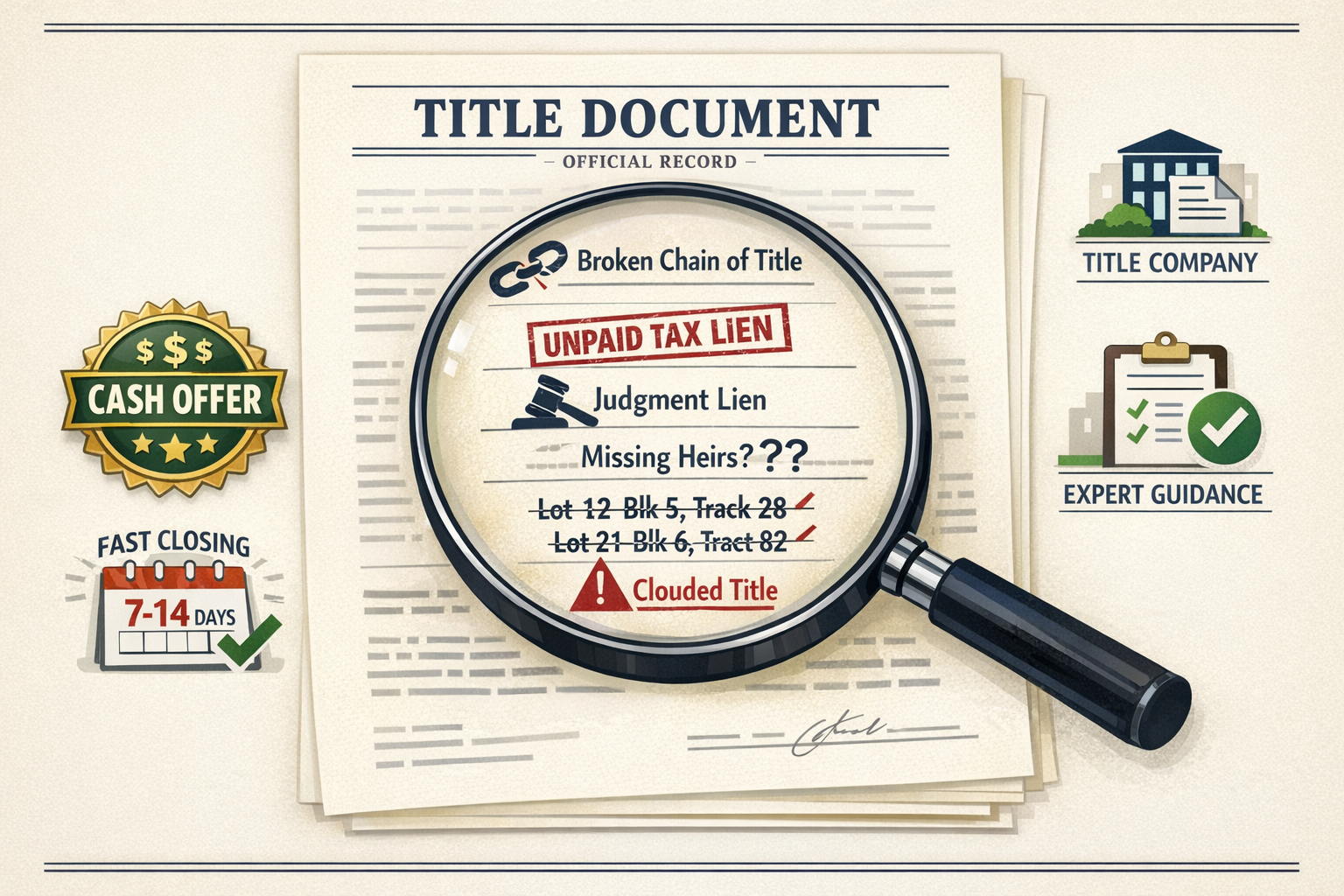
An abstract of title is essentially your property’s complete historical record—a chronological summary of every transaction, transfer, lien, encumbrance, and legal action affecting the property from its original grant to the present day. Think of it as your house’s genealogy, tracing its ownership lineage through time.
When problems appear in this abstract, they create what real estate professionals call “clouds on title” or “title defects.” These issues prevent the clear transfer of ownership and make traditional sales nearly impossible.
Common Abstract Problems That Block Traditional Sales
Break in Chain of Title 🔗
A break in chain of title occurs when there’s a gap in the ownership record. Perhaps a deed was never properly recorded, an estate was never probated, or a transfer document contains errors. This broken link makes it unclear who legally owns the property.
Unpaid Tax Liens
When property taxes go unpaid, counties place liens against the property. These liens take priority over almost all other claims and must be satisfied before ownership can transfer. Many inherited properties carry back taxes on inherited property that accumulate for years.
Judgment Liens
Court judgments against previous owners can attach to the property as liens. These might stem from unpaid debts, lawsuit settlements, or contractor disputes. The property cannot be sold with clear title until these judgments are resolved.
Missing or Deceased Heirs
When property passes through inheritance, all heirs must be accounted for and agree to the sale. Missing heirs or heirs who cannot be located create significant title problems that traditional buyers won’t touch.
Incorrect Legal Descriptions
Errors in property descriptions—wrong lot numbers, incorrect metes and bounds, or conflicting survey information—create confusion about what land is actually being conveyed.
Mechanic’s Liens
Contractors or suppliers who weren’t paid for work on the property can file mechanic’s liens, which attach to the title and must be cleared before sale.
Easement Disputes
Unclear, unrecorded, or disputed easements create title questions that concern traditional buyers and their lenders.
Why Traditional Buyers Avoid These Properties
Mortgage lenders require “marketable title” before approving loans. This means the title must be free from reasonable doubt and free from liens or encumbrances that could threaten the buyer’s ownership. When abstract problems exist, lenders simply refuse to finance the purchase.
Traditional buyers rarely have the cash reserves to purchase without financing, and even those who do often lack the expertise to navigate title complications. The uncertainty, potential legal costs, and time investment scare away conventional purchasers.
Real estate agents working on commission also avoid these listings. The extensive work required to resolve title issues, combined with the uncertainty of whether the property will ever close, makes these properties unprofitable for traditional agents.
This creates a perfect storm where property owners with abstract problems find themselves stuck—unable to sell through normal channels, yet desperately needing to liquidate the asset.
How to Sell House with Abstract Problems: Fast Cash Solutions
The solution lies in working with specialized cash buyers who understand title complications and have systems in place to resolve them. These companies offer helpful guidance through the entire process, taking the burden off property owners’ shoulders.
The Cash Buyer Advantage for Title-Troubled Properties
No Mortgage Contingencies
Cash buyers don’t need lender approval, which eliminates the strictest title requirements. While they still need to obtain ownership, they have flexibility in how and when title issues are resolved.
In-House Title Expertise
Professional property solution companies employ or work closely with title experts who specialize in resolving complicated issues. They’ve seen every type of abstract problem and know the specific steps to clear each one.
Closing Timeline Control
Without financing delays, cash transactions can close as soon as title work is complete—often 7-14 days for straightforward situations, or 30-60 days for more complex title clearing.
Simultaneous Problem Resolution
Rather than requiring owners to fix all issues before making an offer, cash buyers can purchase the property and resolve title problems as part of the closing process, often negotiating directly with lienholders and coordinating with counties.
The Fast Cash Sale Process for Properties with Abstract Issues
Step 1: Initial Contact and Property Assessment
The process begins when property owners reach out to describe their situation. Reputable companies like Sure Path Property Solutions offer free consultations where they listen to the specific circumstances without pressure or obligation.
During this conversation, industry experts gather essential information:
- Property location and type
- Known title issues or liens
- Ownership structure (sole owner, multiple heirs, trust, etc.)
- Timeline needs and motivations
- Current property condition
Step 2: Preliminary Title Research
The buyer orders a preliminary title report or abstract examination to identify all issues affecting the property. This comprehensive review reveals:
- All recorded liens and their amounts
- Chain of title gaps or breaks
- Outstanding judgments
- Tax delinquencies
- Easements and encumbrances
- Legal description accuracy
This research phase typically takes 3-7 days and provides the foundation for understanding exactly what needs to be resolved.
Step 3: Cash Offer Presentation
Based on the title research and property assessment, the buyer presents a cash offer. This offer accounts for:
- Current market value of the property
- Costs to resolve title issues
- Lien payoff amounts
- Risk and time investment
- Desired profit margin
Transparent buyers explain how they calculated the offer and break down the numbers clearly. The offer includes specific terms about which title issues the buyer will handle and what timeline is realistic.
Step 4: Agreement and Title Resolution Coordination
Once the owner accepts the offer, the buyer’s team coordinates all title resolution activities:
- Negotiating lien payoffs and settlements
- Contacting missing heirs
- Filing quiet title actions if necessary
- Correcting legal descriptions
- Obtaining necessary court orders
- Working with probate attorneys
- Coordinating with county tax offices
Property owners receive regular updates but don’t need to manage these complex tasks themselves. The buyer handles the heavy lifting.
Step 5: Closing and Cash Payment
When title issues are resolved sufficiently to transfer ownership, the transaction closes. The property owner receives their cash payment—typically via wire transfer or cashier’s check—and the buyer takes ownership along with responsibility for any remaining title work.
What “As-Is” Really Means for Title-Troubled Properties
When cash buyers advertise purchasing properties “as-is,” this applies to both physical condition and title condition. Property owners don’t need to:
❌ Make repairs or improvements
❌ Clean out belongings
❌ Hire attorneys to clear title
❌ Negotiate with lienholders themselves
❌ Pay off liens before closing
❌ Complete probate before selling
The buyer accepts the property in its current state—title problems and all—and handles everything needed to complete the transaction.
Common Title Issues and How Cash Buyers Resolve Them
Understanding how specific abstract problems get resolved helps property owners feel confident about the process and set realistic expectations.
Resolving Tax Liens and Back Taxes
Tax liens take priority over almost all other claims, making them critical to address. Here’s how cash buyers handle them:
Direct County Coordination
Buyers contact the county tax assessor’s office directly to obtain exact payoff amounts, including all penalties and interest through the projected closing date.
Negotiated Settlements
In some cases, particularly with older tax debt, counties may accept reduced settlements. Experienced buyers know which counties negotiate and how to structure these agreements.
Closing Table Payoff
Tax liens are typically paid at closing from the sale proceeds. The title company calculates the exact amount owed and sends payment directly to the county, ensuring the lien is released immediately.
For property owners wondering “can you sell property if you owe taxes on it,” the answer is absolutely yes when working with knowledgeable cash buyers who coordinate these payoffs routinely.
Clearing Judgment Liens
Judgment liens result from court orders and attach to all real property owned by the judgment debtor. Resolution strategies include:
Lien Holder Negotiation
Many judgment creditors will accept less than the full amount to settle, especially on older judgments. Cash buyers negotiate these settlements as part of the purchase process.
Payment at Closing
Like tax liens, judgment liens can be paid from sale proceeds at the closing table, with the title company ensuring proper release documentation.
Statute of Limitations
Some older judgments may have expired under state law. Title attorneys identify these situations and obtain releases or file actions to remove expired liens.
Bonding Around the Lien
In certain situations, title insurance companies will issue policies “bonding around” a lien, essentially insuring against it rather than requiring removal.
Fixing Breaks in Chain of Title
Chain of title breaks require legal action to repair, but experienced buyers know the most efficient approaches:
Quiet Title Actions
These lawsuits ask the court to declare who owns the property and clear up ownership questions. While they sound intimidating, they’re routine legal procedures that title attorneys handle regularly.
Affidavits of Heirship
When property passed through inheritance without formal probate, affidavits signed by knowledgeable parties can sometimes establish the chain of ownership without full probate proceedings.
Corrective Deeds
When previous deeds contain errors, corrective or confirmatory deeds signed by the appropriate parties can fix the chain without litigation.
Title Insurance Solutions
In some cases, title insurance companies will insure over minor chain breaks, particularly when supported by affidavits and other documentation.
Handling Multiple Heir Situations
Properties with multiple owners or heirs present unique challenges that cash buyers address through:
Buyout of Co-Owners
If some heirs want to sell but others don’t, buyers may purchase individual ownership shares, allowing those who want out to exit while others retain their interest.
Coordinated Heir Agreements
Buyers facilitate communication among all heirs and coordinate signatures, often working with probate attorneys to ensure proper authorization.
Partition Sale Alternatives
Rather than forcing expensive partition lawsuits, cash buyers offer solutions that compensate all heirs fairly without court involvement.
For those dealing with multiple heirs one property situations, professional buyers provide helpful solutions that respect everyone’s interests while moving the sale forward.
Addressing Clouded Title Issues
Clouded title encompasses various defects that create uncertainty about ownership. Resolution approaches include:
Title Search and Examination
Comprehensive research identifies all clouds and determines the most efficient clearing strategy for each.
Legal Action When Necessary
Quiet title actions, declaratory judgment actions, or other lawsuits clear serious title clouds through court orders.
Settlement and Release
Many title clouds can be cleared through negotiated settlements with interested parties, obtaining signed releases that remove the cloud.
Title Insurance Endorsements
Special endorsements or exceptions in title insurance policies sometimes provide coverage despite certain clouds, making the property marketable.
Why Choose Professional Cash Buyers for Abstract Problems
Not all cash buyers are created equal. When dealing with complicated title issues, choosing the right buyer makes the difference between a smooth transaction and a frustrating experience.
Qualities of Trustworthy Service Providers
Transparent Communication 💬
Reputable buyers explain the process clearly, answer questions patiently, and keep owners informed throughout the transaction. They don’t use high-pressure tactics or create artificial urgency.
Fair Pricing
While cash offers on problem properties are lower than retail value, ethical buyers explain their pricing clearly and offer fair compensation given the circumstances.
Proven Track Record
Established companies have histories of successful closings on complicated properties. They can provide references, testimonials, and examples of similar situations they’ve resolved.
Professional Network
Quality buyers work with experienced title companies, real estate attorneys, and other professionals who specialize in resolving complex issues.
No Upfront Fees
Legitimate cash buyers don’t charge property owners fees to evaluate properties or make offers. They make money when transactions close, aligning their interests with the seller’s.
Red Flags to Avoid
⚠️ Pressure to sign quickly without time to review
⚠️ Requests for upfront payments or fees
⚠️ Unwillingness to explain the process or answer questions
⚠️ No verifiable business address or credentials
⚠️ Promises that sound too good to be true
⚠️ Lack of references or track record
The Sure Path Difference
Companies like Sure Path Property Solutions specialize in helping property owners navigate complicated situations with friendly and caring support. Their approach includes:
Comprehensive Problem Assessment
They take time to understand the full scope of title issues, ownership complications, and property challenges before proposing solutions.
Coordinated Professional Services
They work with counties, title professionals, attorneys, and other experts to resolve issues efficiently without owners needing to manage multiple service providers.
Clear, Practical Solutions
Rather than overwhelming owners with legal jargon, they explain options in plain language and recommend the most straightforward path forward.
Optimistic, Helpful Guidance
Even in difficult situations, they maintain a positive, solution-focused approach that helps property owners see a path through their challenges.
Financial Considerations When Selling with Title Problems
Understanding the financial aspects helps property owners make informed decisions and set realistic expectations.
How Title Issues Affect Property Value
Title problems reduce market value because they:
- Eliminate traditional financed buyers (the largest buyer pool)
- Require time and money to resolve
- Create uncertainty and risk for buyers
- May involve significant lien payoffs
The reduction in value varies based on:
| Type of Issue | Typical Impact on Value |
|---|---|
| Minor lien ($5,000-$15,000) | 10-20% reduction |
| Major liens or multiple issues | 20-35% reduction |
| Severe title defects requiring litigation | 30-50% reduction |
| Combination of title and property condition issues | 40-60% reduction |
These percentages are approximate and vary based on local market conditions, property value, and specific circumstances.
What Gets Deducted from Sale Proceeds
When selling to cash buyers, typical deductions include:
Lien Payoffs
All liens must be satisfied from sale proceeds. The title company calculates exact payoff amounts and sends payments directly to lienholders.
Back Taxes
Outstanding property taxes, including penalties and interest, are paid at closing.
Title Work Costs
Some buyers deduct costs for title searches, legal work, and title insurance from the purchase price, while others absorb these costs.
Closing Costs
Standard closing costs like recording fees and title company fees are typically deducted from proceeds.
Buyer Profit Margin
The buyer’s offer accounts for their desired profit after resolving all issues and reselling the property.
Tax Implications of Selling Problem Properties
Property sales have tax consequences that owners should understand:
Capital Gains Considerations
If the property has appreciated since acquisition, capital gains taxes may apply. Inherited properties receive a “stepped-up basis” to fair market value at the date of death, often minimizing or eliminating capital gains.
Debt Forgiveness Income
If liens are settled for less than owed, the forgiven amount may be taxable income under certain circumstances.
Professional Tax Advice
Property owners should consult tax professionals about their specific situations, as tax laws are complex and vary by state.
Comparing Costs: DIY Title Clearing vs. Cash Sale
Some owners consider clearing title themselves before selling traditionally. Here’s a realistic comparison:
DIY Title Clearing Costs:
- Title attorney fees: $2,000-$10,000+
- Quiet title action: $3,000-$15,000
- Court costs and filing fees: $500-$2,000
- Time investment: 6-18 months
- Lien negotiation and payoffs: Variable
- Risk of unsuccessful resolution: Significant
- Ongoing property taxes and maintenance: Accumulating
Cash Sale Approach:
- Owner costs: Typically none
- Timeline: 7-60 days
- Certainty of completion: High
- Stress and time investment: Minimal
- Net proceeds: Lower than retail but guaranteed
For many owners, especially those facing financial pressure, time constraints, or geographic distance from the property, the cash sale approach provides better overall value despite lower gross proceeds.
Step-by-Step: What to Expect When You Sell House with Abstract Problems
Walking through a realistic timeline helps property owners prepare mentally and logistically for the sale process.
Week 1: Initial Contact and Information Gathering
Day 1-2: Reach Out
Contact a reputable cash buyer and describe your situation. Provide basic property information and explain known title issues.
Day 3-5: Property Details
Share additional information requested: property address, approximate value, ownership documentation, lien information if available, and your timeline needs.
Day 6-7: Initial Assessment
The buyer conducts preliminary research and may schedule a property inspection if needed (often waived for land or when condition is clearly stated).
Week 2: Title Research and Offer Preparation
Day 8-10: Title Search
The buyer orders a comprehensive title search or abstract examination to identify all issues affecting the property.
Day 11-12: Issue Analysis
Title professionals review findings and develop a resolution strategy for each identified problem.
Day 13-14: Offer Preparation
The buyer calculates a fair cash offer accounting for property value, resolution costs, timeline, and risk factors.
Week 3: Offer Review and Agreement
Day 15-16: Offer Presentation
The buyer presents a written cash offer with clear terms, timeline, and explanation of how title issues will be handled.
Day 17-18: Review Period
Property owners review the offer, ask questions, and consult with family members or advisors as needed. Reputable buyers don’t pressure quick decisions.
Day 19-21: Agreement
If the offer is acceptable, both parties sign a purchase agreement outlining terms, responsibilities, and timeline.
Weeks 4-6: Title Resolution and Closing Preparation
Ongoing: Title Work
The buyer’s team coordinates all title clearing activities:
- Contacting lienholders to negotiate payoffs
- Communicating with county offices about tax liens
- Gathering documentation for chain of title repairs
- Filing legal actions if necessary
- Obtaining required signatures from all parties
Owner Involvement
Property owners typically need to:
- Sign documents as requested
- Provide identification and ownership verification
- Respond to questions about property history
- Coordinate with the title company for closing
Regular Updates
Professional buyers provide progress updates, explaining what’s happening and what comes next.
Week 6-8: Closing and Payment
Final Title Clearance
All necessary title work is completed, or arrangements are made for remaining issues to be resolved at or after closing.
Closing Coordination
The title company prepares closing documents and coordinates signing. Depending on location and circumstances, closing may happen:
- In person at the title company
- Via mobile notary visiting the seller
- Through mail-away closing documents
Fund Disbursement
After all documents are signed and recorded, the buyer’s funds are disbursed. The title company pays off all liens and taxes from proceeds, then sends the remaining balance to the seller via wire transfer or check.
Transaction Complete ✅
The property transfers to the buyer, all title issues become their responsibility, and the seller walks away with cash and relief.
Timeline Variations
This 6-8 week timeline is typical for moderately complex situations. Actual timelines vary:
Faster (7-14 days): Properties with minor title issues, cooperative lienholders, and motivated sellers
Standard (4-8 weeks): Properties with multiple liens, heir coordination needs, or moderate title complications
Extended (2-4 months): Properties requiring quiet title actions, probate proceedings, or complex legal resolution
Professional buyers provide realistic timeline estimates based on specific circumstances and keep owners informed of any changes.
Frequently Asked Questions About Selling Houses with Abstract Problems

Can I really sell my house if the title isn’t clear?
Absolutely. While traditional buyers require clear title before closing, cash buyers purchase properties with title problems regularly. They have the expertise and resources to resolve issues either before closing or as part of the transaction. Thousands of property owners successfully sell houses with abstract of title problems every year.
Do I need to hire a lawyer to sell a house with title issues?
When working with reputable cash buyers, you typically don’t need your own attorney. The buyer coordinates with title professionals and attorneys to resolve issues. However, you’re always welcome to consult with an attorney for your own peace of mind, especially if the transaction is particularly complex or you have questions about your rights.
How much less will I get for a house with title problems?
This varies significantly based on the specific issues, property value, and market conditions. Generally, expect offers 20-50% below retail market value. However, this comparison isn’t entirely fair—retail value assumes a property that can be sold traditionally, which yours currently cannot. The relevant comparison is between the cash offer and the net proceeds you’d receive after spending months or years and thousands of dollars trying to clear title yourself.
What if I can’t find all the heirs or co-owners?
Professional buyers have experience with missing heir situations. Solutions include hiring heir search firms, filing legal actions to address unknown heirs, or structuring transactions that allow the sale to proceed despite missing parties. Each state has specific laws governing these situations, and experienced buyers know how to navigate them.
Can I sell if there’s a lien bigger than the property value?
Yes, though the process is more complex. Options include negotiating lien settlements for less than owed, short sale arrangements with lienholders, or deed-in-lieu transactions. While you may not receive cash proceeds in these situations, you can still transfer the property and escape ongoing tax and maintenance obligations.
How do I know a cash buyer is legitimate?
Research the company thoroughly:
- Check online reviews and Better Business Bureau ratings
- Verify business registration and licensing
- Ask for references from previous sellers
- Ensure they have a physical business address
- Confirm they don’t charge upfront fees
- Trust your instincts about communication style and transparency
Legitimate companies like Sure Path Property Solutions welcome questions and provide verifiable credentials.
What happens to liens when I sell?
Liens are paid from the sale proceeds at closing. The title company calculates exact payoff amounts and sends payments directly to lienholders, obtaining lien releases that clear the title. You don’t need to contact lienholders or arrange payments yourself—the title company handles everything.
Can I sell part of an inherited property if other heirs won’t cooperate?
In some cases, yes. Cash buyers may purchase your individual ownership interest even if other heirs aren’t selling. This is called a fractional interest purchase. Alternatively, partition actions can force the sale of property with uncooperative co-owners, though this involves court proceedings and costs.
How long does it really take to sell a house with title problems?
Realistic timelines range from 7 days for simple situations to 4 months for complex cases requiring legal action. Most transactions close within 4-8 weeks. The specific timeline depends on:
- Number and severity of title issues
- Cooperation of lienholders and other parties
- Whether legal action is necessary
- How quickly required documents can be obtained
- State-specific legal requirements
Will selling to a cash buyer affect my credit?
Selling your property doesn’t directly affect your credit. However, if liens being paid off include debts that were reported to credit bureaus, satisfying those debts should improve your credit over time. The sale itself isn’t reported to credit agencies.
Alternative Solutions and When They Make Sense
While selling to cash buyers offers the fastest, simplest solution for most property owners with abstract problems, other options exist. Understanding alternatives helps owners make informed decisions.
Traditional Sale After Title Clearing
Best For: Owners with time, financial resources, and desire to maximize sale price
Process:
- Hire a real estate attorney specializing in title issues
- Resolve all liens and title defects (3-18 months)
- List with a traditional real estate agent
- Wait for buyer and navigate financing process (2-6 months)
- Close and receive proceeds
Pros:
- Potentially higher sale price
- Access to full buyer market
- Traditional transaction process
Cons:
- Significant upfront costs ($5,000-$20,000+)
- Extended timeline (6-24 months total)
- No guarantee of successful title clearing
- Ongoing property taxes and maintenance
- Risk that issues can’t be resolved
- Stress of managing multiple professionals
Quiet Title Action
Best For: Properties with serious title defects requiring court intervention
Process:
A quiet title action is a lawsuit asking the court to determine property ownership and clear title defects. An attorney files the action, serves notice to all interested parties, and presents evidence to the court. If successful, the court issues an order clarifying ownership and removing clouds from title.
Timeline: 6-18 months
Cost: $3,000-$15,000+
Success Rate: High when properly executed
When It Makes Sense:
- Significant property value justifies the investment
- Owner has time and resources for the process
- Title defects are serious enough that no other solution works
- Owner plans to keep the property long-term after clearing title
Owner Financing
Best For: Owners willing to act as the bank and receive payments over time
Process:
Rather than requiring clear title before sale, the owner finances the purchase, allowing the buyer to make monthly payments. Title transfers immediately, but the owner retains a lien until paid in full.
Pros:
- May achieve higher sale price
- Creates income stream
- Can work despite title issues
Cons:
- Doesn’t provide immediate cash
- Risk of buyer default
- Owner remains involved with the property
- Complex legal and tax implications
- Many title issues still need resolution
Donation for Tax Deduction
Best For: Properties with minimal value and significant title problems
Process:
Some charitable organizations accept donated properties despite title issues. The donor may receive a tax deduction for the property’s fair market value.
Pros:
- Escapes ongoing obligations
- Potential tax benefit
- Helps charitable cause
Cons:
- No cash received
- Tax deduction may be minimal given title problems
- Not all charities accept problem properties
- Complex tax rules govern deductions
Abandonment (Not Recommended)
Some owners consider simply walking away from problem properties. This is almost never advisable because:
- Tax obligations continue
- Liens may still affect owner’s credit
- Properties may enter tax foreclosure
- Owner may face legal consequences
- Missed opportunity for cash proceeds
Regional Considerations: Title Issues by State
Title laws, lien priorities, and resolution processes vary significantly by state. Understanding regional differences helps set realistic expectations.
Texas Title Considerations
Texas has unique property laws affecting title issues:
- Strong homestead protections
- Specific lien priority rules
- Relatively efficient quiet title process
- Property tax liens have super-priority status
Property owners in Dallas, Houston, Austin, and other Texas cities can find cash buyers who specialize in Texas title issues and understand state-specific requirements.
Florida Title Nuances
Florida’s title landscape includes:
- Complex homestead exemption rules
- Specific requirements for heir property
- Unique lien survival rules after foreclosure
- Longer quiet title timelines in some counties
Selling houses fast in Florida with title problems requires working with buyers familiar with Florida’s specific legal framework.
Oklahoma Property Liens
Oklahoma has particular considerations:
- Specific statutes governing property liens
- Unique requirements for lien releases
- State-specific quiet title procedures
- Particular rules for mineral rights and surface rights
Understanding property liens in Oklahoma helps owners navigate the sale process more effectively.
Georgia and Atlanta Market
Georgia features:
- Relatively borrower-friendly foreclosure laws
- Specific requirements for estate property sales
- Particular rules governing tax sales
- County-by-county variations in procedures
Cash buyers in Atlanta who understand Georgia’s legal landscape provide smoother transactions for property owners.
Universal Principles Across States
Despite state variations, certain principles apply everywhere:
- Tax liens take priority over most other claims
- Clear title is required for traditional financed sales
- Cash buyers can work with title issues in any state
- Professional legal help improves outcomes
- Each state has mechanisms for resolving title defects
Taking Action: Your Next Steps to Sell House with Abstract Problems
If you’re ready to move forward with selling your property despite title complications, here’s your action plan.
Step 1: Gather Available Information
Collect whatever documentation you have:
- Property deed or title documents
- Tax statements or bills
- Lien notices or judgment paperwork
- Inheritance documents
- Correspondence about title issues
- Property address and legal description
Don’t worry if you don’t have everything—professional buyers can obtain missing information.
Step 2: Document Your Situation
Write down key details:
- How you acquired the property
- What title issues you know about
- Your timeline and urgency level
- Your goals for the sale
- Any unique circumstances
This preparation helps you communicate clearly with potential buyers.
Step 3: Research Reputable Cash Buyers
Look for companies that:
- Specialize in problem properties
- Have verifiable track records
- Maintain professional websites with educational content
- Offer free consultations
- Don’t pressure quick decisions
- Provide clear contact information
Sure Path Property Solutions exemplifies these qualities, offering expert service with a friendly and caring approach.
Step 4: Contact Multiple Buyers
Reach out to 2-3 reputable companies to:
- Describe your situation
- Ask about their process
- Gauge their responsiveness and professionalism
- Request preliminary assessments
This comparison shopping helps you find the best fit.
Step 5: Ask the Right Questions
When speaking with potential buyers, ask:
- How many properties with similar issues have you purchased?
- What is your typical timeline for my type of situation?
- How do you calculate your offers?
- What costs will I be responsible for?
- Can you provide references from similar sellers?
- What happens if title issues can’t be resolved?
- How will you keep me informed throughout the process?
Step 6: Review Offers Carefully
When you receive offers:
- Read all terms and conditions
- Understand what’s included and excluded
- Note the timeline and any contingencies
- Ask questions about anything unclear
- Take time to consider—don’t feel pressured
- Consult with trusted advisors if desired
Step 7: Move Forward with Confidence
Once you select a buyer:
- Sign the purchase agreement
- Provide requested documentation promptly
- Respond to communications in a timely manner
- Ask questions when you need clarification
- Trust the process while staying informed
- Prepare for closing and plan how you’ll use proceeds
Step 8: Close and Move On
At closing:
- Review final settlement statement
- Sign required documents
- Receive your cash payment
- Celebrate resolving a complicated situation
- Move forward with your life and plans
Real Success Stories: Property Owners Who Sold Despite Title Problems
Understanding how others navigated similar situations provides hope and practical insights.
Case Study 1: Inherited Property with Multiple Liens
Situation: Sarah inherited her uncle’s house in Houston but discovered $47,000 in tax liens, a $12,000 contractor’s lien, and a judgment lien from an old lawsuit. Traditional agents refused to list the property.
Solution: She contacted a cash buyer specializing in houses with liens. They offered $85,000, coordinated with all lienholders, negotiated settlements, and closed in 32 days.
Outcome: After all liens were paid, Sarah received $23,000 cash and escaped ongoing tax obligations. She used the money to pay off her own debts and felt enormous relief.
Case Study 2: Break in Chain of Title from 1970s
Situation: Michael’s family property had a deed recording error from 1974 that created a break in the chain of title. No traditional buyer would touch it without a quiet title action costing $8,000-$12,000.
Solution: A professional buyer offered to purchase the property and handle the quiet title action themselves. They offered $140,000 for a property worth approximately $200,000 if clear.
Outcome: Michael avoided the cost, time, and uncertainty of legal action. He closed in 45 days and received cash without investing anything upfront.
Case Study 3: Multiple Heirs, One Missing
Situation: Five siblings inherited their parents’ Atlanta home, but one sibling had moved abroad and couldn’t be located. The property couldn’t be sold without all signatures.
Solution: The buyer hired an heir search firm, located the missing sibling, and coordinated signatures from all five heirs across three countries.
Outcome: All heirs received their shares (after lien payoffs) within 60 days, ending years of frustration and property tax payments.
Case Study 4: Tax Sale Imminent
Situation: James owned land with $23,000 in back taxes and a tax sale scheduled in 45 days. He had no money to pay the taxes and faced losing the property entirely.
Solution: A cash buyer made an immediate offer, coordinated with the county to postpone the tax sale, and closed in 28 days—just before the rescheduled auction.
Outcome: James received $31,000 after tax payoff, avoiding complete loss of the property and receiving cash for a fresh start.
Conclusion: Your Path Forward with Title-Troubled Properties
Discovering that your property has abstract problems can feel overwhelming. The complications seem insurmountable, traditional buyers disappear, and the path forward looks impossibly complex. But as this guide demonstrates, you have options, and you can sell house with abstract problems for fast cash, regardless of the title issue.
The key is working with industry experts who specialize in these exact situations. Companies with proven track records don’t see your title problems as obstacles—they see them as solvable challenges they handle routinely.
Remember These Essential Points:
🏠 Abstract problems don’t make properties unsellable—they just require specialized buyers
💰 Cash sales bypass traditional financing obstacles that make title issues dealbreakers
⚡ Fast closings are possible—often 7-14 days for straightforward situations
🤝 Professional buyers handle title resolution—you don’t need to become a legal expert
✅ Multiple issues can be solved simultaneously—liens, breaks in chain, missing heirs, and more
📞 Free consultations provide clarity—reputable buyers assess situations without obligation
Your Next Action Step
Don’t let title problems continue draining your finances and energy. The longer you wait, the more property taxes accumulate, the more stress you experience, and the more complicated the situation may become.
Take the first step today:
Contact a reputable cash buyer who specializes in properties with title issues. Share your situation honestly and ask questions. You’ll likely discover that your “impossible” situation has a clear solution.
Sure Path Property Solutions offers free consultations for property owners facing complicated title situations. Their team provides helpful guidance, coordinates with title professionals and counties, and simplifies the path from problem property to cash in hand.
You don’t have to navigate this alone. Expert service providers exist specifically to help people in your situation. They’ve resolved thousands of title issues and guided property owners through every conceivable complication.
Your property may have problems, but your future doesn’t have to. Take action today and discover how quickly you can transform a title-troubled property into cash and peace of mind.
The solution is closer than you think. Reach out to a professional buyer today and start your journey from complicated property owner to satisfied seller with cash in hand and a clear path forward.