
Sell House with Title Issues Fast: No Title Work Required

Imagine discovering you’ve inherited a property, only to learn it comes with a tangled web of liens, unclear ownership, or years of back taxes. Or perhaps you’re trying to sell your home but hit a wall when title problems surface during the closing process. These situations can feel overwhelming, leaving many property owners stuck and unsure where to turn.
Here’s the good news: you can sell house with title issues fast: no title work required when you work with the right buyer. Traditional sales demand clean titles, but specialized cash buyers understand complicated situations and can close quickly—even when your property has significant title problems. This comprehensive guide reveals exactly how to navigate this process and move forward with confidence.
Key Takeaways
- Cash buyers can purchase properties with title issues without requiring you to fix liens, judgments, or ownership problems first
- Traditional sales require clear titles, making them impossible for properties with unresolved title complications
- Common title issues include tax liens, judgment liens, heir property complications, and breaks in the chain of title
- The process typically takes 7-14 days from initial contact to closing, compared to months for traditional sales
- Professional buyers coordinate with title companies and counties to resolve issues at closing, removing the burden from sellers
Understanding Title Issues: What Makes a Property “Unsellable”
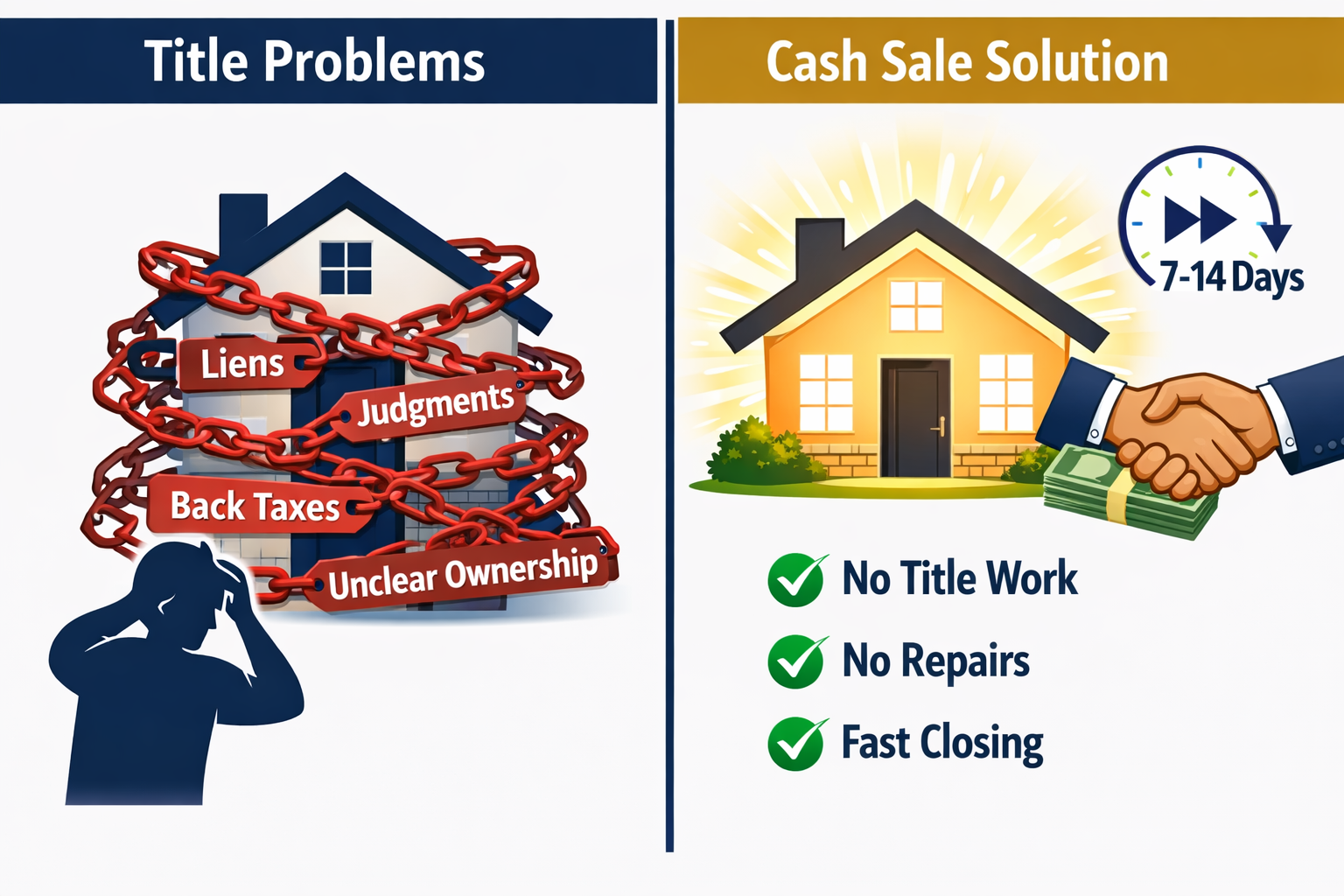
Title issues represent any legal claim, encumbrance, or documentation problem that clouds ownership of a property. Think of a property title like a car’s ownership history—just as a vehicle needs a clean title to transfer ownership smoothly, real estate requires clear documentation proving rightful ownership.
Common Title Problems That Block Traditional Sales
Several types of title complications can derail a conventional real estate transaction:
Tax Liens and Back Taxes 🏛️
When property taxes go unpaid, counties place liens against the property. These liens take priority over almost all other claims and must be satisfied before ownership can transfer in traditional sales. Many property owners facing back taxes on inherited property feel trapped, believing they cannot sell until they pay thousands in accumulated debt.
Judgment Liens
Court judgments against property owners often attach to their real estate. Whether from unpaid credit cards, medical bills, or legal disputes, these liens create clouds on the title that conventional buyers and their lenders won’t accept.
Mechanic’s Liens
Contractors who performed work but weren’t paid can file mechanic’s liens against properties. These claims remain attached to the property itself, regardless of whether the current owner was responsible for the original debt.
Heir Property Complications
When someone inherits property without going through proper probate, or when multiple heirs share ownership without clear documentation, the title becomes clouded. Missing heirs or disputes among family members can make traditional sales virtually impossible.
Breaks in the Chain of Title
Every property has a documented history of ownership transfers. When gaps appear in this chain—perhaps from improper deed recordings, lost documents, or administrative errors—the title becomes unclear. Understanding breaks in chain of title helps property owners recognize why lenders reject financing for their properties.
Why Traditional Buyers Can’t Handle Title Problems
Conventional home buyers typically secure mortgage financing to purchase properties. Lenders protect their investments by requiring title insurance, which guarantees clear ownership. Title insurance companies refuse to issue policies on properties with unresolved title issues, creating an impossible situation:
- Buyer needs financing
- Lender requires title insurance
- Title company won’t insure clouded titles
- Sale cannot proceed
Even cash buyers in traditional transactions usually demand clear titles because they want title insurance protection for their investment.
How to Sell House with Title Issues Fast: No Title Work Required
The solution to selling properties with title complications lies in working with specialized cash buyers who understand complex real estate situations. These buyers—often called problem property buyers or investors—have developed systems to handle title issues that would stop traditional transactions cold.
The Cash Buyer Advantage
Professional cash buyers who specialize in problem properties offer several distinct advantages:
No Financing Contingencies
Without needing bank approval, cash buyers can close quickly and aren’t subject to lender title requirements. This flexibility makes all the difference when title issues exist.
In-House Title Resolution
Experienced buyers work directly with title companies and legal professionals who specialize in resolving complicated ownership situations. They coordinate lien payoffs, negotiate with creditors, and handle the paperwork—all at closing.
As-Is Purchases
These buyers purchase properties in their current condition, both physically and legally. Property owners don’t need to make repairs, clear liens beforehand, or resolve ownership disputes independently.
Speed and Certainty
While traditional sales take 30-60 days (and often fall through due to title problems), cash buyers can close in as little as 7-14 days once they’ve reviewed the situation.
The Step-by-Step Process
Here’s exactly how selling a house with title issues works when you choose the right buyer:
Step 1: Initial Contact and Property Information
Reach out to a cash buyer who specializes in problem properties. Provide basic information about your property and the known title issues. Honest disclosure helps buyers provide accurate offers quickly.
Step 2: Property Evaluation
The buyer researches the property’s value, condition, and title situation. This typically involves:
- Pulling public records
- Ordering preliminary title searches
- Assessing property value
- Calculating resolution costs for liens and other encumbrances
Step 3: Cash Offer Presentation
Within 24-48 hours, the buyer presents a cash offer. The offer accounts for:
- Current market value
- Costs to resolve title issues
- Property condition
- Closing timeline
The offer represents the net amount you’ll receive—the buyer handles all title resolution costs at closing.
Step 4: Agreement and Title Work Coordination
Once you accept the offer, the buyer’s team coordinates with:
- Title companies experienced in complex situations
- County tax offices for payoff amounts
- Lien holders for satisfaction requirements
- Legal professionals as needed
You don’t manage these conversations—the buyer’s team handles everything.
Step 5: Closing
At closing, all title issues are resolved simultaneously:
- Liens are paid from sale proceeds
- Ownership transfers properly
- You receive your net proceeds
- The buyer assumes ownership with clear title
This coordinated closing resolves in one transaction what might otherwise require months of separate negotiations and payments.
Types of Title Issues Cash Buyers Can Handle
Understanding which title problems specialized buyers can resolve helps property owners recognize when this solution fits their situation.
Tax Liens and Delinquent Property Taxes
Property tax liens represent one of the most common title issues cash buyers resolve. Whether you owe one year or ten years of back taxes, professional buyers can:
- Obtain exact payoff amounts from county tax offices
- Negotiate payment plans or settlements when applicable
- Pay liens at closing from sale proceeds
- Transfer ownership with taxes current
Many property owners facing tax debt discover they have more options than they realized when working with experienced buyers.
Judgment Liens and Court-Ordered Debts
Court judgments that attach to properties can be satisfied at closing. Cash buyers work with judgment creditors to:
- Verify exact amounts owed
- Negotiate settlements when possible
- Arrange lien releases
- Ensure proper documentation of satisfaction
The key advantage: you don’t negotiate directly with creditors or manage the release process.
Mechanic’s Liens from Unpaid Contractors
Contractor liens can be particularly frustrating, especially when you inherited a property with existing liens or when disputes exist about work quality. Cash buyers experienced with these situations:
- Research lien validity and amounts
- Work with contractors or their attorneys
- Resolve disputes when necessary
- Obtain proper lien releases
Heir Property and Ownership Complications
Properties passed down through generations without proper probate create some of the most complex title situations. Cash buyers specializing in heir property can navigate:
- Multiple owner situations
- Missing or unknown heirs
- Probate requirements
- Ownership documentation gaps
These buyers often work with specialized attorneys who can establish clear ownership paths even in complicated family situations.
Clouded Titles and Chain of Title Breaks
When title searches reveal gaps in ownership history or unclear documentation, specialized buyers can:
- Order comprehensive title searches
- Work with title curative specialists
- File necessary legal actions (like quiet title actions) when required
- Resolve documentation errors
Understanding clouded titles helps property owners recognize these issues early and seek appropriate solutions.
Real-World Scenarios: When This Solution Makes Sense
Let’s explore specific situations where selling to a cash buyer without doing title work first provides the best solution.
Scenario 1: Inherited Property with Multiple Liens
The Situation:
Maria inherited her grandmother’s house in Dallas. The property had three years of unpaid property taxes totaling $8,400, a mechanic’s lien for $3,200 from roof work done five years ago, and a judgment lien for $5,600 from her grandmother’s unpaid medical bills.
Traditional Sale Challenges:
Conventional buyers wouldn’t consider the property until all liens were cleared. Maria didn’t have $17,200 to pay these debts before selling.
Cash Buyer Solution:
A specialized buyer offered $145,000 for the property (fair market value was $165,000). At closing, all liens were paid from proceeds, and Maria received $127,800 net—without spending a dollar upfront or managing creditor negotiations.
Scenario 2: Multiple Heirs, Unclear Ownership
The Situation:
The Johnson family owned a property passed down from their grandfather in 1978. No probate was ever filed. Now, six cousins technically share ownership, but two live out of state and haven’t been heard from in years.
Traditional Sale Challenges:
Title companies wouldn’t insure the property without all heirs signing off. Locating missing heirs and getting everyone to agree seemed impossible.
Cash Buyer Solution:
A buyer experienced with heir property complications worked with a specialized attorney to establish clear ownership paths. The buyer coordinated with all available heirs, handled legal requirements, and closed within 30 days—something the family had thought impossible.
Scenario 3: Facing Foreclosure with Judgment Liens
The Situation:
Robert fell behind on his mortgage after a job loss. During this difficult period, he also accumulated credit card debt that resulted in two judgment liens totaling $12,000. The foreclosure auction was scheduled in 45 days.
Traditional Sale Challenges:
Even if Robert found a conventional buyer quickly, the judgment liens would prevent closing. He didn’t have funds to satisfy the judgments, and time was running out.
Cash Buyer Solution:
A problem property specialist offered to purchase the home in 14 days. The offer provided enough proceeds to pay off the mortgage, satisfy both judgment liens, and leave Robert with $8,000 to start fresh—all while stopping the foreclosure.
Comparing Your Options: Traditional Sale vs. Cash Buyer
Understanding the differences between selling traditionally and working with specialized cash buyers helps property owners make informed decisions.
| Factor | Traditional Sale | Cash Buyer for Problem Properties |
|---|---|---|
| Timeline | 30-90+ days (if successful) | 7-14 days typical |
| Title Requirements | Must be completely clear | Handles existing issues |
| Upfront Costs | Seller pays to clear liens first | No upfront costs |
| Financing Contingency | Yes (most buyers need loans) | No contingencies |
| Fall-Through Risk | High with title issues | Very low |
| Repairs Required | Usually expected | None—sold as-is |
| Who Handles Title Work | Seller’s responsibility | Buyer coordinates everything |
| Closing Certainty | Uncertain with title problems | High certainty |
The right choice depends on your specific situation. If you have time, resources to clear title issues, and your property has no significant problems, traditional sales may yield higher net proceeds. However, when title complications exist, time is limited, or you lack resources to resolve issues upfront, cash buyers provide practical solutions.
What to Look for in a Cash Buyer for Problem Properties
Not all cash buyers have equal experience or integrity. Finding the right buyer makes the difference between a smooth transaction and additional headaches.
Essential Qualities of Reputable Buyers
Experience with Title Issues 💼
Look for buyers who specifically mention handling properties with liens, judgments, tax problems, or ownership complications. Generic “we buy houses” companies may not have the expertise needed for complex situations.
Transparent Communication
Trustworthy buyers explain their process clearly, answer questions thoroughly, and provide written offers that detail exactly what they’ll pay and how title issues will be resolved.
Local Market Knowledge
Buyers familiar with your area understand local property values, county procedures, and regional title requirements. This expertise leads to fair offers and smoother closings.
Professional Network
Experienced buyers work with established title companies, real estate attorneys, and other professionals who specialize in complicated transactions. This network enables them to resolve issues efficiently.
Positive Track Record
Research reviews, testimonials, and references. Established buyers should have documented success helping property owners in similar situations.
Red Flags to Avoid
Be cautious of buyers who:
- Pressure you to sign quickly without time to review offers
- Charge upfront fees (legitimate buyers don’t charge sellers)
- Provide vague offers without specifics
- Lack verifiable contact information or business credentials
- Make promises that seem too good to be true
The Financial Reality: Understanding Your Net Proceeds
Property owners naturally wonder how much they’ll actually receive when selling with title issues. Understanding the financial components helps set realistic expectations.
How Cash Offers Are Calculated
Professional buyers typically calculate offers using this formula:
Fair Market Value
- Title resolution costs (liens, judgments, legal fees)
- Property condition adjustments
- Buyer’s profit margin
= Cash Offer
For example:
- Property market value: $180,000
- Tax liens: $12,000
- Judgment liens: $8,000
- Title work and closing costs: $3,000
- Buyer’s margin (typically 10-20%): $25,000
= Cash offer: $132,000
Comparing Net Proceeds: Traditional vs. Cash Sale
While cash offers are lower than market value, the net proceeds often compare favorably to traditional sales when you account for all costs:
Traditional Sale Net Proceeds:
- Sale price: $180,000
- Real estate commission (6%): -$10,800
- Closing costs: -$2,500
- Repairs/staging: -$8,000
- Costs to clear liens before listing: -$20,000
- Carrying costs during 60-day sale: -$3,200
= Net proceeds: $135,500
Cash Sale Net Proceeds:
- Cash offer: $132,000
- No commissions: $0
- Minimal closing costs (often buyer-paid): $0
- No repairs: $0
- No upfront lien payments: $0
- No carrying costs: $0
= Net proceeds: $132,000
In this example, the difference is minimal—but the cash sale closes in two weeks instead of two months, with zero upfront costs and no risk of the deal falling through.
Common Questions About Selling with Title Issues
Can I really sell without fixing title problems first?
Yes. Specialized cash buyers purchase properties “subject to” existing liens and encumbrances. They coordinate resolution at closing, so you don’t handle anything beforehand. The buyer’s team works with title companies to ensure all issues are properly addressed when ownership transfers.
Will I owe taxes on the sale?
Tax implications depend on factors like how long you’ve owned the property, whether it was your primary residence, and your specific financial situation. Consult a tax professional for personalized guidance. Generally, if you’re selling at a loss or the property was inherited, tax liability may be minimal or nonexistent.
What if I don’t know all the title issues?
Reputable buyers conduct their own title searches and due diligence. You should disclose everything you know, but the buyer’s research will uncover issues you may not be aware of. Their offer will account for all discovered problems.
How quickly can I really close?
Most experienced buyers can close within 7-14 days once you accept an offer. Some situations may take slightly longer if complex legal work is required, but 30 days is typically the maximum timeframe.
Do I need an attorney?
While not always required, consulting a real estate attorney can provide peace of mind, especially in complex situations. Many sellers feel comfortable proceeding without one when working with established, reputable buyers, but having legal counsel review documents is always an option.
What if multiple people own the property?
Cash buyers experienced with jointly owned properties can navigate multi-owner situations. All owners must typically agree to the sale, but the buyer can facilitate conversations and coordinate signatures even when owners live in different states.
Taking Action: Your Next Steps
If you’re ready to explore selling your property with title issues, here’s how to move forward with confidence.
Step 1: Gather Available Information
Collect whatever documentation you have:
- Property deed or title documents
- Tax bills or statements
- Notices of liens or judgments
- Inheritance or probate documents
- Any correspondence about title issues
Don’t worry if your documentation is incomplete—buyers will conduct their own research. Having whatever you can find simply speeds the process.
Step 2: Contact Specialized Buyers
Reach out to buyers who specifically handle problem properties. When you contact Sure Path Property Solutions, you’ll speak with professionals who understand complicated situations and provide helpful guidance without pressure.
Step 3: Be Honest About Your Situation
Share all known issues openly. Transparency allows buyers to provide accurate offers quickly and prevents surprises that could delay closing.
Step 4: Review Offers Carefully
When you receive a cash offer, make sure you understand:
- The exact amount you’ll receive at closing
- Which title issues the buyer will resolve
- The proposed timeline
- Any contingencies or conditions
- What happens at closing
Ask questions about anything unclear. Professional buyers welcome questions and provide detailed explanations.
Step 5: Make an Informed Decision
Compare your options realistically. Consider:
- Your timeline and urgency
- Available resources to resolve issues independently
- Risk tolerance for traditional sales falling through
- Stress and complexity you’re willing to manage
- Net proceeds after all costs
There’s no single right answer for everyone. The best choice depends on your unique circumstances and priorities.
Why Sure Path Property Solutions Understands Your Situation

At Sure Path Property Solutions, we’ve built our business specifically to help property owners navigate complicated real estate situations. We understand that title issues, liens, multiple heirs, and unclear ownership create stress and uncertainty.
Our Approach: Helpful Solutions, Not Sales Pressure
We believe in providing helpful guidance first, sales second. When you contact us, you’ll experience:
Expert Service from Industry Experts
Our team includes professionals with decades of combined experience resolving complex property situations. We’ve successfully closed hundreds of transactions that traditional buyers couldn’t handle.
Friendly and Caring Communication
We recognize that property problems often come during difficult life circumstances—inheritance after loss, financial hardship, family disputes. Our team treats every property owner with respect, empathy, and patience.
Trustworthy Service You Can Count On
We do what we say we’ll do. Our offers are genuine, our timelines are realistic, and our commitments are solid. We’ve built our reputation on integrity and follow-through.
Coordination with Counties and Title Professionals
We maintain relationships with title companies, county offices, and legal professionals who specialize in complicated situations. This network enables us to resolve issues efficiently and reliably.
Real Results for Real People
We’ve helped property owners across multiple states sell properties with liens, back taxes, heir property complications, and numerous other title issues. Each situation is unique, but our commitment remains constant: providing practical solutions that help people move forward.
Alternative Solutions When Selling Isn’t Right
While selling to a cash buyer solves many title problems quickly, it’s not always the only option. Understanding alternatives helps you make the best decision for your situation.
Resolving Title Issues Independently
If you have time and resources, you might choose to clear title issues yourself before selling traditionally:
Paying Off Liens
If you can access funds to pay tax liens, judgment liens, or other encumbrances, clearing them before listing may increase your net proceeds. Calculate carefully whether the additional proceeds justify the upfront costs, time, and effort.
Negotiating with Creditors
Some lien holders accept settlements for less than the full amount owed. This requires negotiation skills and time but can reduce resolution costs.
Legal Actions
Certain title issues require legal proceedings like quiet title actions to establish clear ownership. These processes typically take months and involve attorney fees, but they permanently resolve ownership questions.
Keeping the Property
In some situations, keeping the property makes more sense than selling:
Rental Income
If the property could generate rental income exceeding carrying costs, keeping it might build long-term wealth despite current title complications.
Family Significance
Some properties hold such family importance that heirs prefer resolving issues and maintaining ownership rather than selling.
Market Timing
If you’re not in a hurry and believe property values will increase significantly, waiting might make financial sense—provided you can afford to carry the property and resolve title issues meanwhile.
The Emotional Side: Making Peace with Difficult Decisions
Selling property with title issues often involves more than financial calculations. Emotional factors play significant roles, especially with inherited properties or homes connected to difficult life circumstances.
Letting Go of Family Properties
Selling a home that’s been in your family for generations can feel like losing a piece of your history. These feelings are valid and normal. Remember:
- Preserving memories doesn’t require keeping the property. Photos, stories, and family connections remain regardless of who owns the house.
- Sometimes selling honors your loved ones better than struggling. If maintaining the property creates stress, financial hardship, or family conflict, your loved ones likely would have wanted better for you.
- You’re not alone in this decision. Thousands of families face similar choices every year, and choosing to sell doesn’t diminish your love or respect for those who came before.
Moving Forward from Financial Hardship
If title issues stem from financial difficulties—unpaid taxes, judgment liens, or foreclosure—selling can feel like admitting defeat. Reframe this perspective:
- Selling strategically is smart, not weak. Recognizing when to cut losses and start fresh demonstrates wisdom and courage.
- You’re solving a problem, not creating one. The problem already exists; selling is your solution.
- Fresh starts are possible. Many people who’ve faced foreclosure, liens, or financial hardship have rebuilt successfully. This difficult moment doesn’t define your future.
Dealing with Family Disagreements
When multiple heirs or co-owners disagree about selling, emotions run high. Some strategies that help:
- Focus on practical realities, not emotions. What can each person actually afford to contribute? What are the real carrying costs? What happens if no one acts?
- Consider everyone’s circumstances. The heir who wants to keep the property may have different financial resources than others. The one who wants to sell quickly may face urgent needs.
- Explore compromise solutions. Perhaps one heir could buy out the others. Maybe selling and dividing proceeds fairly serves everyone better than ongoing conflict.
- Seek professional mediation if needed. Sometimes neutral third parties help families find solutions everyone can accept.
Industry Insights: The Growing Market for Problem Properties
The market for properties with title issues has expanded significantly in recent years. Understanding this trend helps property owners recognize they have more options than ever before.
Why Investors Specialize in Problem Properties
Experienced investors have discovered that properties with title issues, liens, or ownership complications represent opportunities:
Less Competition
While thousands of investors compete for clean-title properties, far fewer have the expertise to handle complicated situations. This reduced competition allows specialized buyers to build sustainable businesses.
Value Creation
Resolving title issues creates value. An investor who purchases a $150,000 property for $120,000, spends $10,000 resolving title problems, and resells for $160,000 has created a win-win situation—the original owner received fast cash without managing complications, and the investor earned reasonable profit for their expertise and risk.
Helping People
Many investors in this space are genuinely motivated by helping property owners escape difficult situations. The business model aligns financial success with solving real problems for real people.
Market Trends in 2026
Several factors are driving increased activity in the problem property market:
Aging Population and Inheritance
As Baby Boomers age, more properties transfer to heirs who may not want or cannot afford to keep them. Many inherited properties come with title complications from years of deferred maintenance, unpaid taxes, or unclear ownership.
Economic Pressures
Economic uncertainty, inflation, and changing employment patterns mean more property owners face financial difficulties that lead to liens, judgments, and tax delinquencies.
Awareness and Education
Property owners increasingly understand they have options beyond traditional sales. Online resources and companies like Sure Path Property Solutions educate people about alternative solutions.
Legal and Ethical Considerations
Understanding the legal and ethical landscape helps property owners protect themselves and make informed decisions.
Your Legal Rights as a Property Owner
Even when title issues exist, you retain important rights:
Right to Sell
You can sell your property interest even with liens or other encumbrances. Buyers who purchase “subject to” existing liens take on responsibility for resolving them.
Right to Fair Dealing
You’re entitled to honest, transparent communication from buyers. Any misrepresentation or deceptive practices violate consumer protection laws.
Right to Legal Counsel
You can consult attorneys at any point in the process. Reputable buyers respect this right and never pressure you to proceed without legal advice if you want it.
Ethical Buyer Practices
Legitimate cash buyers who specialize in problem properties follow ethical standards:
Transparent Offers
Ethical buyers clearly explain how they calculated their offers, what they’ll pay, and how title issues will be resolved.
No Pressure Tactics
Professional buyers give you time to consider offers, ask questions, and consult with family or advisors. High-pressure sales tactics signal problems.
Fair Pricing
While cash offers are below market value, they should be fair given the circumstances. Ethical buyers don’t exploit desperate situations with unreasonably low offers.
Proper Documentation
All agreements should be in writing, clearly stating terms, conditions, and responsibilities.
Regional Considerations: How Location Affects Title Issues
Title laws, lien priorities, and resolution processes vary by state. Understanding regional differences helps property owners know what to expect.
State-Specific Title Laws
Each state has unique laws governing:
Lien Priority
Which liens take precedence affects how they’re paid at closing. Property tax liens typically have first priority, but other rules vary by state.
Foreclosure Processes
Some states use judicial foreclosure (through courts), while others use non-judicial processes. These differences affect timelines and options for property owners facing foreclosure.
Probate Requirements
Inheritance laws and probate procedures differ significantly across states. What’s required to transfer inherited property in Texas differs from Florida or Oklahoma requirements.
Homestead Protections
Some states provide homestead exemptions that protect primary residences from certain types of liens and judgments.
Working with Local Experts
Because of these regional variations, working with buyers who understand your specific state’s laws provides significant advantages. Local expertise means:
- Accurate timelines based on regional processes
- Relationships with local title companies and county offices
- Understanding of state-specific requirements
- Knowledge of local market values
Technology and Title Resolution: Modern Solutions
Advances in technology are making title research and resolution more efficient, benefiting both buyers and sellers.
Digital Title Searches
Modern title companies use sophisticated databases that compile records from counties, courts, and other sources. These systems can:
- Identify liens and encumbrances quickly
- Track ownership history efficiently
- Flag potential issues early
- Reduce research time from weeks to days
Electronic Document Management
Digital signatures, electronic notarization, and online document management make closings faster and more convenient:
- Documents can be signed remotely
- No need for in-person closings in many cases
- Faster document recording with counties
- Reduced errors from manual processes
Communication Platforms
Modern buyers use technology to keep sellers informed throughout the process:
- Real-time updates on title work progress
- Digital document sharing
- Video consultations for remote sellers
- Transparent tracking of closing timelines
Conclusion: Your Path Forward Starts Here
Discovering your property has title issues can feel overwhelming, but you’re not trapped. The ability to sell house with title issues fast: no title work required provides a practical solution when traditional sales won’t work.
Throughout this guide, you’ve learned:
✅ Common title issues like liens, judgments, and ownership complications that block traditional sales
✅ How specialized cash buyers resolve these problems at closing without requiring you to fix anything first
✅ The step-by-step process from initial contact to closing in as little as 7-14 days
✅ Financial realities including how offers are calculated and how net proceeds compare to traditional sales
✅ What to look for in reputable buyers and red flags to avoid
Taking Your First Step
If you’re facing title issues and need to sell your property, your next step is simple: reach out for a no-obligation consultation. When you contact Sure Path Property Solutions, you’ll receive:
- Honest assessment of your situation and options
- Fair cash offer within 24-48 hours
- Clear explanation of how we’ll resolve title issues
- No pressure—just helpful guidance to help you make the best decision for your circumstances
We’ve helped hundreds of property owners navigate complicated situations involving liens, back taxes, heir property issues, and numerous other title complications. Our expert service, friendly and caring approach, and trustworthy track record mean you can move forward with confidence.
Remember: You Have Options
Whether you choose to work with us, another buyer, or pursue alternative solutions, remember that title issues don’t have to trap you indefinitely. Solutions exist. Help is available. And taking that first step—reaching out to learn your options—costs nothing but opens doors you may not have known existed.
Your property situation may feel complicated, but your path forward can be surprisingly simple. Let’s talk about how we can help you move forward and leave these title issues behind.
Ready to get started? Contact Sure Path Property Solutions today for your free, no-obligation consultation and cash offer. We’re here to provide the helpful solutions and expert guidance you need to resolve your property challenges quickly and fairly.