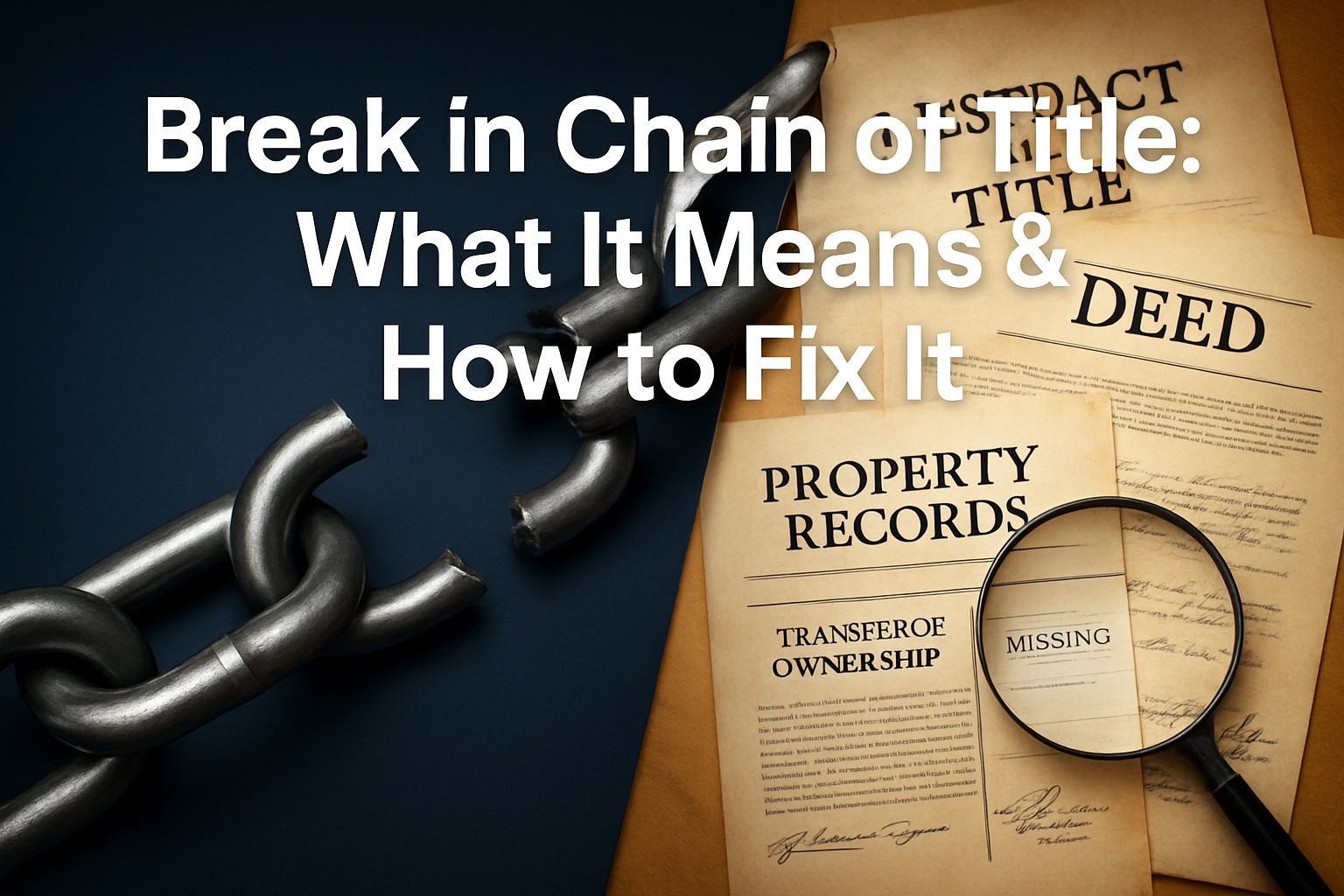
Imagine discovering that the property you’ve owned for years—or just inherited from a loved one—can’t be sold because of a missing signature from decades ago. This nightmare scenario happens more often than most people realize, and it’s called a break in the chain of title. Understanding what a break in chain of title means and how to fix it can save property owners thousands of dollars and months of frustration when trying to sell, refinance, or transfer real estate.
A chain of title represents the complete history of property ownership from the original owner to the current one. When any link in that chain is missing, incomplete, or improperly recorded, it creates a break that can prevent you from proving clear ownership. Whether you’ve inherited property, purchased real estate with complex ownership history, or discovered title issues during a sale, knowing how to address these problems is essential for protecting your investment.
Key Takeaways
- A break in chain of title occurs when there’s a gap or defect in the documented ownership history of a property, preventing clear proof of ownership transfer from one owner to the next.
- Common causes include missing deeds, improperly recorded documents, probate issues, foreclosure errors, and clerical mistakes that create gaps in the ownership record.
- Title searches conducted by professionals can identify breaks in the chain, which must be resolved before most sales, refinances, or transfers can proceed.
- Fixing a break typically requires legal remedies such as quiet title actions, corrective deeds, affidavits of heirship, or probate proceedings depending on the specific issue.
- Working with experienced professionals provides helpful guidance through the complex process of resolving title defects and clearing ownership for successful property transactions.
What Is a Chain of Title?
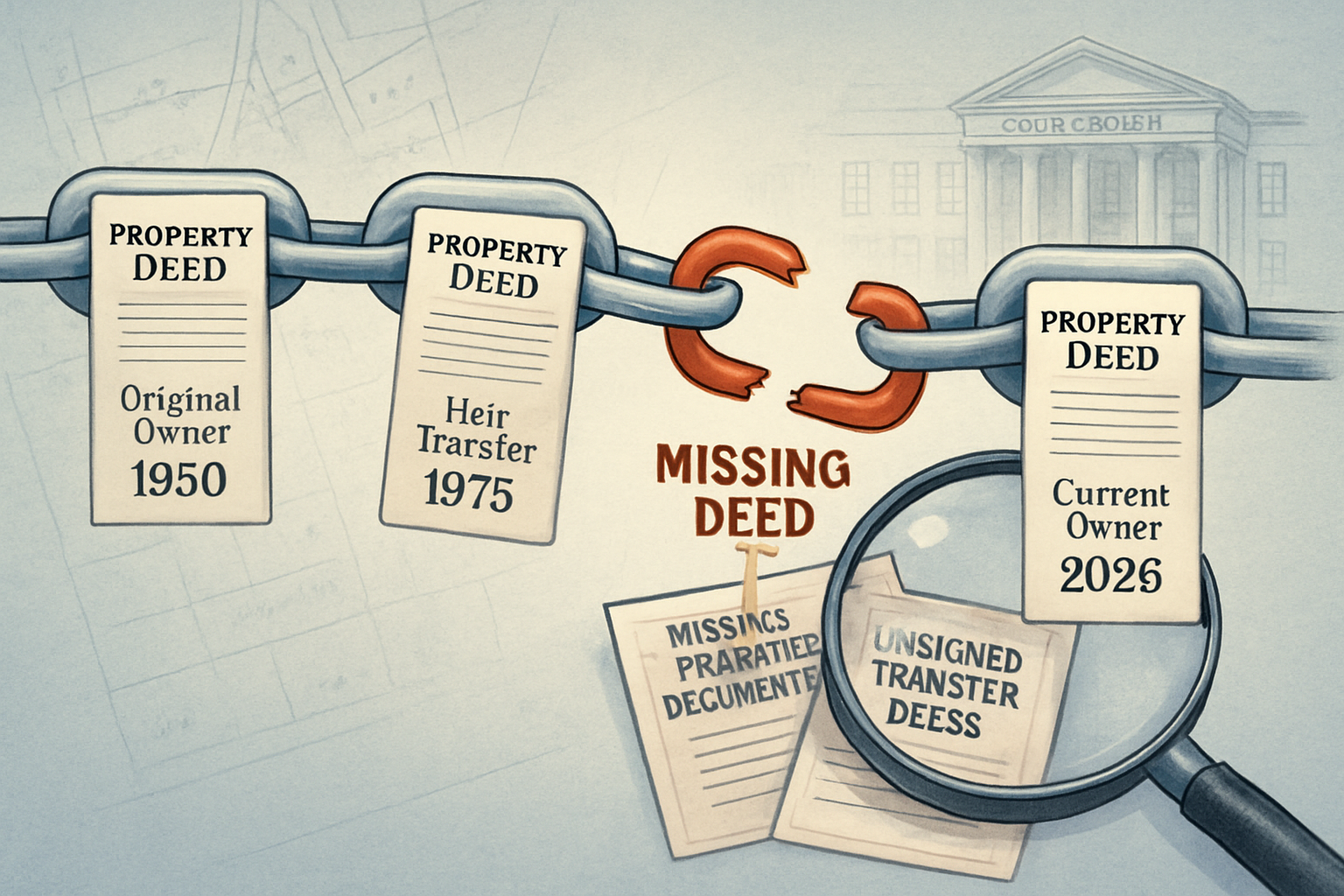
The chain of title is the sequential history of all ownership transfers for a specific piece of real estate. Think of it as a family tree for your property—documenting every person or entity that has owned the land from its original grant or patent to the present day.
The Components of a Complete Chain
A complete chain of title includes several essential elements:
Deeds and Conveyances: Every document that transferred ownership from one party to another, including warranty deeds, quitclaim deeds, and special purpose deeds.
Probate Records: When an owner dies, probate documents show how the property passed to heirs or beneficiaries through the legal process.
Court Orders: Divorce decrees, partition actions, foreclosure judgments, and other court-ordered transfers that affect ownership.
Liens and Encumbrances: Mortgages, tax liens, judgment liens, and other claims against the property that were placed and (hopefully) released over time.
Recorded Documents: All official recordings with the county recorder’s office that provide public notice of ownership changes and property interests.
Why Chain of Title Matters
The chain of title serves as proof of ownership. When selling property, buyers and their lenders need assurance that the seller actually owns what they’re selling and has the legal right to transfer it. Title insurance companies examine the chain before issuing policies that protect against ownership disputes.
Without a clear, unbroken chain, property owners face serious obstacles. Banks won’t provide mortgages, buyers won’t purchase, and selling inherited property becomes nearly impossible until the issues are resolved.
Understanding What a Break in Chain of Title Means
A break in chain of title represents any gap, defect, or irregularity in the documented ownership history that raises questions about who legally owns the property. These breaks create uncertainty about ownership rights and must be corrected before most real estate transactions can proceed.
Types of Title Breaks
Title breaks come in various forms, each presenting unique challenges:
Missing Links: The most common break occurs when a deed or other transfer document was never recorded or has been lost. For example, if John owned property in 1980, and Mary owns it in 2025, but there’s no recorded document showing how ownership passed from John to Mary, that’s a missing link.
Defective Documents: Sometimes deeds were recorded but contain errors—misspelled names, incorrect legal descriptions, missing signatures, or improper notarization. These defects can invalidate the transfer.
Broken Inheritance Chain: When property passes through multiple generations without proper probate proceedings, the chain becomes unclear. If Grandma left property to her three children, but no probate was filed and only one child later sold it, there’s a break in the chain.
Foreclosure Irregularities: Improper foreclosure procedures, missing assignments of mortgage, or errors in the foreclosure process can create title defects that break the chain.
Fraudulent Transfers: Forged signatures, identity theft, or transfers made by someone without legal authority create serious breaks requiring extensive legal remedies.
How Breaks Are Discovered
Most property owners don’t know about title breaks until they attempt a transaction. Here’s when these issues typically surface:
🔍 During Title Search: When preparing to sell or refinance, a title company conducts a thorough examination of public records and discovers gaps or defects in the ownership history.
📋 Estate Settlement: Heirs trying to transfer inherited property often discover that previous generations never properly recorded transfers or completed probate proceedings.
💼 Refinancing Attempts: Lenders require clear title before approving new loans, and their title examination may reveal problems that weren’t caught during the original purchase.
🏛️ Property Disputes: Boundary disagreements or ownership claims by third parties can trigger investigations that uncover chain of title breaks.
Understanding clouded title issues helps property owners recognize that breaks in the chain create similar complications requiring professional resolution.
Common Causes of Chain of Title Breaks
Identifying why breaks occur helps property owners understand their specific situation and determine the appropriate fix. Here are the most frequent causes of title chain disruptions:
Probate and Inheritance Issues
Skipped Probate Proceedings: When property owners die without wills or with informal family arrangements, heirs sometimes take possession without going through legal probate. Years or decades later, this creates serious title problems.
Incomplete Estate Administration: Probate may have been started but never finished, leaving property transfers legally incomplete.
Missing Heirs: Unknown or unlocated heirs who have legal claims to property can create breaks when their interests weren’t properly addressed during estate settlement.
Multiple Generations: Property passing through several generations without proper documentation creates compounding problems. If Great-Grandpa’s property passed informally to Grandpa, then to Dad, and now to you, there may be three missing links in the chain.
Recording Errors and Omissions
County recording offices process thousands of documents, and mistakes happen:
- Unrecorded Deeds: Parties complete a sale but never file the deed with the county recorder, leaving no public record of the transfer
- Misfiled Documents: Papers recorded under wrong names, incorrect property descriptions, or in wrong record books
- Clerical Errors: Misspellings, transposed numbers, or incorrect dates that make documents difficult to locate or connect to the property
- Lost Records: Historical documents destroyed by fire, flood, or other disasters affecting county record-keeping
Divorce and Marital Property Issues
Divorce creates unique title complications:
Incomplete Property Transfers: Divorce decrees that award property to one spouse but don’t include proper deeds transferring title from joint ownership to individual ownership.
Quitclaim Deed Problems: One spouse signs a quitclaim deed to the other, but the deed contains errors or wasn’t properly executed and recorded.
Community Property States: In states with community property laws, special rules apply to marital property that, if not followed correctly, can create title defects.
Foreclosure and Lien Issues
The foreclosure process involves multiple legal steps, and errors at any stage can break the chain:
- Missing Assignments: The original lender sells the mortgage to another company, but the assignment isn’t properly recorded before foreclosure
- Procedural Defects: Foreclosure proceedings that didn’t follow state law requirements
- Redemption Period Confusion: In states with redemption rights, improper handling of these periods can create title problems
Property owners dealing with liens and judgments should understand how these encumbrances interact with chain of title issues.
Fraud and Forgery
Though less common, fraudulent activities create serious title breaks:
Forged Signatures: Someone forges an owner’s signature on a deed to fraudulently transfer property.
Identity Theft: Criminals use stolen identities to create fake documents and transfer property ownership.
Fraudulent Conveyances: Transfers made to avoid creditors or hide assets that courts later void.
Name Variations and Identity Issues
Simple name differences can create surprising complications:
- Property purchased as “Robert J. Smith” but sold as “Bob Smith”
- Name changes through marriage or legal proceedings not properly documented
- Similar names causing confusion about which person actually owned the property
- Corporate name changes or business entity reorganizations not properly reflected in title records
How to Identify a Break in Chain of Title
Discovering title problems early provides more time and options for resolution. Here’s how breaks are typically identified and what property owners should watch for:
Professional Title Examination
The most reliable method for identifying title breaks involves hiring professionals who specialize in title research:
Title Companies: These companies employ trained examiners who review public records going back 30-60 years (or longer) to trace the complete ownership history. They create a “title abstract” summarizing all recorded documents affecting the property.
Title Attorneys: Real estate attorneys can conduct title searches and provide legal opinions about any defects discovered. Their expertise proves especially valuable for complex situations.
Abstract Companies: In some areas, abstract companies specialize in compiling comprehensive property histories from public records.
The Title Search Process
Understanding what happens during a title search helps property owners appreciate the complexity:
- Property Identification: The examiner starts with the current legal description and owner information
- Backward Tracing: Working backward through time, they locate each deed, mortgage, and document affecting the property
- Index Search: County recorder indexes are searched under all owner names to find relevant documents
- Document Review: Each located document is examined for proper execution, recording, and legal sufficiency
- Chain Construction: The examiner builds a chronological chain showing each ownership transfer
- Defect Identification: Any gaps, errors, or irregularities are noted as potential title defects
Warning Signs for Property Owners
Even without a professional search, certain situations suggest possible title problems:
⚠️ Inherited Property: If you’ve inherited property that passed through multiple generations, especially without formal probate, title issues are likely.
⚠️ Old Deeds: Property held for decades without recent title examination may have undiscovered problems.
⚠️ Complex Ownership History: Properties with numerous past owners, foreclosures, or ownership disputes have higher risk of title defects.
⚠️ Family Transfers: Real estate transferred between family members informally often lacks proper documentation.
⚠️ Tax Sale Properties: Properties purchased at tax sales may have title complications requiring careful examination.
Documents to Review
Property owners can conduct preliminary reviews by gathering and examining:
- Your Current Deed: Check that names, legal description, and recording information are correct
- Previous Owner’s Deed: If available, verify it properly transferred ownership to you
- Title Insurance Policy: Review the policy from your purchase (if you have one) for any listed exceptions or exclusions
- Probate Records: For inherited property, locate probate files or death certificates
- Tax Records: County tax assessor records showing ownership history
- Survey Documents: Property surveys that confirm boundaries and legal descriptions
For properties with title problems at closing, early identification provides more time for resolution before transaction deadlines.
The Impact of Chain of Title Breaks
Understanding the consequences of title breaks motivates property owners to address these issues promptly. The impacts extend beyond simple inconvenience to create serious financial and legal problems.
Transaction Obstacles
Sale Impossibility: Most buyers and their lenders require clear, marketable title. A break in the chain typically prevents closing until resolved. Properties can’t be sold through traditional means, leaving owners stuck with property they can’t transfer.
Financing Challenges: Banks won’t provide mortgages or refinancing for properties with title defects. This prevents owners from accessing equity or obtaining better loan terms.
Cash Buyer Limitations: Even cash buyers purchasing without financing usually require title insurance, which won’t be issued until breaks are fixed.
Financial Consequences
The financial impact of unresolved title breaks can be substantial:
💰 Reduced Property Value: Properties with known title defects sell for significantly less than comparable properties with clear title—if they can be sold at all.
💰 Carrying Costs: While working to resolve title issues, owners continue paying property taxes, insurance, maintenance, and other expenses without the ability to sell or leverage the property.
💰 Resolution Expenses: Fixing title breaks requires legal fees, court costs, research expenses, and professional services that can total thousands to tens of thousands of dollars.
💰 Opportunity Costs: Time spent resolving title issues represents lost opportunities to sell, invest proceeds elsewhere, or move forward with life plans.
Legal Risks
Unresolved title breaks create ongoing legal vulnerabilities:
Ownership Disputes: Other parties may claim ownership interests, leading to costly litigation and potential loss of property rights.
Adverse Possession: In some circumstances, others may acquire legal rights to property through long-term possession when ownership is unclear.
Heir Claims: Unknown or unlocated heirs may later appear claiming ownership interests in property that passed through defective transfers.
Creditor Actions: Judgment creditors of previous owners may place liens against property when ownership chain is unclear.
Emotional and Practical Stress
Beyond financial and legal impacts, title breaks create significant stress:
- Delayed Life Plans: Inability to sell prevents relocation, retirement planning, or other life transitions
- Family Conflicts: Inherited property with title issues often creates tension among family members with different priorities
- Uncertainty: Not knowing how long resolution will take or whether it’s even possible creates ongoing anxiety
- Complexity: Navigating legal processes, court systems, and bureaucratic requirements overwhelms many property owners
Property owners facing these challenges benefit from expert service that provides helpful guidance through the resolution process.
How to Fix a Break in Chain of Title: Step-by-Step Solutions
Resolving title breaks requires systematic approaches tailored to the specific defect. While each situation is unique, the following steps provide a roadmap for addressing most chain of title issues.
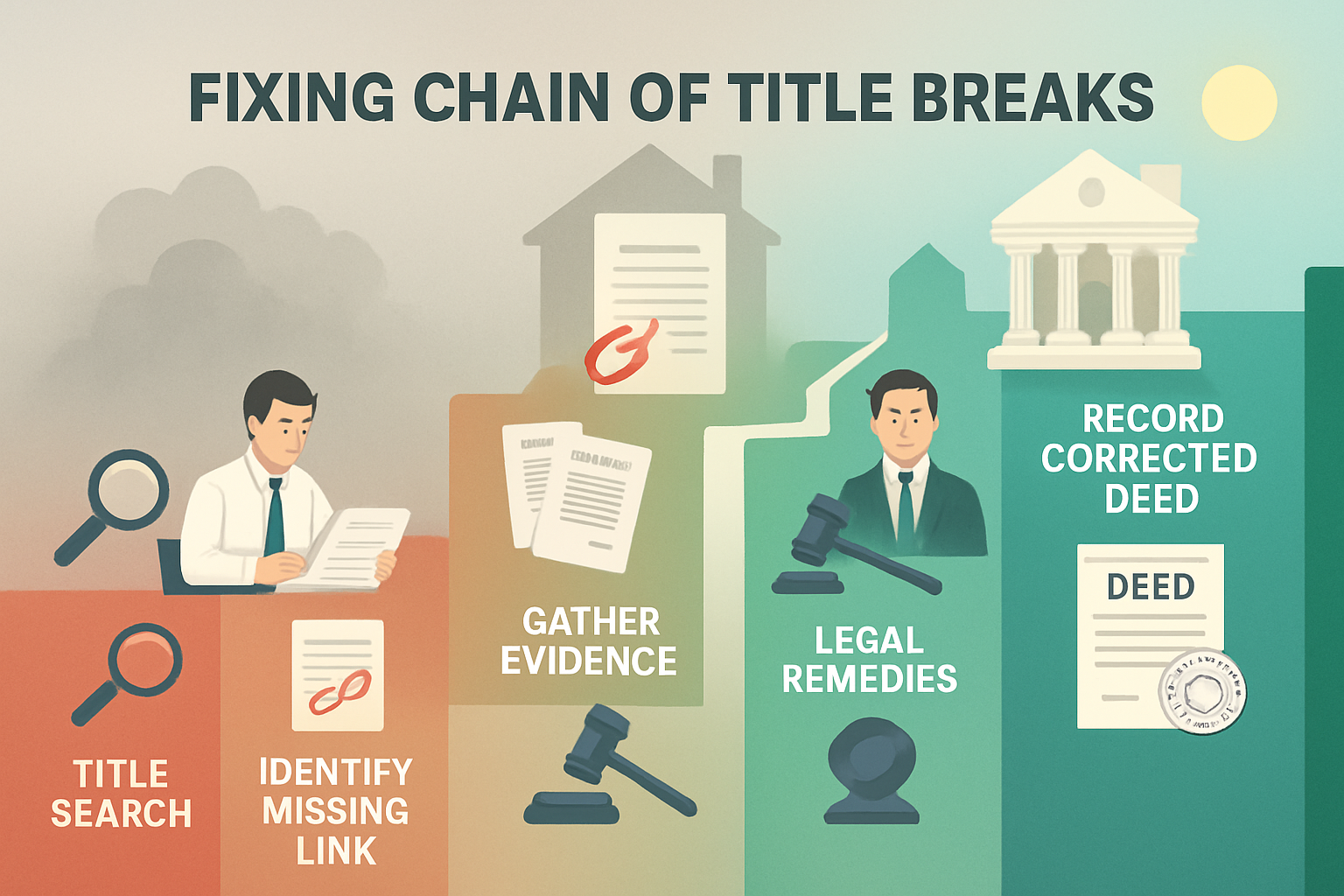
Step 1: Conduct a Comprehensive Title Search
Before fixing a break, understand exactly what’s wrong:
Hire a Title Professional: Engage a title company, attorney, or abstractor to conduct a thorough examination of public records. This investment provides the foundation for all subsequent work.
Obtain a Title Report: Request a detailed report identifying all defects, gaps, and irregularities in the chain. This document becomes your roadmap for resolution.
Identify All Parties: Determine who needs to be involved in fixing the break—previous owners, heirs, lienholders, or other interested parties.
Assess Complexity: Understand whether the issue can be resolved through simple corrective documents or requires court proceedings.
Step 2: Gather Supporting Documentation
Collect evidence that helps establish the correct ownership chain:
- Death Certificates: For inherited property, obtain certified death certificates for deceased owners
- Probate Records: Locate any existing probate files, wills, or estate administration documents
- Affidavits: Gather sworn statements from people with knowledge of ownership history
- Tax Records: Collect property tax payment records showing who paid taxes and when
- Occupancy Evidence: Document who has possessed and maintained the property
- Family Records: Compile family trees, genealogical records, and other documentation establishing relationships
- Correspondence: Locate letters, emails, or other communications discussing property ownership
Step 3: Choose the Appropriate Legal Remedy
Different types of breaks require different solutions:
Corrective Deeds and Affidavits
For minor defects like name variations or clerical errors:
Corrective Deed (Deed of Correction): A new deed executed by the same parties as the original, correcting errors in names, legal descriptions, or other details.
Scrivener’s Affidavit: A sworn statement from the person who prepared the defective document, explaining the error and providing the correct information.
Affidavit of Identity: A sworn statement establishing that “Robert J. Smith” and “Bob Smith” are the same person.
Affidavit of Heirship: In some states, a sworn statement signed by knowledgeable parties identifying the heirs of a deceased owner, sometimes sufficient to clear title without formal probate.
These remedies work well when:
- The error is clear and unambiguous
- All necessary parties are available and cooperative
- The defect doesn’t involve disputed ownership or significant legal questions
Quiet Title Action
For more serious breaks, court proceedings may be necessary:
What It Is: A quiet title action is a lawsuit filed to establish clear ownership and “quiet” (eliminate) competing claims or title defects.
When It’s Needed:
- Missing links in the chain that can’t be corrected through simple documents
- Deceased parties who can’t execute corrective deeds
- Disputed ownership or conflicting claims
- Foreclosure irregularities
- Adverse possession claims
- Unknown heirs or missing parties
The Process:
- File a lawsuit in the county where the property is located
- Identify and serve all parties with potential interests (or publish notice for unknown parties)
- Present evidence establishing the correct ownership chain
- Obtain a court judgment declaring the plaintiff as rightful owner
- Record the judgment to clear the title defect
Timeline and Cost: Quiet title actions typically take 6-18 months and cost $3,000-$10,000+ depending on complexity and whether parties contest the action.
Probate Proceedings
When breaks result from skipped or incomplete estate administration:
Formal Probate: Open an estate proceeding (even years after death) to properly transfer property from deceased owner to heirs or beneficiaries.
Muniment of Title: In some states, a simplified procedure for probating a will when there are no debts, allowing property transfer without full estate administration.
Determination of Heirship: A court proceeding to establish who inherited property when someone died without a will.
Ancillary Probate: When property is located in a different state than where the owner died, ancillary probate in the property’s state may be required.
These proceedings provide court orders that become part of the chain of title, filling gaps created by informal transfers.
Partition Actions
When multiple heirs or co-owners can’t agree on property disposition:
A partition action forces the sale or physical division of property, creating clear ownership for each party. While not fixing a title break directly, partition can resolve ownership disputes that prevent title clearing.
Step 4: Execute and Record Corrective Documents
Once you’ve determined the appropriate remedy:
Prepare Documents: Work with an attorney to draft legally sufficient corrective deeds, affidavits, or court pleadings.
Obtain Signatures: Secure all necessary signatures, ensuring proper notarization and witnessing according to state law.
File Court Actions: If court proceedings are required, file petitions and follow all procedural requirements.
Record Documents: File corrective documents with the county recorder’s office in the proper sequence to create a clear chain.
Obtain Certified Copies: Keep certified copies of all recorded documents for your records and future transactions.
Step 5: Obtain Title Insurance
After resolving the break:
Request New Title Search: Have the title company conduct a fresh examination to verify the break has been properly fixed.
Purchase Title Insurance: Obtain an owner’s title insurance policy protecting against future claims related to the previously broken chain.
Provide Documentation: Give buyers and lenders copies of all corrective documents and court orders demonstrating clear title.
Working with Professionals
Successfully fixing chain of title breaks almost always requires professional assistance:
Real Estate Attorneys: Experienced in title issues, these attorneys can navigate complex legal remedies and represent you in court proceedings.
Title Companies: Provide title searches, identify defects, and often recommend solutions based on their experience with similar issues.
Probate Specialists: Attorneys focusing on estate administration can efficiently handle probate-related title breaks.
Genealogists: For properties with complex inheritance histories, professional genealogists can trace family trees and locate missing heirs.
The industry experts at Sure Path Property Solutions coordinate with these professionals to provide helpful solutions for property owners facing title challenges.
Special Situations: Break in Chain of Title Scenarios
Certain situations create unique title break challenges requiring specialized approaches:
Inherited Property with Multiple Generations
The Challenge: Property passing through two or more generations without proper documentation creates compounding problems. For example, Grandpa died in 1970 without a will, Dad took possession informally, Dad died in 2010 without probating Grandpa’s estate, and now you’re trying to sell.
The Solution:
- Open probate for all deceased owners in sequence, starting with the earliest
- Use affidavits of heirship if your state allows them as alternatives to probate
- Consider quiet title action to establish ownership through all generations simultaneously
- Gather extensive family documentation to prove relationships and inheritance rights
Helpful Tip: The longer these situations remain unaddressed, the more difficult they become as witnesses die and records disappear. Acting promptly provides more options and lower costs.
Properties with Tax Liens or Judgments
When properties have tax liens or other encumbrances combined with title breaks:
The Challenge: You can’t sell the property until both the title break is fixed AND the liens are satisfied or released. Multiple problems compound the complexity.
The Solution:
- Address the title break first to establish clear ownership
- Negotiate lien payoffs or payment plans
- Consider selling to buyers who specialize in properties with multiple issues
- Explore whether selling a house with a lien is possible in your situation
Jointly Owned Property with Deceased Co-Owners
The Challenge: Property owned by multiple people as tenants in common, where one or more co-owners have died without proper transfer of their interests.
The Solution:
- Probate the estates of deceased co-owners to transfer their interests to heirs
- Consider whether jointly owned property can be sold by one owner in certain circumstances
- Negotiate buyouts with other co-owners if possible
- File partition action if co-owners can’t agree on property disposition
Properties Purchased at Tax Sales
The Challenge: Tax sale properties often come with title complications, including insufficient notice to previous owners or lienholders, redemption period issues, or procedural defects in the sale process.
The Solution:
- Wait for redemption periods to expire before attempting to clear title
- File quiet title action to eliminate previous owner’s interests and junior liens
- Provide extensive notice to all potentially interested parties
- Obtain title insurance specifically covering tax sale title risks
Foreclosure Properties with Chain Breaks
The Challenge: Foreclosed properties may have breaks in the chain related to the foreclosure process itself—missing mortgage assignments, improper notice, or procedural errors.
The Solution:
- Review foreclosure file for compliance with state law requirements
- Obtain corrective assignments of mortgage if needed
- File quiet title action to address procedural defects
- Work with foreclosing lender to execute corrective documents
Preventing Chain of Title Breaks
While this article focuses on fixing existing breaks, prevention is always preferable. Property owners can take steps to avoid creating title problems:
Proper Estate Planning
✅ Create a Will or Trust: Specify exactly who should receive your property and how transfers should occur.
✅ Keep Beneficiary Designations Current: For properties held in trusts or with transfer-on-death deeds, regularly update beneficiary information.
✅ Plan for Probate: Understand your state’s probate requirements and ensure your estate plan facilitates smooth property transfers.
✅ Communicate with Heirs: Discuss your plans with family members to prevent surprises and disputes after your death.
Careful Transaction Practices
✅ Always Record Deeds: Never accept or execute a deed without promptly recording it with the county recorder.
✅ Use Qualified Professionals: Work with experienced real estate attorneys and title companies for all property transactions.
✅ Review Documents Carefully: Check all deeds, legal descriptions, and names for accuracy before signing and recording.
✅ Obtain Title Insurance: Purchase owner’s title insurance for every property acquisition to protect against undiscovered defects.
Regular Title Maintenance
✅ Periodic Title Checks: For properties held long-term, consider occasional title examinations to identify and fix small problems before they become large ones.
✅ Keep Records Organized: Maintain files with all deeds, surveys, title policies, and property-related documents in a safe, accessible location.
✅ Address Issues Promptly: If you discover potential title problems, address them immediately rather than hoping they’ll resolve themselves.
When to Seek Professional Help
While some property owners attempt to research and resolve simple title issues themselves, most chain of title breaks require professional expertise. Consider seeking help when:
🔧 The Break Involves Deceased Parties: Court proceedings are almost always necessary when people who should have signed documents are no longer alive.
🔧 Multiple Defects Exist: Properties with several title problems require coordinated strategies to address all issues efficiently.
🔧 Significant Value Is at Stake: For valuable properties, professional assistance ensures problems are properly resolved and protects your investment.
🔧 Time Pressure Exists: If you need to sell quickly or face deadlines, professionals can expedite resolution processes.
🔧 Legal Complexity Arises: Situations involving disputed ownership, fraud, or complex legal questions require attorney representation.
🔧 You Feel Overwhelmed: The stress and complexity of title issues justify professional assistance for peace of mind and proper resolution.
The friendly and caring professionals at Sure Path Property Solutions provide trustworthy service to property owners navigating these challenging situations, coordinating with attorneys, title companies, and other experts to develop comprehensive solutions.
Alternative Solutions: Selling Properties with Title Issues
Sometimes the cost, time, or complexity of fixing a chain of title break exceeds the property’s value or the owner’s resources. In these situations, alternative solutions may be appropriate:
Selling to Specialized Buyers
Some real estate investors and companies specialize in purchasing properties with title problems:
How It Works: These buyers understand title issues and have resources to resolve them after purchase. They offer below-market prices reflecting the cost and risk of fixing the breaks, but provide immediate solutions for owners who can’t or won’t address the problems themselves.
Advantages:
- Quick sales without lengthy resolution processes
- No requirement for owner to fix title issues
- Cash transactions without financing contingencies
- Relief from carrying costs and ongoing property burdens
Considerations:
- Significantly reduced sale prices
- Careful evaluation of buyer’s legitimacy and capability
- Understanding exactly what you’re selling and for how much
Sure Path Property Solutions works with property owners facing these situations, providing helpful solutions when traditional sales aren’t possible due to title issues or other complications.
Selling “As-Is” with Disclosures
In some markets, properties can be sold “as-is” with full disclosure of known title defects:
Requirements:
- Complete transparency about all known title problems
- Significant price reductions to compensate buyers for risk and resolution costs
- Buyers willing to accept title challenges (often investors or developers)
- Clear written disclosures protecting seller from fraud claims
Donating Problem Properties
For properties with minimal value or overwhelming title problems:
Charitable Donations: Some charities accept real estate donations, though most require clear title. A few specialized organizations accept properties with title issues.
Tax Considerations: Consult tax professionals about potential deductions and implications of property donations.
Cost Considerations for Fixing Chain of Title Breaks
Understanding the financial investment required helps property owners make informed decisions about addressing title breaks:
Professional Service Costs
| Service | Typical Cost Range | Notes |
|---|---|---|
| Title Search/Examination | $200 – $500 | Basic search; complex properties cost more |
| Real Estate Attorney Consultation | $200 – $400/hour | Initial consultations sometimes free |
| Corrective Deed Preparation | $300 – $800 | Simple corrections; includes recording |
| Affidavit Preparation | $150 – $400 | Per affidavit; notarization additional |
| Quiet Title Action | $3,000 – $10,000+ | Uncontested; contested actions much higher |
| Probate Proceedings | $2,000 – $8,000+ | Varies by estate complexity and state |
| Partition Action | $5,000 – $20,000+ | Highly variable based on property value and disputes |
| Genealogical Research | $500 – $3,000+ | For locating unknown heirs |
| Title Insurance | $500 – $2,000+ | Based on property value |
Factors Affecting Costs
Several variables influence the total expense of resolving title breaks:
Complexity: Simple name corrections cost far less than multi-generational inheritance issues requiring court proceedings.
Cooperation: When all parties agree and cooperate, costs remain lower than when disputes require litigation.
Location: Attorney fees, court costs, and recording fees vary significantly by state and county.
Property Value: Higher-value properties typically incur higher professional fees and title insurance costs.
Urgency: Expedited processes generally cost more than standard timelines.
Cost-Benefit Analysis
Property owners should consider:
- Property Value: Is the property worth more than the cost to fix the title break?
- Alternative Options: Would selling “as-is” to a specialized buyer net more than fixing the problem and selling traditionally?
- Personal Circumstances: Do you have the financial resources and time to pursue resolution?
- Long-term Plans: If you intend to keep the property long-term, investing in clear title provides ongoing benefits
Frequently Asked Questions
How long does it take to fix a break in chain of title?
The timeline varies dramatically based on the specific issue. Simple corrections using affidavits or corrective deeds may take 30-60 days. Quiet title actions typically require 6-18 months. Probate proceedings range from 6 months to 2+ years depending on state law and estate complexity. Multiple issues or contested matters extend timelines significantly.
Can I sell my property with a known chain of title break?
Traditional sales to buyers using financing are generally impossible with known title breaks, as lenders require clear title. However, some cash buyers and specialized investors purchase properties with title issues, though at significantly reduced prices. Full disclosure of all known defects is legally required.
Will title insurance cover a break in chain of title?
Title insurance purchased when you acquired the property may cover certain undiscovered defects, but generally won’t cover breaks that existed and were known at the time of purchase. After fixing a break, purchasing new title insurance protects against future claims related to the previously defective chain.
What happens if I ignore a chain of title break?
Ignoring title breaks doesn’t make them disappear. Problems typically worsen over time as witnesses die, records are lost, and additional transfers occur. You’ll remain unable to sell, refinance, or properly transfer the property. Other parties may claim ownership interests, potentially resulting in loss of property rights.
Can I fix a chain of title break myself without an attorney?
For very simple issues like minor name variations, property owners sometimes successfully prepare and record corrective affidavits themselves. However, most title breaks require legal expertise to properly resolve. Attempting complex corrections without professional help often creates additional problems or fails to properly cure the defect.
Do all states handle chain of title breaks the same way?
No. Property law varies significantly by state. Recording requirements, probate procedures, quiet title processes, and available remedies differ across jurisdictions. Solutions that work in one state may not be available or effective in another, making local legal expertise essential.
Conclusion
A break in chain of title can transform property ownership from an asset into a burden, preventing sales, blocking refinancing, and creating legal vulnerabilities. However, understanding what these breaks mean and how to fix them empowers property owners to address even complex title issues successfully.
Whether your situation involves inherited property passing through multiple generations, recording errors from decades past, probate proceedings that were never completed, or any other gap in the ownership chain, solutions exist. The key is taking action promptly, working with qualified professionals, and following systematic approaches tailored to your specific circumstances.
For simple defects, corrective deeds and affidavits provide relatively quick and inexpensive remedies. More complex breaks require court proceedings like quiet title actions or probate, involving greater time and expense but delivering legally sound resolutions that clear title for future transactions.
Property owners facing these challenges don’t have to navigate the process alone. The combination of experienced real estate attorneys, title professionals, and specialized property solution companies provides the helpful guidance needed to transform complicated title situations into clear ownership and successful outcomes.
Take Action Today
If you’re dealing with a chain of title break or suspect your property may have title issues:
- Get a Professional Title Examination: Invest in a comprehensive title search to understand exactly what problems exist
- Consult with Experts: Speak with real estate attorneys and title professionals about your specific situation
- Evaluate Your Options: Consider both traditional resolution methods and alternative solutions based on your circumstances
- Develop a Plan: Create a realistic timeline and budget for addressing the title break
- Move Forward: Take the first step toward resolution rather than allowing problems to worsen
The expert team at Sure Path Property Solutions stands ready to provide helpful solutions for property owners facing title challenges, back taxes, liens, or other obstacles to successful real estate transactions. With friendly and caring service, industry experts coordinate with attorneys, title companies, and county officials to guide you through even the most complex property situations.
Don’t let a break in chain of title prevent you from achieving your property goals. With the right approach and professional support, clear ownership and successful transactions are within reach.
Sure Path is a family-owned, curative-title cash buyer. We handle the paperwork and pay what’s owed at closing — no fees, no repairs, no pressure.