
How to Sell Trust Property: Living Trust Real Estate Guide

Selling property held in a living trust doesn’t have to feel like navigating a legal maze. Whether you’ve recently become a trustee after a loved one’s passing or you’re managing trust assets as part of estate planning, understanding the process can save months of delays and thousands of dollars in unnecessary costs.
This comprehensive guide on how to sell trust property: living trust real estate guide will walk you through every step of the process, from understanding your authority as trustee to closing the sale successfully. You’ll learn about common obstacles, required documentation, and practical solutions that make the transaction smoother for everyone involved.
Key Takeaways
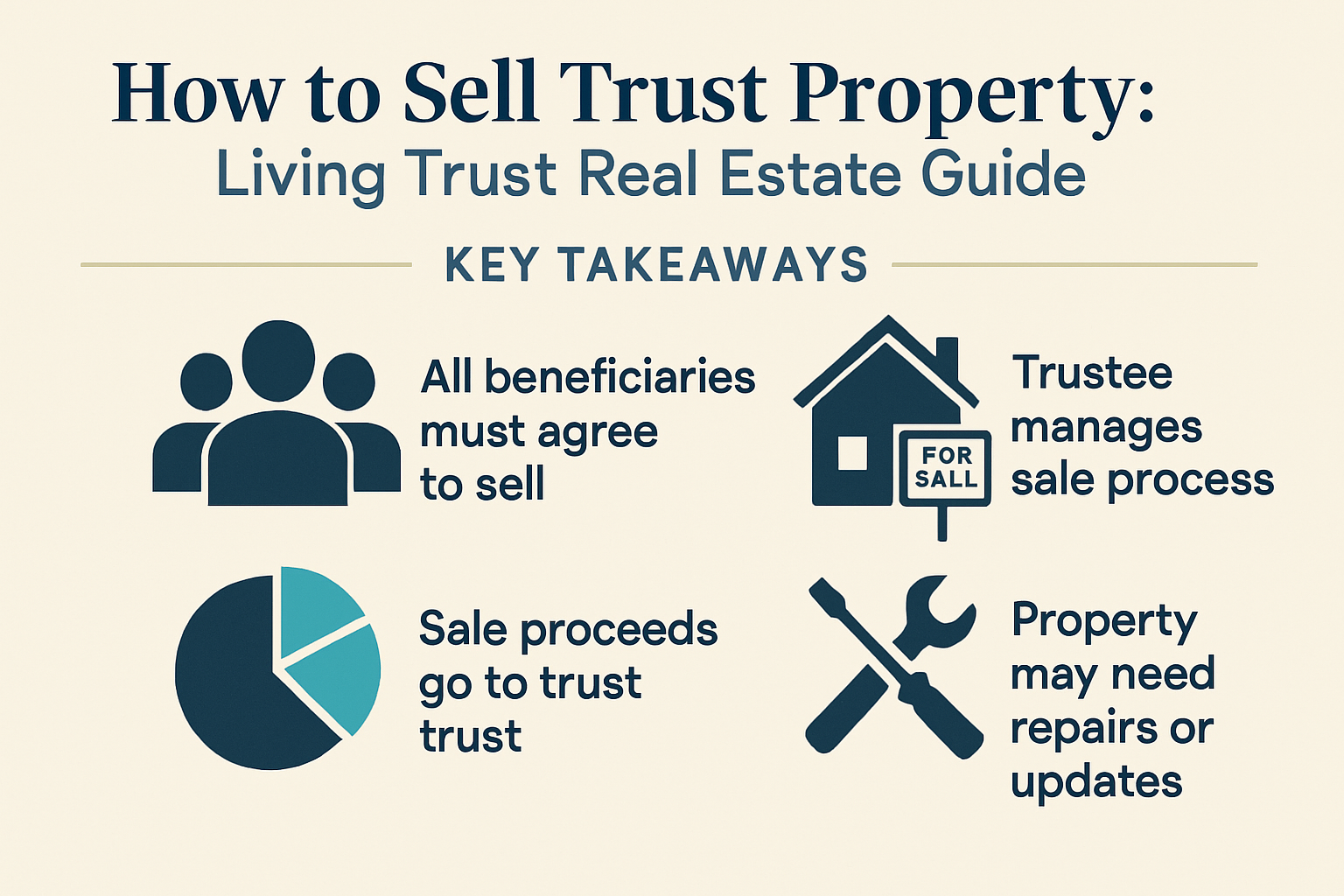
- Trustees have legal authority to sell trust property without court approval in most revocable living trusts, but must follow the trust document’s specific instructions
- Proper documentation is critical – including certified trust certificates, death certificates (if applicable), and clear chain of title to avoid closing delays
- Beneficiary communication prevents disputes and potential legal challenges that can derail or delay the sale
- Title issues, liens, and tax complications are common with trust properties but can be resolved with expert guidance and proper coordination
- Professional assistance from companies like Sure Path Property Solutions can simplify complex situations involving multiple heirs, unclear titles, or outstanding debts
Understanding Living Trusts and Property Ownership
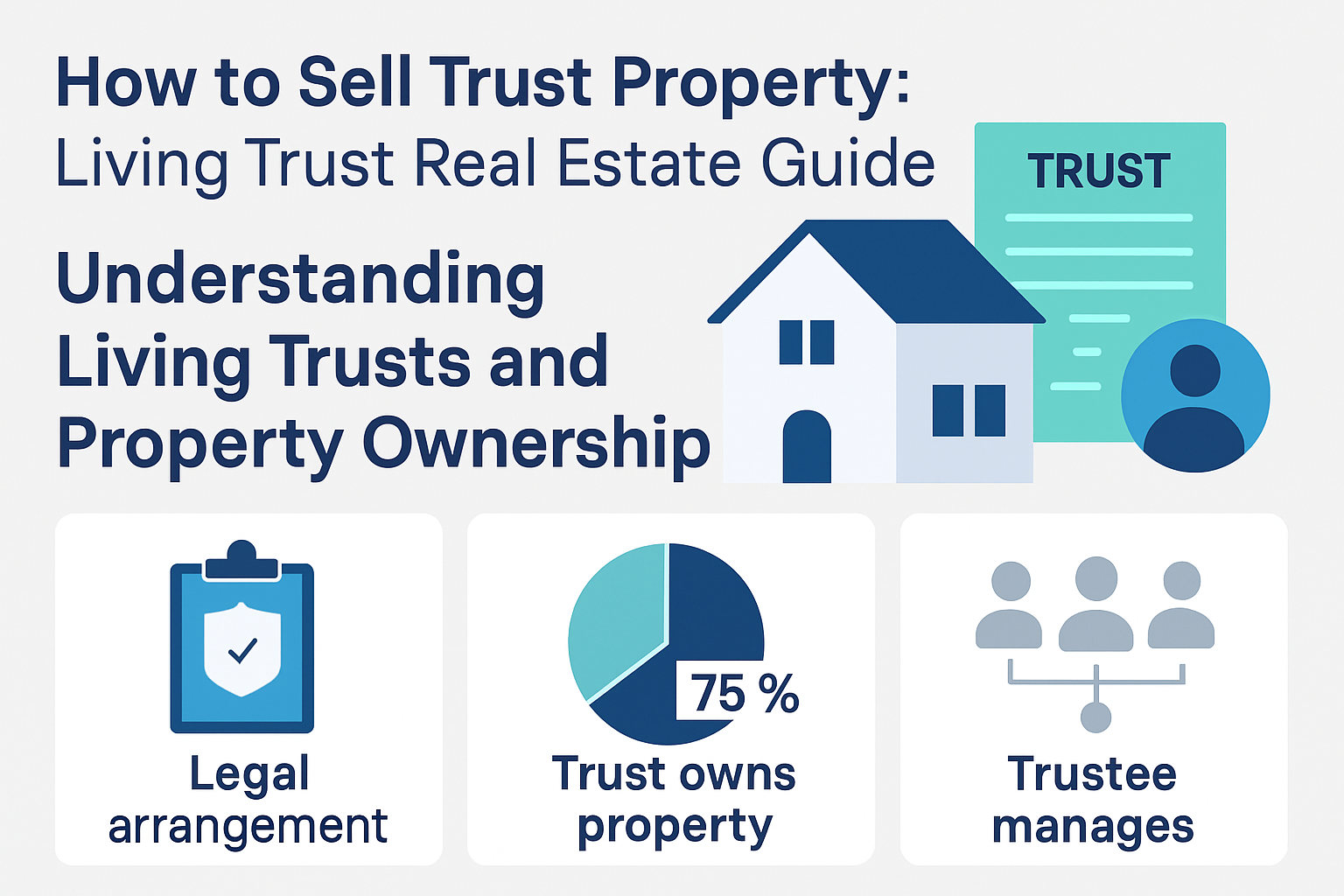
A living trust (also called a revocable trust or inter vivos trust) is a legal entity created during someone’s lifetime to hold and manage assets. Unlike a will, which only takes effect after death, a living trust operates immediately and helps avoid the lengthy probate process.
How Property Ownership Works in a Trust
When real estate is placed into a living trust, the property title transfers from the individual owner to the trust itself. The trust becomes the legal owner, even though the grantor (person who created the trust) typically maintains full control as the initial trustee.
Key ownership characteristics:
- The property deed lists the trust as owner (e.g., “The Smith Family Trust dated January 15, 2020”)
- The trustee manages the property on behalf of beneficiaries
- Ownership bypasses probate upon the grantor’s death
- The successor trustee assumes control when the original trustee passes away or becomes incapacitated
Types of Trusts That Hold Real Estate
Not all trusts function the same way when it comes to selling property:
| Trust Type | Can Sell Property? | Special Requirements |
|---|---|---|
| Revocable Living Trust | ✅ Yes, trustee has authority | Follow trust document instructions |
| Irrevocable Trust | ⚠️ Limited, requires beneficiary consent | May need court approval |
| Testamentary Trust | ✅ Yes, after probate completion | Estate must be settled first |
| Special Needs Trust | ⚠️ Restricted to protect benefits | Court oversight often required |
This guide focuses primarily on revocable living trusts, which are the most common type for holding residential real estate.
Your Authority as Trustee to Sell Trust Property
Understanding your legal authority is the foundation of successfully selling trust property. The trustee’s power comes directly from the trust document itself, making it essential to review this document carefully before proceeding.
What the Trust Document Tells You
The trust agreement serves as your roadmap. It typically specifies:
- When you can sell property (immediately, after certain events, or with conditions)
- Whether beneficiary approval is required (some trusts mandate consent)
- Distribution requirements (how proceeds must be allocated)
- Restrictions or limitations (such as offering property to family members first)
💡 Pro Tip: Request a certified copy of the trust document from the attorney who drafted it or locate the original among the grantor’s important papers. You’ll need this for title companies and potential buyers.
Successor Trustee Responsibilities
If you’ve stepped into the role of successor trustee after the original trustee’s death or incapacity, your responsibilities expand significantly:
Immediate duties include:
- Securing the property – Change locks, maintain insurance, prevent vandalism
- Notifying beneficiaries – Inform all parties of your trustee role and intentions
- Inventorying assets – Document the property’s condition and contents
- Reviewing obligations – Identify mortgages, property taxes, HOA fees, and utilities
- Maintaining the property – Keep up with necessary repairs and maintenance
“As a trustee, you have a fiduciary duty to act in the best interests of the beneficiaries. This means getting fair market value for the property and managing the sale process responsibly.” – Estate Planning Professionals
When You Need Beneficiary Consent
Some trust documents require beneficiary approval before selling real estate. This protects beneficiaries’ interests but can complicate the timeline.
Best practices for obtaining consent:
- Provide written notice of your intention to sell
- Share property appraisals and proposed listing price
- Explain the reasoning behind the sale
- Document all approvals in writing
- Allow reasonable time for beneficiaries to respond
If beneficiaries disagree about selling, you may need to explore mediation or, in rare cases, petition the court for guidance. Companies like Sure Path Property Solutions specialize in helping trustees navigate these complicated situations with helpful guidance and expert service.
Step-by-Step Process: How to Sell Trust Property
Selling trust property follows a structured process that protects all parties and ensures legal compliance. Here’s your comprehensive roadmap.
Step 1: Review the Trust Document Thoroughly
Before taking any action, read the entire trust agreement carefully. Look for:
- Specific instructions about selling real estate
- Required approvals or notifications
- Distribution formulas for sale proceeds
- Any restrictions on timing or method of sale
Consider having an attorney review the document if language seems unclear or contradictory.
Step 2: Obtain Required Documentation
Gather these essential documents before listing the property:
📋 Required Documentation Checklist:
- Certified copy of the trust agreement (or certificate of trust)
- Death certificate of the grantor (if applicable)
- Trustee acceptance document proving your authority
- Property deed showing trust ownership
- Recent property tax statements
- Title insurance policy (if available)
- Mortgage information and payoff statements
- HOA documents and fee statements
The certificate of trust (also called a certification of trust) is particularly important. This shortened document proves the trust’s existence and your authority without revealing private details about beneficiaries or distributions.
Step 3: Get a Professional Property Appraisal
An independent appraisal serves multiple purposes:
- Establishes fair market value for tax purposes
- Protects you from beneficiary claims of undervaluing the property
- Helps set an appropriate listing price
- Provides documentation for estate tax returns
Choose a licensed appraiser familiar with trust properties in your area. The cost typically ranges from $300-$600 but provides valuable protection.
Step 4: Address Title Issues and Liens
Trust properties frequently have title complications that must be resolved before closing. Common issues include:
Outdated ownership records – The property may still show the grantor’s individual name rather than the trust on county records.
Outstanding liens – Property tax liens, judgment liens, or mechanics liens can cloud the title. Learn more about how to sell a house with a lien in our detailed guide.
Unclear chain of title – Missing documents or recording errors can create clouded title issues that delay or prevent the sale.
Multiple ownership interests – When property has multiple heirs or beneficiaries, jointly owned property situations can become complex.
Step 5: Notify and Communicate with Beneficiaries
Transparent communication prevents disputes and builds trust. Send formal written notice that includes:
- Your intention to sell the property
- Proposed listing price and reasoning
- Expected timeline
- How proceeds will be distributed
- Opportunity for beneficiaries to ask questions
Keep detailed records of all communications. This documentation protects you if questions arise later about your decision-making process.
Step 6: Choose Your Selling Method
You have several options for selling trust property:
Traditional listing with a real estate agent:
- ✅ Potentially highest sale price
- ✅ Professional marketing and negotiation
- ❌ Longer timeline (typically 60-90 days or more)
- ❌ Commission costs (5-6% of sale price)
- ❌ Property must be in good condition
Direct sale to a cash buyer:
- ✅ Fast closing (often 7-14 days)
- ✅ No repairs or cleaning required
- ✅ No commission fees
- ✅ Certainty of closing
- ❌ Lower sale price than market value
Auction:
- ✅ Competitive bidding may drive up price
- ✅ Defined timeline
- ❌ No guarantee of reaching reserve price
- ❌ Auction fees and marketing costs
For trustees dealing with properties that have back taxes, multiple heirs, or title complications, working with specialists who understand these challenges often provides the most helpful solutions.
Step 7: Prepare the Property for Sale
The property’s condition significantly impacts sale price and timeline:
Essential preparations:
- Remove personal belongings and estate items
- Complete necessary repairs (or disclose issues)
- Clean thoroughly or hire professional cleaners
- Maintain landscaping and curb appeal
- Ensure utilities remain active for showings
- Address any safety hazards
If the property requires extensive repairs and beneficiaries want to avoid the expense, selling “as-is” to a company that specializes in complicated situations may be the practical choice.
Step 8: Navigate the Offer and Negotiation Process
When offers arrive, evaluate them based on:
- Price – Is it fair market value?
- Contingencies – Fewer contingencies mean more certainty
- Closing timeline – Does it work for the trust’s needs?
- Buyer qualifications – Are they pre-approved for financing?
- Terms – Any unusual requirements or requests?
As trustee, you have a fiduciary duty to accept reasonable offers. Rejecting a fair offer without good reason could expose you to beneficiary challenges.
Step 9: Work with Title and Escrow Companies
The title company plays a critical role in trust property sales:
What they do:
- Verify your authority as trustee
- Review the trust document or certificate
- Conduct title search and resolve issues
- Prepare settlement statements
- Ensure proper signing authority
- Record the deed transfer
Choose a title company experienced with trust transactions. They’ll understand the additional documentation requirements and can guide you through potential complications.
Step 10: Complete the Closing Process
At closing, you’ll need to:
- Sign the deed transferring property from the trust to the buyer
- Provide required trust documentation
- Pay off any existing mortgages or liens
- Settle property taxes and HOA fees
- Receive proceeds on behalf of the trust
Important: Sale proceeds belong to the trust, not to you personally. Deposit funds into the trust’s bank account and distribute according to the trust document’s instructions.
Common Challenges When Selling Trust Property
Even straightforward trust property sales can encounter obstacles. Understanding these challenges helps you prepare effective solutions.
Challenge 1: Beneficiary Disputes and Disagreements
Multiple beneficiaries often have different priorities:
- Some want to sell quickly; others want to maximize price
- Family members may have emotional attachments to the property
- Beneficiaries might disagree about listing price or repairs
- Some may want to keep the property rather than sell
Solutions:
✅ Hold a family meeting to discuss options openly
✅ Provide objective data (appraisals, market analysis, cost projections)
✅ Consider mediation if disagreements persist
✅ Document your decision-making process thoroughly
✅ Remind everyone of your fiduciary duty to act in all beneficiaries’ best interests
Challenge 2: Property Tax Delinquencies
Trust properties, especially after the grantor’s death, sometimes accumulate unpaid property taxes. This creates a tax lien that must be satisfied before or at closing.
Why this happens:
- Trustee wasn’t aware of the obligation
- Trust bank account had insufficient funds
- Mail went to the deceased grantor’s address
- Confusion about who’s responsible for payment
Fortunately, selling a house with a tax lien is absolutely possible. The lien is typically paid from sale proceeds at closing, though accumulated interest and penalties reduce the net proceeds to beneficiaries.
Challenge 3: Multiple Liens and Judgments
Properties may have various liens attached:
- Mortgage liens – Primary and secondary mortgages
- Tax liens – Federal, state, or local tax debts
- Judgment liens – From lawsuit judgments against the grantor
- Mechanics liens – From unpaid contractor work
- HOA liens – Unpaid homeowners association fees
Each lien must be identified and addressed. Our comprehensive guide on property liens explains the types and resolution strategies in detail.
Challenge 4: Unclear or Clouded Title
Title issues are surprisingly common with trust properties:
- Property was never formally transferred into the trust
- Recording errors in county records
- Missing links in the chain of ownership
- Conflicting deed information
- Boundary disputes or easement questions
These title problems at closing can derail a sale at the last minute. Working with experienced title professionals and companies that specialize in resolving complex title issues provides helpful solutions.
Challenge 5: Property in Poor Condition
Trust properties are often neglected, especially if:
- The grantor was elderly or ill before death
- The property sat vacant for months
- Deferred maintenance accumulated over years
- The estate lacks funds for repairs
Traditional buyers typically won’t purchase properties needing extensive work, and making repairs requires trust funds that may not be available.
Options for properties in poor condition:
- Sell as-is to a cash buyer who specializes in distressed properties
- Obtain a trust loan to fund necessary repairs before listing
- Reduce the price to account for needed repairs
- Offer seller financing to buyers willing to handle repairs themselves
Challenge 6: Inherited Property with Multiple Heirs
When trust property passes to multiple beneficiaries who can’t agree on whether to sell, the situation becomes particularly challenging. Some heirs may want to keep the property, while others need their inheritance immediately.
If you’re dealing with inherited property that has multiple owners, you may need to explore buyout options where one heir purchases the others’ interests, or partition actions in extreme cases.
Tax Implications of Selling Trust Property
Understanding the tax consequences protects you and the beneficiaries from unexpected liabilities.
Capital Gains Tax Considerations
When trust property sells, capital gains tax may apply to the profit. The calculation depends on the property’s cost basis.
For revocable living trusts:
- Property receives a step-up in basis to fair market value on the grantor’s date of death
- This eliminates capital gains tax on appreciation during the grantor’s lifetime
- Only appreciation after death is potentially taxable
Example:
- Grantor purchased property in 1990 for $100,000
- Property worth $400,000 when grantor died in 2024
- Stepped-up basis becomes $400,000
- Property sells in 2025 for $410,000
- Taxable gain is only $10,000 (not $310,000)
Estate Tax Considerations
For 2025, the federal estate tax exemption is $13.61 million per individual. Most estates fall well below this threshold and owe no federal estate tax.
However, some states impose their own estate or inheritance taxes with lower exemption amounts. Consult with a tax professional familiar with your state’s requirements.
Income Tax Reporting
The trust must file appropriate tax returns:
- Form 1041 (U.S. Income Tax Return for Estates and Trusts) for the year of sale
- Schedule K-1 for each beneficiary showing their share of income/gains
- Beneficiaries report their K-1 amounts on their personal tax returns
Property Tax Proration
Property taxes are typically prorated between the trust and the buyer based on the closing date. The settlement statement will show this adjustment, with the trust responsible for taxes through the closing date.
Working with Professionals: Who You Need on Your Team
Selling trust property successfully often requires coordinating multiple professionals.
Estate Attorney
An estate attorney helps with:
- Interpreting trust document provisions
- Confirming your authority as trustee
- Resolving beneficiary disputes
- Addressing legal challenges
- Preparing required court filings (if needed)
Real Estate Attorney or Title Company
These professionals handle:
- Title searches and clearance
- Deed preparation and recording
- Lien resolution
- Closing coordination
- Ensuring proper documentation
Tax Professional (CPA or Enrolled Agent)
Tax experts provide:
- Guidance on tax implications
- Trust tax return preparation
- Beneficiary K-1 preparation
- Tax planning strategies
- Audit support if needed
Real Estate Agent (if listing traditionally)
An experienced agent offers:
- Market analysis and pricing strategy
- Property marketing and showings
- Offer negotiation
- Transaction coordination
- Local market expertise
Look for agents who have specific experience with trust and estate properties.
Property Solutions Specialists
For complex situations involving liens, title issues, multiple heirs, or properties in poor condition, specialized companies provide comprehensive support.
Sure Path Property Solutions offers industry experts who coordinate with counties, title professionals, and all parties involved to navigate complicated real estate issues. Their friendly and caring approach, combined with expert service, helps trustees find helpful solutions even in the most challenging situations.
Special Situations: When Trust Property Sales Get Complicated
Some scenarios require additional attention and specialized expertise.
Selling Trust Property in Pre-Foreclosure
If the trust property has a mortgage in default, time becomes critical. The property may be heading toward foreclosure, which would eliminate equity and leave nothing for beneficiaries.
Options include:
- Accelerated sale to a cash buyer who can close quickly
- Short sale negotiation with the lender (if property is underwater)
- Loan modification to bring the mortgage current
- Deed in lieu of foreclosure as a last resort
Our guide on selling a house in pre-foreclosure explains these options in detail.
Trust Property with Tenants
If the property is rented, additional considerations apply:
- Review lease agreements and tenant rights
- Provide proper notice according to state law
- Decide whether to sell with tenants in place or vacant
- Account for security deposits in the sale
- Coordinate showings around tenant schedules
Some investors prefer purchasing occupied rental properties, while traditional buyers typically want vacant homes.
Out-of-State Trust Property
Managing and selling property in a different state creates logistical challenges:
- You may need to work with professionals unfamiliar with your situation
- State laws governing trusts and property sales vary
- Traveling for property preparation and closing may be impractical
- Coordinating repairs and maintenance from a distance is difficult
Working with a local property solutions company that can handle the details on your behalf provides valuable peace of mind.
Trust Property in Disrepair or Condemned
Severely distressed properties present unique challenges:
- Traditional financing won’t be available to buyers
- Code violations may need resolution before sale
- The property may be uninhabitable or unsafe
- Repair costs might exceed the property’s value
In these situations, selling as-is to a cash buyer who specializes in distressed properties is often the only practical solution. These buyers purchase properties in any condition and handle all necessary repairs after closing.
Protecting Yourself as Trustee: Liability and Documentation
As trustee, you can be held personally liable for mismanagement or breach of fiduciary duty. Protect yourself with proper documentation and procedures.
Keep Detailed Records
Document everything related to the property sale:
📁 Essential records to maintain:
- All communications with beneficiaries
- Property appraisals and market analyses
- Repair estimates and invoices
- Offers received and your responses
- Closing documents and settlement statements
- Trust bank account statements
- Distribution records to beneficiaries
These records prove you acted responsibly and in good faith if questions arise later.
Obtain Beneficiary Releases
When distributing sale proceeds, consider requesting signed releases from beneficiaries acknowledging:
- Receipt of their distribution
- Approval of your handling of the sale
- Release of claims against you as trustee
While not always necessary, releases provide additional protection, especially in situations where beneficiary relationships are strained.
Consider Trustee Liability Insurance
For large estates or complex situations, trustee liability insurance (also called fiduciary liability insurance) protects you from claims of mismanagement or breach of duty.
Communicate Proactively
Regular updates to beneficiaries prevent misunderstandings:
- Notify them when you list the property
- Share offers as they’re received
- Explain your reasoning for accepting or rejecting offers
- Provide copies of closing statements
- Detail how proceeds will be distributed
Transparency builds trust and reduces the likelihood of disputes.
Alternatives to Selling: Other Options for Trust Property
Selling isn’t always the only or best option. Consider these alternatives:
Distributing Property to Beneficiaries
If the trust allows, you might transfer the property directly to beneficiaries rather than selling it. This works when:
- All beneficiaries agree
- The trust document permits in-kind distributions
- Tax implications are favorable
- Beneficiaries can handle any mortgages or liens
Keeping Property as a Rental
If the property generates positive cash flow, the trust might retain it as an income-producing asset:
- Rental income can be distributed to beneficiaries
- Property may appreciate over time
- Provides ongoing income rather than one-time distribution
- Requires ongoing management and maintenance
Buyout by One Beneficiary
Sometimes one beneficiary wants to keep the property and can buy out the others’ interests:
- Property is appraised for fair market value
- Buying beneficiary pays other beneficiaries their share
- Property is distributed to the purchasing beneficiary
- Avoids outside sale and keeps property in the family
How Sure Path Property Solutions Can Help
Navigating trust property sales becomes significantly easier with the right partner. Sure Path Property Solutions specializes in helping trustees and beneficiaries resolve complicated real estate situations.
Our Expertise with Trust Properties
We understand the unique challenges trustees face:
✨ Multiple heirs with different priorities – We help coordinate solutions that work for everyone
✨ Properties with liens or judgments – Our team works with counties and title professionals to resolve issues
✨ Back taxes and delinquencies – We navigate property tax issues and find workable solutions
✨ Unclear or clouded titles – We coordinate with title experts to clear ownership questions
✨ Properties in poor condition – We purchase homes as-is, eliminating repair burdens
Our Process: Simple and Straightforward
Step 1: Initial Consultation – We listen to your situation and review the challenges you’re facing.
Step 2: Property Evaluation – We assess the property and any title, lien, or ownership issues.
Step 3: Fair Cash Offer – We provide a no-obligation offer based on current market conditions.
Step 4: Flexible Timeline – You choose the closing date that works best for the trust and beneficiaries.
Step 5: We Handle Everything – From coordinating with title companies to resolving liens, we manage the details.
Why Trustees Choose Sure Path Property Solutions
🏆 Expert service from industry experts who understand trust property complexities
🏆 Trustworthy service with transparent communication throughout the process
🏆 Helpful guidance that simplifies complicated situations
🏆 Friendly and caring approach that respects your role and responsibilities
🏆 Helpful solutions tailored to your specific circumstances
Whether you’re dealing with liens and judgments, multiple beneficiaries, or properties requiring extensive repairs, our team provides the expertise and support you need.
Contact us today to discuss your trust property situation and explore your options.
Frequently Asked Questions About Selling Trust Property
Q: Can I sell trust property without beneficiary approval?
A: It depends on the trust document. Many revocable living trusts give the trustee full authority to sell property without beneficiary consent. However, some trusts require approval, especially for significant assets. Always review the trust document carefully or consult with an estate attorney.
Q: How long does it take to sell trust property?
A: Timeline varies based on several factors:
- Traditional listing: 60-120 days on average
- Cash sale to investor: 7-14 days
- Complex title issues: Add 30-90 days for resolution
- Beneficiary disputes: Can add months if mediation or court involvement is needed
Q: Do I need to pay capital gains tax on trust property sales?
A: For revocable living trusts, the property receives a step-up in basis to fair market value on the grantor’s date of death. This means you only pay capital gains tax on appreciation after that date. Consult with a tax professional for your specific situation.
Q: What if the property is worth less than the mortgage?
A: If the property is “underwater” (mortgage exceeds value), you may need to pursue a short sale with lender approval, contribute trust funds to cover the difference, or explore other options with the lender. This situation requires careful navigation.
Q: Can I sell trust property that’s in my name instead of the trust?
A: If the property was never properly transferred into the trust, you may need to complete that transfer first or explore alternative solutions. A title company or estate attorney can guide you through the options.
Q: What happens if beneficiaries refuse to cooperate?
A: If beneficiaries are obstructive without valid reasons, you may need to petition the court for instructions or approval to proceed. Document all attempts at communication and your reasoning for the sale.
Q: Do I need a lawyer to sell trust property?
A: While not always legally required, working with an estate attorney is highly recommended, especially for:
- Complex trust provisions
- Beneficiary disputes
- Title issues
- High-value properties
- Situations where your authority is questioned
Q: Can I live in the trust property while trying to sell it?
A: This depends on the trust document and your relationship to the property. If you’re a beneficiary-trustee, the trust may allow you to occupy the property, but you must still fulfill your fiduciary duties to other beneficiaries. Consult the trust document and consider getting beneficiary approval.
Conclusion: Your Path Forward with Trust Property Sales
Selling trust property doesn’t have to be overwhelming. With proper understanding of the process, attention to documentation, and the right professional support, you can navigate even complex situations successfully.
Remember these key principles:
🔑 Your authority comes from the trust document – Review it carefully and follow its instructions
🔑 Communication prevents disputes – Keep beneficiaries informed throughout the process
🔑 Documentation protects you – Maintain detailed records of all decisions and transactions
🔑 Professional help is available – You don’t have to navigate this alone
🔑 Complex situations have solutions – Liens, title issues, and property conditions can be resolved
Your Next Steps
1. Gather your documents – Locate the trust agreement, property deed, and related paperwork
2. Assess the situation – Identify any challenges such as liens, title issues, or beneficiary concerns
3. Consult with professionals – Connect with estate attorneys, tax advisors, and property experts
4. Communicate with beneficiaries – Share your plans and gather input
5. Choose your selling strategy – Decide between traditional listing or working with a specialized buyer
6. Take action – Move forward with confidence, knowing you have the information and support you need
Get Expert Help Today
If you’re facing a complicated trust property situation—whether it involves multiple heirs, outstanding liens, back taxes, or unclear title—Sure Path Property Solutions is here to help.
Our team of industry experts provides helpful solutions, trustworthy service, and friendly and caring guidance through every step of the process. We coordinate with counties, title professionals, and all parties involved to simplify complex situations and help you fulfill your responsibilities as trustee.
Contact us today for a no-obligation consultation. Let us show you how we can make selling trust property straightforward, stress-free, and successful.
Your role as trustee is important, and you deserve expert service and helpful guidance to navigate it successfully. We’re here to provide exactly that.