
Lis Pendens on Property: What It Means & How It Affects Sales

Imagine finally deciding to sell your property, only to discover a mysterious legal document called a “lis pendens” has been filed against it. Suddenly, potential buyers vanish, title companies raise red flags, and what seemed like a straightforward sale becomes a complicated legal maze. This scenario happens more often than most property owners realize, and understanding lis pendens on property: what it means & how it affects sales can be the difference between a successful transaction and months of frustration.
A lis pendens is a formal notice filed with the county recorder that alerts the world to pending litigation involving a specific property. The Latin term literally means “suit pending,” and it serves as a public warning that someone has a legal claim against the property. Whether you’re facing foreclosure, dealing with a boundary dispute, or navigating complex ownership issues, this legal filing can significantly impact your ability to sell or transfer your property.
Key Takeaways
- 📋 A lis pendens is a public notice that alerts potential buyers and lenders that a property is involved in active litigation
- 🏠 Properties with lis pendens face significant sales challenges including buyer hesitation, financing difficulties, and reduced market value
- ⚖️ Common causes include foreclosure actions, boundary disputes, divorce proceedings, and contract disagreements
- 🔓 Removal requires resolving the underlying lawsuit through settlement, court dismissal, or legal motion
- 💡 Professional guidance from industry experts can help navigate these complex situations and find helpful solutions
What Is a Lis Pendens?
A lis pendens is a legal document filed in the public records of the county where a property is located. It serves as official notice that the property is the subject of a lawsuit. This filing creates what legal professionals call “constructive notice”—meaning anyone who searches the property records will be informed about the pending legal action.
The Legal Purpose Behind Lis Pendens
The primary purpose of a lis pendens is to protect the rights of the party who filed the lawsuit. Without this mechanism, a property owner could potentially sell their property to an unsuspecting buyer while litigation is ongoing, making it nearly impossible for the plaintiff to collect on a judgment or enforce their legal rights.
Think of it like a warning label on a product. Just as a warning label alerts consumers to potential risks, a lis pendens alerts anyone interested in the property that there’s an unresolved legal issue that could affect ownership or value.
How Lis Pendens Differs from Other Liens
While a lis pendens might seem similar to a lien on property, there are important distinctions:
Lis Pendens:
- Notice of pending litigation
- Doesn’t automatically create a debt
- Warns of potential future claims
- Filed before a judgment is reached
Property Liens:
- Actual claim against property for debt
- Creates enforceable obligation
- Can lead to foreclosure
- Usually filed after judgment or debt establishment
Understanding these differences is crucial because the approach to resolving each situation varies significantly.
Common Situations That Trigger Lis Pendens Filings
Several types of legal disputes can result in a lis pendens being filed against your property. Knowing these situations helps property owners recognize potential issues before they escalate.
Foreclosure Actions
Foreclosure is the most common reason for lis pendens filings. When a homeowner falls behind on mortgage payments, the lender typically initiates foreclosure proceedings. In judicial foreclosure states, the lender must file a lawsuit, and a lis pendens accompanies this filing to notify the public that the property’s ownership is in dispute.
Property owners facing pre-foreclosure situations often feel overwhelmed, but understanding your options early can make a significant difference in the outcome.
Divorce and Property Division Disputes
When couples divorce and cannot agree on how to divide marital property, one spouse may file a lis pendens to prevent the other from selling or transferring the property during the divorce proceedings. This protects both parties’ interests until the court determines the proper division of assets.
Boundary and Easement Disputes
Neighbors sometimes disagree about property lines, shared driveways, or access rights. When these disputes escalate to litigation, a lis pendens may be filed to establish a claim on the disputed portion of the property.
Contract Disputes and Breach of Purchase Agreements
If a buyer and seller disagree about the terms of a purchase contract, either party might file a lis pendens. For example, if a seller refuses to complete a sale after accepting an offer, the buyer could file a lis pendens to prevent the seller from selling to someone else while the dispute is resolved.
Mechanic’s Liens and Construction Disputes
Contractors who haven’t been paid for work on a property may file both a mechanic’s lien and a lis pendens if they pursue legal action to collect payment. This combination can seriously complicate property sales.
Quiet Title Actions
When there are questions about who actually owns a property—perhaps due to inheritance issues, missing heirs, or breaks in the chain of title—a quiet title action may be filed along with a lis pendens to resolve ownership disputes.
How Lis Pendens on Property Affects Sales and Marketability
Understanding lis pendens on property: what it means & how it affects sales is critical for anyone trying to sell a property with this encumbrance. The impact can be substantial and multifaceted.
Buyer Hesitation and Deal Cancellations
Most traditional buyers will immediately walk away from a property with a lis pendens. The uncertainty surrounding the litigation creates too much risk for average homebuyers who want a clean, straightforward transaction.
Even interested buyers face significant obstacles:
- Title insurance companies typically refuse to issue policies on properties with active lis pendens
- Mortgage lenders won’t approve financing when there’s pending litigation
- Real estate agents often advise clients to avoid these properties entirely
Impact on Property Value
Properties with lis pendens typically sell for significantly less than comparable properties without legal issues. The discount can range from 10% to 40% or more, depending on:
- The nature of the underlying lawsuit
- How long the litigation has been pending
- The likelihood of resolution
- Local market conditions
- The urgency of the seller’s situation
Limited Buyer Pool
With traditional buyers and financing eliminated, the buyer pool shrinks dramatically. The remaining potential buyers typically include:
- Cash investors who specialize in distressed properties
- Real estate companies experienced in handling legal complications
- Attorneys or legal professionals who understand the risks
- Family members or business partners with existing relationships to the property
Marketing Challenges
Listing a property with a lis pendens presents unique marketing challenges. Full disclosure is legally required, which means:
- The lis pendens must be disclosed to all potential buyers
- Marketing materials must acknowledge the legal situation
- Showings may be limited or complicated by the litigation
- Online listings may be flagged or restricted
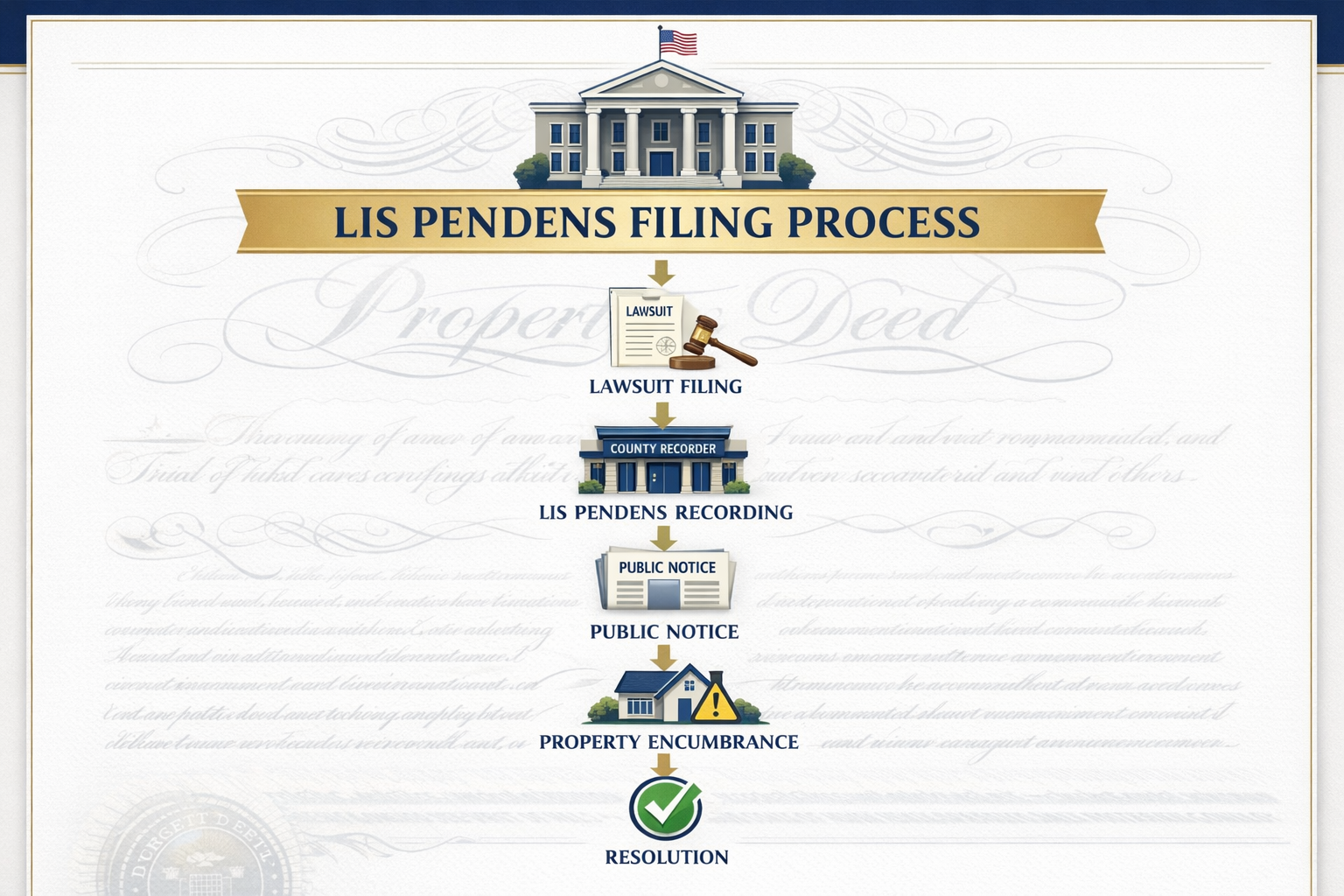
The Lis Pendens Filing Process
Understanding how a lis pendens gets filed helps property owners recognize when they might be at risk and what to expect if it happens.
Legal Requirements for Filing
Not just anyone can file a lis pendens. Most states require:
- Active litigation involving the property must be filed in court
- The lawsuit must directly affect the title or ownership of the property
- Proper legal description of the property must be included
- Filing with the county recorder in the county where the property is located
What Information Is Included
A typical lis pendens document contains:
- Names of all parties involved in the lawsuit
- Case number and court where the lawsuit was filed
- Legal description of the property
- Nature of the claim or dispute
- Date of filing
- Attorney information
Public Record and Notification
Once filed, the lis pendens becomes part of the public record. This means:
- Anyone can search and find it at the county recorder’s office
- Title companies will discover it during title searches
- It appears on property reports and background checks
- Credit reporting agencies may note it
Property owners aren’t always directly notified when a lis pendens is filed, though they should receive notice of the underlying lawsuit. This is why regular monitoring of your property records can be valuable, especially if you’re involved in any disputes.
Can You Sell a House with a Lis Pendens?
The short answer is yes, but it’s complicated. While a lis pendens doesn’t legally prevent a sale, it creates significant practical obstacles that make traditional sales nearly impossible.
Legal Ability vs. Practical Reality
Legally, property owners retain the right to sell their property even with a lis pendens filed against it. However, the practical reality is far different:
Legal Rights:
- Ownership remains with the current owner
- The right to transfer property continues
- No automatic prohibition on sales exists
Practical Obstacles:
- Finding a willing buyer is extremely difficult
- Financing is virtually impossible to obtain
- Title insurance won’t be issued
- The buyer assumes all litigation risks
Traditional Sale Challenges
Attempting a traditional sale with a lis pendens faces these hurdles:
🚫 No Mortgage Financing – Banks won’t lend on properties with active litigation
🚫 No Title Insurance – Title companies won’t insure clouded titles
🚫 Buyer Liability Concerns – Purchasers could be bound by court decisions
🚫 Agent Reluctance – Many real estate agents avoid these listings
Alternative Sale Options
Despite these challenges, property owners do have options. Some helpful solutions include:
Cash Sales to Investors
Experienced real estate investors who specialize in properties with legal issues may purchase properties with lis pendens. These buyers:
- Pay cash, eliminating financing concerns
- Accept the litigation risks
- Typically offer below-market prices
- Can close quickly if needed
Subject-To Purchases
Some buyers may purchase the property “subject to” the litigation, meaning they acknowledge the lis pendens and agree to accept whatever outcome the court decides.
Resolution Before Sale
The most straightforward approach is resolving the underlying litigation before attempting to sell. This might involve:
- Settling the lawsuit
- Winning the case in court
- Negotiating with the plaintiff
- Filing a motion to expunge the lis pendens
For property owners dealing with liens and judgments, professional guidance can help identify the best path forward.
How to Remove a Lis Pendens from Your Property
Removing a lis pendens requires addressing the underlying legal issue. There’s no quick fix, but several strategies can help resolve the situation.
Resolving the Underlying Lawsuit
The most direct path to removing a lis pendens is resolving the lawsuit that triggered it. Options include:
Settlement Agreement
Negotiating a settlement with the opposing party often provides the fastest resolution. Once both parties sign a settlement agreement, the plaintiff can file a notice of settlement, and the lis pendens can be released.
Winning the Case
If the lawsuit proceeds to trial and the property owner wins, the court will dismiss the case, and the lis pendens can be removed through a court order.
Voluntary Dismissal
Sometimes plaintiffs voluntarily dismiss their lawsuits, particularly if they realize their claim lacks merit or if circumstances change. This results in automatic removal of the lis pendens.
Motion to Expunge
Property owners can file a motion to expunge the lis pendens if they believe it was improperly filed. Grounds for expungement include:
- The lawsuit doesn’t actually affect the property title
- The plaintiff has no valid claim
- The lis pendens was filed in bad faith
- Procedural requirements weren’t met
Courts take these motions seriously because they recognize the significant impact a lis pendens has on property owners. However, success requires strong legal arguments and often professional representation.
Bond Requirements
Some states allow property owners to post a bond to remove the lis pendens while the litigation continues. The bond amount typically equals or exceeds the claimed damages, protecting the plaintiff’s interests if they ultimately win the case.
Working with the Opposing Party
Sometimes direct negotiation produces the best results. Property owners might:
- Offer partial payment to resolve the dispute
- Agree to specific terms that satisfy the plaintiff’s concerns
- Provide alternative security instead of the lis pendens
- Negotiate a structured settlement over time
Timeline Considerations
Removing a lis pendens rarely happens overnight. Realistic timelines include:
- Settlement negotiations: 2-6 months
- Motion to expunge: 1-3 months
- Trial resolution: 6-18 months or longer
- Appeal processes: Additional 6-12 months
Understanding these timeframes helps property owners plan accordingly and set realistic expectations.
Protecting Yourself from Lis Pendens Issues
Prevention is always better than cure. Property owners can take proactive steps to avoid lis pendens complications.
Maintain Clear Title
Regularly checking your property’s title status helps identify potential issues before they escalate. Consider:
- Annual title searches
- Monitoring public records
- Addressing boundary concerns promptly
- Resolving title problems early
Keep Financial Obligations Current
Many lis pendens filings result from financial disputes. Staying current on obligations prevents these situations:
✅ Mortgage payments – Avoid foreclosure proceedings
✅ Property taxes – Prevent tax lien foreclosures
✅ HOA dues – Avoid association liens and lawsuits
✅ Contractor payments – Prevent mechanic’s liens
Document Everything
Proper documentation protects your interests in disputes:
- Keep all property-related contracts and agreements
- Maintain records of payments and communications
- Document property conditions with photos
- Save correspondence with neighbors, contractors, and other parties
Address Disputes Early
When conflicts arise, early intervention often prevents escalation to litigation:
- Communicate openly with other parties
- Consider mediation before lawsuits
- Consult with legal professionals early
- Seek expert service from industry experts who understand complex property situations
Title Insurance
While title insurance won’t prevent a lis pendens from being filed, it can provide protection and legal defense if title disputes arise. Understanding when to file title insurance claims can save significant time and money.
Special Situations: Lis Pendens in Complex Property Scenarios
Certain property situations create unique lis pendens challenges that require specialized approaches.
Inherited Property with Multiple Heirs
When multiple heirs inherit property, disagreements about what to do with it can lead to lis pendens filings. One heir might file a partition action to force a sale, triggering a lis pendens that complicates any sale attempts.
Challenges:
- All heirs must typically agree to remove the lis pendens
- Family dynamics can complicate negotiations
- Legal costs may reduce everyone’s inheritance
- Timeline uncertainty creates stress
Solutions:
- Family mediation to reach consensus
- Buyout agreements where one heir purchases others’ interests
- Professional property solutions that work with all parties
- Court-supervised sales through partition proceedings
Properties in Probate
Selling property in probate becomes even more complex when a lis pendens is involved. Disputes among beneficiaries, creditor claims, or will contests can all trigger lis pendens filings.
Jointly Owned Property Disputes
When jointly owned property faces disputes between co-owners, a lis pendens may be filed to prevent one owner from selling without the other’s consent. These situations require careful navigation of both property law and relationship dynamics.
Properties with Tax Issues
Properties with back taxes may face both tax liens and lis pendens if the taxing authority initiates foreclosure proceedings. This double burden makes sales particularly challenging but not impossible with the right approach.
Working with Professionals to Navigate Lis Pendens Challenges
Complex legal situations require expert guidance. The right professionals can make the difference between a successful resolution and prolonged difficulties.
When to Consult a Real Estate Attorney
Legal representation becomes essential when:
- A lis pendens has been filed against your property
- You’re considering filing a lis pendens
- You need to file a motion to expunge
- Settlement negotiations have stalled
- The underlying lawsuit is complex
What Attorneys Provide:
- Legal strategy and representation
- Court filings and procedural compliance
- Negotiation with opposing parties
- Protection of your legal rights
- Expert testimony if needed
Title Companies and Title Issues
Title professionals play a crucial role in lis pendens situations. They can:
- Identify lis pendens during title searches
- Explain the impact on property transfers
- Coordinate with attorneys for resolution
- Issue title insurance once issues are cleared
- Facilitate closings after removal
Real Estate Professionals Specializing in Distressed Properties
Not all real estate professionals have experience with lis pendens situations. Specialists in distressed properties offer:
- Realistic market valuations considering the lis pendens
- Access to investor networks willing to purchase despite legal issues
- Creative solutions for complicated situations
- Coordination with legal and title professionals
- Trustworthy service throughout the process
Property Solution Companies
Companies like Sure Path Property Solutions specialize in helping property owners navigate complicated situations including lis pendens. These industry experts provide:
🏆 Comprehensive Assessment – Understanding your complete situation
🏆 Multiple Options – Presenting various paths forward
🏆 Professional Coordination – Working with attorneys, title companies, and courts
🏆 Friendly and Caring Support – Guiding you through stressful situations
🏆 Practical Solutions – Finding helpful solutions that work for your circumstances
Financial Advisors
The financial implications of lis pendens situations can be significant. Financial advisors help with:
- Understanding tax consequences of different resolution strategies
- Planning for potential losses or settlements
- Evaluating whether to fight the lawsuit or settle
- Protecting other assets during litigation
Understanding Your Rights as a Property Owner

Even with a lis pendens filed against your property, you retain important rights that deserve protection.
Right to Occupy and Use the Property
A lis pendens doesn’t remove your right to live in or use your property. You can:
- Continue residing in the property
- Rent the property to tenants (though disclosure is required)
- Make necessary repairs and improvements
- Use the property for its intended purpose
Right to Challenge the Filing
Property owners have the legal right to challenge lis pendens filings they believe are improper or unjustified. This includes:
- Filing motions to expunge
- Presenting evidence the claim lacks merit
- Arguing procedural defects in the filing
- Demonstrating bad faith by the plaintiff
Right to Sell (With Limitations)
As discussed earlier, the legal right to sell remains intact, though practical limitations exist. Understanding this distinction helps property owners make informed decisions about their options.
Right to Legal Representation
Property owners always have the right to legal representation. If financial constraints make hiring an attorney difficult, options include:
- Legal aid organizations
- Pro bono services
- Payment plans with attorneys
- Limited scope representation for specific tasks
Protection from Fraudulent Filings
Laws protect property owners from fraudulent or harassing lis pendens filings. If someone files a lis pendens in bad faith, property owners may be entitled to:
- Damages for harm caused
- Attorney’s fees
- Sanctions against the filing party
- Punitive damages in egregious cases
Real-World Scenarios: Lis Pendens Case Studies
Understanding how lis pendens situations play out in real life provides valuable perspective.
Case Study 1: Foreclosure Lis Pendens Resolution
Situation: Maria fell behind on her mortgage after a medical emergency. The bank filed foreclosure proceedings and recorded a lis pendens. She wanted to sell the house to avoid foreclosure but couldn’t find traditional buyers.
Solution: Maria worked with a property solutions company that:
- Negotiated with the bank for a short sale approval
- Found a cash investor willing to purchase despite the lis pendens
- Coordinated the closing to satisfy the bank’s requirements
- Helped Maria avoid foreclosure on her credit record
Outcome: The lis pendens was released at closing when the bank received payment. Maria avoided foreclosure and moved forward with her life.
Case Study 2: Boundary Dispute Between Neighbors
Situation: John and his neighbor disputed the property line between their homes. The neighbor filed a lawsuit claiming John’s fence encroached on his property and recorded a lis pendens. John wanted to sell and move but couldn’t proceed with the lis pendens in place.
Solution: John hired a real estate attorney who:
- Ordered a professional survey clearly establishing the property line
- Negotiated with the neighbor using the survey results
- Reached a settlement that slightly adjusted the fence location
- Filed the settlement agreement and removed the lis pendens
Outcome: The dispute was resolved in three months, the lis pendens was removed, and John successfully sold his property.
Case Study 3: Inherited Property with Sibling Disagreement
Situation: Three siblings inherited their parents’ home. Two wanted to sell, but one sibling wouldn’t agree. The two siblings filed a partition action with a lis pendens to force the sale.
Solution: The siblings worked with a mediator and property specialist who:
- Facilitated family discussions about each person’s concerns
- Obtained a professional appraisal to establish fair value
- Structured a buyout option for the reluctant sibling
- When that failed, coordinated a court-supervised partition sale
Outcome: The property sold through partition proceedings, the proceeds were divided according to court order, and the lis pendens was released at closing.
Lis Pendens vs. Other Property Encumbrances
Understanding how lis pendens compares to other property issues helps property owners assess their situation accurately.
Lis Pendens vs. Judgment Liens
| Feature | Lis Pendens | Judgment Lien |
|---|---|---|
| Timing | Filed during litigation | Filed after judgment |
| Nature | Notice of pending lawsuit | Actual debt claim |
| Removal | Resolve lawsuit or expunge | Pay judgment or negotiate release |
| Impact | Warns of potential claim | Creates enforceable debt |
| Foreclosure Risk | Indirect | Direct |
Understanding judgment liens on property helps distinguish these related but different encumbrances.
Lis Pendens vs. Tax Liens
Tax liens represent actual debt owed to government entities, while lis pendens simply notifies the public of pending litigation. However, tax-related lawsuits may involve both a tax lien and a lis pendens simultaneously.
Lis Pendens vs. Clouded Title
A clouded title refers to any defect or uncertainty in the chain of ownership. A lis pendens can contribute to a clouded title, but clouded titles can exist without lis pendens filings.
State-Specific Variations in Lis Pendens Laws
Lis pendens laws vary significantly by state, affecting how they’re filed, challenged, and removed.
Judicial vs. Non-Judicial Foreclosure States
Judicial Foreclosure States require lawsuits for foreclosure, making lis pendens filings standard in foreclosure proceedings.
Non-Judicial Foreclosure States allow foreclosure without court involvement, so lis pendens are less common in foreclosure situations.
Notice Requirements
Some states require:
- Direct notice to property owners when filing
- Specific language in the lis pendens document
- Verification of the underlying claim’s validity
- Bonds or deposits to file
Expungement Standards
States differ in how easily property owners can expunge lis pendens:
Strict Standards: Some states require clear evidence of improper filing
Moderate Standards: Balance between plaintiff and property owner rights
Liberal Standards: Favor property owners and make expungement easier
Time Limitations
Certain states impose time limits on how long a lis pendens can remain in effect without the lawsuit progressing. These automatic expiration provisions protect property owners from indefinite encumbrances.
Financial Implications of Lis Pendens on Property
The financial impact of a lis pendens extends beyond just reduced sale prices.
Property Value Reduction
Market data shows properties with lis pendens typically sell for:
- 10-20% below market in strong real estate markets
- 20-40% below market in average markets
- 40-60% below market in weak markets or complex cases
Carrying Costs During Litigation
While litigation proceeds, property owners continue paying:
💰 Mortgage payments (if applicable)
💰 Property taxes
💰 Insurance
💰 Maintenance and utilities
💰 HOA fees
These costs accumulate monthly, creating financial pressure to resolve the situation quickly.
Legal Fees and Court Costs
Litigation expenses add up rapidly:
- Attorney retainers: $2,500-$10,000+
- Hourly legal fees: $200-$500+ per hour
- Court filing fees: $200-$500
- Expert witness fees: $1,000-$5,000+
- Survey costs: $500-$2,000
- Mediation fees: $1,000-$5,000
Tax Consequences
Resolving lis pendens situations may trigger tax implications:
- Capital gains or losses on property sales
- Debt forgiveness income in settlement scenarios
- Deductibility of legal fees (limited)
- Impact on estate tax planning
Opportunity Costs
Beyond direct costs, property owners face opportunity costs:
- Inability to access home equity
- Missed investment opportunities
- Delayed life plans (retirement, relocation, etc.)
- Stress and time spent managing the situation
Preventing Lis Pendens: Proactive Strategies
The best approach to lis pendens issues is preventing them from occurring in the first place.
Maintain Open Communication
Many disputes escalate to litigation because of communication breakdowns. Proactive communication includes:
- Addressing neighbor concerns promptly
- Responding to contractor complaints quickly
- Discussing financial difficulties with lenders early
- Keeping all parties informed during transactions
Use Written Agreements
Verbal agreements lead to misunderstandings and disputes. Always use written contracts for:
- Property sales and purchases
- Contractor work and renovations
- Boundary agreements with neighbors
- Co-ownership arrangements
- Lease agreements with tenants
Conduct Due Diligence Before Purchase
Buyers can avoid purchasing properties with lis pendens by:
- Ordering comprehensive title searches
- Reviewing public records thoroughly
- Asking direct questions about pending litigation
- Including contingencies for clear title in purchase agreements
Mediation and Alternative Dispute Resolution
When conflicts arise, consider mediation before litigation:
Benefits of Mediation:
- Lower costs than litigation
- Faster resolution
- Preserves relationships
- More creative solutions
- Avoids public record of lis pendens
Regular Property Record Monitoring
Property owners should periodically check public records for:
- Unexpected filings against their property
- Errors in property descriptions
- Fraudulent documents
- Expired liens that should be released
The Future of Your Property: Moving Forward with Confidence
Understanding lis pendens on property: what it means & how it affects sales empowers property owners to make informed decisions and take appropriate action.
Assessing Your Situation
If you discover a lis pendens on your property, start by:
- Obtaining a copy of the lis pendens document
- Understanding the underlying lawsuit and claims
- Consulting with legal professionals about your options
- Evaluating your financial situation and resources
- Considering your timeline and urgency
Exploring All Options
Don’t assume you have only one path forward. Depending on your circumstances, you might:
- Fight the lawsuit and seek expungement
- Negotiate a settlement with the plaintiff
- Sell to a cash buyer or investor despite the lis pendens
- Wait for litigation to resolve before selling
- Pursue alternative resolution methods
Getting Expert Help
Complex situations benefit from expert service and helpful guidance. Sure Path Property Solutions specializes in helping property owners navigate challenging situations including lis pendens, providing:
✨ Personalized assessment of your unique situation
✨ Clear explanation of your options and likely outcomes
✨ Professional coordination with attorneys and title companies
✨ Practical solutions tailored to your needs
✨ Supportive guidance throughout the process
Taking Action
Procrastination rarely improves lis pendens situations. Taking prompt action:
- Prevents additional complications
- Reduces carrying costs
- Demonstrates good faith
- Preserves more options
- Minimizes stress and uncertainty
Conclusion: Navigating Lis Pendens with Knowledge and Support
A lis pendens on your property doesn’t have to mean the end of your plans to sell or move forward. While these legal notices create significant challenges, they’re not insurmountable obstacles. Understanding what a lis pendens means, how it affects property sales, and what options exist for resolution puts you in a position of strength rather than helplessness.
The key takeaways to remember:
Knowledge is power. Understanding lis pendens mechanics, your legal rights, and available options enables better decision-making.
Time matters. Addressing lis pendens situations promptly prevents escalating costs and complications.
Professional help makes a difference. Experienced attorneys, title professionals, and property solution specialists provide invaluable expertise and support.
Multiple paths exist. Whether through litigation, settlement, expungement, or alternative sales strategies, solutions are available for most situations.
You’re not alone. Thousands of property owners face lis pendens challenges each year, and helpful solutions exist for nearly every situation.
If you’re dealing with a lis pendens or other complicated property issues—whether related to back taxes, multiple heirs, liens, or unclear title—remember that friendly and caring professionals are ready to help. The path forward may not always be simple, but with the right guidance and support, you can navigate these challenges and achieve your property goals.
Your Next Steps
- Gather information about the lis pendens and underlying lawsuit
- Consult with professionals who understand complex property situations
- Evaluate your options based on your specific circumstances and goals
- Take action to move toward resolution
- Stay informed throughout the process
The journey through a lis pendens situation may feel overwhelming, but thousands of property owners have successfully navigated this challenge before you. With knowledge, professional support, and determination, you can too.
For personalized assistance with lis pendens or other property challenges, reach out to experienced professionals who can provide the helpful guidance you need to move forward with confidence.