
Probate Property Sale Complications: How We Simplify the Process

Inheriting property should feel like a blessing, not a burden. Yet thousands of families discover each year that selling a probate property can become one of the most complicated, frustrating experiences they’ll ever face. Court approvals, creditor claims, multiple heirs with different opinions, unclear titles, and mounting property taxes—the list of obstacles seems endless.
Probate Property Sale Complications: How We Simplify the Process isn’t just a promise; it’s our specialty. At Sure Path Property Solutions, we’ve guided countless families through the maze of probate sales, transforming what feels impossible into a straightforward path forward. Whether you’re dealing with back taxes on inherited property, disagreements among heirs, or title issues that traditional buyers won’t touch, our industry experts provide the helpful guidance you need.
Key Takeaways
- Probate sales involve unique legal requirements that traditional real estate transactions don’t face, including court supervision, creditor notification periods, and specific approval processes
- Common complications include multiple heirs with conflicting interests, outstanding liens and judgments, property tax debts, title defects, and properties in poor condition
- Working with experienced probate property buyers eliminates most complications by handling court coordination, lien resolution, and heir negotiations directly
- Time is a critical factor—delayed probate sales accumulate additional costs through ongoing property taxes, maintenance, insurance, and potential estate penalties
- Professional guidance from experts who understand both probate law and real estate can save families thousands of dollars and months of stress
Understanding Probate Property Sales and Why They’re Different
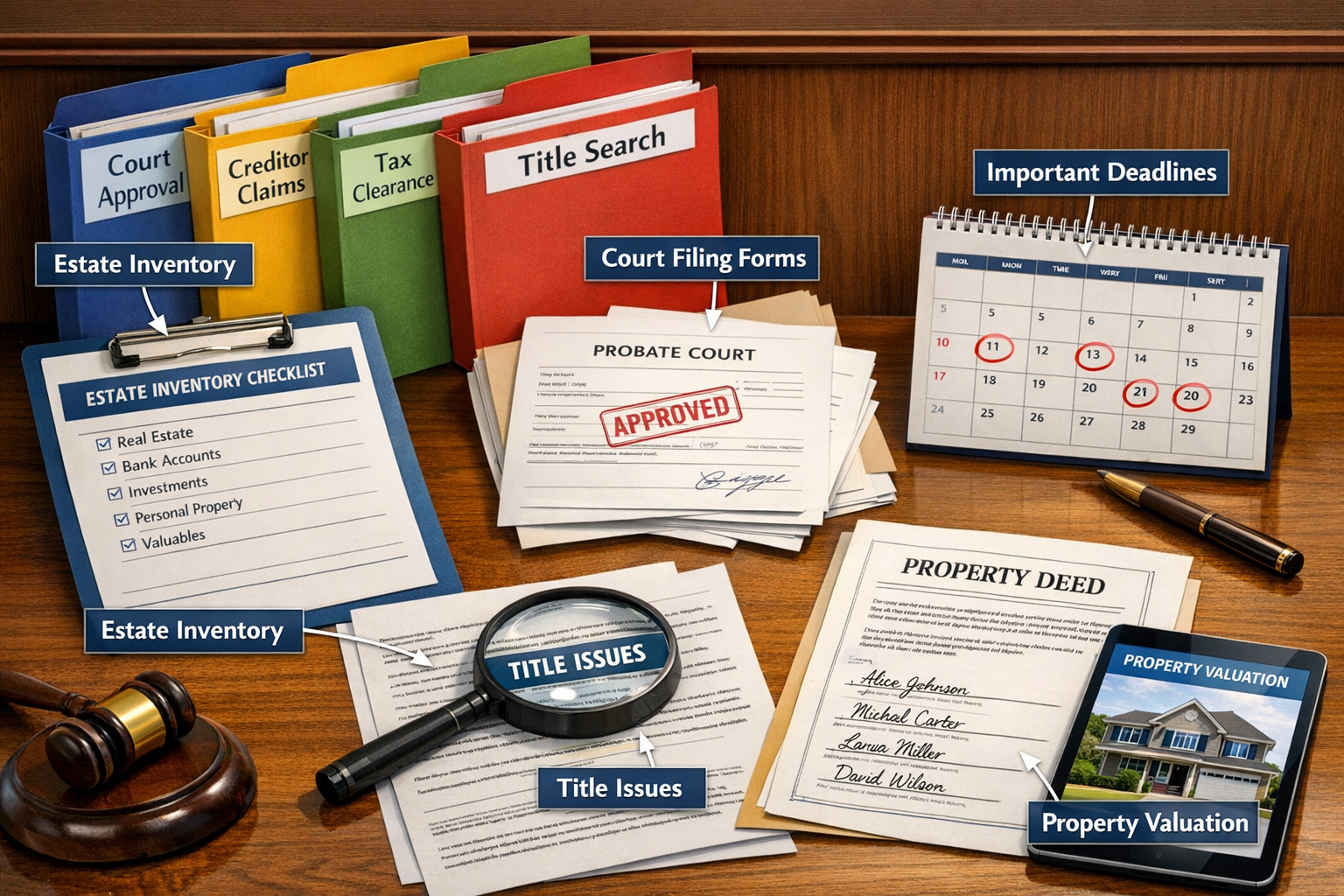
Probate property sales operate under entirely different rules than standard real estate transactions. When someone passes away owning real estate, that property typically enters probate—a court-supervised process that validates the will, pays debts, and distributes assets to heirs.
What Makes Probate Sales Unique
Traditional home sales give sellers complete control over timing, pricing, and buyer selection. Probate sales don’t work that way.
Court Supervision: Every major decision requires court approval. The personal representative (executor or administrator) can’t simply accept an offer and close. They must petition the court, notify interested parties, and wait for judicial approval.
Creditor Claims Period: Before the estate can transfer property, creditors must have time to file claims against the estate. This waiting period varies by state but typically ranges from three to six months.
Heir Complications: When multiple heirs share ownership, unanimous agreement becomes necessary. One dissenting heir can derail the entire sale.
Fiduciary Responsibility: The personal representative has a legal duty to maximize estate value. Selling below market value—even to simplify the process—can result in legal challenges from heirs or creditors.
The Emotional Weight of Probate Sales
Beyond the legal complexities, probate property sales carry emotional weight that traditional transactions don’t. Families are grieving while simultaneously making major financial decisions about a loved one’s legacy.
Siblings who haven’t spoken in years must suddenly collaborate. Memories attached to childhood homes clash with practical financial needs. Some heirs want to preserve family property; others need immediate cash.
These emotional dynamics create additional complications that no legal document can fully address.
Common Probate Property Sale Complications
Understanding the specific obstacles helps families prepare for the journey ahead. Here are the most frequent complications our team encounters:
🏛️ Court Approval Delays
The probate court system moves at its own pace, regardless of your timeline needs. Court calendars fill months in advance. Judges require specific documentation before approving sales.
Timeline Reality: What should take 30 days in a traditional sale often stretches to 6-12 months in probate. Each step requires paperwork, waiting periods, and formal hearings.
Documentation Requirements: Courts demand detailed property appraisals, notice to all interested parties, publication of sale notices in local newspapers, and sometimes multiple hearings before final approval.
👨👩👧👦 Multiple Heir Disagreements
When several people inherit property together, conflict becomes almost inevitable. Each heir has different financial situations, emotional attachments, and opinions about what should happen.
Common Disputes:
- Pricing disagreements: One heir wants top dollar and will wait; another needs immediate cash
- Sale vs. keep decisions: Some heirs want to preserve family property; others want to liquidate
- Buyout conflicts: When one heir wants to buy others out, determining fair value creates tension
- Distribution disputes: Arguments over who gets what percentage or whether sweat equity counts
These disagreements can paralyze the sale process for months or even years. Our team has seen families spend more on attorney fees fighting each other than they ultimately received from the property sale.
💰 Outstanding Liens and Judgments
Deceased property owners often leave behind financial obligations that attach to their real estate. These liens must be addressed before clear title can transfer.
Types of Liens on Probate Properties:
| Lien Type | Description | Typical Resolution |
|---|---|---|
| Mortgage Debt | Remaining balance on home loans | Paid from sale proceeds at closing |
| Property Tax Liens | Unpaid county/city property taxes | Must be satisfied before transfer |
| Federal Tax Liens | IRS claims for unpaid income taxes | Requires IRS discharge or subordination |
| Judgment Liens | Court-ordered debts from lawsuits | Negotiation or payment required |
| Mechanic’s Liens | Unpaid contractor/repair bills | Must be resolved or disputed |
| HOA Liens | Homeowner association dues | Payment or negotiation needed |
Each lien type requires different resolution strategies. Some can be negotiated down; others demand full payment. The complexity multiplies when multiple liens exist with different priority levels.
📋 Title Issues and Defects
Probate properties frequently have title problems that don’t surface until someone tries to sell. These defects can stop sales completely until resolved.
Common Title Defects:
- Missing heirs: Unknown or unlocatable family members with potential inheritance rights
- Breaks in chain of title: Gaps in ownership history from improperly recorded deeds
- Boundary disputes: Unclear property lines or encroachments from neighbors
- Unreleased liens: Old mortgages or judgments that were paid but never officially removed
- Errors in public records: Misspelled names, wrong legal descriptions, or recording mistakes
Traditional title companies often refuse to insure probate properties with these issues. Without title insurance, conventional buyers and their lenders walk away.
🏚️ Property Condition Challenges
Many inherited properties have been neglected during the owner’s final years or sat vacant during probate. The resulting condition problems scare off traditional buyers.
Typical Condition Issues:
- Deferred maintenance from years of neglect
- Outdated systems (electrical, plumbing, HVAC)
- Code violations requiring expensive corrections
- Pest infestations or structural damage
- Hoarding situations requiring extensive cleanout
- Environmental hazards like mold or asbestos
Traditional buyers expect move-in ready homes. They won’t accept properties needing significant repairs, especially when financing is involved. Lenders typically won’t approve loans for properties in poor condition.
Heirs often lack funds to make repairs before selling. The estate may not have liquid assets to invest in property improvements. This creates a catch-22: can’t sell without repairs, can’t afford repairs without selling.
⏰ Time-Sensitive Financial Pressures
While probate grinds slowly forward, financial obligations continue accumulating. These ongoing costs pressure heirs to sell quickly—but the probate process resists speed.
Mounting Costs:
- Property taxes: Continue accruing regardless of ownership status
- Insurance premiums: Required to protect estate assets
- Utilities: Must be maintained for vacant properties
- Maintenance: Lawn care, snow removal, security
- HOA dues: Keep accumulating with late fees
- Mortgage payments: If not paid, foreclosure threatens
These costs can total thousands of dollars monthly. For heirs already stretched financially, covering these expenses while waiting for probate to conclude becomes unsustainable.
🔍 Creditor Claims Against the Estate
Before property can transfer to heirs, the estate must satisfy legitimate creditor claims. This process adds layers of complexity to probate sales.
Creditor Priorities: State law establishes the order in which creditors get paid. Typically, funeral expenses and estate administration costs come first, followed by taxes, secured debts, and finally unsecured creditors.
Unknown Creditors: The personal representative must make reasonable efforts to identify and notify all potential creditors. Unknown creditors who surface later can complicate or even reverse property transfers.
Insufficient Estate Assets: When debts exceed estate assets, the personal representative must decide which creditors to pay and in what order. Selling property may be necessary to generate funds for creditor payments.
How We Simplify Probate Property Sale Complications
At Sure Path Property Solutions, we’ve developed a systematic approach to removing the obstacles that make probate sales so challenging. Our process transforms complexity into clarity.
Our Streamlined Probate Sale Process
Step 1: Comprehensive Situation Assessment
We start by understanding your complete situation—not just the property, but the people involved and the challenges you’re facing. Our industry experts ask detailed questions about:
- Current probate status and court requirements
- All heirs involved and their positions
- Outstanding debts, liens, and tax obligations
- Property condition and any known issues
- Timeline needs and financial pressures
- Title concerns or ownership questions
This assessment gives us the full picture so we can design the right solution.
Step 2: Direct Cash Offer—No Repairs, No Waiting
Unlike traditional buyers who need financing, inspections, and perfect conditions, we make direct cash offers on probate properties in any condition. This eliminates multiple complications immediately:
✅ No repair requirements: We buy as-is, saving you thousands in fix-up costs
✅ No financing contingencies: Cash purchases close faster and more reliably
✅ No buyer inspections: No risk of deals falling apart over inspection findings
✅ No appraisal issues: Cash buyers don’t need bank appraisals
Step 3: Court Coordination and Documentation
Our team has extensive experience working within the probate court system. We coordinate directly with personal representatives and their attorneys to ensure all required documentation is properly prepared and filed.
We handle:
- Petition preparation for court approval
- Notice requirements to all interested parties
- Publication of required sale notices
- Court hearing attendance if needed
- Final order processing
This expert service removes the burden from families unfamiliar with court procedures.
Step 4: Lien and Debt Resolution
Rather than requiring heirs to resolve all liens before we’ll buy, we work directly with lien holders to negotiate payoffs and releases. Our experience includes:
- Negotiating tax lien reductions and payment plans
- Coordinating with mortgage servicers for payoff statements
- Resolving judgment liens through settlement negotiations
- Clearing mechanic’s liens and HOA claims
- Working with title professionals to remove old liens
We advance the funds needed to clear liens at closing, so heirs don’t need cash upfront.
Step 5: Heir Coordination and Agreement Facilitation
When multiple heirs must agree, we serve as neutral facilitators who help everyone understand their options and reach consensus.
Our approach:
- Individual conversations with each heir to understand their needs
- Clear presentation of the financial realities and timeline options
- Transparent explanation of how proceeds will be distributed
- Patience with family dynamics and decision-making processes
- Alternative solutions like buyouts when appropriate
We’ve helped families who hadn’t spoken in years come together to successfully sell inherited property.
Step 6: Fast Closing—Often Within 30 Days
Once court approval is obtained and all heirs agree, we can close quickly. Our cash purchasing power means we’re not waiting on:
- Buyer mortgage approval processes
- Bank underwriting delays
- Appraisal scheduling and completion
- Buyer sale of their current home
Many of our probate property purchases close within 30 days of court approval—bringing relief to families who’ve waited months or years.
What Makes Our Approach Different
Experience with Complex Situations: We specialize in the properties other buyers avoid. Complicated title? Multiple liens? Heir disagreements? Property in poor condition? These are our everyday transactions.
Helpful Solutions, Not Pressure: Our team provides friendly and caring guidance without high-pressure sales tactics. We explain options clearly and let families make informed decisions on their timeline.
Direct Communication: You’ll work with real people who answer your questions honestly. No runaround, no disappearing after initial contact, no bait-and-switch tactics.
Trustworthy Service: We’ve built our reputation on treating families with respect during difficult times. Our expert service focuses on solving problems, not creating new ones.
Coordination with Professionals: We work seamlessly with probate attorneys, title companies, county tax offices, and court systems. This coordination speeds the process and prevents miscommunication.
Real-World Examples: Probate Property Sale Complications We’ve Solved
The Three-State Heir Challenge
The Situation: A Dallas property passed to four siblings living in Texas, California, New York, and Germany. The property had $18,000 in back property taxes, needed $35,000 in repairs, and the siblings hadn’t agreed on anything in 15 years.
The Complications:
- Geographic distance made coordination difficult
- Significant tax debt with penalties accumulating monthly
- Major deferred maintenance issues
- Deep family conflict and distrust
- Time zone differences complicating communication
Our Solution: We conducted individual video calls with each heir to understand their concerns and needs. We presented a clear financial analysis showing repair costs, ongoing expenses, and net proceeds from our cash offer versus waiting for a traditional sale.
After three weeks of patient communication, all four heirs agreed to our offer. We coordinated with the probate attorney to obtain court approval, paid the back taxes directly to the county, and closed in 28 days. Each heir received their portion of the proceeds without ever needing to visit Texas.
The Title Nightmare Property
The Situation: An inherited Oklahoma property had a break in the chain of title from 1987, three unreleased mortgage liens from the 1990s, and a boundary dispute with the neighbor. Two title companies had already refused to insure it.
The Complications:
- Multiple title defects spanning decades
- No clear path to marketable title
- Traditional buyers and lenders wouldn’t touch it
- Heir needed to sell quickly due to financial hardship
- Estimated $8,000+ in legal fees to resolve title issues
Our Solution: We worked with specialized title attorneys to trace the ownership history and identify solutions for each defect. We negotiated releases from the old lien holders (two had gone out of business, requiring extra legal work).
For the boundary dispute, we obtained a survey and negotiated an agreement with the neighbor. We purchased the property despite the title complications, advanced funds for the legal work needed, and closed once clear title was established. The heir received cash without spending anything upfront on title repairs.
The Hoarder House with Health Hazards
The Situation: A Florida estate included a house where the deceased owner had hoarded for 20+ years. The property contained an estimated 40 tons of accumulated items, had mold throughout, electrical code violations, and a condemned notice from the city.
The Complications:
- Overwhelming cleanout required before sale
- Health and safety hazards preventing showings
- City code enforcement threatening daily fines
- Heirs lived out of state with no ability to manage cleanout
- Estimated $25,000+ for professional cleanout and mold remediation
Our Solution: We made a cash offer based on the property’s post-remediation value, eliminating the need for heirs to invest in cleanout or repairs. We coordinated with specialized cleanout companies, handled all mold remediation, and worked with the city to lift the condemned status.
The heirs received cash without ever visiting the property or spending a dollar on cleanup. We handled everything from initial assessment through final closing, providing regular updates throughout the process.
The True Cost of Delaying Probate Property Sales
Many families postpone selling inherited property, hoping market conditions will improve or family disagreements will resolve naturally. This delay often costs far more than families realize.
Financial Costs of Waiting
Property Tax Accumulation: Property taxes continue regardless of probate status. At an average of $2,500-$5,000 annually (higher in many areas), waiting an extra year costs thousands. Late payment penalties and interest add even more.
Maintenance and Utilities: Vacant properties still require:
- Insurance ($1,000-$2,500 annually)
- Utilities to prevent freezing pipes ($100-$300 monthly)
- Lawn care and exterior maintenance ($100-$400 monthly)
- Security monitoring ($30-$60 monthly)
- Seasonal services like snow removal
These costs easily total $5,000-$10,000 per year.
Property Deterioration: Vacant properties deteriorate faster than occupied ones. Without climate control, pipes freeze and burst. Without regular monitoring, roof leaks go unnoticed until major damage occurs. Vandalism and theft target vacant properties.
The longer a property sits vacant, the more its value declines. What might have sold for $200,000 in good condition might fetch only $150,000 after two years of vacancy and deterioration.
Legal and Administrative Fees: Extended probate means extended legal fees. Attorneys charge for every court appearance, document filed, and hour spent on the case. A probate that should close in 6-9 months but stretches to 2-3 years can accumulate tens of thousands in additional legal costs.
Emotional and Personal Costs
Family Relationship Damage: Prolonged disputes over inherited property destroy family relationships. Siblings who were once close become adversaries. Holiday gatherings become battlegrounds. Some families never recover.
Stress and Mental Health Impact: The burden of managing an inherited property while navigating family conflict and complex legal processes takes a serious toll. Anxiety, depression, and stress-related health problems are common among those dealing with complicated probate situations.
Opportunity Costs: Money tied up in an inherited property can’t be used for other purposes. Heirs may miss opportunities to:
- Pay off high-interest debt
- Invest in retirement accounts
- Purchase their own homes
- Fund education
- Start businesses
The opportunity cost of delayed inheritance distribution can exceed the property’s value.
Market Risk
Real estate markets fluctuate. The property worth $250,000 today might be worth $220,000 next year. Waiting for the “perfect” market timing often backfires, especially when ongoing costs erode value during the wait.
Frequently Asked Questions About Probate Property Sales

Q: Can we sell probate property before the estate closes?
A: Yes, in most cases. The personal representative can petition the court for permission to sell property during probate. In fact, selling during probate is common and often necessary to pay estate debts or distribute assets to heirs.
Q: What if one heir refuses to agree to the sale?
A: Options exist even when heirs disagree. The personal representative may petition the court to authorize the sale over objections if it’s in the estate’s best interest. Alternatively, other heirs can pursue a partition action to force the sale. We can also facilitate buyout arrangements where agreeing heirs purchase the dissenting heir’s share.
Q: How do we handle property taxes we can’t afford to pay?
A: We work with properties that have significant tax debt. Our cash purchase can include paying the back taxes directly to the county at closing, so heirs don’t need funds upfront. We’ve successfully closed transactions with tax debts exceeding $50,000.
Q: Will we get less money selling to a cash buyer versus listing traditionally?
A: Not necessarily. Consider the full picture:
Traditional Sale:
- Higher list price potential
- Minus 6% real estate commissions
- Minus repair costs (often $10,000-$50,000+)
- Minus months of ongoing property costs
- Minus risk of deals falling through
- Minus stress and time investment
Cash Sale to Us:
- Lower offer price
- Zero commissions
- Zero repair costs
- Zero ongoing costs during sale process
- Certainty of closing
- Fast timeline and minimal stress
When you calculate net proceeds after all costs and risks, cash sales often yield comparable or better results, especially for properties with complications.
Q: What if we don’t know all the debts or liens on the property?
A: We conduct thorough title searches and lien investigations as part of our process. We’ll identify all recorded liens and work with you to address them. For unknown debts, the probate creditor claim process provides protection—creditors must file claims within specified timeframes or lose their right to payment.
Q: How long does the probate sale process take?
A: Timeline varies by state and situation complexity. Simple probates with cooperative heirs and no complications might close in 3-6 months. Complex situations with disputes, title issues, or creditor claims can take 12-24 months or longer. Our involvement typically speeds the process by removing obstacles and facilitating agreements.
Q: Do all heirs need to sign the sale documents?
A: Usually, the personal representative signs on behalf of the estate with court approval. Individual heirs typically don’t sign the deed, but they may need to sign documents agreeing to the sale terms or confirming their consent to the personal representative’s actions.
Q: Can we sell if the property is in foreclosure?
A: Yes, but timing is critical. If the deceased owner had a mortgage and payments have stopped, foreclosure may be proceeding. We specialize in selling houses fast to avoid foreclosure and can often close quickly enough to prevent foreclosure sale, preserving equity for the estate.
Why Choose Sure Path Property Solutions for Your Probate Property Sale
Selling inherited property shouldn’t add stress to an already difficult time. Our team specializes in providing helpful solutions that address the unique challenges probate properties present.
Our Commitment to You
🤝 Compassionate, Patient Guidance: We understand you’re dealing with loss while navigating unfamiliar legal and financial territory. Our friendly and caring approach means we take time to explain everything clearly, answer questions without judgment, and respect your timeline.
💡 Transparent, Honest Communication: No hidden fees, no surprise deductions, no bait-and-switch tactics. We present clear offers and explain exactly how we calculated them. You’ll know upfront what to expect at closing.
⚡ Fast, Reliable Closings: When you need to sell quickly, we deliver. Our cash purchasing power means we can close in weeks, not months. We’ve never canceled a contract or backed out of a deal.
🎯 Problem-Solving Expertise: Complicated situations are our specialty. The challenges that make other buyers walk away are exactly what we’re equipped to handle. Title problems, liens, tax issues, heir disputes—we’ve successfully resolved them all.
🏆 Proven Track Record: We’ve helped hundreds of families successfully sell inherited properties throughout Texas, Oklahoma, Florida, and beyond. Our reputation is built on results and relationships, not high-pressure sales.
Our Service Area
While we work with probate properties nationwide, we have particular expertise and local presence in:
- Texas: Dallas, Houston, Austin, San Antonio, and surrounding areas
- Oklahoma: Oklahoma City, Tulsa, and statewide
- Florida: Miami, Tampa, Orlando, Jacksonville, and throughout the state
- Georgia: Atlanta and metro area
Even if your property is outside these areas, contact us—we often work with properties nationwide through our network of trusted partners.
Taking the Next Step: How to Get Started
If you’re facing probate property sale complications, you don’t have to navigate them alone. Getting started with Sure Path Property Solutions is simple and obligation-free.
Our Simple Process to Get Your Cash Offer
1. Reach Out: Call us or fill out our simple online form sharing basic information about your situation and property.
2. Initial Consultation: We’ll schedule a conversation (phone or video) to understand your situation, answer questions, and explain how we can help.
3. Property Evaluation: We’ll assess the property (often remotely using photos and public records) to understand its condition and value.
4. Cash Offer Presentation: Within 24-48 hours, we’ll present a fair cash offer with clear explanation of how we calculated it.
5. Your Decision: Take whatever time you need to review the offer, consult with family and advisors, and make the decision that’s right for you. Zero pressure.
6. Closing Coordination: If you accept, we handle all the details—court coordination, lien resolution, title work, and closing arrangements.
7. Cash in Your Hands: You receive your proceeds at closing, typically within 30 days of court approval.
What to Prepare Before Contacting Us
Having these items ready helps us provide faster, more accurate assistance:
- Property address and basic details (bedrooms, bathrooms, square footage if known)
- Probate status: Has probate been opened? Who is the personal representative?
- Known issues: Any liens, tax debts, title problems, or property condition concerns you’re aware of
- Heir information: How many heirs are involved? Any disagreements?
- Timeline needs: How quickly do you need to sell?
Don’t worry if you don’t have all this information—we can help you gather it. The important thing is to reach out and start the conversation.
Conclusion: Simplifying Your Path Forward
Probate Property Sale Complications: How We Simplify the Process isn’t just our expertise—it’s our mission. We’ve seen firsthand how overwhelming inherited property challenges can feel. We’ve also witnessed the relief families experience when those complications are resolved and they can finally move forward.
Whether you’re dealing with how to sell deceased parents’ house, navigating heir property with complicated titles, or struggling with properties that have multiple liens and tax debts, Sure Path Property Solutions provides the expert service and helpful guidance you need.
The complications you’re facing are real, but they’re not insurmountable. With the right partner, probate property sales can move from overwhelming to manageable, from months of frustration to weeks of progress, from family conflict to collaborative resolution.
Your Next Step
Don’t let probate property complications control your timeline or damage family relationships. Reach out to Sure Path Property Solutions today for a no-obligation consultation. Let our industry experts assess your situation and present options you may not have considered.
You have nothing to lose by exploring your options and everything to gain from finally resolving the inherited property situation that’s been weighing on you.
Ready to simplify your probate property sale? Contact us now to receive your fair cash offer within 24-48 hours. Let’s create your path forward together.