
Property Lien Attorney: When to Hire & What They Do
Property liens can transform a straightforward real estate transaction into a legal maze. When a creditor places a lien on your property—whether for unpaid taxes, contractor bills, or court judgments—it creates a cloud over your ownership that won’t simply disappear on its own. Understanding when to hire a property lien attorney and what they actually do can mean the difference between losing your property and finding a clear path forward. If you’re facing liens, judgments, or complicated title issues, knowing how a Property Lien Attorney: When to Hire & What They Do becomes essential to protecting your real estate investment and financial future.
A property lien gives creditors a legal claim against your real estate until you satisfy the underlying debt. These claims attach to the property itself, not just to you personally, which means they follow the property through ownership changes and can prevent sales, refinancing, or transfers. For property owners dealing with liens and judgments, the situation can feel overwhelming—but helpful solutions exist.
Key Takeaways
- Property lien attorneys specialize in resolving legal claims against real estate, including tax liens, mechanic’s liens, judgment liens, and mortgage liens that can block property sales or transfers
- Hire a property lien attorney when facing foreclosure threats, disputed liens, multiple creditor claims, title defects, or when traditional lien resolution methods have failed
- These legal professionals provide services including lien investigation, negotiation with creditors, quiet title actions, lien release documentation, and courtroom representation
- Early intervention by an attorney can save thousands of dollars in penalties, interest, and legal fees while preserving your property ownership rights
- Alternative solutions exist for property owners who cannot afford full legal representation, including property solution companies that coordinate with legal professionals to resolve complex situations
Understanding Property Liens: The Basics
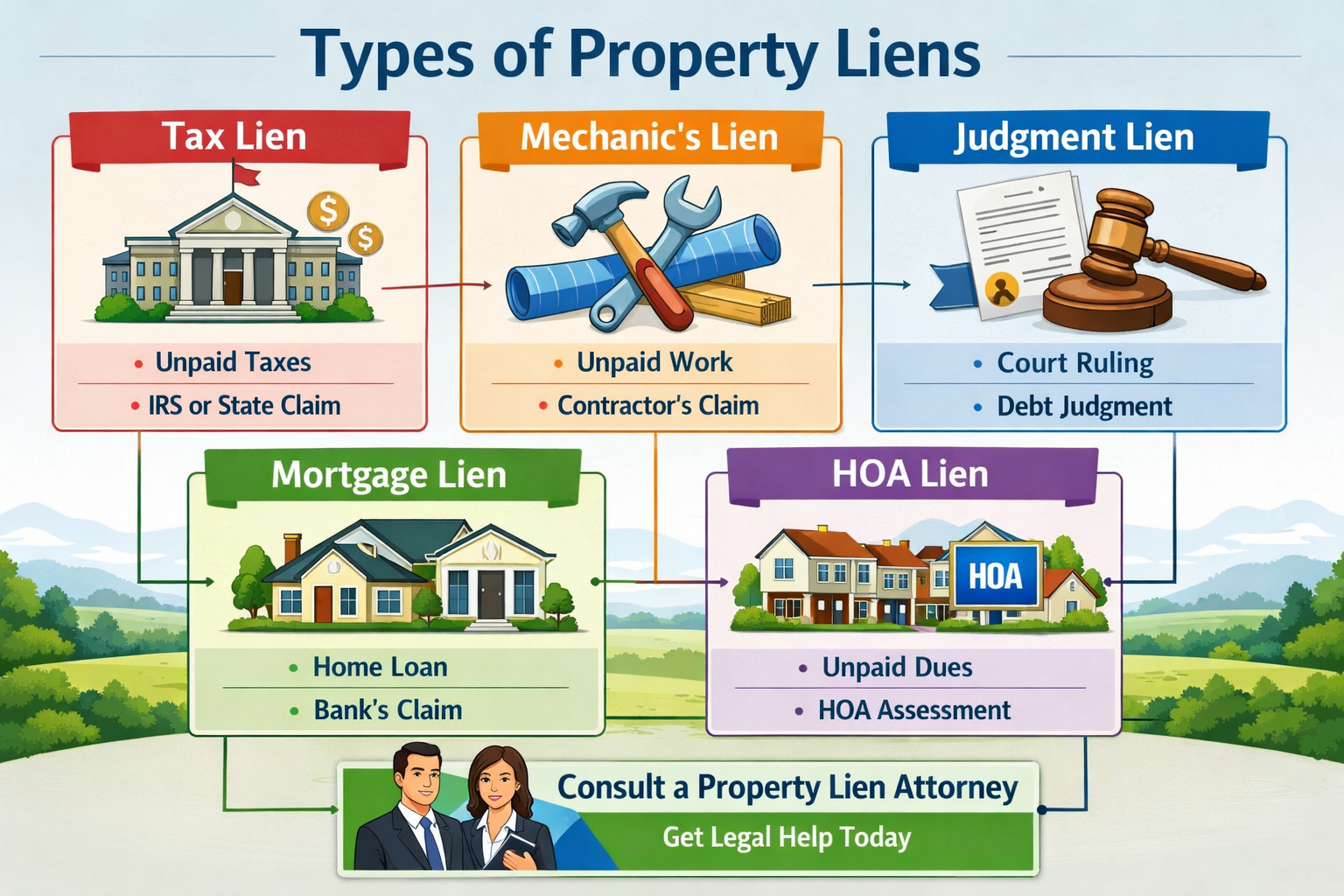
Before diving into when to hire a property lien attorney, it’s important to understand what liens actually are and how they affect your property rights.
What Is a Property Lien?
A property lien is a legal claim or “hold” on real estate that secures payment of a debt or obligation. Think of it as a financial anchor attached to your property. The lien gives the creditor (the person or entity you owe money to) a legal interest in your property until you pay what you owe.
Liens are public records. They appear in county records and on title searches, alerting anyone interested in your property that someone else has a claim against it. This public nature makes liens particularly problematic when you want to sell or refinance.
Key characteristics of property liens:
- They attach to the property, not the owner
- They must be satisfied before clear title can transfer
- They’re prioritized by date and type (some liens take precedence over others)
- They can lead to forced sale or foreclosure if unresolved
- They accumulate interest and penalties over time
Common Types of Property Liens
Not all liens are created equal. Different types carry different levels of urgency and require different resolution strategies.
| Lien Type | What It Is | Priority Level | Typical Timeline |
|---|---|---|---|
| Tax Liens | Unpaid property taxes, IRS debts, or state taxes | Highest (often supersedes other liens) | Can lead to foreclosure in 1-3 years |
| Mechanic’s Liens | Unpaid contractor, subcontractor, or supplier bills | Varies by state | Must be filed within 30-120 days of work completion |
| Judgment Liens | Court-ordered debt from lawsuits | Lower priority | Remains until satisfied or statute expires (5-20 years) |
| Mortgage Liens | Primary or secondary mortgages | High (secured by property) | Foreclosure possible after 90-120 days of non-payment |
| HOA Liens | Unpaid homeowners association fees | Varies by state | Can lead to foreclosure in some states |
Understanding which type of lien you’re dealing with is the first step toward resolution. Each requires different expertise and strategies, which is where a property lien attorney becomes invaluable.
For a comprehensive overview of how different liens impact property sales, check out our complete guide to property liens.
How Liens Affect Property Ownership
Property liens don’t strip you of ownership, but they severely limit what you can do with your property. Here’s how:
🏠 Sale Restrictions: Most buyers won’t purchase property with liens attached. Title companies typically require all liens to be cleared before closing. Even if you find a willing buyer, they’ll likely demand that you pay off the liens from the sale proceeds—or reduce the purchase price accordingly.
💰 Refinancing Barriers: Lenders won’t refinance property with outstanding liens because these claims take priority over new loans. This can trap you in high-interest mortgages or prevent you from accessing equity.
⚖️ Foreclosure Risk: Many liens give creditors the right to force a sale of your property if you don’t pay. Tax lien foreclosures are particularly aggressive, often moving forward quickly.
📉 Credit Damage: Liens appear on credit reports and can significantly lower your credit score, affecting your ability to get loans, credit cards, or even employment in some fields.
The good news? Property liens are not permanent. With the right legal guidance and strategy, they can be negotiated, reduced, or removed entirely.
What Does a Property Lien Attorney Do?
A property lien attorney specializes in the legal complexities surrounding claims against real estate. These legal professionals bring expert service and industry knowledge to situations that often confuse general practice attorneys.
Core Services Provided by Property Lien Attorneys
Property lien attorneys offer a range of helpful services designed to protect property owners and resolve creditor claims:
1. Lien Investigation and Title Search 📋
Before developing a strategy, attorneys conduct thorough investigations to identify all liens against your property. This includes:
- Comprehensive title searches revealing hidden or forgotten liens
- Verification of lien validity and proper filing procedures
- Priority determination (which liens must be paid first)
- Identification of expired or unenforceable liens
Many property owners discover liens they didn’t know existed. An attorney’s investigation often uncovers errors, fraudulent claims, or liens that can be challenged.
2. Lien Dispute and Challenge ⚖️
Not all liens are legitimate. Attorneys challenge liens that are:
- Improperly filed or documented
- Based on incorrect amounts
- Filed after statutory deadlines
- Fraudulent or filed in bad faith
- Already satisfied but not released
Challenging an invalid lien requires legal expertise and knowledge of state-specific statutes. A successful challenge can remove the lien entirely without payment.
3. Negotiation with Creditors 🤝
Property lien attorneys excel at negotiating with creditors to:
- Reduce the total amount owed (lien settlement)
- Establish payment plans that prevent foreclosure
- Negotiate partial lien releases for property sales
- Secure lien subordination (moving the lien to lower priority)
Creditors often accept less than the full amount when negotiating with attorneys because they know the alternatives (bankruptcy, legal challenges) may yield even less.
4. Quiet Title Actions 🏛️
When liens cloud your property title, attorneys can file quiet title actions—lawsuits that ask the court to determine the rightful owner and clear invalid claims. This legal process:
- Removes clouds on title
- Establishes clear ownership
- Eliminates disputed or questionable liens
- Provides court-ordered clean title
Quiet title actions are particularly valuable when dealing with old liens, deceased creditors, or complex ownership situations.
5. Lien Release and Satisfaction Documentation 📄
Even after paying off a lien, creditors sometimes fail to file proper release documents. Attorneys ensure:
- Proper satisfaction documents are recorded
- Releases are filed with the correct county offices
- Title companies receive necessary documentation
- Future title searches show the lien as resolved
Without proper documentation, a paid lien can continue to haunt your property records for years.
6. Foreclosure Defense 🛡️
When lien holders initiate foreclosure proceedings, property lien attorneys provide aggressive defense by:
- Challenging foreclosure procedures and timelines
- Identifying lender violations of foreclosure laws
- Negotiating alternatives like loan modifications
- Filing bankruptcy to halt foreclosure proceedings
- Representing clients in foreclosure court
For property owners facing pre-foreclosure situations, early attorney involvement can preserve ownership rights and create time for alternative solutions.
Specialized Knowledge Property Lien Attorneys Bring
Beyond general legal knowledge, property lien attorneys possess specialized expertise that makes them invaluable:
✅ State-Specific Lien Laws: Lien laws vary dramatically by state. Attorneys understand local statutes, filing requirements, priority rules, and foreclosure procedures.
✅ Title Insurance Complexities: They work effectively with title companies and understand how to resolve issues that prevent title insurance issuance.
✅ Real Estate Transaction Experience: They coordinate with real estate agents, buyers, sellers, and lenders to facilitate transactions despite lien complications.
✅ Creditor Psychology: Experienced attorneys understand how different creditors operate and what negotiation strategies work best with each type.
✅ Court Procedures: They navigate complex court systems, file appropriate motions, and represent clients effectively in hearings and trials.
This combination of legal knowledge and practical experience creates helpful solutions for property owners facing seemingly impossible situations.
Property Lien Attorney: When to Hire & What They Do – Critical Timing
Knowing when to hire a property lien attorney can be just as important as knowing what they do. Early intervention often prevents problems from escalating, while waiting too long can eliminate options.
Situations That Require Immediate Legal Help
Some situations demand immediate attorney involvement. Don’t delay if you’re facing:
🚨 Foreclosure Notices or Lawsuits
If you’ve received a foreclosure notice, lawsuit, or court summons related to a lien, contact an attorney immediately. Foreclosure timelines move quickly, and missing response deadlines can result in default judgments and property loss.
Most states provide only 20-30 days to respond to foreclosure complaints. An attorney can file necessary responses, request extensions, and begin negotiating alternatives.
🚨 Multiple Competing Liens
When several creditors have placed liens on your property, the situation becomes legally complex. Priority disputes arise, and creditors may fight over who gets paid first from any sale proceeds.
An attorney can:
- Determine proper lien priority under state law
- Negotiate with multiple creditors simultaneously
- Develop strategies to satisfy higher-priority liens first
- Protect your interests when creditors conflict
🚨 Disputed or Questionable Liens
If you believe a lien is invalid, incorrectly filed, or fraudulent, don’t simply ignore it. Invalid liens still cloud your title and create problems until formally removed.
Common lien disputes include:
- Contractor liens for work never completed or improperly done
- Tax liens based on incorrect assessments
- Judgment liens from cases you never knew about
- Liens filed after statutory deadlines expired
Attorneys have the legal tools to challenge these liens through formal dispute processes and court actions.
🚨 Title Defects Blocking Property Sales
Discovered a lien during the selling process? This common scenario requires quick resolution. Buyers and their lenders won’t proceed until the title is clear.
An attorney can:
- Negotiate rapid lien payoffs or settlements
- Arrange for liens to be paid from sale proceeds
- Secure partial releases allowing the sale to proceed
- Resolve title defects that prevent closing
Time is critical in these situations. Delayed closings can cause buyers to walk away, costing you the sale.
🚨 Inherited Property with Unknown Liens
Inheriting property often means inheriting its problems. Selling inherited property becomes complicated when liens from the previous owner remain attached.
Attorneys help by:
- Conducting comprehensive lien searches
- Determining which liens survive the owner’s death
- Navigating probate and lien resolution simultaneously
- Protecting heirs from personal liability for estate debts
Early Warning Signs You Need Legal Guidance
Beyond emergency situations, certain warning signs suggest you should consult a property lien attorney sooner rather than later:
⚠️ Receiving Collection Notices: Letters from creditors threatening lien placement mean action is imminent. Consulting an attorney before the lien is filed can prevent it entirely.
⚠️ Property Tax Delinquency: Falling behind on property taxes leads to liens and eventual foreclosure. Early attorney consultation can help negotiate payment plans or explore alternatives.
⚠️ Contractor Disputes: Disagreements with contractors about payment or work quality often escalate to mechanic’s liens. Attorney involvement can resolve disputes before liens are filed.
⚠️ Divorce or Partnership Dissolution: Property division during divorce or business partnership dissolution often involves lien complications. Attorneys protect your interests during these transitions.
⚠️ Title Issues During Refinancing: If your refinance application reveals unexpected liens or title problems, legal help can clear these issues and salvage the refinance.
When You Might Not Need an Attorney (Yet)
Not every lien situation requires immediate legal representation. You might handle certain scenarios yourself:
✓ Small, Undisputed Liens: If you owe a small amount and don’t dispute the debt, simply paying it off and ensuring proper release documentation may be sufficient.
✓ Clear Payment Plans: When creditors offer reasonable payment plans that you can afford, and they’re willing to subordinate the lien, you might not need legal help.
✓ Simple Lien Releases: If you’ve paid a debt but the creditor hasn’t filed a release, a phone call or letter might resolve it without attorney involvement.
However, if these simple approaches don’t work within a reasonable timeframe, escalating to legal representation prevents small problems from becoming big ones.
How to Choose the Right Property Lien Attorney
Not all attorneys have equal experience with property liens. Choosing the right legal professional makes a significant difference in outcomes and costs.
Essential Qualifications to Look For
When evaluating potential attorneys, prioritize these qualifications:
🎓 Real Estate Law Specialization
Look for attorneys who focus specifically on real estate law, not general practitioners who occasionally handle property issues. Specialists understand:
- State-specific lien statutes and procedures
- Title insurance requirements and processes
- Real estate transaction mechanics
- Foreclosure defense strategies
- Property rights and ownership complexities
Ask potential attorneys what percentage of their practice involves property liens and real estate matters. Aim for at least 50% specialization.
📊 Proven Track Record
Experience matters. Seek attorneys with:
- Years of practice in property lien matters (5+ years preferred)
- Successful case outcomes similar to your situation
- Positive client testimonials and reviews
- Professional recognition or awards in real estate law
Don’t hesitate to ask for references from previous clients with similar issues.
🏛️ Local Court Experience
Property lien cases often end up in local courts. Your attorney should have:
- Regular practice in your county’s courts
- Relationships with local judges and court staff
- Understanding of local court procedures and preferences
- Knowledge of how local judges typically rule on lien matters
An attorney from across the state might have excellent credentials but lack the local knowledge that influences outcomes.
💼 Professional Memberships
Look for membership in:
- State bar association real estate sections
- American Bar Association (Real Property, Trust and Estate Law Section)
- Local real estate attorney associations
- Title insurance industry organizations
These memberships indicate ongoing education and professional commitment.
Questions to Ask During Initial Consultations
Most property lien attorneys offer free or low-cost initial consultations. Use this time wisely by asking:
About Their Experience:
- How many property lien cases have you handled?
- What types of liens do you most commonly deal with?
- Have you handled cases similar to mine?
- What were the outcomes?
About Your Specific Situation:
- What options do I have for resolving this lien?
- What’s the likely timeline for resolution?
- What are the potential outcomes (best case and worst case)?
- What risks should I be aware of?
About Costs and Fees:
- How do you charge (hourly, flat fee, contingency)?
- What’s your hourly rate or typical flat fee for cases like mine?
- What additional costs should I expect (filing fees, court costs, etc.)?
- Do you offer payment plans?
About Communication:
- Who will handle my case (you or an associate)?
- How often will you update me on progress?
- How quickly do you typically respond to client questions?
- What’s the best way to reach you?
Pay attention not just to the answers, but to how the attorney communicates. You want someone who explains complex legal concepts in understandable terms—a sign of both expertise and helpful guidance.
Red Flags to Avoid
Certain warning signs suggest you should look elsewhere:
🚩 Guarantees of Specific Outcomes: No ethical attorney can guarantee results. Legal proceedings involve too many variables.
🚩 Pressure to Sign Immediately: Reputable attorneys give you time to consider your options and compare services.
🚩 Lack of Specialization: Attorneys who handle “everything” rarely excel at complex property lien matters.
🚩 Poor Communication: If the attorney is difficult to reach during the consultation process, expect worse communication after you hire them.
🚩 Unusually Low Fees: While affordability matters, fees significantly below market rates may indicate inexperience or corner-cutting.
🚩 No Written Fee Agreement: Professional attorneys provide clear, written agreements outlining services and costs.
Trust your instincts. The right attorney should make you feel confident and informed, not confused or pressured.
The Property Lien Attorney Process: What to Expect
Understanding the typical process helps set realistic expectations and prepares you for what lies ahead.
Initial Consultation and Case Evaluation
Your first meeting with a property lien attorney typically involves:
Information Gathering 📝
Bring all relevant documents:
- Property deed and title documents
- Lien notices or court documents
- Correspondence with creditors
- Payment records or proof of payment
- Property tax records
- Any relevant contracts (construction agreements, loan documents, etc.)
The attorney will review these materials and ask detailed questions about:
- How the debt originated
- Your payment history
- Your financial situation
- Your goals (keep the property, sell it, etc.)
- Timeline constraints
Preliminary Title Search
Many attorneys conduct or order a preliminary title search to identify all liens and encumbrances. This often reveals liens you didn’t know existed.
Strategy Discussion
Based on the information gathered, the attorney will outline:
- Potential resolution strategies
- Likelihood of success for each approach
- Estimated timelines
- Approximate costs
- Your role in the process
This consultation should leave you with a clear understanding of your options and next steps.
Investigation and Documentation Phase
Once hired, your attorney begins thorough investigation:
Comprehensive Title Examination
A detailed title search reveals:
- All recorded liens (by type, amount, and date)
- Lien priority order
- Potential title defects or breaks in the chain of title
- Ownership complications
Lien Verification
Attorneys verify each lien’s validity by checking:
- Proper filing procedures and deadlines
- Accuracy of amounts claimed
- Legal basis for the lien
- Whether statutes of limitation have expired
Document Collection
Your attorney gathers:
- Original contracts or agreements
- Payment records and canceled checks
- Communication history with creditors
- Court records for judgment liens
- Tax assessment records for tax liens
This investigation phase typically takes 1-4 weeks, depending on complexity.
Negotiation and Resolution
With complete information, your attorney develops and executes a resolution strategy:
Creditor Negotiations 🤝
Most lien cases involve extensive negotiation. Your attorney contacts creditors to:
- Verify debt amounts and discuss discrepancies
- Propose settlement amounts (often 40-70% of the claimed amount)
- Negotiate payment terms or payment plans
- Request lien subordination or partial releases
- Secure written agreements
Creditors often negotiate more favorably with attorneys than with property owners directly because they recognize the alternatives (litigation, bankruptcy) may yield less.
Settlement Documentation
When negotiations succeed, attorneys ensure:
- Written settlement agreements protecting your interests
- Clear terms for lien release upon payment
- Proper payment processing and receipt documentation
- Timely filing of lien releases with county recorders
Litigation When Necessary
If negotiation fails or liens are invalid, attorneys may file:
- Motions to release or discharge liens
- Quiet title actions to clear disputed claims
- Foreclosure defense lawsuits
- Bankruptcy proceedings to eliminate certain liens
Litigation extends the timeline (typically 3-12 months) but sometimes provides the only path to resolution.
Post-Resolution Follow-Up
Even after resolving liens, attorneys provide valuable follow-up services:
✅ Lien Release Recording: Ensuring releases are properly filed with county recorders
✅ Title Clearance Verification: Confirming updated title searches show clear title
✅ Documentation for Future Transactions: Providing comprehensive records for future sales or refinancing
✅ Credit Report Monitoring: Advising on how to ensure liens are removed from credit reports
This follow-up ensures the resolution actually accomplishes your goals and doesn’t leave lingering issues.
Cost Considerations: What Property Lien Attorneys Charge
Legal fees represent a significant concern for property owners already facing financial stress. Understanding typical costs helps with planning and decision-making.
Common Fee Structures
Property lien attorneys use several billing approaches:
Hourly Rates ⏰
Most property lien attorneys charge by the hour, with rates varying by:
- Geographic location ($150-$500+ per hour)
- Attorney experience level
- Case complexity
- Local market conditions
Typical hourly rate ranges:
- Small markets or newer attorneys: $150-$250/hour
- Mid-sized markets or experienced attorneys: $250-$400/hour
- Major metropolitan areas or highly specialized attorneys: $400-$600/hour
Hourly billing works best when the scope of work is uncertain or may expand based on what’s discovered during investigation.
Flat Fees 💵
For straightforward matters, attorneys may offer flat fees:
- Simple lien release assistance: $500-$1,500
- Uncontested quiet title action: $2,000-$5,000
- Mechanic’s lien negotiation: $1,500-$3,500
- Basic foreclosure defense: $2,500-$7,500
Flat fees provide cost certainty but may not cover complications that arise during the process.
Retainer Arrangements 📊
Many attorneys require an upfront retainer (advance payment) against which they bill hourly. Common retainer amounts:
- Simple matters: $1,500-$3,000
- Moderate complexity: $3,000-$7,500
- Complex litigation: $7,500-$15,000+
When the retainer is depleted, you replenish it. Unused portions are typically refunded.
Contingency Fees 🎯
Rarely used in property lien cases, contingency fees mean the attorney receives a percentage (typically 25-40%) of money saved or recovered. This arrangement works only when:
- You’re challenging an invalid lien for a refund
- You’re pursuing damages against someone who wrongfully placed a lien
- You’re negotiating significant lien reductions
Additional Costs Beyond Attorney Fees
Legal representation involves expenses beyond attorney fees:
| Expense Type | Typical Cost | When Required |
|---|---|---|
| Court filing fees | $200-$500 | Litigation or quiet title actions |
| Title search fees | $200-$500 | Comprehensive title examination |
| Process server fees | $50-$150 per party | Serving legal documents |
| Expert witness fees | $2,000-$10,000+ | Complex disputes requiring expert testimony |
| Recording fees | $25-$100 per document | Filing lien releases or court orders |
| Mediation fees | $1,500-$5,000 | Alternative dispute resolution |
These costs can add $500-$5,000+ to your total expenses, depending on case complexity.
Ways to Reduce Legal Costs
Even when attorney help is necessary, you can minimize expenses:
💡 Be Organized: Provide complete, organized documentation upfront. Time spent searching for information is time you’re billed for.
💡 Handle Simple Tasks Yourself: Ask your attorney which tasks you can handle (gathering documents, making copies, basic research).
💡 Communicate Efficiently: Consolidate questions into single emails or calls rather than contacting the attorney multiple times daily.
💡 Respond Promptly: Delays caused by your slow responses extend the timeline and increase costs.
💡 Consider Limited Scope Representation: Some attorneys offer “unbundled” services where they handle specific tasks while you manage others.
💡 Explore Payment Plans: Many attorneys offer payment arrangements for clients who cannot pay large retainers upfront.
When Legal Costs Outweigh Benefits
Sometimes the cost of legal representation exceeds the value it provides. Consider alternatives when:
- The lien amount is very small (under $1,000)
- Legal fees would exceed the lien amount
- You can easily pay the undisputed debt
- The creditor offers reasonable payment terms without attorney involvement
In these situations, direct payment or negotiation may make more financial sense than hiring an attorney.
However, for significant liens, disputed claims, or foreclosure threats, attorney fees represent an investment that protects far greater value—your property itself.
Alternatives and Complementary Solutions

While property lien attorneys provide invaluable expertise, they’re not the only resource available. Understanding complementary solutions creates more options.
Working with Property Solution Companies
Companies like Sure Path Property Solutions offer an alternative approach for property owners facing complex lien situations. These companies:
🏘️ Coordinate Multiple Professionals
Property solution companies work with networks of attorneys, title professionals, and county officials to address complicated situations holistically. Rather than hiring and coordinating multiple professionals yourself, they manage the process.
🏘️ Provide Direct Purchase Options
When you need to sell quickly despite liens, property solution companies can:
- Purchase properties with liens attached
- Coordinate lien payoffs from purchase proceeds
- Handle negotiations with multiple creditors
- Close quickly without traditional financing delays
This approach works particularly well when you want to exit the property rather than keep it.
🏘️ Offer Helpful Guidance Without Hourly Fees
Unlike attorneys who bill hourly, property solution companies typically don’t charge upfront fees. They make money through property purchases, creating aligned incentives—they succeed when you succeed.
For property owners dealing with multiple heirs, back taxes, and liens simultaneously, this coordinated approach often provides more practical solutions than hiring separate professionals for each issue.
Title Companies and Title Insurance
Title companies play important roles in lien resolution:
Title Searches: Professional title searches identify all liens and encumbrances, providing the foundation for resolution strategies.
Title Insurance Claims: If you have owner’s title insurance, certain liens may be covered. Filing title insurance claims can provide financial protection.
Closing Coordination: Title companies coordinate lien payoffs during property sales, ensuring proper documentation and fund distribution.
While title companies can’t provide legal advice, they’re valuable partners in the lien resolution process.
Credit Counseling and Debt Negotiation Services
For liens arising from general debt problems, credit counseling agencies offer:
- Debt management plans
- Creditor negotiation assistance
- Financial education and budgeting help
- Bankruptcy counseling (required before filing)
These services cost less than attorneys but lack the legal expertise to handle complex lien issues or litigation.
DIY Lien Resolution: When It Works
Property owners with time, research skills, and straightforward situations sometimes resolve liens themselves:
Situations Suitable for DIY:
- Small, undisputed debts
- Creditors willing to negotiate directly
- Simple lien release documentation issues
- Clear payment arrangements
Resources for DIY Approach:
- County recorder’s office (for lien information and filing procedures)
- State bar association (for legal forms and guidance)
- Online legal resources and guides
- Direct communication with creditors
Limitations of DIY:
- No legal protection if things go wrong
- Creditors may not take you as seriously as an attorney
- Risk of missing deadlines or procedural requirements
- Inability to file court actions or represent yourself effectively in litigation
For complex situations, disputed claims, or foreclosure threats, DIY approaches rarely succeed and often make matters worse.
Special Situations Requiring Property Lien Attorney Expertise
Certain scenarios present unique challenges that particularly benefit from specialized legal help.
Tax Liens and IRS Issues
Tax liens—whether from the IRS, state tax agencies, or local governments—require specialized knowledge:
Federal Tax Liens 🏛️
IRS liens are particularly aggressive and complex. Attorneys help by:
- Negotiating offers in compromise (settling for less than owed)
- Establishing installment agreements
- Requesting lien subordination or discharge
- Challenging incorrect tax assessments
- Representing clients in IRS appeals
The IRS has extensive collection powers, making professional representation especially valuable.
Property Tax Liens 🏘️
Selling a house with a tax lien presents unique challenges because property tax liens typically have “super priority”—they get paid before other creditors, including mortgage lenders.
Attorneys help by:
- Negotiating payment plans with county tax collectors
- Arranging for tax liens to be paid from sale proceeds
- Stopping tax foreclosure proceedings
- Challenging incorrect property assessments
Many counties offer redemption periods and payment plans, but navigating these options requires understanding local procedures.
Mechanic’s Liens and Construction Disputes
Mechanic’s liens arise from construction, renovation, or repair work. These situations involve:
Validity Challenges
Mechanic’s liens have strict filing requirements:
- Specific deadlines (often 30-120 days after work completion)
- Required preliminary notices
- Accurate descriptions of work performed
- Proper property identification
Attorneys frequently find procedural defects that invalidate these liens.
Dispute Resolution
Construction disputes often involve:
- Disagreements about work quality
- Claims of incomplete work
- Disputes over change orders and additional charges
- Allegations of property damage
Attorneys negotiate resolutions that address both the lien and the underlying dispute.
Lien Bonding
In some states, property owners can “bond around” a mechanic’s lien by posting a surety bond, allowing property sales to proceed while disputes are resolved. Attorneys arrange these bonds and manage the process.
Judgment Liens from Lawsuits
Judgment liens result from court judgments in lawsuits. These require attorneys to:
Challenge the Underlying Judgment
Sometimes the original judgment can be:
- Appealed if deadlines haven’t passed
- Set aside due to procedural defects
- Modified based on new evidence
- Discharged in bankruptcy
Negotiate Settlements
Judgment creditors often accept reduced amounts to avoid collection difficulties. Attorneys negotiate favorable settlements and ensure proper lien releases.
Understand Priority Issues
Judgment lien priority varies by state and can be complex when multiple judgments exist. Attorneys determine which must be paid first and develop strategies accordingly.
Inherited Property with Multiple Liens
Inheriting property with liens creates unique complications:
Estate Liability Questions
Attorneys determine:
- Which liens survive the previous owner’s death
- Whether heirs have personal liability
- How probate affects lien priority
- Options for disclaiming problematic inheritances
Multiple Heir Coordination
When multiple heirs share ownership, attorneys help:
- Coordinate among heirs with different goals
- Navigate partition actions if heirs disagree
- Structure sales that satisfy liens and distribute proceeds fairly
- Resolve disputes about lien responsibility
Probate and Lien Resolution
Attorneys coordinate probate proceedings with lien resolution, ensuring proper legal procedures and protecting heir interests.
Protecting Your Property Rights: Prevention Strategies
While this article focuses on resolving existing liens, prevention deserves attention. Property lien attorneys often advise clients on protective measures:
Regular Title Monitoring 🔍
Periodically check your property’s title for unexpected liens:
- Annual title searches (cost: $100-$200)
- Title monitoring services that alert you to new recordings
- County recorder website checks (often free)
Early detection prevents small problems from becoming large ones.
Proper Contract Documentation 📋
When hiring contractors or service providers:
- Use written contracts specifying payment terms
- Require lien waivers upon payment
- Make payments by check (creating payment records)
- Verify contractor licensing and insurance
Proper documentation prevents disputes that lead to liens.
Timely Property Tax Payment 💰
Property tax liens are easily preventable:
- Set up automatic payments or reminders
- Contact tax collectors immediately if you can’t pay
- Explore payment plans before becoming delinquent
- Consider tax escrow accounts with mortgage lenders
Most counties work with property owners who communicate proactively.
Title Insurance 🛡️
Owner’s title insurance (purchased at closing) protects against:
- Unknown liens from previous owners
- Title defects and fraud
- Errors in public records
While it doesn’t cover liens you create, it provides valuable protection against inherited problems.
Prompt Dispute Resolution ⚖️
When disputes arise with creditors or contractors:
- Address them immediately rather than ignoring them
- Document all communications
- Seek mediation or arbitration before litigation
- Consult attorneys early in significant disputes
Proactive dispute resolution prevents liens from being filed in the first place.
Real-World Examples: Property Lien Attorney Success Stories
Understanding how property lien attorneys help in real situations illustrates their value:
Case Study 1: The Invalid Mechanic’s Lien
Situation: A homeowner received notice of a $45,000 mechanic’s lien from a roofing contractor. The homeowner had paid $30,000 for the work but disputed the additional charges, claiming the work was incomplete and damaged the property.
Attorney Action: The attorney investigated and discovered:
- The contractor failed to provide required preliminary notices
- The lien was filed 135 days after work stopped (state law required filing within 120 days)
- The contractor wasn’t properly licensed
Outcome: The attorney filed a motion to release the lien based on procedural defects. The court invalidated the entire lien. The contractor’s only recourse was filing a lawsuit (which would require proving the debt), but facing evidence of licensing violations and incomplete work, the contractor dropped all claims.
Result: The homeowner paid nothing beyond the original $30,000 and avoided a $45,000 lien that would have prevented selling the property.
Case Study 2: Multiple Liens Blocking Estate Sale
Situation: Three siblings inherited their parents’ home worth approximately $280,000. Title search revealed:
- $45,000 in delinquent property taxes
- $12,000 IRS lien from the father’s business
- $8,000 judgment lien from a credit card lawsuit
- $180,000 mortgage balance
Total liens and mortgage: $245,000, leaving only $35,000 equity to split three ways.
Attorney Action: The attorney:
- Negotiated a $32,000 settlement on the property taxes (saving $13,000)
- Discovered the IRS lien had expired and filed for release
- Negotiated a $4,500 settlement on the judgment lien (saving $3,500)
- Coordinated with a title company to structure the sale and payoffs
Outcome: Total savings of $28,500 increased the heirs’ equity to $63,500 ($21,167 each instead of $11,667).
Result: The attorney’s fees ($6,500) were far exceeded by the savings achieved, and the siblings successfully sold the property and divided the proceeds.
Case Study 3: Foreclosure Defense and Loan Modification
Situation: A property owner fell three months behind on property taxes ($4,200) and received a foreclosure notice. The owner had equity in the property but was temporarily unemployed and couldn’t pay the full amount.
Attorney Action: The attorney:
- Filed an appearance in the foreclosure case, extending the timeline
- Negotiated with the county for a 12-month payment plan ($350/month)
- Helped the client apply for a property tax deferral program for financial hardship
- Secured a court-approved payment arrangement stopping the foreclosure
Outcome: The foreclosure was dismissed, and the property owner retained the home while making affordable monthly payments.
Result: The owner avoided losing a property with $150,000 in equity over a $4,200 debt. Attorney fees of $2,500 were a small price for preserving this substantial asset.
Frequently Asked Questions About Property Lien Attorneys
Q: How long does it typically take to resolve a property lien with an attorney?
A: Timeline varies significantly based on lien type and complexity:
- Simple lien releases: 2-4 weeks
- Negotiated settlements: 1-3 months
- Quiet title actions: 3-6 months
- Contested litigation: 6-18 months
Foreclosure situations require faster action, while non-urgent matters can proceed more deliberately.
Q: Can a property lien attorney guarantee they’ll remove my lien?
A: Ethical attorneys never guarantee specific outcomes because legal proceedings involve too many variables. However, experienced attorneys can provide realistic assessments of likely outcomes based on similar cases.
Q: Will hiring an attorney stop foreclosure immediately?
A: Filing certain legal actions (bankruptcy, foreclosure defense responses) can temporarily halt foreclosure proceedings, but this isn’t automatic. The attorney must take specific legal steps, and the delay is temporary unless underlying issues are resolved.
Q: Can I sell my house if it has liens?
A: Yes, but liens typically must be paid from sale proceeds. Selling a house with a lien requires coordinating with the title company, creditors, and sometimes attorneys to ensure proper payoff and release documentation.
Q: What’s the difference between a property lien attorney and a real estate attorney?
A: Property lien attorneys are real estate attorneys with specific expertise in lien-related matters. While general real estate attorneys handle transactions, contracts, and closings, lien specialists focus on resolving creditor claims and title defects.
Q: Can bankruptcy eliminate property liens?
A: Bankruptcy can eliminate some liens but not others:
- Secured liens (mortgages, properly filed tax liens) generally survive bankruptcy
- Unsecured judgment liens may be “stripped” in some circumstances
- Chapter 13 bankruptcy can create payment plans for secured debts
Bankruptcy is complex and requires specialized attorney guidance.
Q: How do I know if a lien on my property is valid?
A: Valid liens must:
- Be properly filed according to state law
- Meet statutory deadlines
- Accurately describe the property and debt
- Have a legal basis (court judgment, unpaid taxes, etc.)
A property lien attorney can verify validity through title examination and legal analysis.
Q: What happens if I ignore a property lien?
A: Ignoring liens leads to:
- Accumulating interest and penalties
- Foreclosure proceedings
- Inability to sell or refinance
- Credit damage
- Potential loss of property
Early action always provides more options than delay.
Conclusion: Taking Action on Property Liens
Property liens represent serious challenges, but they’re rarely insurmountable. Understanding Property Lien Attorney: When to Hire & What They Do empowers property owners to make informed decisions and take effective action.
The key takeaways for property owners facing liens:
✅ Act quickly – Early intervention provides more options and prevents problems from escalating
✅ Seek specialized expertise – Property lien attorneys bring specific knowledge that general practitioners lack
✅ Understand your options – Multiple resolution strategies exist, from negotiation to litigation to alternative solutions
✅ Consider all resources – Attorneys aren’t the only solution; property solution companies, title professionals, and other resources can help
✅ Protect your rights – Legal representation ensures creditors follow proper procedures and don’t take advantage
✅ Invest wisely – Attorney fees often pale in comparison to the property value being protected
Your Next Steps
If you’re dealing with property liens, take these actionable steps today:
1️⃣ Gather all documentation related to your property, liens, and debts
2️⃣ Order a comprehensive title search to identify all liens and encumbrances
3️⃣ Consult with a property lien attorney for professional assessment of your situation (most offer free initial consultations)
4️⃣ Explore all options including direct negotiation, legal representation, and alternative solutions like working with property solution companies
5️⃣ Take action – even small steps forward are better than waiting and hoping problems resolve themselves
How Sure Path Property Solutions Can Help
At Sure Path Property Solutions, we understand that property liens often occur alongside other complications—back taxes, multiple heirs, unclear titles, and financial hardship. Our approach provides helpful solutions by:
🤝 Coordinating with legal and title professionals to address your situation holistically
🤝 Offering direct purchase options that allow you to sell despite liens and complications
🤝 Providing expert service without upfront fees or commissions
🤝 Delivering friendly and caring guidance through what can be an overwhelming process
Whether you need to sell quickly, resolve complex lien situations, or simply understand your options, our industry experts are here to help. We’ve helped hundreds of property owners navigate situations that seemed impossible, finding practical paths forward when traditional solutions don’t fit.
Don’t let property liens control your future. With the right guidance—whether from a property lien attorney, a property solution company, or both—you can resolve these challenges and move forward with confidence.
Ready to explore your options? Contact Sure Path Property Solutions today for a free, no-obligation consultation about your property situation. We’ll provide honest guidance about whether legal representation, a direct sale, or another approach best serves your needs.
Your property challenges have solutions. Let’s find yours together.