
Sell House with Lawsuit Pending: Fast Exit Before Trial
Facing a lawsuit while owning property creates a nightmare scenario that keeps homeowners awake at night. The fear of losing everything to a judgment, watching equity disappear, or having assets seized can feel overwhelming. When legal troubles threaten your home, time becomes your most valuable resource.
The good news? You can sell your house even with a lawsuit pending—and doing so before trial may be your smartest financial move. Thousands of property owners successfully navigate this challenging situation every year by understanding their options and acting decisively. Whether you’re dealing with a creditor lawsuit, divorce litigation, business dispute, or other legal action, a strategic exit can protect your equity and provide the fresh start you need.
This comprehensive guide reveals exactly how to sell house with lawsuit pending: fast exit before trial, protecting your interests while the legal clock ticks down.
Key Takeaways
- Selling before judgment is crucial: Once a judgment is entered, creditors can place liens on your property, making sales significantly more complicated and reducing your net proceeds
- Multiple sale options exist: Traditional sales, cash buyers, and specialized investors all offer viable paths depending on your timeline and circumstances
- Disclosure is legally required: Failing to disclose pending litigation can derail your sale and create additional legal liability
- Speed matters significantly: The faster you close, the more control you maintain over the proceeds and terms
- Professional guidance protects you: Working with experienced professionals who understand liens and judgments ensures compliance and maximizes your outcome
Understanding the Legal Landscape: What Happens to Your Property During a Lawsuit
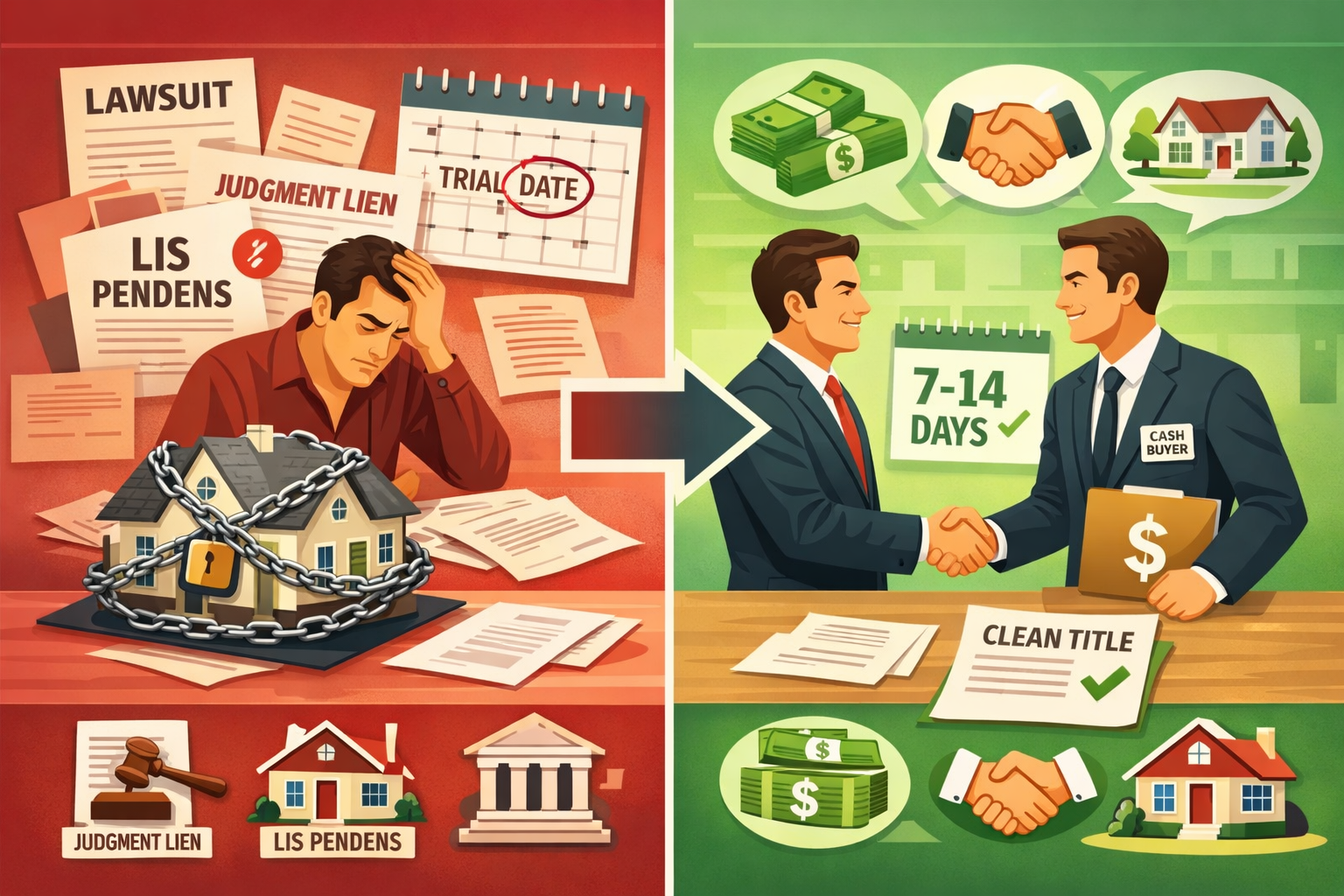
Before exploring how to sell house with lawsuit pending: fast exit before trial, it’s essential to understand what’s actually happening to your property rights during active litigation.
The Difference Between a Lawsuit and a Judgment
Many homeowners confuse these two critical stages:
Lawsuit (Pre-Judgment Phase)
- Legal action has been filed against you
- The case is working through the court system
- No final decision has been made
- Your property rights remain largely intact
- You maintain full ownership and control
Judgment (Post-Trial Phase)
- Court has ruled against you
- Creditor has won the case
- Legal debt is now established
- Creditor can pursue collection actions
- Property liens become much more likely
The window between lawsuit filing and judgment represents your golden opportunity. During this period, you still have maximum flexibility and control over your assets.
How Lawsuits Affect Property Ownership
When someone files a lawsuit against you, several things may happen to your property:
Lis Pendens Notice 📋
In some cases, particularly real estate disputes or divorce proceedings, the plaintiff may file a lis pendens on property. This public notice alerts potential buyers that litigation affecting the property is pending. While it doesn’t prevent you from selling, it does:
- Appear in title searches
- Warn buyers of potential claims
- Complicate traditional financing
- Reduce buyer pool significantly
- Lower potential sale price
Temporary Restraining Orders
In rare circumstances, courts may issue orders preventing property transfers. This typically occurs only when:
- Fraud is alleged
- Asset hiding is suspected
- Divorce proceedings involve disputes over property division
- Business partnership dissolution includes real estate
Attachment or Garnishment Attempts
Some creditors seek pre-judgment attachments, though these are difficult to obtain and require showing:
- Likelihood of winning the case
- Risk that defendant will hide assets
- Irreparable harm without attachment
Your Rights as a Property Owner During Litigation
Despite facing a lawsuit, you retain significant property rights:
✅ Right to sell (unless specifically prohibited by court order)
✅ Right to refinance (though lenders may be hesitant)
✅ Right to rent or lease the property
✅ Right to make improvements or repairs
✅ Right to use property as collateral
However, these rights come with important responsibilities and strategic considerations.
Why Selling Before Trial Makes Financial Sense
The decision to sell house with lawsuit pending: fast exit before trial isn’t just about avoiding stress—it’s a calculated financial strategy that can save tens of thousands of dollars.
Protecting Your Equity from Judgment Liens
Once a creditor obtains a judgment against you, they gain powerful collection tools:
Judgment Liens
The creditor can record a judgment lien on property in your county, which:
- Attaches to your real estate automatically
- Must be paid when property sells
- Accrues interest (often 10-12% annually)
- Remains for years (typically 10-20 years depending on state)
- Can be renewed indefinitely in many jurisdictions
The Math of Waiting
Consider this example:
| Scenario | Lawsuit Pending | After Judgment |
|---|---|---|
| Home Value | $300,000 | $300,000 |
| Mortgage Balance | $200,000 | $200,000 |
| Judgment Amount | $0 | $50,000 |
| Judgment Interest (1 year) | $0 | $5,000 |
| Legal Fees | $5,000 | $15,000 |
| Your Net Equity | $95,000 | $30,000 |
By selling before judgment, this homeowner protected $65,000 in equity—a massive difference that represents financial survival versus devastation.
Avoiding Forced Sale Scenarios
After obtaining a judgment lien, creditors can pursue forced sale through:
Execution Sales
- Sheriff’s sale or auction
- Property sold at significant discount (often 50-70% of market value)
- You receive only excess proceeds after all liens paid
- No control over timing or buyer
- Public record damages credit further
Foreclosure Actions
- Creditor forces sale through court
- Extended legal process adds costs
- Property condition deteriorates during process
- Neighborhood stigma affects price
- Deficiency judgments may follow if proceeds insufficient
Selling voluntarily before judgment lets you:
- Choose your buyer
- Negotiate best price
- Control timing
- Minimize public exposure
- Maximize net proceeds
Maintaining Negotiating Leverage
Here’s a counterintuitive truth: you have more negotiating power before judgment than after.
Before trial, you can:
- Negotiate settlement using sale proceeds as leverage
- Offer structured payments that satisfy creditors
- Propose reduced payoff in exchange for quick resolution
- Control the narrative with creditors
- Avoid judgment on your credit report entirely
After judgment, creditors have little incentive to negotiate—they’ve already won and can simply wait for interest to accumulate while their lien sits on your property.
“The best time to sell a house with legal troubles is yesterday. The second-best time is today—before that judgment hits.” — Property attorney with 20+ years experience
Can You Legally Sell a House with a Lawsuit Pending?
This question tops the list of concerns for homeowners facing litigation. The short answer: Yes, in most cases you absolutely can sell.
Legal Authority to Sell During Litigation
Unless a court has specifically prohibited the sale through a restraining order or injunction, you maintain full ownership rights including the right to sell. The lawsuit itself doesn’t strip you of property ownership—only a final judgment and subsequent collection actions do that.
When You CAN Sell:
- General creditor lawsuits (credit cards, medical bills, personal loans)
- Business disputes not involving the property directly
- Most personal injury claims against you
- Contract disputes
- Many divorce cases (with proper procedures)
When Sales May Be Restricted:
- Court order specifically prohibiting transfer
- Bankruptcy automatic stay in effect
- Divorce with temporary restraining order on assets
- Real estate disputes where the property itself is the subject
- Fraudulent transfer concerns
Disclosure Requirements You Must Follow
Honesty isn’t just the best policy—it’s a legal requirement. Failing to disclose pending litigation can result in:
- Sale cancellation
- Additional lawsuits from the buyer
- Fraud charges
- Loss of any legal defenses
- Forfeiture of proceeds
What to Disclose:
📝 To Potential Buyers:
- Pending lawsuits that could affect the property
- Any lis pendens filed
- Known claims against the property
- Divorce proceedings affecting ownership
📝 To Your Real Estate Agent:
- All pending litigation
- Any court orders affecting property
- Creditor communications
- Timeline of legal proceedings
📝 To Title Companies:
- Complete legal situation
- All parties to lawsuits
- Expected trial dates
- Any settlement negotiations
How to Disclose Properly:
Work with your attorney to prepare a disclosure statement that:
- States facts without unnecessary detail
- Explains current status of litigation
- Clarifies that no judgment exists (if true)
- Notes any title issues
- Provides contact information for legal counsel
Working with the Court System
Depending on your situation, you may need court approval or notification:
Divorce Cases:
Many jurisdictions require:
- Notice to spouse of intent to sell
- Court approval of sale terms
- Escrow of proceeds pending settlement
- Accounting of all proceeds
Bankruptcy:
If you’ve filed bankruptcy:
- Trustee approval required
- Court must approve sale
- Proceeds may go to bankruptcy estate
- Exemptions may protect some equity
Estate/Probate Litigation:
When selling deceased parents’ house during disputes:
- Executor authority must be clear
- All heirs may need to consent
- Court supervision may be required
- Proceeds held pending resolution
How to Sell House with Lawsuit Pending: Fast Exit Before Trial Strategies
Now let’s explore the practical strategies for actually executing your sale quickly and effectively.
Strategy #1: Cash Buyers and Investors
For homeowners who need to sell house with lawsuit pending: fast exit before trial, cash buyers offer the fastest, most reliable path.
Advantages of Cash Buyers:
⚡ Speed: Close in 7-14 days versus 30-60+ days for traditional sales
💰 Certainty: No financing contingencies that could fall through
🔍 Fewer Inspections: Most buy “as-is” without demanding repairs
📋 Simplified Process: Minimal paperwork and requirements
🤝 Experience with Complications: Specialized buyers understand liens and title issues
How Cash Sales Work:
- Contact investor or cash buying company
- Provide property details and disclose legal situation
- Receive cash offer (typically within 24-48 hours)
- Accept offer and choose closing date
- Complete minimal paperwork
- Close at title company and receive funds
- Walk away with check in hand
Companies like Sure Path Property Solutions specialize in complicated situations including pending lawsuits, making the process straightforward even when circumstances aren’t.
What to Expect for Price:
Cash buyers typically offer 70-85% of market value. While this seems like a discount, consider:
- No repair costs (saves 5-15%)
- No agent commissions (saves 5-6%)
- No carrying costs during listing period
- No risk of sale falling through
- Guaranteed fast closing
When facing legal deadlines, the speed premium is often worth the price difference.
Strategy #2: Traditional Sale with Full Disclosure
If you have sufficient time before trial (3+ months), a traditional sale might maximize proceeds.
Steps for Traditional Sale:
- Hire experienced real estate agent who has handled legal complications
- Prepare comprehensive disclosure with attorney’s help
- Price competitively to attract serious buyers quickly
- Market aggressively to create urgency
- Screen buyers carefully for financial strength
- Require larger earnest money to ensure commitment
- Negotiate shorter contingency periods
- Work with experienced title company familiar with complex situations
Challenges to Anticipate:
- Buyers may be scared off by lawsuit disclosure
- Lenders may refuse to finance property with pending litigation
- Title insurance may be difficult to obtain
- Process takes significantly longer
- Deal may fall through, restarting timeline
Best Candidates for Traditional Sale:
- Significant equity justifies waiting
- Trial date is 4+ months away
- Property is in excellent condition
- Strong local market with multiple buyers
- Lawsuit doesn’t involve the property directly
- No lis pendens filed
Strategy #3: Selling to the Plaintiff
In some cases, the person or entity suing you might be interested in purchasing the property.
When This Makes Sense:
- Neighbor disputes over property lines or easements
- Business partner wanting to buy out your share
- Divorce where spouse wants to keep the home
- Contract disputes with someone who wants the property
- HOA or condo association enforcement actions
Benefits:
- Resolves lawsuit simultaneously
- Eliminates trial costs for both parties
- Faster than court process
- Can negotiate favorable terms
- Reduces overall legal expenses
How to Approach:
- Consult your attorney first
- Have attorney propose sale as settlement
- Obtain independent appraisal
- Negotiate sale price separately from lawsuit claims
- Draft comprehensive settlement addressing all issues
- Include mutual releases from future claims
- Close through escrow with proper documentation
Strategy #4: Short Sale (If Underwater)
If you owe more than the property is worth, a short sale might be necessary.
For properties with liens exceeding value, this process requires:
- Lender approval of below-payoff sale
- Hardship documentation
- Buyer willing to wait for approval
- Negotiation with all lienholders
- Possible deficiency waiver
This is complex and time-consuming, but may be the only option for underwater properties facing judgment.
The Step-by-Step Process to Sell Before Trial
Let’s walk through the detailed timeline and actions for executing a successful pre-trial sale.
Phase 1: Assessment and Planning (Week 1)
Day 1-2: Evaluate Your Legal Situation
- Meet with your attorney to discuss:
- Trial timeline and key dates
- Likelihood of judgment
- Potential judgment amount
- Any restrictions on selling
- Required court notifications
- Obtain clear answers to:
- Can you legally sell right now?
- Are there any court orders affecting the property?
- What disclosure is required?
- How will proceeds be handled?
Day 3-4: Assess Property and Equity
- Determine current market value (get 2-3 BPO estimates or formal appraisal)
- Calculate total debt against property:
- Mortgage balance(s)
- Property taxes owed
- HOA liens
- Any existing liens
- Estimate net proceeds after sale costs
- Calculate how much you’d lose if judgment occurs
Day 5-7: Choose Your Sale Strategy
Based on your timeline and equity, decide:
- Urgent (trial in <60 days): Cash buyer route
- Moderate timeline (60-120 days): Traditional sale with experienced agent
- Complex situation: Consult with problem property specialists
Phase 2: Preparation and Marketing (Week 2-3)
For Cash Sale:
- Contact 3-5 reputable cash buyers or investors
- Provide property details and full disclosure
- Review offers and verify buyer credentials
- Select buyer and agree on terms
- Set closing date (typically 7-14 days out)
For Traditional Sale:
- Interview and hire experienced real estate agent
- Prepare property (declutter, clean, minor repairs)
- Complete disclosure documents with attorney review
- Professional photos and marketing materials
- List property at competitive price
- Begin showings immediately
Phase 3: Negotiation and Contract (Week 3-4)
Key Contract Provisions:
Regardless of sale method, ensure your purchase agreement includes:
- Disclosure acknowledgment: Buyer confirms awareness of lawsuit
- As-is clause: Protects you from repair demands
- Short inspection period: 5-7 days maximum
- Substantial earnest money: 2-3% minimum to ensure commitment
- Limited contingencies: Minimize opportunities for buyer to back out
- Specific closing date: Firm deadline before trial
- Attorney review period: Allow your lawyer to review
Negotiation Tips:
- Be transparent about timeline urgency
- Offer incentives for quick closing (cover some closing costs)
- Remain flexible on minor terms to keep deal moving
- Have backup offers if possible
- Don’t let perfect be enemy of good—accept reasonable offers
Phase 4: Due Diligence and Title Work (Week 4-5)
Title Company Selection:
Choose a title company experienced with:
- Pending litigation situations
- Complex lien scenarios
- Quick closing timelines
Provide them with:
- Complete disclosure of lawsuit
- Contact information for your attorney
- All relevant court documents
- Expected trial date
Title Issues to Address:
The title company will identify:
- Any lis pendens filed
- Existing liens or judgments
- Tax delinquencies
- Other encumbrances
Work with your attorney to:
- Resolve resolvable issues
- Obtain title insurance despite complications
- Prepare affidavits or documentation needed
- Coordinate with creditors if necessary
Buyer Due Diligence:
Support the buyer’s process:
- Provide access for inspections promptly
- Respond to questions quickly
- Have attorney available for buyer’s attorney
- Maintain property in good condition
- Don’t create new issues during this period
Phase 5: Closing and Proceeds Distribution (Week 5-6)
Pre-Closing Checklist:
✅ Final walkthrough scheduled
✅ All contingencies removed
✅ Title commitment issued
✅ Closing disclosure reviewed
✅ Funds verified from buyer
✅ Attorney approval obtained
✅ Court notifications filed (if required)
✅ Proceeds distribution plan established
Handling Proceeds:
Depending on your situation, proceeds may:
Option 1: Go Directly to You
- If no court order requires otherwise
- You maintain full control
- Can use for settlement negotiations
- Can protect in exempt assets
- Consult attorney on asset protection
Option 2: Go to Escrow Account
- Attorney trust account
- Court-supervised account
- Joint account requiring both parties’ signature
- Provides security while negotiating settlement
Option 3: Pay Creditors Directly
- If settlement reached
- To satisfy liens
- As part of negotiated resolution
- With proper releases obtained
Closing Day:
- Sign all documents at title company
- Ensure proper disclosure acknowledgments from buyer
- Receive proceeds via wire or certified check
- Obtain copies of all closing documents
- Get written confirmation of lien satisfactions
- File required notifications with court
Protecting Yourself: Legal and Financial Considerations
Selling property during litigation requires careful attention to legal and financial protections.
Working with the Right Professionals
Assemble a team that understands complex situations:
Real Estate Attorney
- Specializes in property law
- Experience with litigation matters
- Can coordinate with trial attorney
- Reviews all sale documents
- Ensures compliance with court requirements
Trial Attorney
- Handles the underlying lawsuit
- Advises on settlement opportunities
- Coordinates with real estate attorney
- Files necessary court notifications
- Protects your legal interests
Real Estate Agent (if traditional sale)
- Experience with complicated transactions
- Comfortable with disclosure requirements
- Strong negotiation skills
- Proven track record of closings
- Professional network for quick sales
Tax Professional
- Advises on tax implications of sale
- Helps structure transaction tax-efficiently
- Prepares necessary tax documents
- Plans for capital gains considerations
- Coordinates with attorneys on reporting
Avoiding Fraudulent Transfer Claims
One critical risk when selling during litigation: fraudulent transfer allegations.
What Is Fraudulent Transfer?
Selling or transferring assets to avoid paying creditors can be challenged as fraudulent, even if no fraud was intended. Courts look at:
- Timing: Sale shortly before or after lawsuit filed
- Consideration: Whether you received fair market value
- Intent: Whether purpose was to hide assets from creditors
- Solvency: Whether sale left you unable to pay debts
How to Protect Yourself:
✅ Sell at Fair Market Value
- Obtain independent appraisal
- Document comparable sales
- Show competitive marketing process
- Demonstrate arms-length transaction
✅ Document Legitimate Reasons
- Need to relocate for work
- Can’t afford property
- Downsizing for retirement
- Health issues requiring move
- Financial hardship predating lawsuit
✅ Maintain Transparency
- Disclose sale to creditor/plaintiff
- Don’t hide the transaction
- File required court notifications
- Provide documentation if requested
✅ Use Proceeds Appropriately
- Don’t immediately transfer to family members
- Don’t hide cash
- Consider placing in attorney trust account
- Document all uses of proceeds
- Consult attorney before spending
✅ Preserve Records
- Keep all sale documents
- Maintain communication records
- Document property condition
- Save marketing materials
- Retain appraisals and valuations
Tax Implications of Selling Under Pressure
Selling your home during legal troubles doesn’t change tax rules, but creates planning opportunities:
Capital Gains Exclusion
If the property is your primary residence:
- $250,000 exclusion (single) or $500,000 (married)
- Must have lived there 2 of last 5 years
- Can only use once every 2 years
- Reduces taxable gain significantly
Reporting Requirements
- Report sale on tax return even if no gain
- Form 1099-S issued by closing agent
- Calculate basis including improvements
- Document all exclusions claimed
Strategic Timing
Consider:
- Selling in year with other losses to offset gains
- Timing to maximize exclusion eligibility
- Coordinating with settlement negotiations
- Impact on overall tax situation
Common Scenarios: Tailored Strategies for Different Lawsuit Types
Different types of lawsuits require different approaches to selling property.
Creditor Lawsuits (Credit Cards, Medical Bills, Personal Loans)
Situation: Credit card company or medical provider suing for unpaid debt.
Timeline Pressure: Moderate—creditor lawsuits typically take 6-12 months from filing to judgment.
Best Strategy:
- Assess whether you have enough equity to pay debt and keep surplus
- If yes: Sell quickly, settle lawsuit with proceeds, keep remainder
- If no: Consider whether selling makes sense or if bankruptcy better option
Negotiation Opportunity:
- Creditors often settle for 40-60% before judgment
- Use pending sale as leverage: “I can pay you $X from sale proceeds now, or you can wait years for judgment collection”
- Get settlement in writing before closing
- Ensure settlement includes dismissal of lawsuit
Timeline: 30-45 days with cash buyer; 60-90 days traditional sale
Divorce Litigation
Situation: Divorce proceedings where house is marital asset.
Timeline Pressure: High—courts often freeze assets during divorce.
Best Strategy:
- Consult divorce attorney about selling before decree
- Both spouses typically must agree to sale
- Proceeds usually held in escrow until settlement
- Court may need to approve sale terms
Special Considerations:
- One spouse may have right to buy out other
- Temporary restraining orders may prevent sale without court approval
- Tax implications differ for divorce-related transfers
- Timing affects property division calculations
Process:
- File motion for permission to sell (if required)
- Both parties sign listing agreement
- Agree on listing price and terms
- Proceeds to attorney trust account
- Distribution per settlement or court order
Business Disputes and Partnership Dissolution
Situation: Business partner or vendor suing over contracts, debts, or partnership issues.
Timeline Pressure: Variable—business litigation can be lengthy.
Best Strategy:
- Determine if property is business or personal asset
- If business asset: Sale may require partner consent
- If personal asset: Sell before judgment to protect from business debts
Unique Challenges:
- Piercing corporate veil concerns
- Personal guarantees on business debts
- Partnership agreements may restrict transfers
- Business bankruptcy implications
Protective Measures:
- Maintain clear separation between business and personal assets
- Document that property is separate personal asset
- Avoid commingling funds
- Consult both business and real estate attorneys
Personal Injury Claims Against You
Situation: Someone injured on your property or by you is suing for damages.
Timeline Pressure: Low to Moderate—personal injury cases often take 1-2 years.
Best Strategy:
- Notify your homeowner’s insurance—they may defend and cover judgment
- Determine insurance coverage limits
- If exposure exceeds coverage, consider selling to protect equity
- If insurance covers fully, selling may be unnecessary
Insurance Considerations:
- Homeowner’s policy may cover liability
- Umbrella policy provides additional coverage
- Insurance company has duty to defend
- Settlement within policy limits protects you
When to Sell:
- Exposure significantly exceeds insurance coverage
- Insurance denies coverage
- Substantial equity at risk
- Plaintiff refuses reasonable settlement
HOA and Condo Association Disputes
Situation: Homeowner’s association suing for unpaid fees, violations, or assessments.
Timeline Pressure: High—HOAs can foreclose relatively quickly.
Best Strategy:
- Calculate total amount owed (fees, fines, interest, attorney fees)
- Determine if you have equity after paying HOA
- Sell quickly before HOA forecloses
- Pay HOA from proceeds to clear title
Special Issues:
- HOA liens have priority in many states
- Foreclosure timeline can be 90-180 days
- Attorney fees and costs escalate quickly
- HOA must provide payoff statement
Process:
- Request payoff statement from HOA
- Disclose HOA lawsuit to buyers
- Ensure title company coordinates payoff
- Obtain lien release at closing
For properties with multiple liens including HOA debts, specialized buyers can navigate the complexity.
What Happens to Sale Proceeds During Litigation

Understanding where your money goes after closing is crucial for planning.
Immediate Distribution vs. Escrow
Direct Distribution (Typical When):
- No court order restricts proceeds
- No lis pendens on property
- Voluntary sale with no claims against property
- Creditor hasn’t obtained pre-judgment attachment
You receive:
- Net proceeds after paying mortgage, liens, closing costs
- Full control over funds
- Ability to use for settlement or other purposes
Escrow/Trust Account (Required When):
- Court order mandates holding funds
- Divorce proceedings pending
- Bankruptcy estate involved
- Settlement agreement requires escrow
- Lis pendens specifically addresses proceeds
Funds held:
- In attorney trust account
- Court-supervised account
- Escrow with title company
- Until court order or settlement releases them
Protecting Proceeds from Judgment
If you receive proceeds before judgment, consider:
Exempt Assets
Many states protect certain assets from creditor claims:
- Retirement accounts (401k, IRA)
- Homestead exemption (if buying another home)
- Life insurance cash value
- Annuities
- Tenancy by entirety assets (in some states)
Strategy: Convert non-exempt cash into exempt assets legally and properly.
⚠️ Warning: Consult attorney before moving funds. Improper transfers can be fraudulent conveyance.
Legitimate Uses:
- Pay living expenses
- Pay other secured debts
- Purchase necessities
- Fund retirement accounts (within annual limits)
- Pay attorney fees
- Settle the lawsuit
Prohibited Uses (Fraudulent Transfer Risk):
- Transfer to family members for “safekeeping”
- Purchase assets in someone else’s name
- Hide cash
- Transfer out of country
- Purchase luxury items to “spend before they get it”
Negotiating Settlement with Proceeds
Having cash from your home sale creates powerful settlement leverage:
Settlement Negotiation Strategy:
- Calculate Maximum Exposure
- Potential judgment amount
- Interest that would accrue
- Attorney fees and costs
- Collection costs
- Time value of money
- Determine Settlement Range
- Creditors often settle for 40-70% before judgment
- Offer lump sum immediate payment
- Emphasize certainty vs. years of collection efforts
- Structure the Offer
- “I have $X from property sale available now”
- “This represents Y% of your claim”
- “In exchange for full release and dismissal”
- “Offer expires in 10 days”
- Negotiate Terms
- Payment amount
- Dismissal with prejudice
- Mutual release of claims
- No deficiency judgment
- Confidentiality (if desired)
- Document Everything
- Written settlement agreement
- Court dismissal filed
- Release of all claims
- Satisfaction of any liens
- No admission of liability
Example Settlement:
| Item | Amount |
|---|---|
| Lawsuit Claim | $75,000 |
| Potential Judgment (with costs) | $90,000 |
| Settlement Offer | $45,000 (50%) |
| Creditor Saves | Years of collection effort |
| You Save | $45,000 + legal fees + stress |
Both parties benefit from reasonable settlement.
Finding the Right Buyer for Your Situation
Not all buyers are created equal when you need to sell house with lawsuit pending: fast exit before trial.
Cash Buyers vs. Traditional Buyers
Cash Buyers/Investors
Pros:
- Close in 7-14 days
- Buy as-is (no repairs)
- Experienced with complications
- No financing contingencies
- Flexible on timing
- Understand legal situations
Cons:
- Offer 70-85% of market value
- Less emotional attachment (business transaction)
- May request deeper discount for complications
Best For:
- Urgent timeline (trial in <60 days)
- Property needs repairs
- Complicated legal situation
- Want certainty and speed
- Willing to accept lower price for convenience
Traditional Buyers
Pros:
- May pay closer to market value
- Larger buyer pool
- Emotional buyers may overlook issues
Cons:
- 30-60+ day closing timeline
- Financing contingencies (deal may fall through)
- Inspection demands and repair requests
- Scared off by lawsuit disclosure
- Lender may refuse to finance
Best For:
- Sufficient time before trial (90+ days)
- Property in excellent condition
- Strong market with many buyers
- Lawsuit doesn’t directly involve property
- Maximizing proceeds is priority
Questions to Ask Potential Buyers
For Cash Buyers/Investors:
- “How many properties have you purchased with legal complications?”
- “What’s your typical timeline from offer to closing?”
- “Do you require any contingencies?”
- “How do you determine your offer price?”
- “Can you provide references from recent sellers?”
- “Are you buying directly or representing other investors?”
- “How do you handle title issues?”
- “What documentation do you need from me?”
For Traditional Buyers:
- “Are you pre-approved for financing?” (Require proof)
- “Have you been informed about the pending lawsuit?”
- “Does your lender have any issues with the legal situation?”
- “What’s your timeline for closing?”
- “Are you working with an experienced real estate attorney?”
- “How flexible are you on inspection items?”
- “What contingencies do you require?”
Red Flags to Avoid
🚩 Buyer Red Flags:
- Refuses to acknowledge lawsuit disclosure in writing
- Wants unusually long closing period
- Multiple contingencies that could delay or cancel
- No proof of funds or pre-approval
- Pressure to hide information from title company
- Requests you make repairs before closing
- Wants to delay closing past trial date
- Suggests “creative” solutions to avoid creditors
🚩 Investor Red Flags:
- No verifiable track record
- Reluctant to provide references
- Offers far below reasonable range (below 60% of value)
- Requires upfront fees
- Unclear about funding source
- Pushes for quick decision without due diligence
- Suggests fraudulent transfer schemes
Green Flags ✅:
- Transparent about process and pricing
- Provides references and track record
- Experienced with complicated situations
- Clear, straightforward contract
- Flexible on your timeline
- Responsive communication
- Professional team (attorney, title company)
- Realistic about challenges
Special Considerations for Different Property Types
The type of property you’re selling affects your strategy.
Single-Family Homes
Advantages:
- Largest buyer pool
- Easiest to value
- Most cash buyers interested
- Straightforward title work
Considerations:
- Condition affects marketability
- Location impacts speed of sale
- Comparable sales readily available
Timeline: 7-14 days (cash) or 30-60 days (traditional)
Multi-Unit Properties
Advantages:
- Income-producing attracts investors
- Cash buyers very interested
- Value based on income, not just condition
Considerations:
- Tenant rights during sale
- Lease agreements transfer to buyer
- Income/expense documentation needed
- May require longer due diligence
Special Issues:
- Notify tenants of sale (state-specific requirements)
- Security deposits transfer to buyer
- Ongoing leases honored
- Tenant cooperation for showings
Timeline: 14-30 days (cash investor) or 45-90 days (traditional)
Land and Vacant Lots
Advantages:
- No condition issues
- No tenant complications
- Simpler transaction
Challenges:
- Smaller buyer pool
- Harder to value
- May take longer to sell
- Zoning and use restrictions matter
For selling land with liens, specialized land buyers offer the best solution.
Timeline: 14-45 days (land investor) or 60-180 days (traditional)
Commercial Properties
Advantages:
- Investors understand complications
- Value based on income
- Business-minded buyers
Challenges:
- Smaller buyer pool
- Complex due diligence
- Environmental concerns
- Longer transaction timelines
Special Considerations:
- Environmental Phase I assessment
- Lease assignments
- Tenant estoppel certificates
- Zoning compliance verification
Timeline: 30-60 days (cash investor) or 90-180 days (traditional)
Inherited Property with Multiple Heirs
Unique Challenges:
- All heirs must typically agree to sale
- Probate may still be pending
- Multiple heirs create complexity
- Estate debts must be paid first
Process:
- Determine executor/administrator authority
- Obtain consent from all heirs
- Court approval if required
- Clear title issues
- Distribute proceeds per will or state law
When Lawsuit Involves Estate:
- Creditor claims against estate
- Heir disputes over property
- Will contests
- Executor liability claims
Companies specializing in heir property sales can navigate these complex situations efficiently.
Frequently Asked Questions
Can a creditor stop me from selling my house?
Generally, no—unless they obtain a court order specifically preventing the sale. Before judgment, creditors have limited power to stop property sales. However, they can:
- File a lis pendens (notice of pending litigation)
- Request a pre-judgment attachment (rarely granted)
- Monitor the sale and potentially claim proceeds after closing
Once a judgment is entered, creditors can place liens but still cannot prevent sale—they just get paid from the proceeds.
Will selling my house make the lawsuit go away?
No, selling the property doesn’t automatically dismiss the lawsuit. The legal case continues independently of property ownership. However:
- You can use sale proceeds to settle the lawsuit
- Selling removes the creditor’s target asset
- Settlement becomes more attractive to both parties
- You may have leverage to negotiate better terms
The lawsuit only goes away through:
- Settlement agreement with dismissal
- Winning at trial
- Bankruptcy discharge (in some cases)
How long does it take to sell a house with a lawsuit pending?
Cash sale: 7-14 days from offer acceptance to closing
Traditional sale: 30-90 days including:
- 14-30 days to find buyer
- 15-30 days for buyer due diligence
- 30-45 days for financing and closing
Factors affecting timeline:
- Property condition
- Market conditions
- Complexity of legal situation
- Buyer type (cash vs. financed)
- Title issues to resolve
Do I have to tell buyers about the lawsuit?
Yes, absolutely. Disclosure requirements vary by state, but generally you must disclose:
- Any pending litigation affecting the property
- Lis pendens filed against the property
- Known claims or disputes
- Anything that materially affects property value or title
Failure to disclose can result in:
- Sale cancellation
- Buyer lawsuit against you
- Fraud claims
- Additional legal liability
- Loss of proceeds
When in doubt, disclose. Work with your attorney to prepare appropriate disclosure language.
What if I owe more than the house is worth?
If you’re underwater (owe more than property value), you have several options:
- Short sale: Negotiate with lender to accept less than full payoff
- Bring cash to closing: Pay difference from other funds
- Deed in lieu: Give property to lender instead of foreclosure
- Bankruptcy: Discharge deficiency in Chapter 7 or reorganize in Chapter 13
For properties with tax debt exceeding value, specialized solutions exist.
Can I file bankruptcy instead of selling?
Bankruptcy is an alternative that may make sense if:
- You have substantial unsecured debt beyond the lawsuit
- Property has little or no equity
- You qualify for homestead exemption protection
- You want to keep the property
- Multiple creditors are pursuing you
Chapter 7 Bankruptcy:
- Discharges most unsecured debts
- Trustee may sell non-exempt assets
- Homestead exemption may protect home equity
- Fast process (3-4 months)
Chapter 13 Bankruptcy:
- Reorganizes debts into payment plan
- Can keep property while repaying creditors
- 3-5 year payment plan
- Stops foreclosure and collection
Selling vs. Bankruptcy:
| Factor | Selling | Bankruptcy |
|---|---|---|
| Keep equity | Yes (minus debts) | Maybe (if exempt) |
| Credit impact | Minimal | Severe (7-10 years) |
| Timeline | 1-2 months | 3-60 months |
| Cost | Minimal | $1,500-$5,000+ |
| Other debts | Not affected | Discharged/reorganized |
Consult both a bankruptcy attorney and real estate attorney to compare options.
Real-Life Success Stories: How Others Navigated This Challenge
Case Study 1: Medical Debt Lawsuit
Situation: Sarah faced a $68,000 lawsuit from a hospital for her daughter’s emergency surgery. Trial was scheduled in 75 days. She owned a home worth $285,000 with a $195,000 mortgage.
Strategy:
- Contacted cash buyer specializing in complicated situations
- Received offer of $225,000 (79% of value)
- Closed in 12 days
- Net proceeds after mortgage: $30,000
Outcome:
- Negotiated settlement with hospital for $32,000 (47% of claim)
- Used proceeds plus small loan from family
- Lawsuit dismissed with prejudice
- Saved approximately $36,000 vs. waiting for judgment
- Avoided judgment on credit report
- Moved to affordable apartment, eliminated house payment stress
Key Lesson: Speed and certainty beat maximum price when facing legal deadlines.
Case Study 2: Business Partnership Dispute
Situation: Marcus was being sued by his former business partner for $125,000 over a failed venture. His home had $180,000 equity. Trial was 6 months away.
Strategy:
- Listed with experienced agent who understood situation
- Priced competitively at $425,000 (market value $440,000)
- Full disclosure to all potential buyers
- Received offer in 18 days
- Negotiated 45-day close
Outcome:
- Sold for $420,000
- Net proceeds after costs: $175,000
- Offered partner $50,000 settlement before trial
- Partner accepted (saved both parties $30,000+ in legal fees)
- Marcus kept $125,000
- Purchased smaller home, invested remainder
Key Lesson: Traditional sale can work with sufficient time and proper disclosure.
Case Study 3: Divorce with Complications
Situation: Jennifer and Tom were divorcing. Tom had business debts leading to creditor lawsuits. House worth $350,000 with $180,000 mortgage. Court ordered property sale with proceeds held pending settlement.
Strategy:
- Both agreed to quick sale
- Hired cash buyer to avoid financing delays
- Accepted $280,000 offer
- Closed in 14 days
- Proceeds to attorney trust account
Outcome:
- Net proceeds: $100,000
- Paid Tom’s business creditors $35,000 from his share
- Dismissed lawsuits
- Split remaining proceeds 50/50
- Both walked away with $32,500 each
- Finalized divorce within 90 days
Key Lesson: Cooperation and speed benefit both parties in divorce situations.
Taking Action: Your Next Steps
If you’re facing a lawsuit and need to sell house with lawsuit pending: fast exit before trial, here’s your action plan:
Immediate Actions (This Week)
Day 1: Legal Assessment
- Schedule consultation with your trial attorney
- Determine exact trial date and timeline
- Ask about any restrictions on selling
- Understand disclosure requirements
- Get copies of all lawsuit documents
Day 2: Property Evaluation
- Determine current market value (online estimates, agent BPO, or appraisal)
- Calculate total debt against property
- Estimate net proceeds after sale
- Calculate potential loss if judgment occurs
Day 3: Strategy Selection
- Decide between cash sale vs. traditional sale
- Contact 3-5 potential buyers or agents
- Request cash offers or listing proposals
- Compare timelines and net proceeds
Day 4-5: Professional Team Assembly
- Hire real estate attorney if needed
- Select buyer or agent
- Choose title company with complex transaction experience
- Engage tax professional for proceeds planning
Day 6-7: Initiate Sale Process
- Accept cash offer or list property
- Prepare disclosure documents
- Gather property documents (deed, mortgage statements, tax records)
- Notify court if required
- Begin marketing or due diligence
30-Day Action Plan
Week 1: Assessment and planning (above)
Week 2:
- Execute purchase agreement or listing agreement
- Complete property inspections
- Provide all disclosures to buyer
- Coordinate with title company
- Begin title work
Week 3:
- Resolve any title issues identified
- Remove contingencies
- Finalize closing date
- Prepare for settlement negotiations
- Coordinate with attorneys
Week 4:
- Final walkthrough
- Sign closing documents
- Receive proceeds
- Execute settlement if negotiated
- File court notifications
Resources and Support
Legal Resources:
- State bar association attorney referral
- Legal aid for low-income homeowners
- Real estate attorney specializing in litigation
- Bankruptcy attorney for comparison
Financial Resources:
- HUD-approved housing counselors
- Certified financial planners
- Tax professionals
- Credit counselors
Real Estate Resources:
- Sure Path Property Solutions for complicated property sales
- Local real estate investors associations
- Title companies with litigation experience
- Real estate agents specializing in distressed properties
Educational Resources:
- Complete guide to property liens
- Understanding judgment liens
- State-specific real estate laws
- Court self-help centers
Conclusion: Taking Control of Your Situation
Facing a lawsuit while owning property feels overwhelming, but you have more control than you might think. The ability to sell house with lawsuit pending: fast exit before trial gives you powerful options to protect your equity, negotiate from strength, and move forward with your life.
Remember These Key Points:
🎯 Time is your most valuable asset—the period before judgment offers maximum flexibility and control
💪 You have options—cash buyers, traditional sales, and settlement negotiations all provide viable paths forward
📋 Disclosure protects you—transparency prevents future legal problems and builds trust with buyers
⚡ Speed matters—quick action preserves equity and creates negotiating leverage
🤝 Professional guidance is essential—experienced attorneys, agents, and buyers navigate complexity successfully
The homeowners who fare best in these situations share common traits: they act decisively, seek expert guidance, remain transparent, and focus on practical solutions rather than perfect outcomes.
Whether you choose a cash sale for speed and certainty, a traditional sale to maximize proceeds, or use your property sale as leverage for settlement, the important thing is taking action now—before that trial date arrives and your options narrow significantly.
Your Next Step
Don’t wait for the trial date to approach. Every day that passes is a day you could be moving toward resolution. If you’re facing a lawsuit and need helpful solutions for selling your property quickly, Sure Path Property Solutions offers expert service and trustworthy guidance for complicated situations exactly like yours.
Our team of industry experts has helped hundreds of property owners navigate lawsuits, liens, judgments, and other legal complications. We provide helpful guidance through every step, from initial assessment to closing, with friendly and caring service that puts your interests first.
Take action today:
- Request a confidential consultation to discuss your specific situation
- Get a no-obligation cash offer within 24-48 hours
- Choose your closing date as soon as 7 days away
- Walk away with cash and peace of mind
You don’t have to face this challenge alone. With the right strategy, professional support, and decisive action, you can protect your equity, resolve your legal troubles, and move forward to a fresh start.
The clock is ticking toward your trial date. Make your next move count.
Contact Sure Path Property Solutions today for a confidential discussion of your options and a fair cash offer for your property—regardless of the legal complications you’re facing.