
Inheriting property can feel overwhelming. One moment you’re grieving a loved one, the next you’re responsible for real estate decisions you never anticipated. Whether it’s your parents’ family home, a grandparent’s rental property, or land you’ve never seen, the Selling Inherited Property Steps: Complete Checklist provides the roadmap you need to navigate this complex process with confidence.
More than 40% of inherited properties involve multiple heirs, adding layers of complexity to an already emotional situation. Add probate court requirements, potential tax obligations, property liens, and maintenance costs, and it’s easy to understand why many people feel stuck. The good news? With the right guidance and a clear action plan, selling inherited property doesn’t have to be complicated.
This comprehensive guide walks through every essential step—from securing the property immediately after inheritance to closing the sale and distributing proceeds. Whether you’re dealing with a straightforward estate or facing challenges like back taxes, multiple owners, or title issues, you’ll find helpful solutions and expert service recommendations to move forward.
Key Takeaways
✅ Secure the property immediately after inheritance to protect your asset from vandalism, weather damage, and liability issues
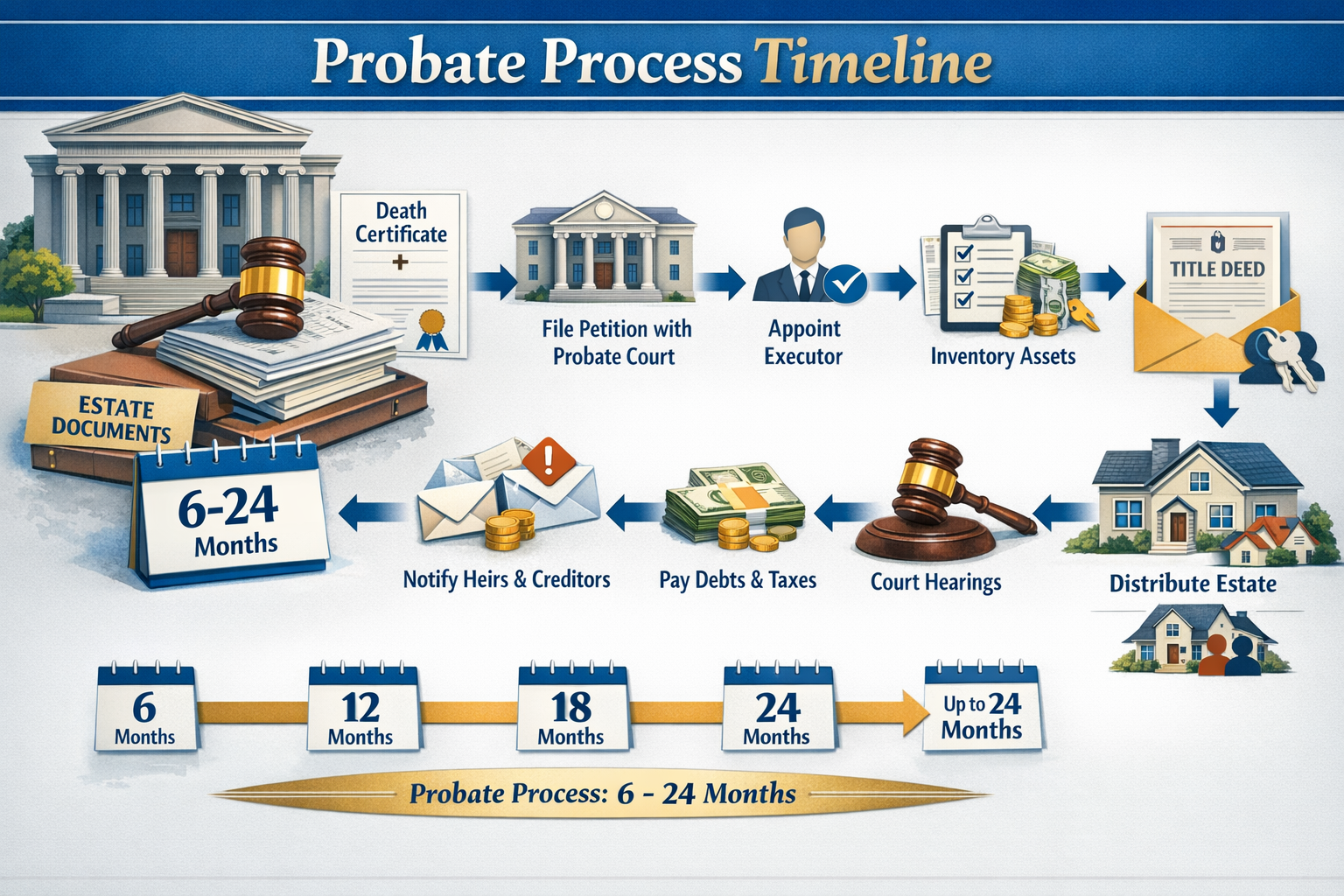
✅ Understand probate requirements in your state, as timelines range from 6-24 months and directly impact when you can legally sell
✅ Obtain a professional property valuation to make informed decisions about pricing, tax implications, and distribution among heirs
✅ Address outstanding debts and liens before listing, including property taxes, mortgages, and judgments that can complicate or delay the sale
✅ Consider all selling options including traditional sales, cash buyers, and specialized solutions for complicated situations involving multiple heirs or title problems
Understanding Your Legal Authority to Sell
Before taking any action on an inherited property, you must establish your legal right to make decisions about it. This fundamental step prevents costly mistakes and legal complications down the road.
Executor vs. Beneficiary Roles
The executor (or personal representative) manages the estate during probate. This person has legal authority to handle property matters, pay debts, and distribute assets according to the will or state law.
Beneficiaries inherit the property but typically cannot sell it until probate concludes and ownership officially transfers. Understanding which role you hold determines what actions you can take and when.
If you’re the executor, you’ll need Letters Testamentary (or Letters of Administration if there’s no will) from the probate court. This document proves your authority to act on behalf of the estate.
Probate vs. Non-Probate Property
Not all inherited property goes through probate. Properties held in certain ways bypass this process entirely:
- Living trusts transfer directly to beneficiaries without court involvement
- Joint tenancy with right of survivorship passes automatically to the surviving owner
- Transfer-on-death deeds (available in some states) allow direct transfer
- Beneficiary deeds work similarly to transfer property outside probate
Properties requiring probate include those owned solely by the deceased or as “tenants in common” without survivorship rights. Our guide on how to sell trust property explains the differences in detail.
Multiple Heirs Considerations
When several people inherit the same property, all co-owners typically must agree to sell. This shared ownership creates unique challenges:
🏠 Decision-making complexity increases with each additional heir
📋 All signatures required for listing agreements and sale documents
💰 Disagreements about price, timing, or whether to sell can stall the process
⚖️ Partition actions may be necessary if agreement cannot be reached
Approximately 35-40% of inherited properties involve multiple heirs, making this a common scenario. If you’re facing this situation, our comprehensive resource on selling inherited property with multiple owners provides helpful guidance for navigating disagreements and legal options.
Expert Tip: If one sibling wants to keep the property while others want to sell, consider a buyout arrangement where the interested party purchases the others’ shares at fair market value.
Initial Steps After Inheriting Property
The first actions you take after inheriting property set the foundation for everything that follows. These initial steps protect your investment and prevent problems from escalating.
Secure the Property Immediately
Empty properties attract vandalism, theft, and squatters. Take these protective measures within the first week:
Physical Security:
- Change all locks and secure entry points
- Install motion-sensor lighting
- Consider a security system or cameras
- Board up broken windows
- Remove valuable items for safekeeping
Utilities and Maintenance:
- Keep utilities connected to prevent freeze damage and maintain habitability
- Set thermostats to appropriate levels for the season
- Arrange for lawn care and snow removal
- Check for water leaks and address immediately
- Inspect the roof for damage
Documentation:
- Take detailed photos and videos of the property’s condition
- Document all personal property and valuables
- Create an inventory for estate records
- Note any existing damage or needed repairs
Notify Relevant Parties
Proper notification prevents service interruptions and establishes your authority:
📞 Insurance company – Transfer the homeowner’s policy to the estate or obtain vacant property insurance (standard policies may not cover unoccupied homes)
📞 Mortgage lender – If a mortgage exists, notify them of the owner’s death and discuss payment options
📞 Utility companies – Transfer accounts to the estate to maintain service
📞 HOA or condo association – Inform them of the ownership change and continue paying dues
📞 Property tax assessor – Update contact information for tax bills
📞 Post office – Set up mail forwarding to prevent important documents from being lost
Locate Important Documents
Gather all property-related paperwork to understand what you’ve inherited:
✔️ Original deed showing ownership and how title was held
✔️ Property tax statements revealing any back taxes owed
✔️ Homeowner’s insurance policies and recent claims
✔️ Mortgage documents if applicable
✔️ HOA documents including bylaws and financial statements
✔️ Recent appraisals or property valuations
✔️ Repair and maintenance records demonstrating property history
✔️ Utility bills showing average costs
✔️ Warranties for appliances, roof, HVAC, etc.
These documents provide critical information for decision-making and help identify potential issues early. If the deceased kept meticulous records, you’ll find this process much easier.
Navigating the Probate Process
For most inherited properties, probate is unavoidable. Understanding this legal process helps you plan realistically and avoid frustration with the timeline.
When Probate Is Required
Probate serves several important functions:
- Validates the will (or determines heirs if there’s no will)
- Appoints the executor to manage the estate
- Identifies and values assets including real property
- Pays outstanding debts and taxes from estate funds
- Distributes remaining assets to rightful beneficiaries
You’ll typically need probate when:
- The deceased owned property in their name alone
- The property value exceeds your state’s small estate threshold
- There are multiple heirs or potential disputes
- Creditors need to be paid from estate assets
- The will needs court validation
State-Specific Probate Requirements
Probate laws vary significantly by state. Key differences include:
Timeline Variations:
- California: 9-18 months on average
- Texas: 6-12 months for independent administration
- Florida: 6-12 months for formal administration
- New York: 9-12 months minimum
Small Estate Procedures:
Some states offer simplified processes for estates below certain values:
- California: $184,500 threshold (2023)
- Texas: $75,000 for real property
- Florida: $75,000 for summary administration
Independent vs. Supervised Administration:
- Independent allows executors to act without court approval for each transaction
- Supervised requires court permission for major decisions, extending timelines
For detailed information about selling during probate, review our guide on selling property in probate.
Timeline Expectations
Understanding realistic timelines prevents frustration and helps with planning:
| Probate Phase | Typical Duration | Key Activities |
|---|---|---|
| Filing & Appointment | 2-8 weeks | Submit will, petition court, receive Letters Testamentary |
| Creditor Notice Period | 3-6 months | Publish notice, allow creditor claims |
| Asset Inventory | 1-3 months | Identify, value, and document all estate assets |
| Debt Payment | 2-6 months | Review claims, pay valid debts and taxes |
| Property Sale (if needed) | 2-6 months | List, market, negotiate, and close sale |
| Final Distribution | 1-2 months | Distribute assets, file final accounting, close estate |
Total Timeline: 6-24 months depending on estate complexity, state requirements, and whether disputes arise.
Important: You generally cannot sell inherited property until probate concludes and the deed transfers to your name, unless the court grants specific permission for the executor to sell estate property.
Assessing the Property’s Condition and Value
Accurate property valuation informs every subsequent decision. Whether you’re determining fair distribution among heirs, setting a sale price, or calculating taxes, professional assessment is essential.
Professional Appraisal vs. CMA
Two primary valuation methods serve different purposes:
Professional Appraisal ($300-$600)
- Conducted by licensed appraiser
- Required for estate tax returns if property value exceeds exemption thresholds
- Provides defensible value for IRS purposes
- Detailed analysis of property condition and comparable sales
- Necessary for partition actions or heir disputes
Comparative Market Analysis (CMA) (Often Free)
- Prepared by real estate agents
- Analyzes recent sales of similar properties
- Estimates current market value for listing purposes
- Helps determine competitive pricing strategy
- Updated regularly as market conditions change
For estate tax purposes and legal proceedings, invest in a professional appraisal. For selling decisions, a CMA from an experienced agent provides sufficient guidance.
Identifying Needed Repairs
Walk through the property with a critical eye, or better yet, hire a professional inspector. Common issues in inherited properties include:
🔧 Deferred Maintenance:
- Aging HVAC systems
- Roof repairs or replacement
- Plumbing leaks or outdated fixtures
- Electrical system upgrades
- Foundation cracks or settling
🏚️ Neglect from Illness or Aging:
- Overgrown landscaping
- Peeling paint and cosmetic deterioration
- Accumulated clutter or hoarding situations
- Pest infestations
- Mold or water damage
💰 Cost-Benefit Analysis:
Not all repairs make financial sense before selling. Focus on:
- Safety issues (electrical, structural)
- Deal-breakers (roof leaks, major plumbing problems)
- High-ROI improvements (fresh paint, basic cleaning)
Skip expensive renovations unless your market analysis shows clear return on investment. Many buyers prefer to customize themselves, and you may not recoup renovation costs.
Determining Your Selling Strategy
Your property assessment reveals which selling approach makes sense:
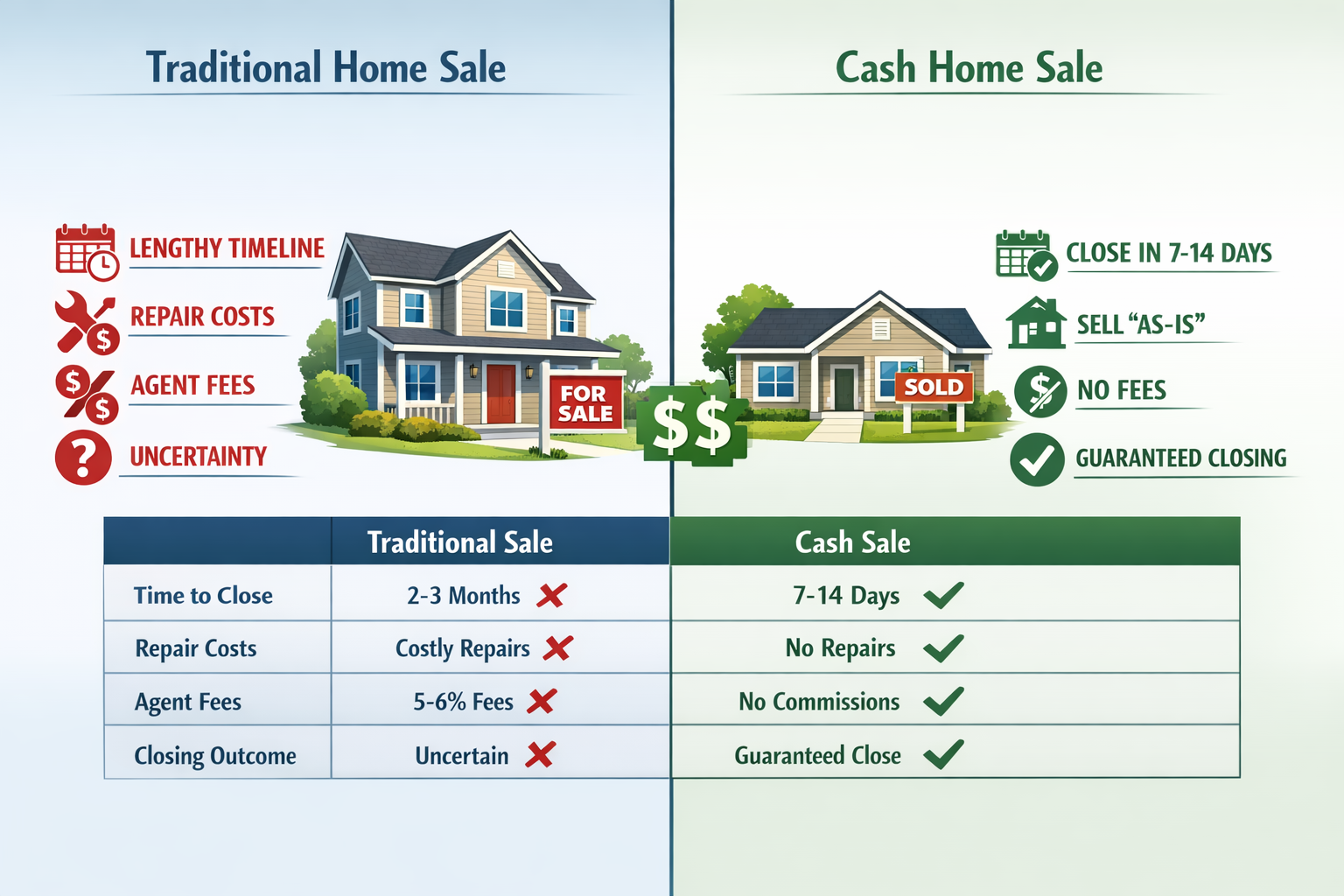
Traditional Sale (List with Agent):
Best when the property is in good condition, you have time for the process, and market conditions favor sellers. Expect 2-6 months from listing to closing.
Cash Sale to Investor:
Ideal for properties needing significant repairs, complicated title situations, or when speed is essential. Cash buyers purchase as-is and close in 7-14 days.
Auction:
Works for unique properties, competitive markets, or when you need certainty about closing timeline.
If you’re dealing with a property requiring extensive repairs or facing time pressure, consider our fast cash offer service for inherited homes.
Understanding Tax Implications
Tax consequences significantly impact your net proceeds from selling inherited property. Fortunately, federal tax law provides substantial benefits for heirs.
Estate Tax Considerations
The federal estate tax applies only to estates exceeding the exemption threshold:
- 2023: $12.92 million per individual
- 2024: $13.61 million per individual
- 2026: Scheduled to decrease to approximately $7 million unless Congress acts
Key Points:
- Most inherited properties never trigger federal estate tax
- Married couples can combine exemptions (over $27 million in 2024)
- Some states impose separate estate or inheritance taxes at lower thresholds
- Estate tax is paid by the estate before distribution, not by beneficiaries
Check your state’s specific rules, as states like Maryland, Massachusetts, and Oregon have much lower exemption thresholds.
Step-Up in Basis Explained
This powerful tax benefit eliminates capital gains on appreciation that occurred during the deceased’s ownership.
How It Works:
Without Step-Up:
- Original purchase price (1990): $100,000
- Value at death (2026): $400,000
- Your sale price (2026): $400,000
- Capital gains tax on $300,000 profit: ~$45,000-$60,000
With Step-Up:
- Your basis (value at death): $400,000
- Your sale price: $400,000
- Capital gains: $0
- Tax owed: $0
The step-up resets your “cost basis” to the fair market value on the date of death, eliminating tax on all previous appreciation. This applies to most inherited property at the federal level.
Capital Gains on Sale
You only owe capital gains tax on appreciation occurring after you inherit:
Example:
- Value at inheritance (your basis): $400,000
- Sale price one year later: $425,000
- Taxable gain: $25,000
Capital Gains Tax Rates (2026):
- 0% for low-income taxpayers
- 15% for most middle-income taxpayers
- 20% for high-income taxpayers
Holding Period:
Inherited property automatically qualifies for long-term capital gains rates (lower than ordinary income), regardless of how long you own it before selling.
Tax Reporting Requirements
When selling inherited property, you’ll need:
📄 Form 8949 – Reports capital gains or losses
📄 Schedule D – Summarizes capital gains for your tax return
📄 Estate’s Form 1041 – If the estate generated income during probate
📄 Professional appraisal – Documents your stepped-up basis
Consider consulting a tax professional, especially for high-value properties or complex estates. The cost of expert advice often saves far more than it costs.
If the inherited property has back taxes owed, understanding who’s responsible and how to resolve them is critical before selling.
Resolving Outstanding Debts and Liens
Clear title is essential for selling property. Outstanding debts and liens must be addressed before or during the sale process.
Property Tax Arrears
Unpaid property taxes create a lien that takes priority over almost all other claims. Here’s how to handle them:
Identify the Amount:
- Contact the county tax assessor’s office
- Request a payoff statement showing total owed
- Ask about penalties and interest accruing daily
- Determine if a payment plan is available
Resolution Options:
- Pay from estate funds before distributing to heirs
- Pay at closing from sale proceeds (most common)
- Negotiate with the county for reduced penalties in some cases
- Sell to a cash buyer who handles tax debt as part of the transaction
Many counties will work with heirs who communicate proactively. Ignoring property taxes can lead to tax lien foreclosure, where the county sells the property to recover unpaid taxes.
Our detailed guide on selling property with tax debt explains your options and rights.
Existing Mortgages
If the deceased had a mortgage, several scenarios may apply:
Due-on-Sale Clause:
Most mortgages contain language requiring full payment when ownership transfers. However, federal law (Garn-St. Germain Act) provides exceptions for inherited property, allowing heirs to assume the mortgage.
Your Options:
- Assume the mortgage and continue payments (if you’re keeping the property)
- Pay off the mortgage from estate funds or sale proceeds
- Sell the property and pay the mortgage at closing
- Short sale if the property is underwater (worth less than mortgage balance)
Important: Continue making mortgage payments during probate to avoid foreclosure. The lender can foreclose even during the probate process if payments stop.
Contact the lender immediately after inheriting to discuss options and prevent default notices.
Judgment Liens and Other Encumbrances
The deceased’s debts may have created liens against the property:
Common Lien Types:
- Judgment liens from lawsuits
- Mechanic’s liens from unpaid contractor work
- HOA liens from unpaid association dues
- IRS tax liens from unpaid federal taxes
- Child support liens from unpaid obligations
Resolution Process:
- Title search reveals all recorded liens
- Verify validity – some liens may be expired or invalid
- Negotiate payoffs – creditors often accept less than full amount
- Pay at closing from sale proceeds
- Dispute invalid liens through legal channels
Selling a house with liens is possible, but they must be satisfied from sale proceeds before you receive any money. Learn more about selling a house with a lien in our comprehensive guide.
Working with Title Companies
Title companies play a crucial role in identifying and resolving title issues:
Their Services Include:
- Comprehensive title search revealing all liens and encumbrances
- Title insurance protecting buyers from undiscovered claims
- Escrow services holding funds until all conditions are met
- Lien payoff coordination ensuring proper release of claims
- Recording services filing the new deed
Choose an experienced title company familiar with inherited property transactions. They’ll identify issues early and propose solutions, making the closing process smoother.
Preparing the Property for Sale
How you prepare the property directly impacts sale price, time on market, and the type of buyers you attract.
Clean-Out and Estate Sale
Most inherited properties contain a lifetime of possessions. Addressing personal property is both emotional and practical:
Systematic Approach:
Step 1: Family Distribution
- Allow heirs to select meaningful items
- Set clear deadlines to prevent indefinite delays
- Document valuable items for estate records
- Consider professional appraisal for antiques or collectibles
Step 2: Estate Sale or Donation
- Hire estate sale professionals for valuable contents
- Donate usable items to charity (potential tax deduction)
- Recycle or dispose of remaining items responsibly
- Keep receipts for tax purposes
Step 3: Professional Clean-Out
- Hire junk removal services for remaining items
- Deep clean the property after removal
- Address any hoarding situations with specialized services
- Budget $500-$5,000 depending on property size and contents
Timeline: Allow 2-6 weeks for thorough clean-out, longer for extensive estates.
Repairs and Improvements
Strategic improvements maximize value, but over-improving wastes money:
High-Value Improvements:
- ✅ Deep cleaning and professional odor removal
- ✅ Fresh neutral paint throughout
- ✅ Basic landscaping and curb appeal
- ✅ Minor repairs (leaky faucets, broken fixtures)
- ✅ Professional carpet cleaning or replacement
Usually Not Worth It:
- ❌ Kitchen or bathroom renovations
- ❌ New flooring throughout (unless severely damaged)
- ❌ Roof replacement (unless actively leaking)
- ❌ Major landscaping projects
- ❌ High-end finishes or custom features
The “As-Is” Alternative:
If repairs seem overwhelming or financially questionable, selling as-is to a cash buyer eliminates this burden entirely. You avoid repair costs, contractor coordination, and renovation risk.
Companies like Sure Path Property Solutions specialize in purchasing inherited properties in any condition, handling all repairs after closing.
Staging Considerations
Staging helps buyers envision themselves in the space:
Minimal Staging (Budget-Friendly):
- Remove personal items and family photos
- Declutter all surfaces and closets
- Arrange existing furniture to showcase space
- Add fresh flowers or plants
- Maximize natural light
Professional Staging ($1,500-$5,000):
- Rented furniture and decor
- Professional design expertise
- Significant impact in competitive markets
- Particularly valuable for vacant properties
Virtual Staging ($50-$150 per room):
- Digitally add furniture to listing photos
- Cost-effective alternative to physical staging
- Disclose that photos are virtually staged
- Best for online marketing impact
Staged homes typically sell 73% faster and for 5-15% more than unstaged properties, according to the National Association of Realtors.
Choosing Your Selling Method
The right selling approach depends on your timeline, property condition, and financial goals.
Traditional Real Estate Agent
Best For:
- Properties in good condition
- Competitive markets with strong buyer demand
- Sellers who can wait 2-6 months for closing
- Situations where maximizing price is the priority
Advantages:
- ✅ Access to MLS and maximum buyer exposure
- ✅ Professional marketing and negotiation
- ✅ Agent handles showings and paperwork
- ✅ Potentially higher sale price
Disadvantages:
- ❌ 5-6% commission reduces net proceeds
- ❌ Longer timeline from listing to closing
- ❌ May require repairs or improvements
- ❌ Showings and open houses create inconvenience
- ❌ No guarantee of sale
Agent Selection Tips:
- Interview 3-5 agents with inherited property experience
- Ask about their marketing plan specifically for your property
- Request references from recent estate sales
- Compare commission rates and services
- Verify their knowledge of probate sales if applicable
Cash Buyer/Investor
Best For:
- Properties needing significant repairs
- Sellers facing time pressure or financial stress
- Complicated situations (liens, title issues, multiple heirs)
- Avoiding the hassle of traditional sales process
Advantages:
- ✅ Quick closing (often 7-14 days)
- ✅ No repairs or improvements needed
- ✅ No commissions or closing costs
- ✅ Certainty of closing (no financing contingencies)
- ✅ Solutions for complicated title situations
Disadvantages:
- ❌ Lower purchase price (typically 60-80% of retail value)
- ❌ Must carefully vet buyers to avoid scams
- ❌ Less competitive bidding
When Cash Buyers Make Sense:
- Property needs $30,000+ in repairs
- You’re facing foreclosure or tax sale
- Multiple heirs want quick resolution
- Property has title issues or liens
- You live far from the inherited property
Sure Path Property Solutions offers cash offers for inherited property with transparent pricing and helpful guidance throughout the process.
For Sale By Owner (FSBO)
Best For:
- Sellers with real estate experience
- Properties in high-demand areas
- Those willing to handle all aspects of the sale
- Situations where saving commission justifies extra work
Advantages:
- ✅ Save 5-6% in commission
- ✅ Complete control over process
- ✅ Direct communication with buyers
Disadvantages:
- ❌ Limited marketing reach (no MLS access in most areas)
- ❌ Time-consuming (showings, negotiations, paperwork)
- ❌ Legal and liability risks without professional guidance
- ❌ May sell for less due to limited exposure
- ❌ Difficult to negotiate effectively with experienced buyer agents
FSBO Success Rate: Only about 7% of home sales are FSBO, and they typically sell for 5-10% less than agent-listed properties, according to NAR data.
Auction
Best For:
- Unique or high-value properties
- Situations requiring quick, certain sale
- Competitive markets with strong buyer interest
- Properties with multiple interested parties
Advantages:
- ✅ Defined timeline and closing date
- ✅ Competitive bidding may drive price up
- ✅ Creates urgency among buyers
- ✅ Particularly effective for unique properties
Disadvantages:
- ❌ Auction fees (5-10% of sale price)
- ❌ Risk of selling below market value
- ❌ Extensive marketing required before auction
- ❌ May attract only investors, not retail buyers
Auctions work best for properties that are difficult to value through traditional methods or when multiple heirs want guaranteed resolution by a specific date.
Marketing and Selling the Property
Once you’ve chosen your selling method, effective marketing and negotiation determine your success.
Pricing Strategy
Accurate pricing is critical—too high and the property sits unsold, too low and you leave money on the table.
Pricing Factors:
- Recent comparable sales in the neighborhood
- Current market conditions (buyer’s vs. seller’s market)
- Property condition and needed repairs
- Unique features or drawbacks
- Seasonal timing
- Days on market for similar properties
Pricing Approaches:
Competitive Pricing (At Market Value):
Generates maximum interest and often multiple offers in strong markets. Properties priced correctly typically sell within 30-60 days.
Aggressive Pricing (Below Market):
Creates urgency and may trigger bidding wars. Effective in competitive markets but risks undervaluing the property.
Premium Pricing (Above Market):
Allows room for negotiation but may result in extended market time and eventual price reductions. Works only for exceptional properties in strong markets.
Price Reduction Strategy:
If the property doesn’t sell within 30-45 days, consider a price reduction of 3-5%. Multiple small reductions are less effective than one significant adjustment.
Professional Photography
Quality photos are essential—93% of buyers search online first, and listings with professional photos receive 61% more views.
Investment: $150-$400 for professional photography
Return: Properties with professional photos sell faster and for higher prices
Essential Shots:
- Exterior from multiple angles showcasing curb appeal
- All main living spaces with wide-angle lenses
- Kitchen and bathrooms with excellent lighting
- Unique features or selling points
- Outdoor spaces and landscaping
- Twilight shots for dramatic appeal
Consider adding:
- Drone photography for larger properties or unique locations
- Virtual tours allowing buyers to “walk through” online
- Video tours showcasing flow and space
Disclosure Requirements
Sellers must disclose known material defects. Requirements vary by state, but common disclosures include:
Typically Required:
- Known structural issues or foundation problems
- Roof age and known leaks
- Plumbing or electrical problems
- Environmental hazards (lead paint, asbestos, mold)
- Past flooding or water damage
- Pest infestations or damage
- HOA information and restrictions
- Boundary disputes or easements
Inherited Property Considerations:
Many states allow heirs to disclose limited knowledge: “Seller has not occupied the property and has no personal knowledge of defects.”
However, you must still disclose:
- Issues discovered during your ownership
- Information revealed by inspections or appraisals
- Problems disclosed in estate documents
- Obvious visible defects
Legal Protection:
Honest disclosure protects you from post-sale liability. Buyers who discover undisclosed defects can sue for damages, rescind the sale, or demand repairs.
When in doubt, disclose. Transparency builds trust and prevents legal problems.
Negotiating Offers
When offers arrive, evaluate them comprehensively, not just on price:
Key Offer Components:
| Factor | Considerations |
|---|---|
| Purchase Price | Highest isn’t always best if other terms are unfavorable |
| Financing Type | Cash > Conventional > FHA > VA (in terms of closing certainty) |
| Contingencies | Fewer contingencies mean more certainty |
| Closing Timeline | Match your needs (quick vs. flexible) |
| Earnest Money | Larger deposits show serious commitment |
| Inspection Period | Shorter periods reduce uncertainty |
| Included Items | Clarify what stays with the property |
Multiple Offers:
If you receive several offers, you can:
- Accept the best offer outright
- Counter multiple buyers simultaneously
- Request “highest and best” final offers
- Negotiate specific terms with your preferred buyer
Counteroffers:
Don’t be afraid to counter. Most buyers expect negotiation. Focus on:
- Price adjustments based on market analysis
- Closing date that works for your timeline
- Reducing or eliminating contingencies
- Increasing earnest money deposit
- Repair credits vs. actual repairs
All-Heir Agreement:
If multiple heirs own the property, all must agree to accept an offer. Establish decision-making criteria in advance to prevent delays when offers arrive.
Closing the Sale
The closing process finalizes the transfer of ownership and distributes proceeds.
Title Work and Escrow
Title Search and Insurance:
The title company conducts a comprehensive search of public records to:
- Verify legal ownership
- Identify all liens and encumbrances
- Discover easements or restrictions
- Find potential title defects
Title Insurance:
Protects the buyer (and their lender) from title defects discovered after closing. The seller typically pays for the owner’s policy in many states, though this varies by location.
Escrow Process:
An escrow agent (often the title company) acts as a neutral third party:
- Holds the buyer’s earnest money deposit
- Coordinates with lenders for financing
- Ensures all conditions are met before closing
- Distributes funds to appropriate parties
- Records the new deed
Final Walk-Through
Buyers typically conduct a final walk-through 24-48 hours before closing to verify:
- Property condition hasn’t changed since offer acceptance
- Agreed-upon repairs were completed
- All included items remain with the property
- Utilities are functional
- Property is vacant and clean (if agreed)
Seller Responsibilities:
- Ensure property is “broom clean”
- Remove all personal belongings
- Complete agreed repairs
- Leave appliances, fixtures, and items specified in contract
- Provide keys, garage openers, and access codes
Closing Costs
Sellers typically pay several closing costs:
Common Seller Costs:
- Real estate commission (5-6% of sale price)
- Title insurance (varies by state and price)
- Transfer taxes or stamp duties (state/local specific)
- HOA transfer fees and prorated dues
- Property tax prorations
- Payoff of existing liens and mortgages
- Attorney fees (if applicable)
- Recording fees
Example on $300,000 Sale:
- Commission (6%): $18,000
- Title insurance: $1,500
- Transfer taxes: $1,500
- Prorated property taxes: $800
- Lien payoffs: Variable
- Total: $21,800+ (7.3% of sale price)
Net proceeds = Sale price – Closing costs – Outstanding debts
Distribution to Heirs
After closing, remaining proceeds are distributed according to:
- The will’s specifications
- State intestacy laws (if no will)
- Court orders (in probate sales)
- Heir agreements (if all heirs agreed to different terms)
Distribution Process:
- Pay all estate debts from proceeds first
- Satisfy any liens not paid at closing
- Reimburse heirs for property expenses during ownership
- Distribute remaining funds according to ownership percentages
- Obtain signed receipts from all heirs
- File final accounting with probate court if required
Tax Considerations:
Each heir reports their share of any capital gains on their personal tax return. The estate may need to file a final estate tax return if applicable.
Dispute Prevention:
Provide all heirs with:
- Complete accounting of all expenses
- Closing statement showing proceeds
- Explanation of distribution calculations
- Receipts for all expenditures
Transparency prevents misunderstandings and potential legal challenges.
Special Situations and Challenges
Inherited property sales often involve complications requiring specialized solutions.
Selling During Probate
In some states and situations, you can sell property before probate concludes:
Court-Supervised Sales:
- Executor petitions court for permission to sell
- Court may require appraisal and minimum price
- Sale must be in the estate’s best interest
- Proceeds held in estate account until probate concludes
- Court must approve final sale terms
Advantages:
- Eliminates ongoing property expenses
- Prevents property deterioration
- Generates funds to pay estate debts
- Resolves heir disagreements about the property
Process:
- Executor files petition to sell real property
- Court hearing scheduled (heirs notified)
- Court grants authority with specific conditions
- Property marketed and sold
- Court confirms sale before closing
- Proceeds deposited into estate account
Our guide on selling probate property fast explains strategies for navigating this process efficiently.
Dealing with Disagreements Among Heirs
Multiple heirs rarely agree on everything. Common disputes include:
Disagreement Types:
- Whether to sell or keep the property
- Listing price and acceptable offers
- Timing of the sale
- Distribution of proceeds
- Who pays for repairs or expenses
- One heir living in the property
Resolution Strategies:
1. Mediation:
- Neutral third party facilitates discussion
- Less expensive than litigation
- Preserves family relationships
- Often required before court action
2. Buyout:
- One heir purchases others’ shares at fair market value
- Requires appraisal to establish value
- Buying heir needs financing or cash
- Clean resolution allowing one heir to keep property
3. Partition Action:
- Legal proceeding forcing sale when heirs can’t agree
- Court orders property sold and proceeds divided
- Expensive (legal fees reduce proceeds)
- Last resort when other methods fail
4. Cash Buyer Solution:
- Sell quickly to investor for fair cash price
- Eliminates ongoing disputes and expenses
- All heirs receive their share promptly
- Avoids lengthy court proceedings
If you’re facing heir disagreements, our resource on selling when siblings won’t cooperate provides helpful guidance and legal options.
Properties with Title Issues
Title problems complicate or prevent traditional sales:
Common Title Issues:
- Missing heirs who must sign off on sale
- Breaks in chain of title from past transfers
- Unpaid liens from previous owners
- Boundary disputes with neighbors
- Undisclosed easements or restrictions
- Errors in public records
Resolution Approaches:
Quiet Title Action:
- Legal proceeding to establish clear ownership
- Resolves disputes and clouds on title
- Costs $2,000-$5,000 in legal fees
- Takes 3-6 months to complete
Title Curative Work:
- Track down missing heirs or signatures
- Obtain releases for satisfied liens
- Correct errors in recorded documents
- May involve affidavits or court orders
Cash Buyer Alternative:
Many title issues that prevent traditional sales don’t prevent cash sales to experienced investors. Companies like Sure Path Property Solutions specialize in properties with complicated titles and can often close despite issues that would stop conventional buyers.
Out-of-State Inherited Property
Managing inherited property from a distance creates unique challenges:
Complications:
- Difficulty inspecting and maintaining property
- Coordinating repairs with contractors remotely
- Managing showings and open houses
- Understanding local market conditions
- Complying with state-specific probate laws
- Higher risk of vandalism or deterioration
Solutions:
Hire Local Professionals:
- Property manager to oversee maintenance
- Real estate attorney familiar with state law
- Local real estate agent with market expertise
- Contractors for needed repairs
Remote Selling Options:
- Virtual closings (available in most states)
- Power of attorney for local representative
- Digital document signing
- Cash buyers who handle everything remotely
Fast Sale Consideration:
The costs and hassles of managing distant property often make quick cash sales attractive, even at a discount to retail value. Selling fast eliminates:
- Ongoing travel expenses
- Property insurance and taxes
- Maintenance and utilities
- Liability risks
- Time and stress
Sure Path Property Solutions works with out-of-state heirs regularly, handling the entire process remotely and providing helpful solutions for complicated situations.
Working with Professional Help
Complex inherited property situations benefit from expert guidance.
When to Hire an Attorney
Consider legal representation for:
Probate Matters:
- Contested wills or heir disputes
- Complex estates with significant assets
- Missing heirs or unknown beneficiaries
- Creditor claims against the estate
Property Issues:
- Title defects or ownership questions
- Partition actions among co-owners
- Lien disputes or priority questions
- Boundary disputes with neighbors
Tax Concerns:
- Estates exceeding federal or state exemptions
- Complex capital gains situations
- Trust administration questions
Attorney Costs:
- Hourly rates: $200-$500 depending on location and expertise
- Flat fees: $2,000-$5,000 for straightforward probate
- Percentage of estate: 2-5% for full estate administration
The investment in legal guidance prevents costly mistakes and provides peace of mind during complex transactions.
Tax Professional Guidance
CPAs and tax attorneys help with:
Estate Tax Planning:
- Determining if estate tax returns are required
- Maximizing deductions and minimizing tax liability
- Advising on timing of sales for tax efficiency
Capital Gains Strategy:
- Documenting stepped-up basis
- Calculating taxable gains on sale
- Advising on holding periods and timing
Income Tax Reporting:
- Preparing estate income tax returns
- Reporting individual heir distributions
- Coordinating with estate attorney
Cost: $150-$400 per hour, or $500-$2,000 for complete estate tax preparation
For estates over $1 million or with complicated tax situations, professional tax guidance is essential.
Real Estate Professionals
The right real estate agent makes the selling process smoother:
Look For:
- Experience with inherited property and estate sales
- Knowledge of probate sales if applicable
- Strong marketing skills and local market expertise
- Excellent communication and responsiveness
- References from past estate sales
Questions to Ask:
- How many inherited properties have you sold?
- What’s your average days on market for estate sales?
- How do you market properties that need work?
- Can you recommend contractors for needed repairs?
- How do you handle multiple heirs with different opinions?
- What’s your commission structure and what services are included?
Red Flags:
- Pressure to list immediately without proper preparation
- Unrealistic price estimates to win the listing
- Lack of specific marketing plan
- Poor communication or unavailability
- No experience with estate or probate sales
Sure Path Property Solutions: Expert Service for Complex Situations
When inherited property involves complications—multiple heirs, title issues, liens, back taxes, or needed repairs—Sure Path Property Solutions provides helpful solutions and trustworthy service.
Our Specialized Services:
✅ Cash offers within 24-48 hours for inherited properties in any condition
✅ We handle complicated situations including multiple heirs, probate sales, title issues, and outstanding liens
✅ No repairs needed – we buy properties as-is and coordinate all work after closing
✅ Fast closing in as little as 7-14 days when you need quick resolution
✅ Friendly and caring approach that respects the emotional nature of inherited property
✅ Expert service coordinating with counties, title professionals, and attorneys to resolve complex issues
✅ Transparent pricing with no hidden fees or last-minute surprises
We’re industry experts in:
- Properties with back taxes or tax liens
- Multiple heir situations requiring quick resolution
- Title defects and ownership complications
- Properties with judgments or other liens
- Out-of-state inherited property
- Probate sales requiring court approval
Our helpful guidance walks you through every step, providing practical solutions for even the most complicated inherited property situations.
Selling Inherited Property Steps: Complete Checklist
Use this comprehensive checklist to track your progress through the inherited property sale process:
☑️ Immediate Steps (Week 1-2)
- Secure the property (change locks, check security)
- Maintain utilities and insurance
- Document property condition with photos/video
- Locate important documents (deed, tax records, insurance)
- Notify insurance company and relevant parties
- Determine your legal authority (executor vs. beneficiary)
- Contact probate attorney if needed
☑️ Legal and Administrative (Week 2-8)
- File probate petition (if required)
- Obtain Letters Testamentary or Administration
- Notify creditors per state requirements
- Order professional appraisal
- Conduct title search to identify liens
- Review property tax status and arrears
- Contact mortgage lender (if applicable)
- Communicate with all heirs about plans
☑️ Property Assessment (Week 4-8)
- Inspect property thoroughly
- Identify needed repairs and estimate costs
- Obtain Comparative Market Analysis
- Decide on selling strategy (traditional vs. cash vs. FSBO)
- Create budget for repairs and selling costs
- Determine timeline and priorities
☑️ Property Preparation (Week 6-12)
- Coordinate family distribution of personal items
- Conduct estate sale or donate items
- Hire junk removal for remaining items
- Complete necessary repairs
- Deep clean property
- Address landscaping and curb appeal
- Consider staging (if listing traditionally)
☑️ Marketing and Sale (Week 8-20)
- Select real estate agent or cash buyer
- Arrange professional photography
- Set listing price based on market analysis
- Complete disclosure documents
- List property (if traditional sale)
- Review and negotiate offers
- Obtain all heir signatures on acceptance
- Open escrow
☑️ Closing Process (Week 16-24)
- Coordinate with title company
- Review title report and resolve issues
- Complete agreed repairs
- Conduct final walk-through
- Review closing documents
- Attend closing or arrange remote signing
- Receive and distribute proceeds
- File final accounting with probate court
- Prepare tax documentation for heirs
☑️ Post-Sale Tasks
- Cancel property insurance
- Transfer or cancel utilities
- File capital gains on tax returns
- Distribute proceeds to all heirs
- Obtain signed receipts from heirs
- Close probate estate (if applicable)
- Retain records for tax purposes (7 years)
Frequently Asked Questions
How long does it take to sell inherited property?
Timeline varies significantly based on whether probate is required. With probate, expect 6-24 months from death to closing. Without probate (property in trust or joint tenancy), you can sell as soon as you’re ready—potentially 30-90 days for traditional sale or 7-14 days for cash sale.
Can I sell inherited property before probate is complete?
In most cases, no—you must wait until probate concludes and the deed transfers to your name. However, executors can petition the court for permission to sell during probate if it serves the estate’s best interest. Court-supervised sales require approval of terms before closing.
Do I have to pay taxes when I sell inherited property?
You’ll owe capital gains tax only on appreciation occurring after you inherited. The “step-up in basis” eliminates tax on appreciation during the deceased’s ownership. Most inherited property sales generate minimal or no capital gains if sold relatively soon after inheritance. Estate tax applies only to estates exceeding $13.61 million (2024).
What if my siblings disagree about selling?
When multiple heirs can’t agree, options include mediation, one heir buying out the others, or filing a partition action forcing court-ordered sale. Cash buyers can provide quick resolution that satisfies all parties, eliminating ongoing disputes and expenses. Legal action should be a last resort due to costs and family relationship damage.
Can I sell inherited property with a mortgage?
Yes. The mortgage must be paid from sale proceeds at closing. You can also assume the mortgage if you plan to keep the property—federal law allows heirs to take over mortgages without triggering due-on-sale clauses. Continue making payments during probate to avoid foreclosure.
What happens to property liens when I inherit?
Liens stay with the property, not the person. You inherit the property subject to existing liens, which must be satisfied before or at closing. The estate (not heirs personally) is responsible for paying liens from sale proceeds or estate assets.
Should I make repairs before selling inherited property?
It depends on your market, timeline, and financial situation. Strategic improvements (cleaning, painting, minor repairs) often provide good return. Major renovations rarely make financial sense. If the property needs significant work, selling as-is to a cash buyer may net more after accounting for repair costs, holding costs, and market risk.
How do I determine fair market value for inherited property?
Obtain both a professional appraisal (for estate tax and legal purposes) and a Comparative Market Analysis from a real estate agent (for selling decisions). The appraisal establishes your stepped-up basis for tax purposes, while the CMA guides pricing strategy based on current market conditions.
Conclusion: Moving Forward with Confidence
Selling inherited property involves numerous steps, potential complications, and emotional challenges. The Selling Inherited Property Steps: Complete Checklist provided in this guide gives you a clear roadmap from securing the property immediately after inheritance through closing the sale and distributing proceeds.
Key principles for success:
🎯 Take action promptly to secure the property and prevent deterioration
📋 Understand your legal authority and follow proper probate procedures
💰 Get professional valuations to make informed decisions about pricing and taxes
🔍 Address title issues early before they complicate or delay the sale
🤝 Communicate clearly with all heirs to prevent disputes and delays
⚖️ Consider all selling options including traditional sales and cash buyers for complicated situations
📞 Seek expert guidance from attorneys, tax professionals, and real estate specialists when needed
Whether your inherited property is a straightforward estate or involves complications like multiple heirs, back taxes, liens, or title issues, helpful solutions exist. The right approach depends on your specific situation, timeline, and goals.
Ready to sell your inherited property?
If you’re facing a complicated inheritance situation and want a fast, fair solution without the hassles of traditional selling, Sure Path Property Solutions provides expert service and trustworthy guidance. We specialize in inherited properties with challenges that make traditional sales difficult—multiple heirs, probate complications, title issues, liens, back taxes, or properties needing extensive repairs.
Get your cash offer in 24-48 hours:
- No repairs needed—we buy as-is
- Fast closing in 7-14 days
- We handle all complications
- Friendly, caring service during a difficult time
- Transparent pricing with no hidden fees
Contact Sure Path Property Solutions today for a no-obligation consultation. Our industry experts will review your situation and provide helpful guidance on the best path forward for your inherited property.
Remember: selling inherited property doesn’t have to be overwhelming. With the right information, professional support, and clear action plan, you can navigate this process successfully and move forward with confidence.
Sure Path is a family-owned, curative-title cash buyer. We handle the paperwork and pay what’s owed at closing — no fees, no repairs, no pressure.