Owning property with someone else can seem like a simple arrangement—until it isn’t. When two siblings inherit their parents’ home, when spouses purchase real estate together, or when business partners invest in property, joint tenancy often appears to be the straightforward solution. But what happens when one owner wants to sell and the other doesn’t? What if creditors come calling? What if relationships deteriorate or circumstances change? Understanding Joint Tenancy Problems: Common Issues & How to Resolve Them becomes critical when these situations arise, and knowing your options can mean the difference between a smooth resolution and years of legal battles.
Joint tenancy is one of the most common forms of property co-ownership in the United States, yet it’s also one of the most misunderstood. Many property owners don’t fully grasp the implications of this ownership structure until a problem emerges. Whether dealing with disagreements between co-owners, financial complications, or the need to sever the arrangement, these challenges require expert guidance and practical solutions.
Key Takeaways
- Joint tenancy creates automatic transfer of ownership to surviving owners upon death, which can complicate estate planning and create unintended inheritance consequences
- Any co-owner can force a sale through partition action lawsuits, even when other owners object, making it essential to understand your legal rights
- Creditor claims against one owner can jeopardize the entire property, requiring proactive protection strategies
- Severing joint tenancy is possible through various methods, but must be done correctly to avoid legal complications and title issues
- Professional guidance from industry experts helps navigate complex co-ownership disputes and find helpful solutions that protect everyone’s interests
Understanding Joint Tenancy: The Foundation of Co-Ownership
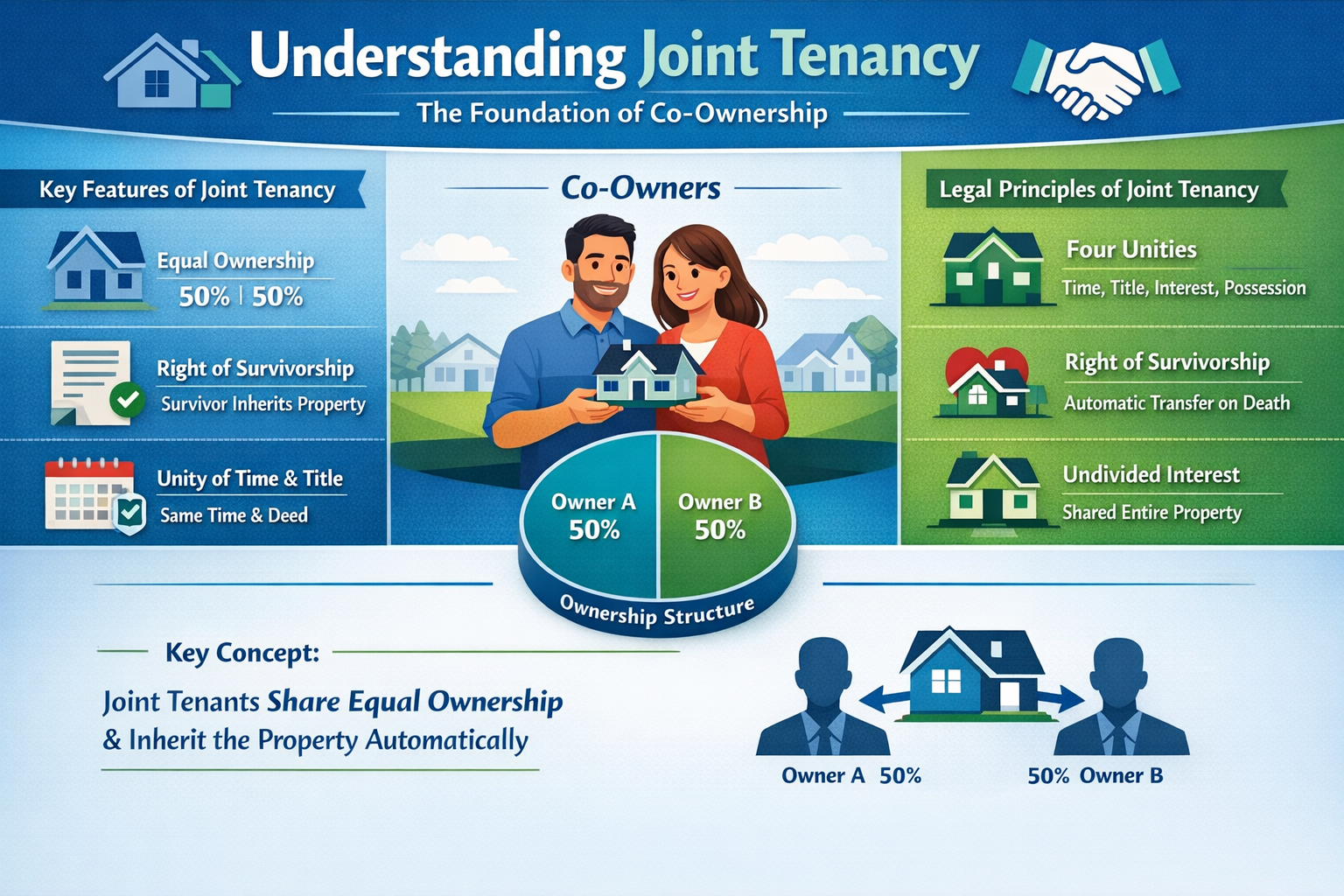
Joint tenancy represents a specific form of property ownership where two or more people hold equal, undivided interests in real estate. This arrangement comes with four essential characteristics, often called the “four unities”: unity of time, title, interest, and possession.
Unity of time means all owners must acquire their interest simultaneously. Unity of title requires all owners to receive their interest through the same deed or document. Unity of interest ensures each owner holds an equal share—you can’t have one owner with 60% and another with 40% in true joint tenancy. Unity of possession grants each owner equal rights to use and occupy the entire property.
The defining feature that sets joint tenancy apart from other ownership forms is the right of survivorship. When one joint tenant passes away, their interest automatically transfers to the surviving owners, bypassing probate entirely. While this can offer convenience, it also creates significant complications that many property owners don’t anticipate.
How Joint Tenancy Differs from Other Ownership Types
Joint tenancy isn’t the only way to co-own property. Understanding the alternatives helps clarify why certain problems arise:
Tenancy in Common allows owners to hold unequal shares and doesn’t include the right of survivorship. When an owner dies, their share passes through their estate to heirs, not automatically to co-owners.
Tenancy by the Entirety is available only to married couples in certain states and provides additional creditor protection. Neither spouse can unilaterally sever the tenancy or force a sale.
Community Property exists in nine states and treats property acquired during marriage as equally owned, but without the automatic right of survivorship unless specifically designated as “community property with right of survivorship.”
Each structure has advantages and disadvantages. Joint tenancy’s automatic transfer feature makes it popular, but this same characteristic creates many of the problems property owners face.
Common Joint Tenancy Problems That Property Owners Face
The reality of joint tenancy ownership often diverges sharply from expectations. What seemed like a simple arrangement can quickly become complicated when life circumstances change. Let’s explore the most frequent challenges that emerge.
🏠 Disagreements Between Co-Owners
Perhaps the most common issue involves fundamental disagreements about the property. One owner wants to sell; the other wants to keep it. One owner wishes to rent the property; another opposes becoming a landlord. These conflicts intensify when:
- Family dynamics shift after inheriting property from parents
- Financial circumstances diverge between co-owners over time
- Personal relationships deteriorate between spouses, siblings, or business partners
- Different visions emerge for the property’s use or future
Consider a typical scenario: Two sisters inherit their childhood home as joint tenants. One sister lives across the country and needs cash for medical expenses. The other lives nearby and wants to preserve the family home for sentimental reasons. Neither can move forward without the other’s cooperation, creating a stalemate that strains both their relationship and their finances.
When co-owners can’t agree on major decisions, the property often sits in limbo. Maintenance gets deferred, taxes may go unpaid, and opportunities are lost. This deadlock represents one of the most frustrating aspects of joint tenancy.
💰 Financial Complications and Unequal Contributions
Joint tenancy assumes equal ownership, but real life rarely works so neatly. Financial disputes commonly arise when:
- One owner pays more toward the mortgage, taxes, or maintenance
- Co-owners have unequal financial resources or income levels
- One owner occupies the property while others don’t
- Improvement costs are borne by only some owners
The legal structure doesn’t account for these disparities. Even if one owner pays 90% of all expenses, they still own only an equal share with co-owners who contribute nothing. This inequity breeds resentment and conflict.
Example: Three siblings own a vacation property as joint tenants. One sibling uses the property every summer and pays for all maintenance and utilities. The other two rarely visit but still own equal shares. When the property-using sibling suggests selling, the others refuse, seeing it as a free asset. The contributing sibling feels exploited, while the others feel entitled to their inheritance.
These financial imbalances create tension that can escalate into legal battles, especially when trying to sell inherited property with multiple owners.
⚖️ Creditor Claims and Liability Issues
One of the most dangerous aspects of joint tenancy involves creditor vulnerability. If one co-owner faces financial trouble, all owners may suffer consequences:
- Judgment liens against one owner can attach to the entire property
- Creditors can force partition sales to collect debts
- Tax liens from one owner’s unpaid obligations can cloud the title
- Bankruptcy by one owner can trigger forced sales
The property becomes collateral for debts that other owners didn’t incur. This creates significant risk, particularly when co-owners don’t maintain close communication about their financial situations.
A creditor holding a judgment against one joint tenant can place a lien on that person’s interest in the property. While the lien doesn’t immediately affect other owners’ interests, it can force a partition action to satisfy the debt. Suddenly, all owners face an unwanted sale because of one person’s financial problems.
Understanding how liens affect property sales becomes essential when dealing with these complications.
🔄 Right of Survivorship Complications
The automatic transfer feature that makes joint tenancy attractive also creates unexpected problems:
- Unintended inheritance when property passes to co-owners instead of intended heirs
- Estate planning conflicts that bypass carefully constructed wills and trusts
- Tax complications involving stepped-up basis and estate tax calculations
- Family disputes when surviving joint tenants receive property that other family members expected to inherit
Consider this scenario: An elderly parent adds one adult child to the property deed as a joint tenant to avoid probate. When the parent dies, that one child automatically inherits the entire property, excluding siblings who expected equal shares. The parent’s will stating all children should share equally becomes irrelevant—the joint tenancy supersedes it.
This situation creates family rifts and potential legal challenges. The excluded siblings may claim undue influence or challenge the parent’s capacity when creating the joint tenancy. What was intended as a simple estate planning tool becomes a source of lasting family conflict.
📋 Title and Legal Complications
Joint tenancy can create various title issues that complicate property transactions:
- Unclear ownership when joint tenancy was improperly created or documented
- Title defects from missing signatures or improper severance attempts
- Divorce complications when spouses hold property as joint tenants
- Probate confusion when it’s unclear whether right of survivorship applies
These problems often surface during refinancing or sale attempts. Title companies may refuse to insure the property until ownership questions are resolved. What should be a straightforward transaction becomes delayed or derailed entirely.
Title problems at closing can prevent property sales and require extensive legal work to resolve.
🚫 Inability to Sell or Refinance
One of the most frustrating joint tenancy problems involves the inability to take action without unanimous consent:
- All owners must agree to sell the property
- All owners must sign refinancing documents
- Any owner can block transactions the others want
- Deadlock situations prevent any forward movement
This veto power each owner holds can paralyze decision-making. Even when selling makes obvious financial sense, one uncooperative owner can prevent it. This becomes particularly problematic when:
- One owner becomes incapacitated or unreachable
- One owner acts out of spite or revenge
- One owner has unrealistic expectations about property value
- One owner simply refuses to engage with the situation
Property owners facing these challenges often wonder about their options, particularly whether a jointly owned property can be sold by one owner without the others’ consent.
How to Resolve Joint Tenancy Problems: Practical Solutions
Fortunately, property owners aren’t trapped in problematic joint tenancy situations. Multiple resolution paths exist, ranging from cooperative agreements to legal remedies. The best approach depends on the specific circumstances, the relationship between co-owners, and the urgency of the situation.
🤝 Communication and Negotiation: The First Step
Before pursuing legal remedies, attempting direct resolution through communication offers the best chance for a satisfactory outcome. This approach:
- Preserves relationships between co-owners
- Saves money compared to litigation
- Allows creative solutions tailored to everyone’s needs
- Resolves issues faster than court proceedings
Effective negotiation starts with understanding each owner’s true interests and concerns. Often, what appears to be an intractable disagreement masks underlying needs that can be addressed.
Helpful guidance from a neutral third party can facilitate these conversations. A mediator or real estate professional can help co-owners:
- Identify common ground and shared goals
- Explore options that might not be obvious
- Communicate more effectively and reduce emotional tension
- Develop creative compromises that work for everyone
For example, if one owner needs cash while another wants to keep the property, a buyout arrangement might satisfy both parties. If disagreement centers on property use, a formal co-ownership agreement specifying usage rights and expense sharing might resolve tensions.
The key is approaching negotiations with flexibility and good faith. When co-owners commit to finding helpful solutions rather than “winning,” resolution becomes much more likely.
💵 Buyout Agreements: Purchasing a Co-Owner’s Interest
When one owner wants out and another wants to stay, a buyout represents an ideal solution. This involves one or more owners purchasing the departing owner’s interest, allowing them to exit while others maintain ownership.
Key considerations for buyouts include:
- Property valuation: Agreeing on fair market value (often requiring a professional appraisal)
- Payment terms: Lump sum versus installment payments
- Financing: How the buying owner(s) will fund the purchase
- Tax implications: Capital gains and other tax consequences for both parties
Buyouts work particularly well when financial resources are unequal. The owner with greater means purchases the interest of the owner who needs liquidity. Both parties get what they want without court intervention.
Example buyout scenario: Three siblings inherit a rental property as joint tenants. One sibling needs money for a business opportunity. The other two value the rental income and want to keep the property. They obtain an appraisal showing $300,000 value, meaning each third is worth $100,000. The two remaining siblings each pay $50,000 to buy out the departing sibling’s share, becoming equal co-owners.
For detailed information about this process, explore resources on tenants in common buyout procedures.
✂️ Severing the Joint Tenancy
Sometimes the best solution involves converting joint tenancy to tenancy in common, which eliminates the right of survivorship and allows owners more flexibility. Severance can be accomplished through:
Unilateral action by one owner: In most states, any joint tenant can unilaterally sever the joint tenancy by transferring their interest to themselves or a third party. This converts their share to tenancy in common while other owners may remain joint tenants with each other.
Mutual agreement: All owners can agree to convert the joint tenancy to tenancy in common through a new deed.
Partition action: Filing a partition lawsuit automatically severs the joint tenancy.
Mortgage or lease: In some jurisdictions, one owner mortgaging their interest or granting a lease can sever the joint tenancy.
Severance provides important benefits:
- Each owner can will their share to chosen heirs
- Owners can hold unequal percentages
- More flexibility for individual owners to sell or mortgage their interests
- Reduced risk that one owner’s creditors will force a sale
However, severance must be executed properly to be legally effective. Improper attempts can create title problems and legal disputes. Working with trustworthy service providers who understand these technicalities ensures the severance is valid and properly recorded.
⚖️ Partition Actions: Legal Remedy for Deadlock
When negotiation fails and co-owners remain deadlocked, partition actions provide a legal remedy. This lawsuit forces the division or sale of jointly owned property, even over objections from other owners.
Two types of partition exist:
Partition in kind physically divides the property into separate parcels, with each owner receiving their proportionate share. This works for large land parcels that can be subdivided but is impractical for most residential properties.
Partition by sale forces the sale of the property with proceeds divided among owners according to their ownership percentages. This is the most common outcome for residential properties and smaller parcels.
The partition process typically involves:
- Filing a partition lawsuit in the county where the property is located
- Court determination that partition is appropriate
- Appointment of a commissioner or referee to oversee the sale
- Public auction or private sale of the property
- Distribution of proceeds to co-owners after expenses
Important considerations:
- ⏰ Timeline: Partition actions typically take 6-18 months to complete
- 💰 Costs: Legal fees, court costs, and sale expenses reduce the proceeds
- 📉 Sale price: Forced sales often yield lower prices than voluntary market sales
- 🔒 Inevitability: Courts almost always grant partition when properly requested
While partition actions guarantee resolution, they should be a last resort. The costs and delays make them less desirable than negotiated solutions. However, when a co-owner absolutely refuses reasonable compromise, partition provides an exit path.
For comprehensive information about this legal process, review details about partition action lawsuits.
📄 Creating Co-Ownership Agreements
Prevention beats cure. Co-owners can avoid many problems by creating comprehensive co-ownership agreements before disputes arise. These contracts should address:
- Decision-making processes: How decisions about the property will be made
- Expense sharing: Who pays what percentage of costs
- Usage rights: Who can occupy the property and when
- Maintenance responsibilities: Who handles repairs and upkeep
- Dispute resolution: Mediation or arbitration requirements before litigation
- Exit strategies: Buyout procedures and valuation methods
- Right of first refusal: Requiring owners to offer their interest to co-owners before selling to outsiders
A well-drafted co-ownership agreement functions like a prenuptial agreement for property—it clarifies expectations and provides a roadmap when disagreements arise.
These agreements are particularly valuable for:
- Unmarried couples purchasing property together
- Business partners investing in real estate
- Family members inheriting property together
- Friends buying vacation homes jointly
While creating these agreements requires upfront investment in legal fees, the cost is minimal compared to litigation expenses later. Expert service from qualified real estate attorneys ensures these agreements are enforceable and comprehensive.
🏢 Working with Professional Problem Solvers
Complex joint tenancy situations often benefit from professional assistance. Industry experts can provide helpful solutions that co-owners might not identify on their own.
Real estate professionals specializing in complicated ownership situations understand the nuances of joint tenancy problems. They can:
- Evaluate the property and ownership situation objectively
- Present options owners might not have considered
- Facilitate communication between disagreeing parties
- Coordinate with attorneys, title companies, and other professionals
- Navigate complex title issues and legal requirements
Mediators offer neutral, third-party facilitation to help co-owners reach agreements. Mediation provides:
- A structured process for productive discussions
- Professional guidance in identifying interests and options
- Lower costs than litigation
- Faster resolution than court proceedings
- Preservation of relationships between co-owners
Real estate attorneys provide essential legal guidance for:
- Reviewing and drafting co-ownership agreements
- Executing proper severance of joint tenancy
- Filing partition actions when necessary
- Resolving title defects and ownership disputes
- Protecting individual owners’ legal rights
Title professionals help resolve ownership documentation issues and ensure proper recording of ownership changes.
At Sure Path Property Solutions, we specialize in helping property owners navigate these exact situations. Our friendly and caring approach combines legal knowledge with practical problem-solving to find paths forward when joint tenancy creates obstacles.
Special Situations: Joint Tenancy Problems in Specific Contexts
Joint tenancy problems manifest differently depending on the relationship between co-owners and how the ownership came about. Understanding these context-specific challenges helps identify the most effective solutions.
👨👩👧👦 Inherited Property with Multiple Heirs
When parents pass away leaving property to multiple children as joint tenants, unique challenges emerge:
Emotional attachments to the family home often differ among siblings. One may have strong sentimental connections while others view it purely as a financial asset.
Geographic dispersion means some heirs live nearby while others are across the country, creating different perspectives on the property’s utility.
Financial disparities between siblings affect their ability to maintain the property or buy out others’ interests.
Childhood dynamics resurface, with old rivalries and resentments complicating objective decision-making.
These situations require sensitivity and patience. Often, the sibling most attached to the property lacks the resources to buy out others, while the sibling wanting to sell feels held hostage by sentiment.
Helpful guidance in these situations involves:
- Acknowledging emotional attachments while addressing financial realities
- Exploring creative solutions like delayed sales or rental arrangements
- Obtaining professional appraisals to establish objective value
- Considering partial buyouts or gradual transitions
- Mediating family discussions to prevent lasting rifts
When selling inherited property with multiple owners, professional assistance can prevent family relationships from being permanently damaged.
💑 Divorce and Joint Tenancy
When spouses hold property as joint tenants and divorce, the situation requires careful handling:
Automatic severance occurs in some states when divorce is finalized, converting joint tenancy to tenancy in common.
Property division becomes part of the divorce settlement, with the court determining how to handle the property.
Buyout or sale typically results, with one spouse buying the other’s interest or the property being sold and proceeds divided.
Timing considerations affect tax implications and market value realization.
Mortgage complications arise when both spouses are on the loan but only one will keep the property.
Divorce adds emotional complexity to joint tenancy problems. Former spouses may struggle to cooperate even when it’s financially beneficial. The property becomes a proxy for other conflicts, making rational decision-making difficult.
Professional guidance from divorce attorneys and real estate experts helps ensure the property division is handled fairly and efficiently, minimizing ongoing entanglement between former spouses.
🏘️ Investment Properties and Business Partners
When business partners or investment groups hold property as joint tenants, different issues arise:
Business relationship changes can make continued co-ownership untenable, such as when partners have a falling out or one wants to exit the business.
Financial performance disagreements emerge when partners have different risk tolerances or investment timelines.
Management disputes occur over property maintenance, tenant selection, or improvement investments.
Exit strategy misalignment happens when some partners want to hold long-term while others want to cash out.
Unlike family situations, business relationships are generally more transactional. However, this doesn’t necessarily make resolution easier. Business partners may take hardline positions based on financial calculations rather than emotional considerations.
Best practices for business partner joint tenancy:
- Draft comprehensive partnership agreements before purchasing property
- Include clear buyout provisions and valuation methods
- Establish decision-making processes and dispute resolution procedures
- Consider forming an LLC or other entity to hold the property instead of individual joint tenancy
- Plan exit strategies from the beginning
Converting from joint tenancy to an LLC or partnership structure often provides better protection and flexibility for business-oriented property ownership.
🏡 Unmarried Couples and Joint Tenancy
When unmarried couples purchase property together as joint tenants, they face unique vulnerabilities:
No legal framework exists for property division if the relationship ends, unlike divorce laws for married couples.
Right of survivorship may create unintended consequences if one partner dies without a will, potentially excluding the deceased partner’s children or family.
Unequal contributions are common, with one partner providing more down payment or paying more monthly costs, but joint tenancy doesn’t reflect this.
Breakup complications can be messy, with no established legal process for dividing assets.
Helpful solutions for unmarried couples include:
- Creating detailed co-ownership agreements specifying contribution percentages and division procedures
- Considering tenancy in common instead of joint tenancy to allow unequal ownership
- Executing wills to ensure intended inheritance even with joint tenancy
- Documenting financial contributions to support buyout calculations if the relationship ends
- Consulting with attorneys to establish legal protections
Unmarried couples often don’t anticipate relationship endings when purchasing property together, but planning for that possibility protects both parties.
Preventing Joint Tenancy Problems: Proactive Strategies
While this article focuses on resolving existing problems, prevention deserves attention. Property owners can avoid many joint tenancy complications through proactive planning.
🔍 Understanding Before Committing
Many joint tenancy problems stem from owners not fully understanding what they’re agreeing to. Before creating a joint tenancy:
- Research the implications of right of survivorship for your estate plan
- Understand the creditor risks you’re accepting
- Consider alternative ownership structures that might better fit your situation
- Consult with professionals including attorneys and financial advisors
- Discuss expectations thoroughly with prospective co-owners
Taking time to understand joint tenancy before committing prevents regret later. What seems like a simple, convenient arrangement may not align with long-term goals.
📝 Choosing the Right Ownership Structure
Joint tenancy isn’t always the best choice. Consider whether alternatives better serve your needs:
Tenancy in common provides more flexibility, allows unequal ownership, and lets each owner will their share to chosen heirs.
Trusts offer sophisticated estate planning benefits, creditor protection, and management continuity.
LLCs or partnerships provide liability protection and clear governance structures for business or investment properties.
Life estate deeds allow parents to transfer property to children while retaining lifetime use rights.
Each structure has advantages and disadvantages. The right choice depends on:
- Your estate planning goals
- The relationship between co-owners
- The property’s purpose (residence, investment, business)
- Your creditor protection needs
- Tax considerations
Working with experienced professionals helps identify the ownership structure that best fits your specific situation.
🛡️ Protecting Against Creditor Claims
If joint tenancy is the right choice, take steps to minimize creditor risks:
- Maintain separate finances and avoid co-mingling assets unnecessarily
- Consider umbrella insurance to protect against liability claims
- Address debt issues promptly before they escalate to judgments
- Communicate with co-owners about financial situations and potential risks
- Explore tenancy by the entirety if you’re married in a state that offers this protection
Proactive creditor protection prevents situations where one owner’s financial problems jeopardize everyone’s property interest. Understanding how judgment liens affect property helps owners recognize and address these risks early.
📋 Regular Review and Updates
Property ownership needs change over time. Regularly reviewing your ownership structure ensures it still serves your goals:
- Review every 3-5 years or when major life changes occur
- Update estate plans to align with current ownership structure
- Reassess relationships between co-owners and address emerging tensions
- Evaluate financial situations and adjust contribution arrangements if needed
- Consider whether severance or restructuring would better serve current needs
This ongoing attention prevents small issues from becoming major problems. When co-owners maintain open communication and regularly assess their arrangement, they can make adjustments before conflicts arise.
When to Seek Professional Help for Joint Tenancy Issues
Recognizing when a situation requires professional assistance is crucial. Some joint tenancy problems can be resolved through direct communication, while others demand expert intervention.
🚨 Warning Signs You Need Professional Assistance
Seek professional help when:
- Communication has broken down and co-owners can’t have productive discussions
- Legal threats are being made by co-owners or creditors
- Deadlines are approaching for tax payments, foreclosure, or other time-sensitive matters
- Title issues have emerged that prevent refinancing or selling
- One owner is unresponsive or unreachable
- Creditor actions threaten the property
- Family relationships are deteriorating over property disputes
- You don’t understand your legal rights or options
Waiting too long to seek help often makes problems worse and more expensive to resolve. Early intervention by industry experts can prevent escalation and preserve more options.
🎯 Choosing the Right Professional
Different situations call for different types of professionals:
Real estate attorneys for legal advice, partition actions, and ownership disputes
Mediators for facilitating negotiations between disagreeing co-owners
Real estate agents specializing in complex situations for valuation and marketing assistance
Tax professionals for understanding tax implications of various resolution options
Estate planning attorneys for addressing inheritance and survivorship issues
Companies specializing in complicated property situations like Sure Path Property Solutions for comprehensive guidance and problem-solving
Look for professionals with:
- ✅ Specific experience with joint tenancy issues
- ✅ Knowledge of local laws and procedures
- ✅ A track record of successful resolutions
- ✅ Clear communication and transparent pricing
- ✅ A collaborative, problem-solving approach
The right professional becomes a trusted partner in navigating complex situations, providing both technical expertise and emotional support during stressful times.
💡 What to Expect from Professional Assistance
When working with professionals to resolve joint tenancy problems, expect:
Initial consultation to assess your situation, explain options, and outline potential approaches
Information gathering including reviewing deeds, title reports, financial documents, and ownership history
Strategy development tailored to your specific circumstances and goals
Implementation support whether that’s negotiating with co-owners, filing legal actions, or coordinating sales
Ongoing communication keeping you informed about progress and next steps
Resolution facilitation bringing the matter to conclusion through agreement or legal remedy
Professional assistance doesn’t mean losing control of the situation. Good professionals empower you with information and options while handling technical aspects you’re not equipped to manage alone.
Real-World Examples: Joint Tenancy Problem Resolution
Understanding how others have successfully resolved joint tenancy problems provides valuable perspective. Here are several real-world scenarios (details changed to protect privacy):
Example 1: The Sibling Standoff
Situation: Three siblings inherited their parents’ home as joint tenants. Two wanted to sell; one wanted to keep it as a vacation home. The property sat vacant for two years while they argued, with taxes and maintenance costs mounting.
Resolution: Through mediation, they reached a creative solution. The sibling wanting to keep the property agreed to buy out the others over three years, with the property generating rental income to fund the payments. A formal agreement specified payment terms, interest rates, and consequences for default. All three siblings felt the solution was fair, and family relationships were preserved.
Key lesson: Creative financing arrangements can bridge the gap between “sell now” and “keep forever” positions.
Example 2: The Creditor Crisis
Situation: Two business partners owned an investment property as joint tenants. One partner faced a lawsuit and judgment, with the creditor placing a lien on his property interest and threatening partition action to collect.
Resolution: The non-debtor partner purchased the debtor partner’s interest at fair market value, using the proceeds to partially satisfy the judgment. The creditor agreed to release the lien in exchange for payment. The non-debtor partner refinanced the property to fund the buyout, becoming sole owner and eliminating the creditor threat.
Key lesson: Quick action and buyout arrangements can prevent forced sales at unfavorable prices.
Example 3: The Divorce Dilemma
Situation: A divorcing couple held their home as joint tenants. Neither could afford to buy out the other, but both wanted to avoid selling in a down market. Communication was hostile, making cooperation difficult.
Resolution: Their divorce attorneys coordinated with a real estate professional to create a delayed sale agreement. One spouse remained in the home for 18 months, paying all expenses. After that period, they listed the property and split proceeds. This gave the market time to improve and allowed the occupying spouse to transition to new housing gradually.
Key lesson: Delayed sales can serve both parties’ interests when immediate sale isn’t optimal.
Example 4: The Unreachable Co-Owner
Situation: A woman inherited property with her brother as joint tenants. She wanted to sell, but her brother had moved abroad years ago and wasn’t responding to communication attempts. The property was deteriorating and accumulating tax debt.
Resolution: After exhausting attempts to contact the brother, she filed a partition action. The court appointed a guardian ad litem to represent the missing brother’s interests. The property sold at auction, with proceeds held for the brother. The woman received her share and was freed from the burden of the deteriorating property.
Key lesson: Partition actions provide a solution even when co-owners are unreachable.
Moving Forward: Taking Action on Joint Tenancy Problems
Joint tenancy problems rarely resolve themselves. Property issues tend to worsen over time as maintenance is deferred, taxes accumulate, and relationships deteriorate. Taking action—even when the path forward isn’t entirely clear—is essential.
📊 Assessing Your Situation
Start by honestly evaluating your circumstances:
What is the core problem? Disagreement about selling? Financial imbalance? Creditor threats? Relationship breakdown?
What are your goals? Keep the property? Exit ownership? Maximize financial return? Preserve family relationships?
What are other owners’ positions? Understanding their perspectives and interests is crucial for finding solutions.
What resources are available? Financial capacity for buyouts? Time for negotiation? Willingness to compromise?
What are the consequences of inaction? Mounting costs? Foreclosure risk? Worsening relationships?
This assessment provides clarity about what you’re dealing with and what resolution might look like.
🗺️ Creating an Action Plan
Based on your assessment, develop a concrete plan:
- Attempt direct communication with co-owners to explore voluntary resolution
- Gather necessary information including property valuation, title reports, and financial documents
- Consult with professionals to understand legal options and implications
- Present proposals to co-owners for negotiated solutions
- Set deadlines for reaching agreement before pursuing legal remedies
- Take legal action if negotiation fails and the situation demands resolution
Having a plan reduces anxiety and provides direction. Even if the plan needs adjustment as circumstances evolve, starting with a roadmap helps maintain momentum toward resolution.
🤝 Staying Solution-Focused
Joint tenancy disputes can become emotionally charged, particularly among family members. Staying focused on solutions rather than blame improves outcomes:
- Focus on interests, not positions (what people need, not what they’re demanding)
- Separate people from problems (address issues without personal attacks)
- Generate multiple options before deciding on one approach
- Use objective criteria like appraisals and market data to guide decisions
- Maintain perspective remembering that property disputes aren’t worth destroying relationships
This solution-focused mindset makes resolution more likely and less painful for everyone involved.
Conclusion: Finding Your Path Through Joint Tenancy Challenges
Joint tenancy problems can feel overwhelming, especially when relationships, finances, and legal complexities intersect. Whether dealing with disagreeing co-owners, creditor threats, inheritance complications, or the inability to sell, these challenges are real and consequential. However, they’re also solvable.
Understanding Joint Tenancy Problems: Common Issues & How to Resolve Them empowers property owners to take control of difficult situations. From negotiation and buyouts to severance and partition actions, multiple resolution paths exist. The right approach depends on specific circumstances, but helpful solutions are always available.
The key is taking action rather than hoping problems will resolve themselves. Whether through direct communication, professional mediation, or legal remedies, moving forward breaks the deadlock and creates possibilities.
Remember these essential points:
✅ Joint tenancy problems are common—you’re not alone in facing these challenges
✅ Multiple resolution options exist—from negotiation to legal action
✅ Professional guidance makes a difference—expert service navigates complexity effectively
✅ Early action prevents escalation—addressing issues promptly preserves more options
✅ Creative solutions often work best—thinking beyond “sell or keep” opens new possibilities
If you’re struggling with joint tenancy complications, don’t navigate this alone. At Sure Path Property Solutions, we specialize in helping property owners work through exactly these situations. Our friendly and caring team combines legal knowledge with practical problem-solving to find paths forward when ownership becomes complicated.
We understand that behind every property issue are real people facing stress, uncertainty, and difficult decisions. Our approach focuses on understanding your unique situation and goals, then developing helpful solutions that work for everyone involved. Whether dealing with multiple heirs and one property, creditor complications, or co-owner disputes, we provide the expert guidance you need.
Don’t let joint tenancy problems control your life or damage important relationships. Contact our team today to discuss your situation and explore your options. Together, we’ll find the right path forward for your unique circumstances.
Your property challenges have solutions. Let’s find them together.
Sure Path is a family-owned, curative-title cash buyer. We handle the paperwork and pay what’s owed at closing — no fees, no repairs, no pressure.
See how we help with selling a property with multiple heirs →